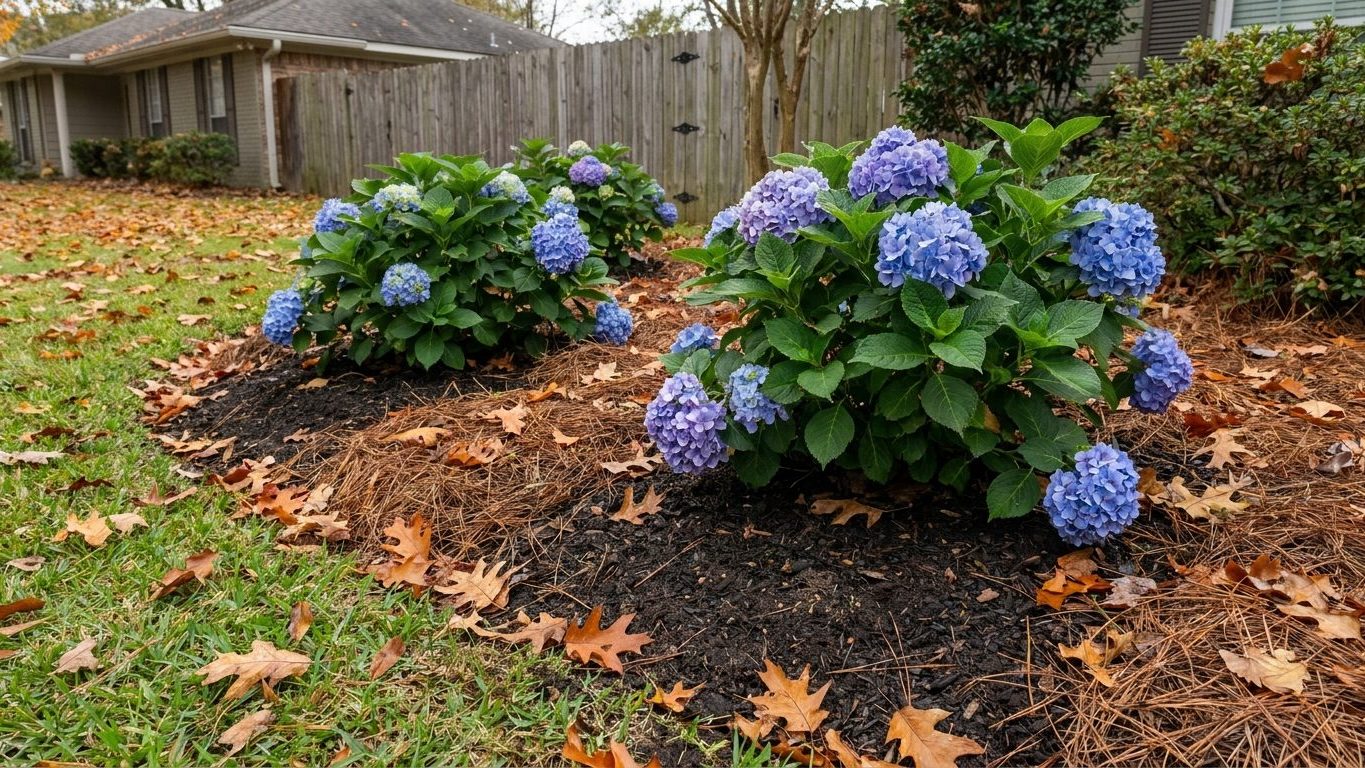
Louisiana’s hydrangeas face more trouble from humidity and heat than from any hard freeze, with fungal leaf spot, powdery mildew, aphids, spider mites, and heavy-clay root rot topping the list. Watering at the soil line instead of overhead, and improving drainage before planting, prevents most of what actually kills a shrub here.
Hydrangea Pests and Diseases Louisiana: The Short Answer
New Orleans, the reference city for this state’s climate data, rarely sees a hard freeze, so hydrangea disease pressure here comes from humidity and heat rather than winter dieback. USDA Plant Hardiness Zone Map puts Louisiana at 8a to 10a, and that long, wet growing season keeps fungal spores active for most of the year.
Aphids on new growth
Aphids cluster on tender spring shoots and flower buds, leaving a sticky honeydew that draws ants and sooty mold. A hard spray from the hose most mornings knocks the colony down, and the March fertilize window is a good time to check the same new growth for damage.
Cercospora leaf spot
Small purple-brown spots with tan centers appear on lower leaves first as early summer humidity climbs, then spread upward and cause premature leaf drop. Removing fallen leaves and watering the soil instead of the foliage slows the spread, and thinning stems during the June to July prune helps air move through the shrub.
Powdery mildew
A gray-white dusty coating settles on leaf tops and stem tips during warm days with cool, humid nights, distorting new leaves without necessarily killing the plant. Spacing shrubs for airflow and watering at the base rather than overhead keeps the fungus from spreading through a bed.
Spider mites

Fine stippling and a bronze cast on leaves, often with faint webbing underneath, shows up during the hottest, driest stretch of summer when mites multiply fast. A strong daily rinse of the leaf undersides breaks their cycle, and mulch that holds soil moisture reduces the drought stress that draws them in.
Botrytis blight
Brown, mushy blotches on petals and buds spread fast once fall brings cooler nights and lingering leaf wetness, especially after the season’s last blooms fade. Deadheading spent flowers promptly and avoiding overhead watering in the evening keeps the fungus from overwintering in plant debris.
Root rot

Wilting leaves on a well-watered shrub, plus dark and mushy roots when you dig, point to root rot in Louisiana’s heavy, slow-draining clay after a wet winter. Raised beds or amended planting holes at the January and February planting window keep roots from sitting in standing water.
Yellowing leaves with green veins
Interveinal yellowing on newer leaves points to iron chlorosis, common where Louisiana’s soil runs alkaline from shell or limestone fill near the coast. A soil test confirms the pH, and a light application during the May fertilize window with an acidifying feed greens the leaves back up within a few weeks.
Louisiana — the year and the numbers
- State
- Louisiana
- USDA zones
- 8a-10a
- Last spring frost
- January 18 to February 8
- First fall frost
- December 17 to January 8
- Annual rain
- 63 in
- Lawn zone
- warm-season
- Source
- NOAA NCEI 1991-2020 Climate Normals, 32F freeze probabilities · New Orleans
How to Work Out the Dates for Your Own Yard
Working out which problem you actually have takes a short, repeatable check instead of a guess from a single blurry leaf.
- Start with the wet season: NOAA NCEI 1991-2020 Climate Normals put New Orleans’ last freeze window at January 18 to February 8, so soil in the January and February planting window is often already saturated, favoring root rot over any insect.
- Check where the damage starts: lower, older leaves point to a splash-borne fungus like leaf spot, while damage on new tip growth usually means an insect is feeding there.
- Turn the leaf over: fine webbing and stippling on the underside signal spider mites, while a dusty gray coating sitting on top signals powdery mildew instead.
- Dig near the root ball: a shrub that wilts despite wet soil, with dark, mushy roots underneath, points to root rot rather than any pest.
- Match the season: aphids cluster on spring growth, mites peak in the hottest, driest weeks of summer, and botrytis waits for the first cool, wet nights of fall.
- Watch how fast it spreads: a single blemished leaf that stays isolated is often just heat stress, but new spots appearing daily across the shrub call for the treatment labeled for that specific problem.
If two or three of these checks point the same direction, that’s very likely your actual problem, and it’s worth confirming with the parish extension office before spraying anything.
Louisiana North to South: How the Dates Shift
Louisiana’s disease and pest pressure shifts noticeably from the Arkansas line to the Gulf, and that shift changes which problem shows up first each year.
- North Louisiana (Shreveport, the Ark-La-Tex): sits at the cooler end of the state’s zone range, so a real winter freeze knocks back aphid and mite populations before spring growth starts, and leaf spot has less time to build over winter.
- Central Louisiana (Alexandria): freezes are lighter and less consistent than in the north, letting leaf spot and mildew linger later into what would be a dormant season further up the state.
- South Louisiana and the coast (New Orleans, Baton Rouge): sits at the milder end of the range, where humidity rarely lets up and heavy clay drains slowly, so fungal problems and root rot both get a longer window to build each year.
Whichever end of the state you’re in, the state hydrangea guide has the exact frost window and hardiness figures for your parish, and it’s worth checking before deciding a symptom is unusual for your area.
Mistakes Louisiana Punishes
Three habits show up again and again in Louisiana yards, and each one hands a problem from the list above exactly what it needs to spread.
Watering the leaves at night
Overhead sprinklers run in the evening leave hydrangea foliage wet through Louisiana’s long, humid nights, the exact condition powdery mildew and leaf spot need to take hold and spread across a bed. Switch to soaker hoses or hand-water the soil in the morning instead, well before dusk.
Skipping fall leaf cleanup
NOAA NCEI 1991-2020 Climate Normals show a 32-degree freeze in only 86.8 percent of years here, so roughly one winter in seven leaves fallen, spore-loaded leaves un-killed by cold. Raking and discarding that litter each fall keeps next spring’s leaf spot and mildew pressure lower.
Planting in a low, wet corner
Louisiana’s heavy clay holds water long after a storm, and a hydrangea set into a low spot without amendment sits in exactly the wet conditions root rot needs to establish. Build the bed up a few inches above grade during the January or February planting window instead.
Louisiana Extension Offices and County Contacts
The state-wide range above is a starting point, and your parish’s LSU AgCenter office can confirm exactly which pest or disease is active in your yard right now.
- Your state page: the frost dates and hardiness range for Louisiana, plus the fertilize, plant, and prune windows for the whole state.
- Which ones hold up here: hydrangea varieties suited to Louisiana’s heat and humidity, ranked from most to least reliable.
- LSU AgCenter: local parish contacts for a soil test or a diagnosis before you spray anything.
Common questions
Do hydrangeas get fungal disease every year in Louisiana?
Not automatically, but the humidity makes it likely in a wet year. Watering at the base instead of overhead, and spacing shrubs for airflow, cuts that risk substantially.
What’s the most common hydrangea pest in Louisiana?
Aphids and spider mites are the two most reported, with mites peaking during the hottest, driest weeks of summer and aphids showing up earlier on tender spring growth.
Should I spray a fungicide as prevention every spring?
Not necessary for every yard. Check for the season’s actual first symptoms as described above before treating anything, and confirm with the parish LSU AgCenter office if you’re unsure which problem you have.