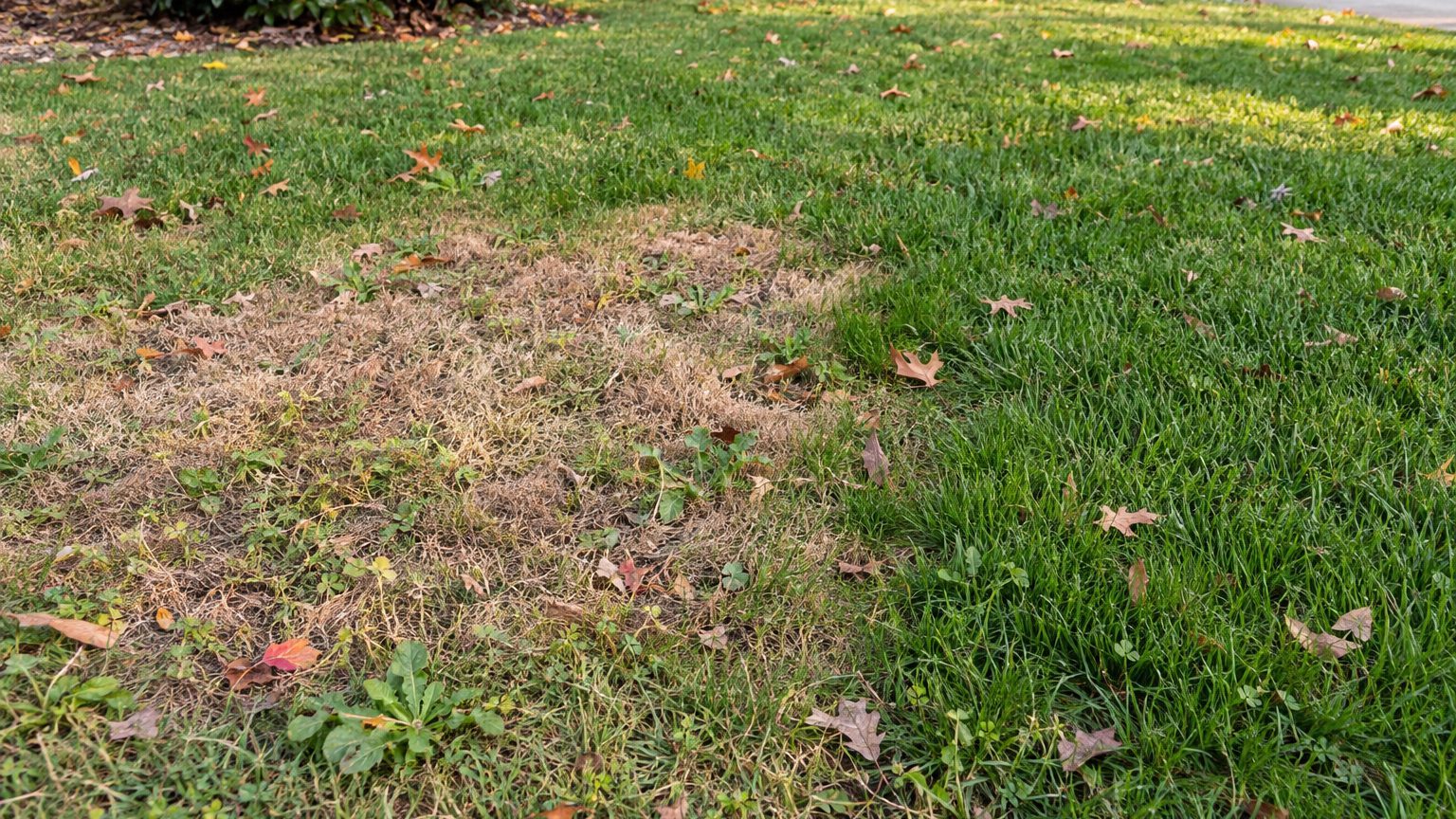
Grass that goes straw-colored in a hot August, a bare patch where the mower always turns, weeds that fill in before the lawn does: Arkansas yards show their trouble in a few familiar ways. Most of it traces back to summer heat, humidity and the mix of cool-season and warm-season grasses grown here. Knowing which problem you have decides what to do and when.
Lawn Pests and Diseases in Arkansas
Crabgrass in Spring

Crabgrass shows up as coarse, light green clumps that sprawl flat along the ground and thicken in July heat. It sprouts from seed in warming soil, so prevention beats pulling. A pre-emergence application works best in March, and it still helps in February, April or May.
Thatch Buildup
Thatch is the spongy brown layer between green blades and soil. Up to 1/2 inch is healthy, and anything thicker blocks water and air. Press a finger into the turf. If it feels like a mattress, dethatch bermuda or zoysia in May or June. Tall fescue is better dethatched in August or September.
Brown Patch in Humid Weather
Brown patch appears as roughly circular tan to brown areas, often with a darker ring at the edge, mostly on tall fescue. Arkansas humidity and warm nights favor it. Water in the early morning so blades dry quickly, and hold back on fertilizer in summer, since lush growth feeds the disease.
Weeds in Thin Turf
Weeds move into any gap in the grass. Thin tall fescue after a hot summer gives weeds an opening, and shaded lawns can thin out quickly. Aerating in August and overseeding fescue soon after fills those gaps. September still works if August slips by.
Warm-Season Lawns Slow to Green
Bermuda and zoysia stay brown well past the last frost because they wait for warm soil, not a date on the calendar. A brown lawn in early spring is usually dormant, not dead. Scratch a stem with a fingernail. Green inside means it is alive and waiting for May and June growth.
Arkansas — the year and the numbers
- State
- Arkansas
- USDA zones
- 6b-8a
- Last spring frost
- March 12 to March 28
- First fall frost
- November 7 to November 20
- Annual rain
- 50 in
- Lawn type
- cool- and warm-season
- Source
- NOAA NCEI 1991-2020 Climate Normals, 32F freeze probabilities · Little Rock
How to Tell Which Lawn Problem You Have
Appearance alone rarely settles the diagnosis. Pair what the damage looks like with where and when it appears, then check with a simple test such as tugging a handful of grass or pushing a finger into the turf.
Shape, timing and sun or shade narrow the field quickly. Walk the lawn in the morning, when dew and fungal rings show best.
| Sign | When and where | Likely problem |
|---|---|---|
| Tan circles with darker edges | Humid summer, tall fescue | Brown patch |
| Coarse light green clumps, spreading flat | Summer, thin or sunny spots | Crabgrass |
| Spongy turf, water runs off | Any season, bermuda or zoysia especially | Thatch buildup |
| Brown but stems stay green inside | Early spring, warm-season grass | Dormancy, not damage |
| Thin grass with weeds filling in | Late summer, shade or compacted soil | Worn fescue turf |
Grass that pulls up with no roots points to something eating or rotting the roots, which deserves a call to your county office before you treat anything.
Where Lawn Problems Are Worst in Arkansas
Heat and humidity shape trouble differently across the state, and the grass you can grow changes with them.
- Little Rock and the Arkansas River Valley: Long, humid summers put heavy fungal pressure on fescue, so warm-season grasses can suit sunny lots.
- Northwest Arkansas and the Ozarks: Cooler nights and higher ground suit tall fescue better, though shade and compacted clay still thin it out.
- The Delta: Flat, heavy, wet soil holds water longer, which favors disease and weeds in low spots.
Check your own yard for drainage and shade first, since both can outweigh regional differences.
Lawn Care Mistakes That Invite Problems in Arkansas
Mowing Too Short
Scalped grass loses leaf area, roots shrink and weeds get light. Mow regularly from March through November for fescue, and from April through October for bermuda and zoysia. Avoid scalping the lawn in summer, and remove only a little grass at each mowing.
Watering Late or Shallowly
Evening sprinkling leaves blades wet all night, which invites brown patch. Water deeply and early, mostly in June, July and August when the lawn actually needs it. Skip it when rain has done the job.
Fertilizing at the Wrong Time
Feeding fescue in summer produces soft growth that disease loves. Feed it in early spring and in fall, with March, September and October as the strongest months. Bermuda and zoysia want food in May, June and July, when they are growing hard.
Where to Get Lawn Advice in Arkansas
Local soil and local disease pressure vary, so a nearby expert saves guesswork. The state’s extension service and your county office can confirm a diagnosis before you spend money.
- University of Arkansas Division of Agriculture Extension offers lawn guides and problem-solving help, useful whenever a patch looks unfamiliar.
- Your county extension office can look at a turf sample and discuss a soil test.
Common Questions
Why Does My Fescue Lawn Look Worse Every August?
Tall fescue is a cool-season grass, and Arkansas summer heat stresses it. Aerating and overseeding in late summer rebuilds the thinned turf.
Is a Brown Bermuda Lawn in March Dead?
Usually not. Bermuda stays dormant until soil warms. Check for green inside the stems before replacing anything.
Can You Fix a Thin Lawn in Spring?
Fescue seeding belongs in late summer. For bermuda or zoysia, May is the time to seed or lay sod, and June also works.