Skip to content

Broadleaf Plantain in Lawns: How to Identify It and Kill It

Broadleaf Plantain in Lawns: How to Identify It and Kill It

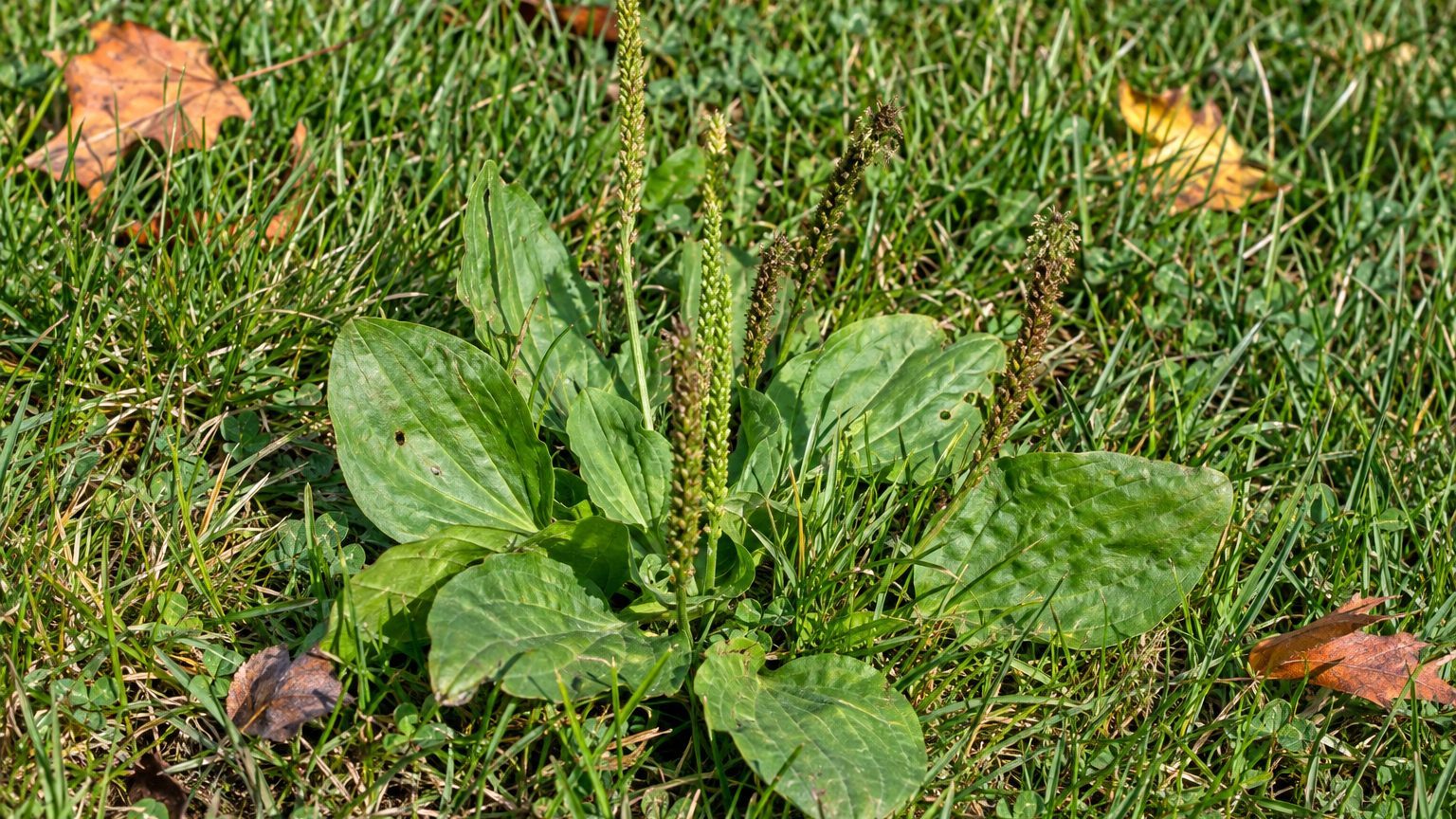
A flat rosette of broad, ribbed leaves hugging the ground, still there after the mower passes, is usually broadleaf plantain. It is a perennial that regrows from its crown, so mowing alone never finishes it. Pulling, thickening the turf and fixing the soil underneath do.

How to Identify Broadleaf Plantain

Look at the leaves first, because they give the plant away even when nothing else is showing.

  • The leaf blades are smooth and oval, 2 to 7 inches long, with several veins that run parallel to the leaf edge.
  • The leaves all rise from one point at the soil surface, forming a low rosette that sits flat under the mower deck.
  • In summer, leafless stalks shoot up from the rosette, reaching 15 inches tall and ending in a dense spike of small flowers.
  • The spikes leave behind black or brown seeds about 1/16 inch across, small enough to ride in on shoes and mower wheels.
  • The plant comes back in the same spot year after year, because it is a perennial and not a one-season weed.

Dig one up and you will find a tough crown just at the soil line, which is why a clipped plant simply regrows.

Weeds Mistaken for Broadleaf Plantain

Only one plant is a regular source of mix-ups, and it is a close relative. Buckhorn plantain forms a similar ribbed rosette, so a quick glance can fool you.

Check the leaf shape and the root before choosing a method, since the two plants do not grow quite the same way.

Looks like How to tell them apart
Buckhorn plantain Leaves are longer and narrower, 3 to 12 inches long, compared with the broad oval blades of broadleaf plantain. Dig one up and it has a taproot.
Buckhorn plantain in bare ground It grows best in disturbed sites such as bare, torn-up patches, while broadleaf plantain is the one you find in moist, compacted spots.

In California, removal is similar for the two plants, so a mistaken ID costs little. Still, a taproot snaps off more easily when you pull, so loosen the soil first.

What Causes Broadleaf Plantain in Lawns

Thin, stressed turf gives plantain its opening. Seed lands at or near the soil surface, and wherever grass is sparse, the seedlings face little competition.

Compaction is the usual setback. In California, broadleaf plantain commonly turns up in moist areas with full sun or partial shade and compacted soil, and it is an indicator of alkaline soil with low fertility. In Maryland, dry, compacted soil and infrequent or improper fertilizer applications are what favor it.

Foot-worn paths, driveway edges and spots where the mower or kids pack the ground are the usual starting points. Seedlings can spend 8 to 15 weeks in their young stage in California, depending on growing conditions, so a weak spot can fill in before you notice.

How to Get Rid of Broadleaf Plantain

Start with your hands and the lawn itself, in this order, and call your state extension office if you want to consider a herbicide, since approved products differ by state.

  1. Water the area the day before, so the soil is soft and the whole crown comes out with the roots.
  2. Pull the plant or lift it with a weeding tool, because in Maryland these are the primary means of mechanical weed control in lawns.
  3. Remove every piece of crown, since plantain grows from the crown at the soil surface and can regrow from what is left.
  4. Cut off any seed spikes before moving them and bag them, so the seeds do not scatter across the lawn.
  5. Fill the bare spot with seed or sod and keep it moist, so grass claims the hole before new plantain does.
  6. Loosen compacted ground with aeration where the weeds clustered, so the new grass can root.

In planting beds, organic mulch 2 to 4 inches deep may control seedlings by itself in California. Pulling stays the main tool in turf, and a few missed plants are easy to catch on a later pass.

How to Prevent Broadleaf Plantain

Prevention follows the season, and it comes down to keeping grass thick and the ground loose.

  • In early spring, aerate any packed areas and feed the lawn on a regular schedule, since infrequent or improper fertilizing favors plantain in Maryland.
  • Once the soil reaches 50°F, watch for seedlings, because in California that is when plantain seed starts to germinate with enough moisture.
  • Through late spring and summer, mow at a steady height and water deeply, so dense turf can compete and keep weeds from establishing.
  • In midsummer, pull plants as soon as flower spikes appear, so black or brown seed never drops into the lawn.
  • In early fall, overseed thin or worn patches so grass fills in before the next season of weed seed.

Germination speeds up as soil warms toward 77°F in California, so thin spots in warm weather deserve your attention first.

Common Questions

Does Mowing Get Rid of Broadleaf Plantain?

No. The plant grows from its crown at the soil surface, so it survives mowing and sends up new leaves. The crown has to come out.

Is Broadleaf Plantain an Annual or a Perennial?

It is a perennial, so one plant can return for years. Left alone, it also keeps adding seed.

Why Does Plantain Grow Along My Driveway and Walkway?

Those edges tend to be packed down, which suits the plant, and the turf there is often thin. Loosening the soil and thickening the grass makes them less welcoming.
Black Medic in Lawns: How to Identify It and Kill It

Black Medic in Lawns: How to Identify It and Kill It

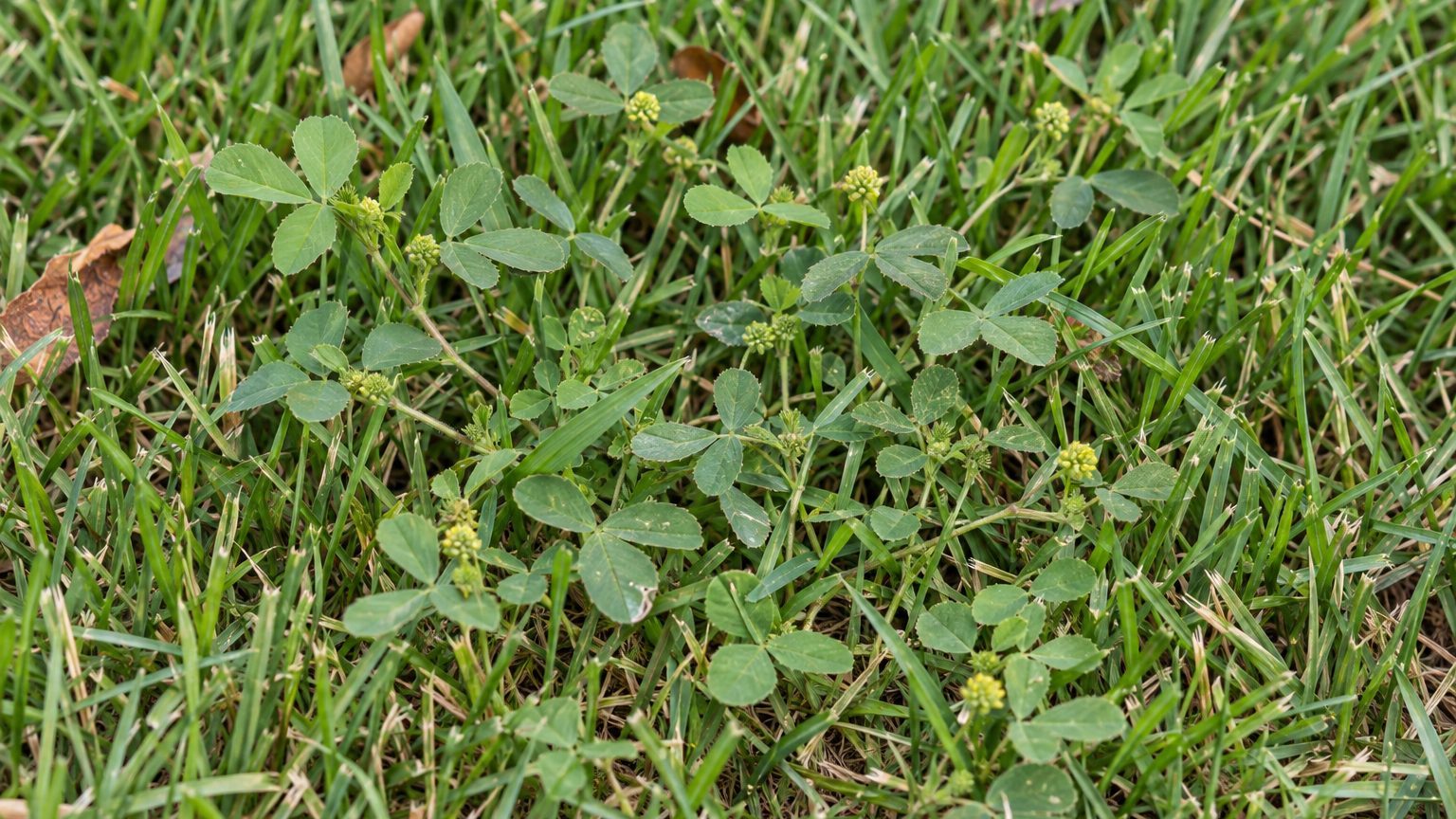
A patch of low, sprawling green dotted with tiny yellow buttons shows up in thin, dry spots of the lawn every summer. That is black medic, a clover look-alike that thrives where grass is weak and the soil runs short on nitrogen. Telling it apart from its neighbors and starving it of room is the work of a lawn season.

How to Identify Black Medic

Black Medic on a lawn

Start with the flowers, since they set black medic apart from the clovers it grows beside.

  • Small, bright yellow flowers sit in compact, rounded clusters of 10-50 tiny blooms, each cluster on a stalk rising from where a leaf meets the stem.
  • Each leaf has three oval leaflets, roughly 1/2 to 3/4 inch long, set alternately along the stems.
  • Look at the leaflet tip, where a small point projects, and at the edges, which are toothed.
  • The plant is a broadleaf annual that sprouts from seed in spring and occasionally in winter.
  • Flowers and seed keep coming from April to September, so a patch you ignore in June is reseeding all summer.

Low, mat-forming growth in a thin lawn, with those yellow clusters above it, is the pattern to look for.

Weeds Mistaken for Black Medic

White clover and wood sorrel are easy to confuse with black medic. Check the leaf shape and the flower color together before you decide.

Looks like How to tell them apart
White clover Grows in the same sites and often right alongside black medic, but lacks the toothed leaflet edges and the tiny point at the leaflet tip.
Wood sorrel (Oxalis) Its leaves look like a trifoliate legume at a glance, yet black medic gives itself away with the pointed, toothed leaflets and the rounded yellow flower clusters on stalks from the leaf axils.

Because black medic and white clover so often share a patch, you may be dealing with both at once. Check leaves and flowers across the area before deciding.

What Causes Black Medic in Lawns

Thin turf is the opening. Black medic colonizes dry, thin turf, gravel areas, and other disturbed ground with low soil nitrogen. Because it produces its own nitrogen, it can outcompete turf in low-fertility soils, which is why it often spreads where the lawn is already struggling.

Those conditions give black medic an opening. Compacted strips beside driveways, sidewalks and curbs, sunny slopes that dry out fast, and lawns that rarely get fed all give it a foothold.

Timing matters too. The seed germinates in spring and occasionally in winter, then the plant flowers and sets seed continuously through the warm months. Plants that set seed add to the seed bank and can make the patch harder to manage next season.

How to Get Rid of Black Medic

Work in this order, and treat the soil and grass as part of the fix, not just the weed.

  1. Pull young plants by hand when the soil is damp, getting the taproot and the whole mat, so no piece is left to regrow.
  2. Mow higher, since in Utah, raising the mower height to 3 inches or more helps suppress black medic and other lawn weeds.
  3. Proper fertilization helps turf crowd out black medic.
  4. Proper irrigation helps prevent the dry, stressed gaps where black medic can gain ground.
  5. Mulch bare garden beds, as in Utah, where a layer of bark or leaf mulch at least 3 inches thick suppresses weed growth, including black medic.
  6. Rake out thin areas and overseed them, so dense grass fills the gaps the weed would take.

According to University of Wisconsin Extension, higher mowing in the 3-inch range, proper fertilization, and irrigation help keep black medic in check. If hand work and lawn care are not enough, your state extension office can tell you which herbicide products are approved where you live.

How to Prevent Black Medic

Prevention is mostly a matter of keeping the grass dense, with lawn care timed to local growing conditions.

  • In Utah, check for thin or bare spots in spring and plan to reseed them, because that is when black medic germinates.
  • According to Utah State University Extension, set the mower to 3 inches or more once the grass is growing.
  • In Wisconsin, irrigate dry areas properly; from April to September, watch for yellow flowers and remove plants before they produce more seed.
  • In summer, pull plants before the seed sets, and bag them so the seed does not scatter across the lawn.
  • Proper fertilization helps the lawn compete with black medic.
  • Overseed thin turf at the locally appropriate time so grass can compete when black medic sprouts.

Healthy, dense turf competes with black medic and helps prevent it from establishing.

Common Questions

Is Black Medic the Same as Clover?

No. Both are legumes with three leaflets and often grow together in turf, but black medic has yellow flowers and leaflets with toothed edges and a small projecting tip.

Does Black Medic Come Back Every Year?

Yes, from seed. It is an annual that germinates in spring and occasionally in winter, so seed left from last year’s plants can fill the same spots again.

Why Does Black Medic Grow Where Grass Will Not?

It makes its own nitrogen, so it does well in poor, dry, thin soil where turf struggles. Fixing the soil and thickening the grass takes that advantage away.

Bermudagrass in a Lawn: How to Identify It and Kill It

Bermudagrass in a Lawn: How to Identify It and Kill It

Bermudagrass shows up as a fine, fast-spreading patch of lighter green that creeps across a fescue or bluegrass lawn through summer and turns straw brown in fall. Spotting it early, knowing what it is not, and cutting off its runners decides whether you pull a few patches or fight the whole yard.

How to Identify Bermudagrass

Bermudagrass in a Lawn on a lawn

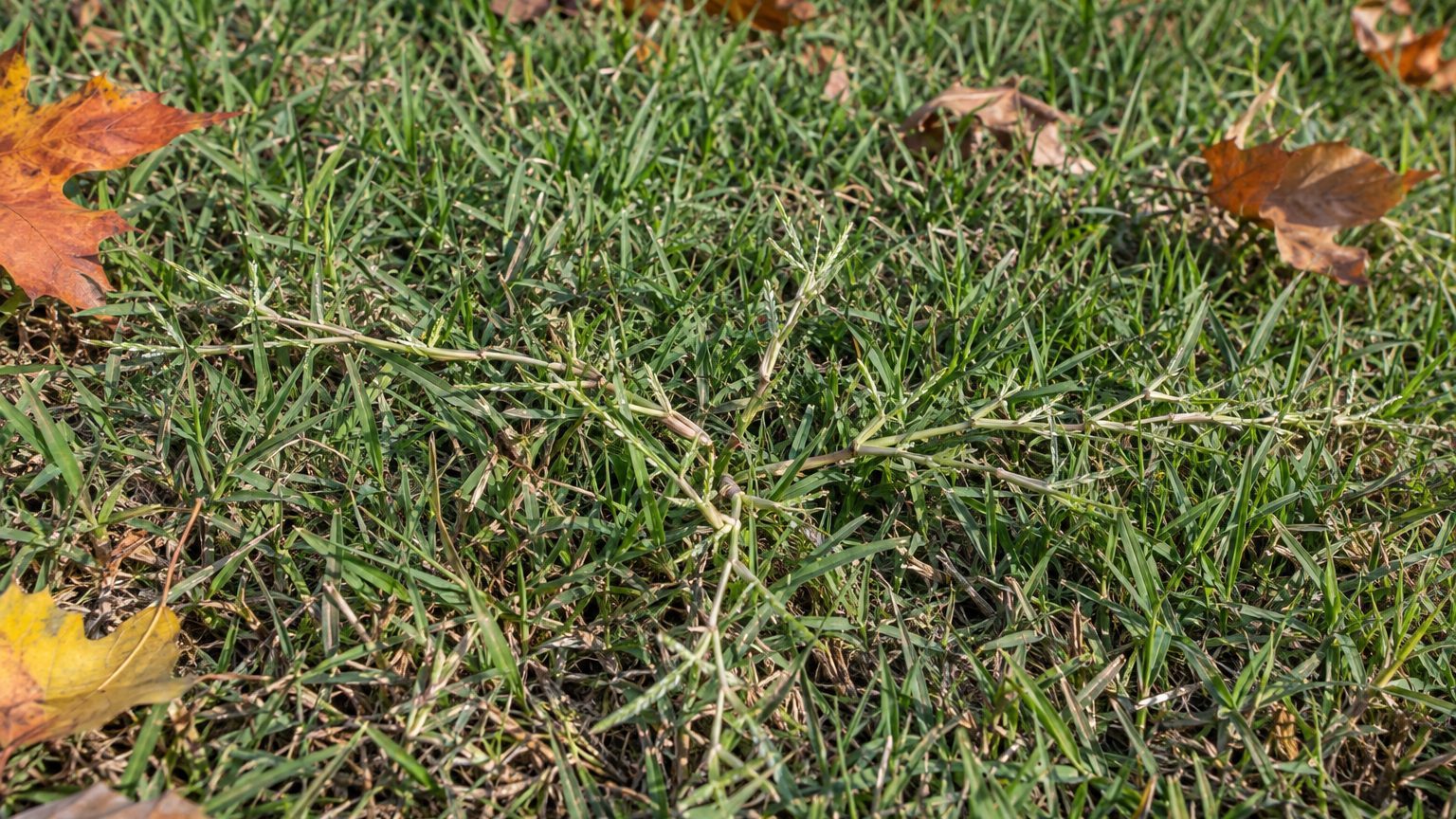
Look first at the leaf base and the creeping stems, since those give it away more reliably than color alone.

  • A conspicuous ring of white hairs sits where each blade meets the sheath.
  • Blades are generally smooth and pointed, short and fairly flat, in a gray-green that stands apart from the surrounding turf.
  • Stolons run across the soil surface, and rhizomes run just below it, rooting at the nodes to start new plants.
  • Seed heads bear three to seven spikelike branches, usually in a single whorl at the tip of the stem, like fingers spread from one point.
  • Left unmowed in summer, it can climb to 2 ft. tall, then goes dormant in the fall and turns brown while cool-season grass stays green.

That brown, tan patch in autumn often makes the invasion stand out against green turf.

Weeds Mistaken for Bermudagrass

Several weedy grasses look close enough to fool a quick glance, so take care to tell them apart from similar-looking lawn grass species before you treat anything.

Check the leaf base and growth habit together. A pale patch alone proves nothing, but a pale patch with the wrong leaf base or the wrong growth habit points to a different grass.

Looks like How to tell them apart
Crabgrass Wide, coarse blades radiating from one center in a star shape, and it lacks the ring of white hairs at the blade base.
Zoysiagrass Stiffer, denser blades that form a tight mat, with no ring of white hairs and a slower, more gradual spread.
Quackgrass Broader, flatter blades with small clasping lobes at the base, and it stays green while bermudagrass browns in fall.

Look for creeping stems: bermudagrass spreads by aboveground stolons and belowground rhizomes.

What Causes Bermudagrass in Lawns

Bermudagrass arrives through creeping stems and seed, and it takes hold wherever the lawn is thin enough to give it light. It is a warm-season perennial widely used for lawns in the southeastern United States, so neighboring yards and roadsides there supply a steady source that creeps under fences and edging.

Fragments of stolons and rhizomes can root and regrow if cut and left on or in moist soil. A mower, a tiller, or a shovel full of infested dirt can seed the problem into a clean patch of lawn.

In California, bermudagrass grows in a wide range of environmental and drought stress conditions, and although it tolerates some drought, it grows best when irrigated. Seedlings there may also emerge in turfgrass, garden, or landscaped areas that have been treated with postemergence herbicides, because clearing the old growth opens room for new plants. Increasing shade from trees and tall shrubs reduces its growth, which is why it thins out under canopy and thrives in open sun.

How to Get Rid of Bermudagrass

Because it spreads from buried stems as well as seed, removal works best as a sequence that exposes the runners and keeps them from rooting again.

  1. Mark the patches in fall while dormant grass shows the visible outline, so you can return to the same area during removal.
  2. In California, cultivate the infested area deeply; a single cultivation down to 6 inches may be adequate to bring most shoots to the surface.
  3. Rake out the exposed stolons and rhizomes and bag them, because cut fragments left on moist soil will root and regrow.
  4. Check with your state extension office about which herbicide products are registered in your state, and follow the label, since rules differ from place to place.
  5. Reseed the cleared ground with a lawn grass suited to your area so the bare soil does not hand the space back to bermudagrass.
  6. Go back over the patch regularly and dig out any new shoots while they are small.

Expect to repeat the work. A thick, healthy lawn is what finally closes the door, so treat removal and renewal as one job.

How to Prevent Bermudagrass

Prevention follows the lawn’s own year, and the aim is to keep the turf dense and limit open ground.

  • In Maryland, mow at 3-4 inches high during the growing season so the canopy shades the soil.
  • In California, do not water beyond the lawn’s needs, since bermudagrass grows best when irrigated.
  • In Maryland, seed bare spots so runners and seedlings have less open soil to enter.
  • In fall, feed tall fescue; Virginia recommends 3.5 to 4.0 inch mowing heights with fall fertility, which builds the dense turf that crowds out invaders.
  • After any edging or digging near an infested border, rake up and discard the fragments instead of composting them or leaving them on moist soil.

Cleaning mower decks and tools after working an infested area keeps stem pieces from riding into clean turf.

Common Questions

Can Bermudagrass Come Back After You Kill It?

It can, from buried stem pieces you missed. Check the area regularly and pull new shoots early, before they root and spread.

Why Does Bermudagrass Turn Brown When the Rest of the Lawn Is Green?

It goes dormant in the fall. When cool-season lawn grasses are still green, the brown patches make dormant bermudagrass easier to spot.

Is Bermudagrass a Weed or a Lawn Grass?

Both. Across the Southeast it is planted on purpose as a lawn, but in a fescue or bluegrass yard it behaves as an invader that spreads by runners.

Barnyard Grass in Lawns: How to Identify It and Kill It

Barnyard Grass in Lawns: How to Identify It and Kill It

A coarse, flat-stemmed grass that shoots up above the rest of the turf in summer is often barnyard grass. It grows from seed each year and thrives wherever the lawn has gone thin. Knowing what it looks like and when it starts makes it much easier to clear out of a front yard or back lawn.

How to Identify Barnyard Grass

Barnyard Grass on a lawn

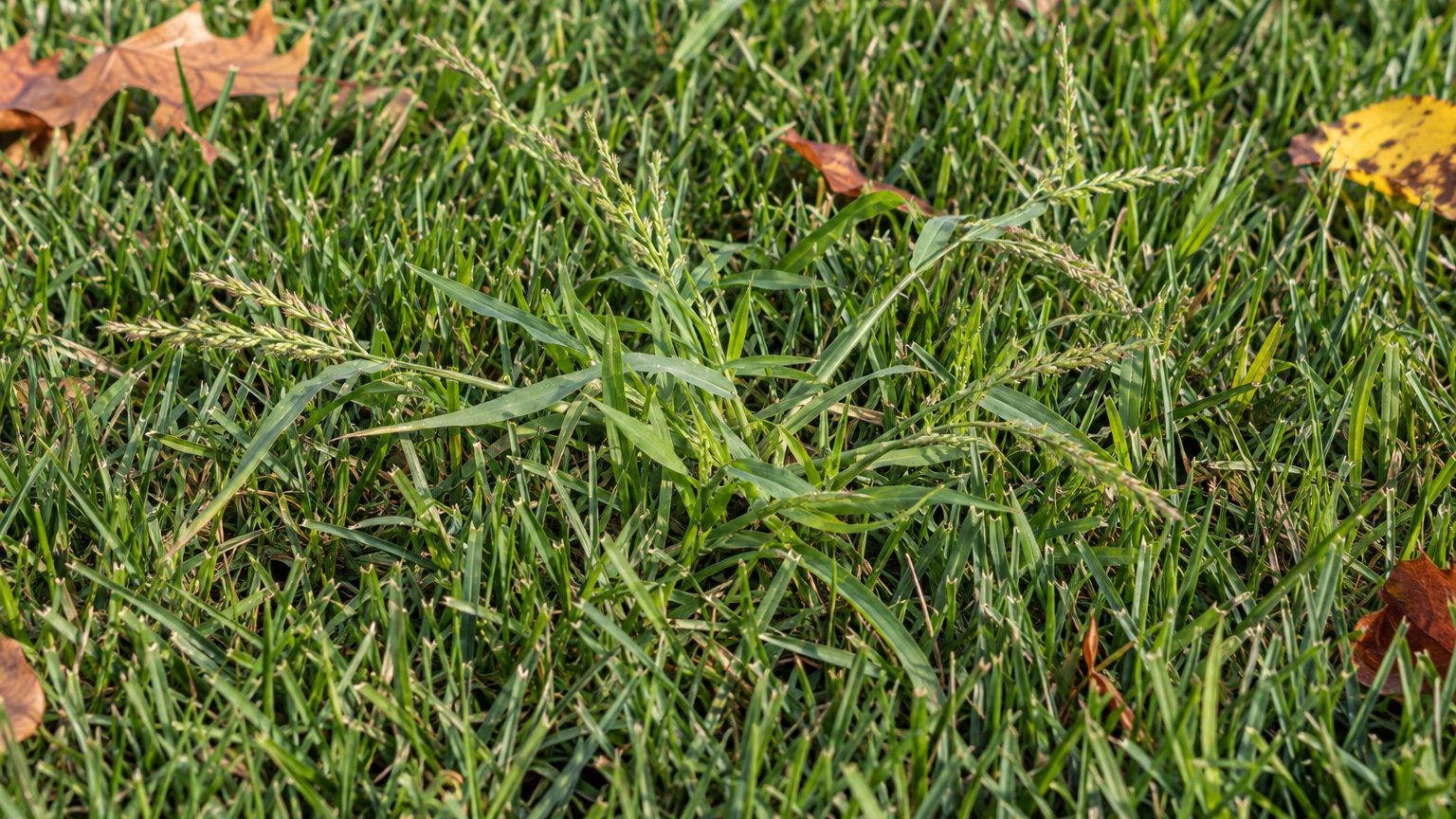
Look at the base of the leaf and the shape of the stem before you judge the whole plant, because the clues are small but dependable.

  • Check the collar, where the leaf meets the stem, and you will find no ligule and no auricles, which sets it apart from other summer annual grasses in lawns.
  • Roll the stem between your fingers and it feels flat, without the fuzzy hairs many lookalikes carry.
  • Watch for a plant that stands well above the mown turf, since it can reach heights over 3 feet tall if left alone.
  • Look at the top of mature stalks for a large seedhead, a sign the plant is about to spread seed across the lawn.
  • Note the timing, because in Pennsylvania seedlings come up from spring into early summer.

Any clump that passes the collar test is worth dealing with before the seedheads open.

Weeds Mistaken for Barnyard Grass

Several summer grasses sprawl and seed in much the same way, so a quick glance can mislead you. Checking leaf color, plant height, and seedhead size together keeps you from treating the wrong weed.

Looks like How to tell them apart
Junglerice Purple striations often show on the leaf, and the plant grows lower with a smaller seedhead than barnyard grass.

Crabgrass is the other one people reach for, and it turns up in lawns more often. It copes with low mowing for long stretches, while barnyard grass does not, so a lawn kept short is more likely to hold crabgrass than the tall, upright stalks described above.

What Causes Barnyard Grass in Lawns

The cause is seed meeting an opening. Barnyard grass is a summer annual that reproduces only by seed, so every plant you see started from seed that landed in a gap in the turf, and a thin or damaged lawn gives it room to take hold.

Warm soil sets it going. In Pennsylvania, seed germinates over a wide range of soil temperatures, with the best results between 68 and 87°F. That broad range explains why new plants keep appearing instead of arriving all at once.

In Pennsylvania, fertilization, irrigation during drought, and turfgrasses well adapted to the site can improve lawn density and help reduce infestations. In Pennsylvania, denser turf helps reduce barnyardgrass infestations.

How to Get Rid of Barnyard Grass

Because the plant lives one season and depends on seed, the aim is to stop it from setting seed this year and to thicken the lawn so less comes up next year.

  1. Pull young plants, roots and all, while they are small, so they never reach the seedhead stage.
  2. Mow frequently at cutting heights below 3 inches, as advised in Pennsylvania, because it suppresses leaf growth and the formation of seedheads.
  3. Bag the clippings from infested areas, since mowing can scatter seed into clean turf.
  4. Brush off the mower deck and your shoes before leaving the infested patch, so seed does not travel to the rest of the yard.
  5. Fertilize the lawn to improve turf density and help reduce barnyardgrass infestations.

For larger infestations, get local guidance on which herbicides are approved and when to use them.

How to Prevent Barnyard Grass

Prevention works best when each task follows the weed’s progression from germination to seed production.

  • In California, apply a preemergence herbicide 2 to 3 weeks before weed germination, and ask your state extension service how that timing fits your area.
  • In Pennsylvania, walk the lawn from spring into early summer and pull seedlings before they grow tall.
  • In Pennsylvania, irrigate during drought so the turf stays dense and leaves fewer gaps for seed.
  • When mowing near a weedy patch, mow it last, so the mower does not carry seed to clean grass.
  • Use turfgrass well adapted to the site to help keep the lawn dense.

A dense lawn gives barnyardgrass fewer openings.

Common Questions

Does Barnyard Grass Come Back Every Year?

It does, but from seed rather than from the old roots. Each plant lives for the summer and drops seed before it dies; in Pennsylvania, its seed begins to germinate in spring. Stopping seedheads one year cuts the supply for the next.

Can Barnyard Grass Grow in Shade or Wet Soil?

Yes, to a degree. In Pennsylvania it grows in many soil types and tolerates wet soil and moderate drought. It prefers sunny areas but can survive in partial shade, so a shady, damp corner is not safe from it.

How Does Barnyard Grass Seed Spread Around a Yard?

Seed is easily carried by mowing equipment, shoes, animals, and moved soil. Mowing a weedy patch last and cleaning the deck afterward keeps the seed in the place where it fell.

Annual Bluegrass (Poa annua) in Lawns: How to Identify It and Kill It

Annual Bluegrass (Poa annua) in Lawns: How to Identify It and Kill It

In spring, small tufts of fine grass push seedheads above the mowing line while the rest of the lawn is still waking up. That is usually annual bluegrass, a cool-season grass that fills thin spots and edges. Spotting it early, knowing why it moved in, and timing your response to its fall-to-spring cycle keeps it from spreading across the yard.

How to Identify Annual Bluegrass

Annual Bluegrass (Poa annua) on a lawn

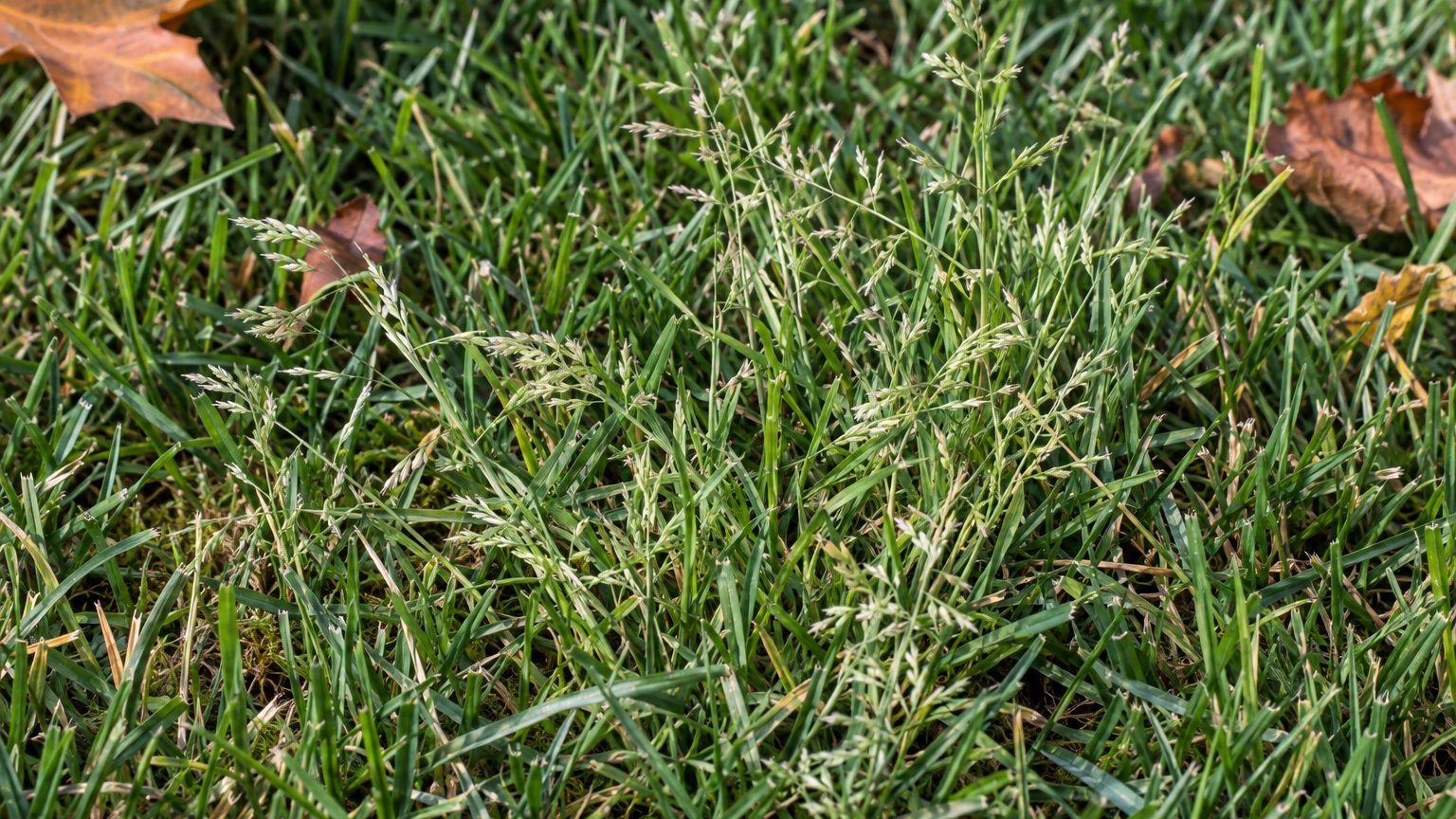
Look at the tips of the blades first, then work outward to the seedheads.

  • Each blade ends in a boat-shaped tip, as if the leaf were pinched closed at the very end.
  • Run your eye down a blade and you will see the faint tramlines on a leaf that is flat, smooth, and slightly keeled.
  • Seedheads open loosely on delicate, spreading branches, with stalked spikelets that run 3/8 to 3/4 in. long when flowering.
  • Clumps often show up in spring, stay green through winter, and sit in thin turf, along driveways and sidewalks, and on compacted ground.
  • The plants grow as low, spreading tufts and look lighter and more ragged than the dense turf around them.

One sign alone can mislead you, so confirm the boat tip and the tramlines together before you act.

Weeds Mistaken for Annual Bluegrass

Two close relatives share the Poa genus with annual bluegrass, and both get confused with it. Neither is a winter annual, so the habit of the plant tells you as much as the blade does.

Looks like How to tell them apart
Kentucky bluegrass (Poa pratensis) Plants stay put as a perennial and spread by creeping underground stems, while annual bluegrass forms loose tufts that come from seed and set seedheads in spring.
Canada bluegrass (Poa compressa) Stems are flattened and wiry and grow from a perennial base, while annual bluegrass has softer tufts and tramlines on its blades.

Kentucky bluegrass is a lawn grass many homeowners plant on purpose, so pull a sample before you treat anything. A plant that comes out as a small tuft with shallow roots and no creeping stems is the one to deal with.

What Causes Annual Bluegrass in Lawns

Annual bluegrass is a winter annual that spreads by seed. It germinates in fall, grows through winter, and sets seed in spring, so every thin patch or bare spot in autumn is an open invitation. Timing varies by place. In Maryland, seeds germinate in late summer to early September, while in North Carolina it emerges from fall through spring.

Conditions decide where it takes hold. In Maryland, cool, moist weather and compacted soil favor growth, and it spreads quickly in thin turf and along edges such as driveways and sidewalks. It prefers moist, shady areas.

Traffic does not stop it. Annual bluegrass grows in a wide variety of soils and tolerates trampling, mowing, and frozen conditions, so it is a frequent weed where people or livestock wear the lawn down. Heavy foot paths, play areas and mower turning spots are common starting points.

How to Get Rid of Annual Bluegrass

Control works best when you stop seed from forming and then keep the lawn thick enough that new seedlings find no room.

  1. Pull small patches by hand while seedheads are still forming, so the plants cannot drop seed into the surrounding turf.
  2. Mow frequently when seedheads become visible in spring, with a bagger attached, because in South Carolina the advice is to cut at approximately 2 inches to collect seeds and slow their spread.
  3. According to Purdue Extension, estimate how much of the lawn is annual bluegrass before you reach for a herbicide, because a preemergence treatment works best in lawns with less than 10% annual bluegrass.
  4. Apply that preemergence treatment right after the lawn goes dormant from drought, which in Indiana is the most effective combination, and ask your state extension office which products are approved where you live.
  5. Reseed or patch bare spots left behind, since open soil lets the next flush of seedlings take over.

If annual bluegrass covers a large share of the lawn, focus on preventing seed production and thickening the turf.

How to Prevent Annual Bluegrass

Prevention follows the plant’s calendar, which starts in late summer when the seeds wake up.

  • In late summer, watch for soil cooling, because in Indiana germination begins once soil temperatures fall below 70 degrees F.
  • Maintain healthy, dense turf in thin areas so annual bluegrass has less room to establish.
  • Limit traffic on frozen and soggy turf, since annual bluegrass tolerates trampling and frozen conditions.
  • Address compacted soil along walkways and driveways in Maryland, and improve drainage in damp, shaded corners in North Carolina.
  • Through the growing season, maintain healthy, dense turf that can compete, because in Maryland that is how thick grass keeps weeds from establishing.

Pay close attention to edges in Maryland and to shady spots in North Carolina, since annual bluegrass is favored in those places.

Common Questions

Can Annual Bluegrass Seeds Stay in the Soil for Years?

Yes. The seeds can lie dormant for years before sprouting, so a lawn can produce new plants long after the last seedhead was cut.

Does Annual Bluegrass Grow in Winter?

It does. As a winter annual, it grows through the cold months; in North Carolina, it also tolerates frozen conditions.

How Many Seeds Does One Plant Make?

Each plant produces several hundred seeds in a season, so letting even a few seedheads ripen can restock the lawn.

Lawn Turning Yellow: What It Means and What to Do

Lawn Turning Yellow: What It Means and What to Do

A lawn that fades from green to pale yellow, sometimes in neat round patches, is telling you something about moisture, soil or feeding. The pattern of the yellow matters more than the shade. Patches, bands on the blades and an even wash across the whole yard each point somewhere different, and each calls for a different fix.

How to Recognize a Yellow Lawn

Lawn Turning Yellow on a lawn

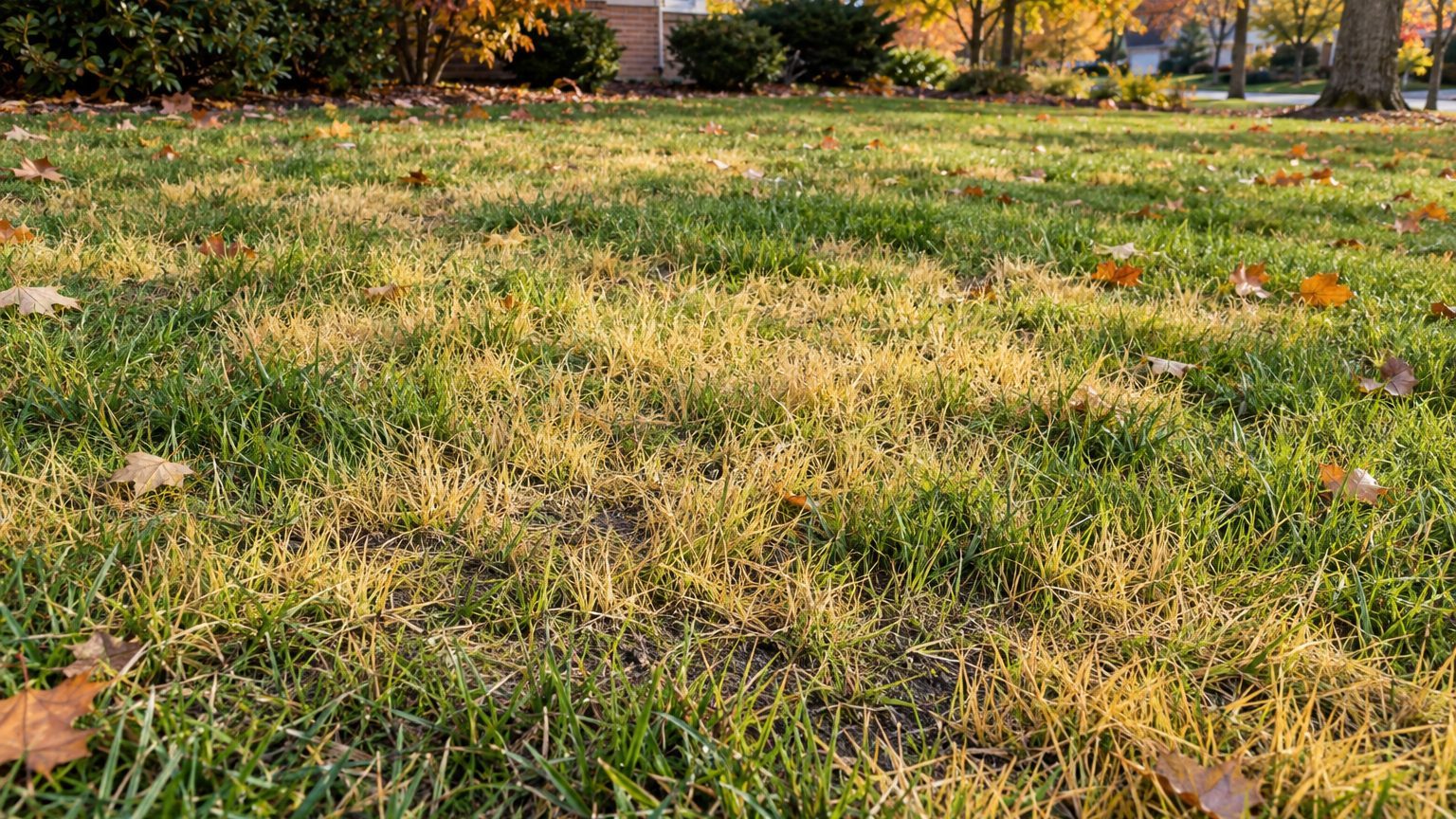
Start by looking at the shape of the damage, then crouch down and read individual blades.

  • Patches and rings are the giveaway, with patches running anywhere from 4 to 12 inches across.
  • A patch usually starts about 1 ft. in diameter, turns yellow, then fades to reddish brown, brown or straw as the leaves die.
  • On a single blade, the yellow starts at the tip and moves toward the base.
  • Where iron is short, the youngest leaves go yellow first while the veins stay dark, giving a banded look.
  • From across the yard, that banded yellowing reads as mottled rather than as clean patches.
  • Patches that show up from November through May, in cool weather, point to a disease rather than summer stress.

Walk the edge of a patch and compare the outer ring with the center.

Problems Mistaken for a Yellow Lawn

Iron and nitrogen shortages can mimic disease because the grass is missing a nutrient rather than facing an attack. Each gives itself away with a pattern on the blade and a quick test.

Looks like How to tell them apart
Iron shortage Young leaves yellow between dark veins in a banded pattern, usually on Kentucky bluegrass or zoysia growing in soil with a pH above 7.2.
Nitrogen shortage The whole lawn looks pale rather than patchy, and in Arizona, if it greens up in a week or so after feeding, nitrogen was the missing piece.

Drought stress also turns grass yellow and then straw colored, but it follows dry spells and dry spots rather than cool, wet weather. Check soil moisture and recent watering before ruling out drought stress.

What Causes a Yellow Lawn

The patch-forming kind comes from a fungus that thrives in cool, damp conditions. It is most active when temperatures sit between 50 and 65°F, though it can infect grass in a wider range of 45 to 75°F. That is why it shows up from late fall through spring and normally fades once summer heat arrives.

Moisture is the trigger. Heavy rainfall, too much irrigation or long stretches of humid weather can leave the blades wet for 48 hours or more, and that is enough for infection to take hold. Conditions that keep the blades wet can allow infection to take hold.

Iron trouble has a different root. It is most common where soil pH climbs above 7.2, because the iron is in the ground but the grass cannot take it up. Kentucky bluegrass and zoysia are the grasses that suffer most. The pattern on your lawn matters more than your zip code.

How to Fix a Yellow Lawn

Start with the pattern and soil pH before moving to treatment.

  1. Examine the blades and the pattern, since patches point to disease and banded young leaves point to iron.
  2. Test the soil pH, because an alkaline reading explains iron trouble and tells you whether feeding alone will help.
  3. Start by reviewing how much nitrogen the lawn receives. According to NC State Extension, avoid high rates, more than 0.25 lb N/1,000 square feet, in late fall and early spring, when yellow patch is most active.
  4. Water early in the day and only when the lawn needs it, so the blades dry out and the fungus loses its edge.
  5. Follow the recommended fertilization rate for your turfgrass species.
  6. In Arizona, a lawn that greens up after feeding was nitrogen deficient; without that response, reassess for disease or iron trouble.

Kansas guidance notes that chemical controls are sometimes necessary, but that adjusting cultural practices prevents or limits the problem in many cases. If the patches keep spreading after you have corrected watering and feeding, your state extension office can say what is approved where you live.

How to Prevent a Yellow Lawn

Prevention starts with careful feeding and watering.

  • In North Carolina, avoid heavy nitrogen in late fall and early spring, when yellow patch is most active.
  • Test the soil, because in California turfgrass grows best at a pH between 6 and 7 and does poorly when soil runs too acidic or too alkaline.
  • Feed at the rates recommended for your grass species rather than guessing.
  • In summer, water deeply and on a sensible schedule, since in Kansas poor watering is flagged as a cause of drought stress that leaves turf open to disease and insect damage.
  • Avoid leaving the grass wet as cool weather returns.

Soil rich in organic matter helps with all of it, and around 5% is considered ideal.

Common Questions

How Long Does an Iron Treatment Last?

The effect of iron treatment can be temporary. The yellowing can return if the soil is still alkaline, so the lasting answer is correcting the conditions that locked up the iron.

Can Yellow Patch Come Back After the Lawn Greens Up?

Yes, when cool, wet weather returns. Drier blades, moderate feeding and good drainage help limit the problem when cool, wet weather returns.

Does Yellow Grass Always Mean Disease?

No. Yellowing can come from poor feeding, soil chemistry, drought or disease, and the shape of the damage tells them apart. Patches and rings suggest disease, banded young leaves suggest iron, and an even pale lawn suggests nitrogen.

Thin Grass in Shade: What It Means and What to Do

Thin Grass in Shade: What It Means and What to Do

Under an old maple or oak, the grass rarely looks like the lawn out in the open. It grows sparse, pale and floppy, with soil showing between the blades. The shadow pattern points to limited light as the place to start.

How to Recognize Thin Grass in Shade

Thin Grass in Shade on a lawn

A useful sign is a lawn that thins out only where shadow falls and stays dense in the sunny stretches beside it.

  • The thin area follows the shadow line of a tree, fence or house, and the turf turns thick again where the sun reaches it.
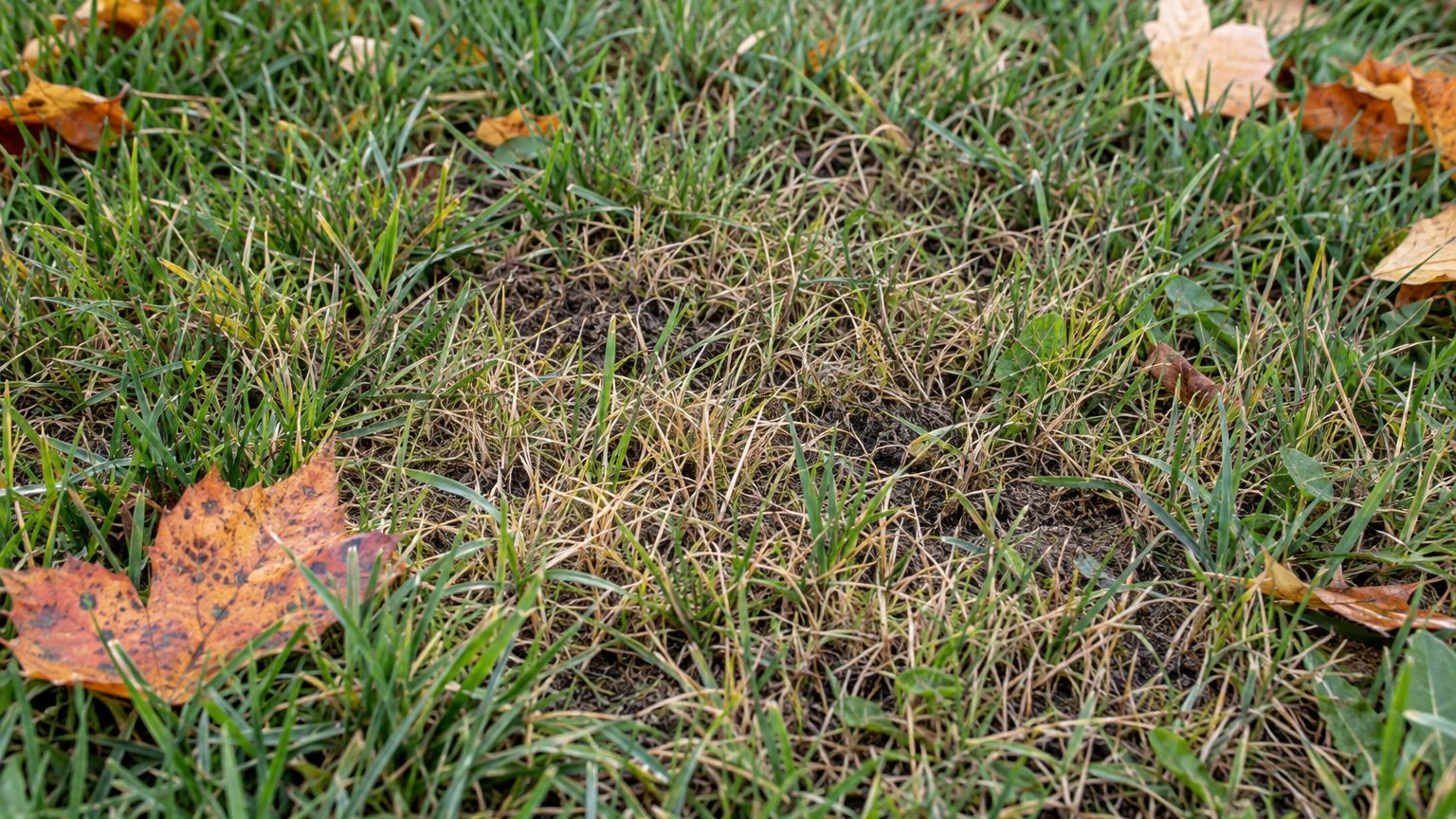
  • Bare soil shows between the grass plants, and the gaps may widen as the turf thins.
  • Leaf blades look pale, narrow and floppy, and the grass lies down instead of standing upright.
  • Moss and shade-loving weeds can move into the gaps.
  • Patches may look worse once the canopy is fully leafed and blocks more light.

Lawns under trees are typically thin, weak and of poor quality, and too much shade lowers grass vigor until the turf thins out.

Problems Mistaken for Thin Grass in Shade

Plenty of things leave a lawn looking thin. Some of them happen in shade too, which makes the light the wrong place to look first.

Check the pattern of the damage and what the lawn has been through, and the real cause usually shows itself.

Looks like How to tell them apart
Foot traffic wear Thin strips follow a walking path or play area rather than the shadow line, and the soil underneath feels packed hard.
Too much nitrogen Weak, thin turf shows up after heavy feeding, and the sunny parts of the lawn may look off too.
Perennial ryegrass dying out In Nebraska, perennial ryegrass seeded in shade may fade because it survives only one or two seasons.

Heavy traffic can add wear to shaded turf, especially along paths.

What Causes Thin Grass in Shade

Grass makes its food from sunlight, and a canopy takes that away. Turfgrasses need a minimum of 6 hours of full sun a day, so anything less makes keeping them healthy a challenge. Even shade-tolerant grasses still need an acceptable amount of light to grow.

Feeding can make things worse. Too much nitrogen can be detrimental to shade lawn species, so a heavy dose meant to thicken the turf often does the opposite.

A tree canopy can reduce the light reaching turf and cause thinning. In summer, a fully leafed canopy can limit the light reaching the grass.

Light is also the reason the right grass type matters. A shade-tolerant mixture is a better fit, but no turfgrass grows in darkness.

How to Fix Thin Grass in Shade

Start by checking the light, then work through the lawn in this order.

  1. Watch how light moves across the yard in summer, when the canopy is fully leafed, so you know how many hours of sun the turf gets. A shade-tolerant lawn species needs at least 2 hours of direct sunlight every day.
  2. Prepare the thin area so the seed can reach the soil.
  3. Sow a shade-tolerant grass mixture, since in Illinois choosing one is considered critical; in Nebraska, perennial ryegrass fades quickly in shade.
  4. Water the new seed so the top layer stays moist until it sprouts, then ease off so roots can reach deeper.
  5. Feed lightly, because in Illinois about one to two pounds of actual nitrogen per 1,000 square feet per growing season is all that is needed.
  6. Mow high all summer, and in Nebraska the advice is 3 to 3.5 inches, which builds a deeper root system and cuts down on weeds.

Once the grass is established, wait to water again until the top 2-3 inches of soil appear dry, as Nebraska guidance puts it. That may mean one, two or more weeks depending on temperatures. If practices have been followed and the lawn still fails, there probably is not enough light even for shade-tolerant grass species. At that point, your state extension office can suggest ground covers or mulch for the deepest shade.

How to Prevent Thin Grass in Shade

Routine care should avoid adding stress to a shaded lawn.

  • Clear matted leaves and debris so light and air can reach the grass.
  • In Illinois, choose a shade-tolerant mixture when overseeding thin spots.
  • In Nebraska, mow high all summer and wait to water until the topsoil appears dry.
  • Clear fallen leaves so they do not smother the grass.
  • In Illinois, reduce foot traffic over lawns in the shade.

Illinois guidance also says that following these steps helps avoid thin turf in the first place.

Common Questions

Why Does Shaded Grass Look Worse in Late Summer?

A fully leafed canopy can limit the light reaching the turf. Heat and dry spells add stress, and the thinning becomes visible.

What Can Replace Grass Where Shade Is Too Dense?

Mulch, shade-loving ground covers or a path of stepping stones suit spots where grass keeps failing. Local garden centers can name plants that suit your area.

Does Raking Leaves Off a Shaded Lawn Really Matter?

Yes. A mat of wet leaves blocks what little light there is and holds moisture against the grass. Keeping the surface clear helps the turf stay thick.

Thatch: What It Means and What to Do

Thatch: What It Means and What to Do

A spongy, springy feel underfoot, with a brownish mat showing when you part the grass blades, can be a sign of thatch. It is a layer of dead stems and old plant material packed just above the soil. A thin layer does the lawn good, but a thick one needs attention, and the fix depends on your grass type.

How to Recognize Thatch

Thatch: What It Means and What to Do

Start by parting the grass with your fingers and looking at the base of the plants, where the layer sits between green blades and soil.

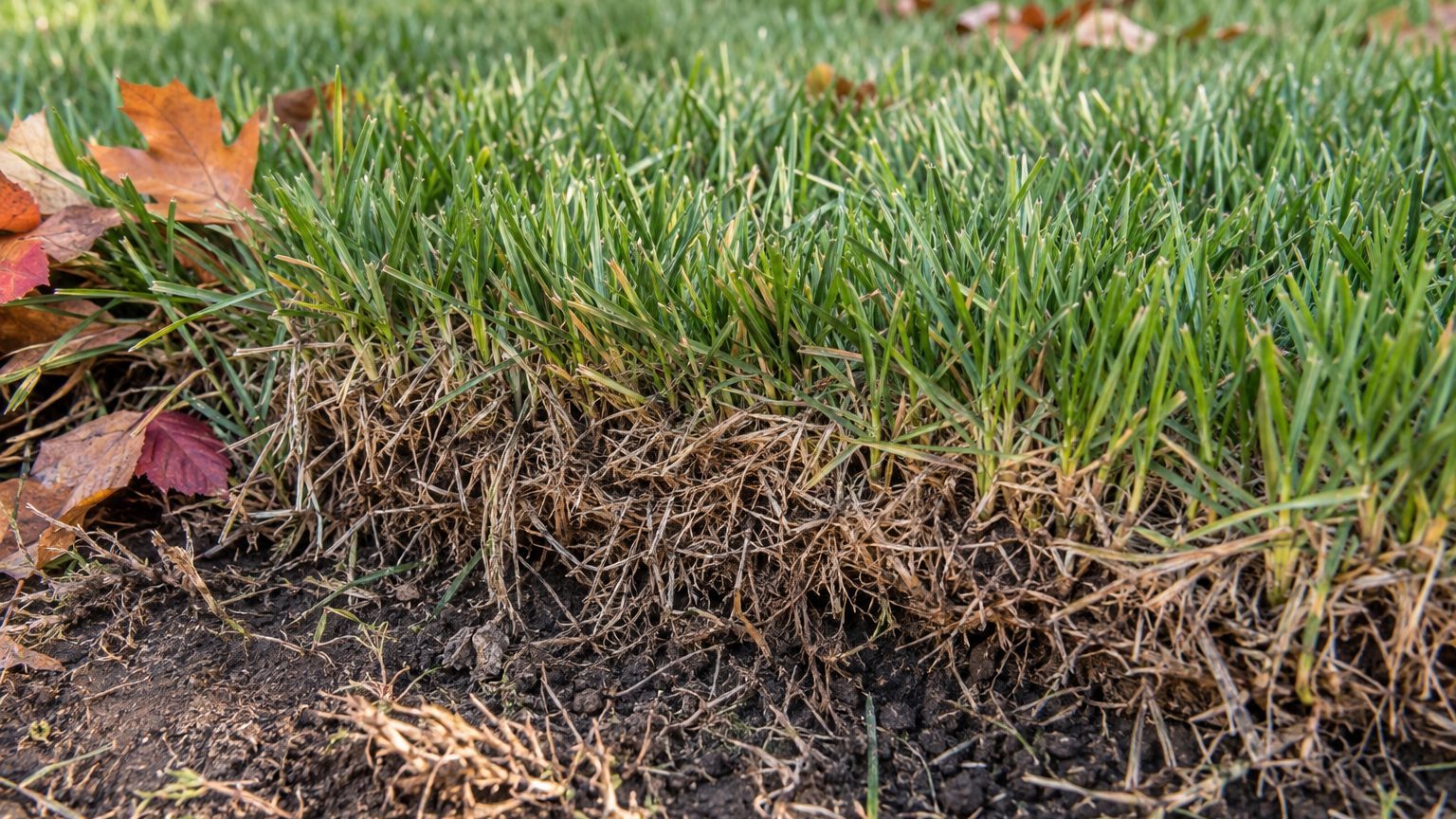
  • A tan to brown, fibrous mat sits between the green blades and the soil, made of dead stems rather than roots.
  • The lawn feels bouncy or spongy when you walk across it, as if a thin cushion lay under the grass.
  • A wedge cut 2 inches into the soil shows a mat thicker than 1/2 inch, which is the point where thatch stops helping the lawn.
  • Grass crowns and roots sit up in the mat instead of down in the soil, so the turf pulls up easily in patches.
  • Mowing scalps high spots, because the mower wheels ride on the cushion and the blades cut too low.

A layer up to 1/2 inch thick is healthy, since it holds moisture and steadies soil temperature.

Problems Mistaken for Thatch

Brown, spongy turf has other causes, and treating the wrong one wastes time and effort. Match what you see with a simple wedge test instead of guessing.

Dig up a small wedge before you rent any equipment. The wedge can quickly separate thatch from its look-alikes.

Looks like How to tell them apart
Drought stress, with tan, dry turf Soil under the grass is dry and hard, and the wedge shows a mat under 1/2 inch; the grass greens up after a deep soaking
Compacted soil, with thin, weak turf A screwdriver or spade resists going in, especially along paths and play areas, and the wedge shows little mat above the soil
Soft, wet ground, with a squishy feel Water pools or the soil stays soggy after rain, and the squish comes from the soil rather than a fibrous layer above it

Compaction can also work alongside thatch, since compacted soil is one of the conditions that favors it. A thick mat with hard soil underneath means thatch and compaction may be present together.

What Causes Thatch

Thatch builds when grass produces dead material faster than the soil can break it down. The layer is made of dead stems along with clippings and older plant material that naturally falls off the grass. Some lawns are more prone to thatch than others.

Grass type matters a great deal. Hybrid bermudagrass and Kentucky bluegrass build heavy thatch, and zoysiagrass builds it because its fibrous tissue breaks down slowly. Lawns with these grasses deserve regular checks for thatch.

Lawn care habits add to the problem. Excessive nitrogen fertilizer or overwatering often contributes, because both push the grass to grow excessively fast. Soil conditions play a part too:

  • heavy, wet soils
  • alkaline, or high pH, soils
  • compacted soil

Clippings from regular mowing are not usually the culprit. According to University of Illinois Extension, clippings are very high in water content and break down rapidly when returned to the lawn, as long as the lawn is mowed on a regular basis and no more than one-third of the leaf blade is removed.

How to Fix Thatch

Work in this order, and match the timing to your grass type so the lawn can recover quickly.

  1. Measure the mat first by cutting a wedge 2 inches into the soil, so you know whether it is over 1/2 inch and needs treatment at all.
  2. Dethatch at the right time for your grass: cool-season lawns in late summer or early fall, and warm-season lawns in spring after green-up or in early summer, when the turf is growing hard enough to fill in.
  3. Pull the mat out with a dethatcher or vertical mower, then rake up the debris so it does not settle back onto the turf.
  4. Aerate afterward to open the soil, since in Illinois an average of 15 to 20 aeration holes per square foot is suggested.
  5. Topdress with a thin layer of compatible topsoil or compost, which in Illinois is advised at 1/8 to 1/4 inch, to feed the microbes that break down what remains.

Severe cases call for patience. According to Oklahoma State University Extension, moderate treatments over two or three years are favored rather than trying to remove everything in a single operation, which can leave the lawn thin and stressed. Your state extension office can confirm timing for your area.

How to Prevent Thatch

Prevention follows the mowing and growing season, and the habits are simple enough to build into a regular routine.

  • Avoid heavy nitrogen, since overfertilizing makes the grass grow faster than the soil can digest it.
  • Mow on a regular basis and take no more than one-third of the leaf blade, leaving the clippings to break down on the lawn.
  • Water only when the lawn needs it, because overwatering is a known contributor.
  • For a thatch-prone cool-season lawn such as Kentucky bluegrass, match aeration or topdressing to local conditions.
  • On warm-season lawns such as bermudagrass or zoysia, check the mat with a wedge in spring after green-up, then decide whether to dethatch.

In Illinois, thatch torn out with a dethatcher will most likely return unless the cause is corrected, so the habits matter more than the machine.

Common Questions

Is a Little Thatch Bad for a Lawn?

No. A layer up to 1/2 inch thick holds moisture and steadies soil temperature, so a thin mat is part of a healthy lawn. Trouble starts when it thickens beyond that.

Which Grasses Are Most Likely to Build Thatch?

Hybrid bermudagrass and Kentucky bluegrass build heavy thatch. Zoysiagrass builds it too, because its fibrous tissue breaks down slowly, so those lawns deserve a check with a wedge more often.

Can You Remove All the Thatch in One Go?

You can, but a severe layer may be easier on the lawn if you take it in stages. According to Oklahoma State University Extension, moderate treatments over two or three years are suggested over complete removal in a single operation.

Standing Water in the Yard: What It Means and What to Do

Standing Water in the Yard: What It Means and What to Do

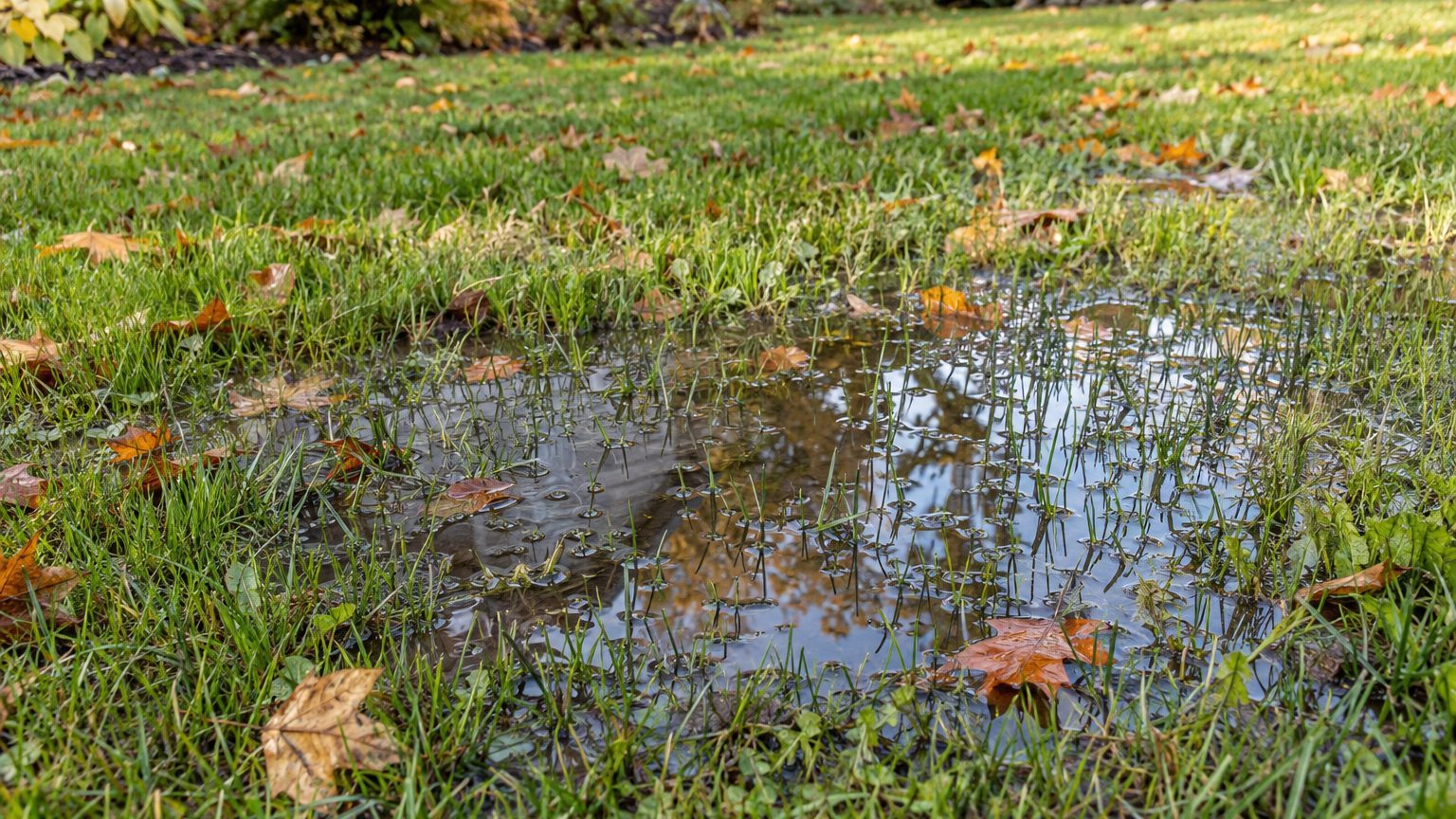
After a stretch of heavy rain, a low corner of the lawn can stay soggy and shiny long after the rest has drained. Standing water on the lawn is a sign that water has displaced air from the soil, limiting root growth. The damage shows up on its own schedule, so what you do afterward matters.

How to Recognize Standing Water

Standing Water in the Yard on a lawn

The injury is easy to confuse with other browning, so look for these signs together.

  • A raw, sewage-like smell rising from the turf or soil is the first warning, and it means the soil has lost its oxygen.
  • Dead brown areas appear a few days after the water recedes, not while it is still sitting there.
  • The brown patches sit in the dips and hollows where water gathered, with a fairly sharp edge against greener turf on higher ground.
  • The ground stays spongy underfoot and holds a footprint, which makes mowing a chore.
  • Prolonged rain can bring the same soggy conditions even when no flood ever reaches the yard.

Problems Mistaken for Standing Water

Brown turf has many causes, and a few of them look a lot like flood injury. Use the color, the patch’s location and a quick rake test together.

Looks like How to tell them apart
Drought dormancy: straw-colored turf that is dry and crisp Patches sit on sunny, high or sandy ground rather than in hollows, the soil is dry, and there is no sour smell. Lightly rake the brown area to see whether green crowns remain.
Silt smothering: grass buried under a layer of mud after a flood The brown area is covered with a visible crust of sediment, and the grass blades are flattened beneath it. Brush the layer aside and check for living turf below.

Lawn diseases can look similar because they spread in very moist weather and prey on stressed grass. They often move in after water damage rather than replacing it, so a lawn can have both problems at once.

What Causes Standing Water

Water fills the tiny air pockets between soil particles and pushes the oxygen out. Roots need that oxygen to grow, so excessive rainfall makes an unfavorable environment for them. Without it, roots stop growing, and in extreme cases toxic gases such as hydrogen sulfides and metallic sulfides can build up in the soil.

Weakened grass then becomes an easy target. Diseases that thrive in extremely moist conditions take advantage of the stressed plants, so the browning you see can come from the lack of oxygen, from disease, or from both.

This can happen in any lawn, anywhere it rains hard or floods. Low spots, compacted ground and soil that drains slowly make it more likely, because water has nowhere to go. Injured areas follow the outline of low flooded areas.

How to Fix Standing Water

Recovery starts once the ground is firm enough to walk on, and the order of the work matters.

  1. Rake the brown areas lightly, so you can see where living grass survived and where bare patches need help.
  2. Assess the silt before removing it, since deposits exceeding three inches will likely need professional removal.
  3. Feed the lawn to encourage recovery, remembering that in Georgia the suggestion is one-half pound of nitrogen per 1,000 square feet.
  4. Seed the bare spots and cover the seed lightly with topsoil, since in Illinois that gives good seed-soil contact on areas up to 200 square feet.
  5. Call 811 before you dig for a drainage fix, because in South Carolina the advice is to have utility lines marked first.

Grass often fills in more than you expect. If 40 percent to 50 percent of the area has healthy grass, there is probably enough left to grow in the rest. According to University of Georgia Extension, if more than 60 percent is lost, the advice is to consider sod, seed, plugs or a planted cover to restore the lawn. Your state’s extension office can tell you which grass and timing suit your area.

How to Prevent Standing Water

Prevention follows the seasons, and most of it is about spotting wet ground early and keeping the lawn strong.

  • After a hard rain, note low spots where water lingers before planning a drainage fix.
  • Mow only when the soil is firm, since heavy equipment on saturated ground leaves ruts and compacts the surface.
  • In Georgia, turf-type tall fescue seeded at five pounds to six pounds per 1,000 square feet in September may survive.
  • In Georgia, you can establish a temporary cover with ryegrass or tall fescue from mid-September through early November.
  • Keep leaves out of low spots and drains so water can leave.

After a big storm, check the dips again to see where water still lingers.

Common Questions

How Long Can Grass Stay Underwater Before It Dies?

The longer turf stays underwater, the less likely it is to recover because of the prolonged lack of oxygen and light. Shorter spells give the grass a much better chance.

How Long Does a Flooded Lawn Take to Recover?

According to University of Illinois Extension, satisfactory recovery of a home lawn can take two years. Expect patchy turf for a while, and keep up with feeding and seeding rather than giving up early.

When Should You Hire a Professional to Remove Silt?

Silt deposits exceeding three inches will likely need to be removed by a professional.

Slime Mold on Grass: What It Means and What to Do

Slime Mold on Grass: What It Means and What to Do

A yellow, scrambled-egg-looking smear or a patch of gray dust on the grass after several days of gloomy, wet weather can be alarming, but it is rarely harmful. Slime mold sits on top of the turf rather than feeding on it, and it usually clears without any treatment.

How to Recognize Slime Mold

Slime Mold on Grass on a lawn

The look changes as the organism matures, so what you see depends on the stage, and these are the signs to check, starting with the one that sets it apart from lawn diseases.

  • The grass blades show no disease symptoms, because slime mold does not infect plants and simply rests on them.
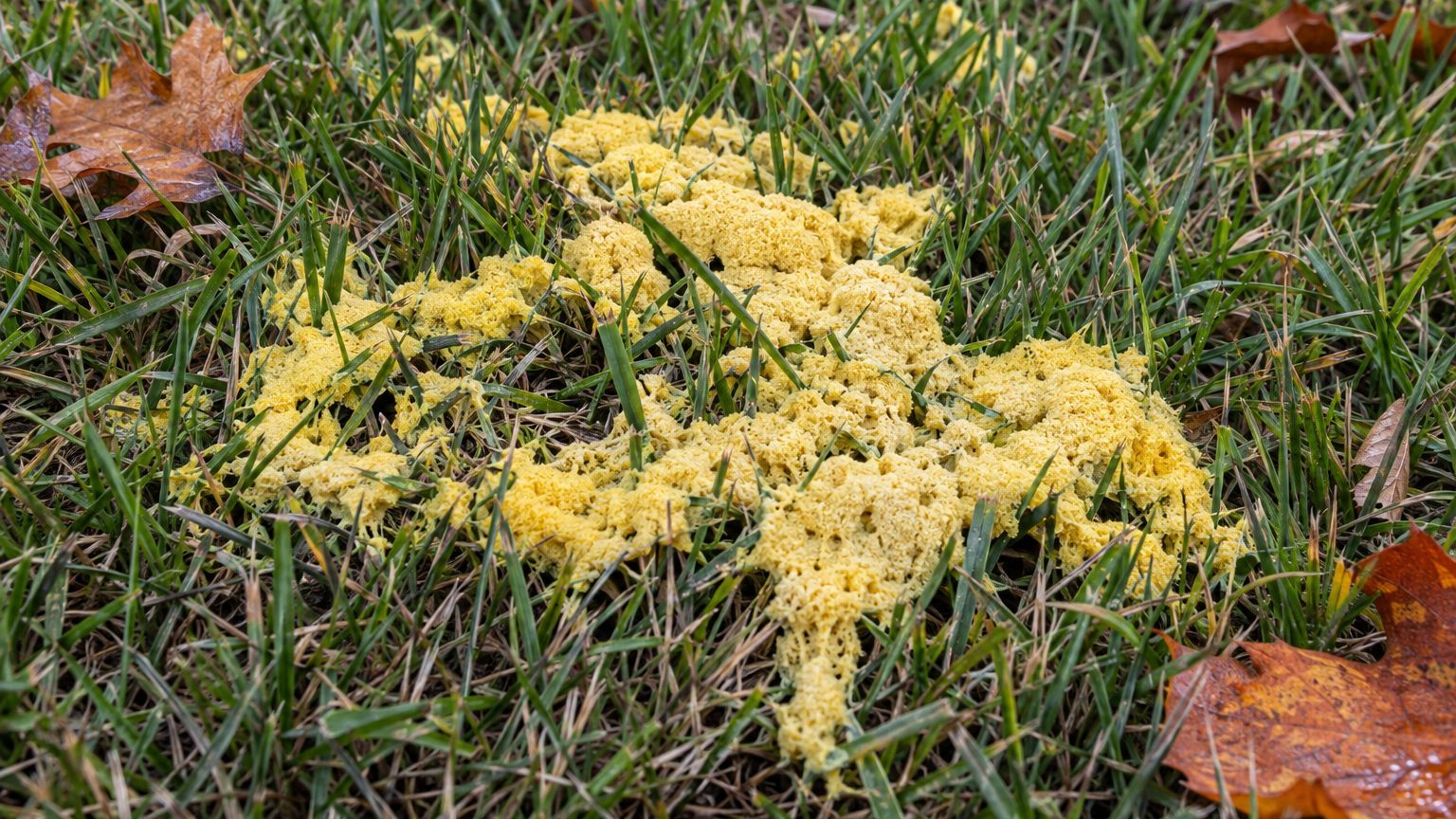
  • Small round pustules sit on the leaves in circular to irregular patches usually 4 to 8 inches in diameter.
  • Early on, the common species forms a yellow, gooey mass that can look like vomit and creeps slowly across the surface, especially at night.
  • Later the mass dries and crusts over on the lawn surface.
  • The dried crust releases dusty masses of spores that rub off on your shoes or mower.
  • The patches may return to the same part of the lawn from year to year.

Late spring and summer are when this tends to happen, usually after cloudy, damp stretches.

Problems Mistaken for Slime Mold

Several things leave a powdery or discolored film on grass, and a quick look at the blades themselves sorts most of them out. Slime mold wipes off and leaves healthy tissue underneath.

Check where the patch sits and whether the leaf tissue beneath is damaged, because no clue should be read alone.

Looks like How to tell them apart
Powdery mildew White to gray coating that stays on the leaf and is most common in shaded, humid spots, while slime mold wipes off and leaves clean blades.
Leaf spot or other turf disease Blades show lesions, yellowing or thinning that persist and spread, while slime mold leaves foliage symptom-free.
Mushrooms or other fungal growth Firm caps or stalks grow from the soil or thatch, while slime mold forms a flat, gooey or dusty film on the blades.

Dog waste or spilled material can also leave a smear, but it will not form in a rounded patch that dries to spores and then vanishes.

What Causes Slime Mold

Slime molds are not true fungi but primitive organisms that thrive in similar damp environments. They sometimes turn up in lawns, though they are more common on mulch in landscaped beds, so a patch near a mulched border is no surprise.

Moisture is the trigger. Slime molds are most prevalent after prolonged periods of leaf wetness, and they appear most often during several days of cloudy, wet weather, usually in late spring and summer. Nothing about this is tied to one region, so any lawn with a stretch of gray, damp days can see it.

Some spots invite it more than others. In Alabama, slime molds may be more common on heavily thatched or poorly drained portions of a lawn.

How to Fix Slime Mold

Because the organism sits on the surface, removal is simple and a bit forgiving. According to Alabama Cooperative Extension System, the pustules typically disappear after 2 to 3 days, so treatment is not needed.

  1. Wait and watch first, since the crust or fruiting bodies disintegrate on their own and leave no trace.
  2. Mow the area if the dusty crust bothers you, because mowing is an effective way to destroy the crusty fruiting bodies.
  3. Rake lightly to break up the mass and lift it off the blades, taking care not to tear the grass.
  4. Spray the patch with a stream of water from a hose, which in California is a recommended way to wash the mold off.

Left undisturbed, slime mold usually disappears in a week or so in California. Thick growth can shade and suffocate the grass underneath, which is why it is worth removing sooner.

How to Prevent Slime Mold

You cannot stop gray, wet weather, but you can make the lawn a less welcoming surface for these organisms.

  • Address heavy thatch so the turf can dry faster after rain.
  • In Alabama, renovating low spots and poorly drained areas may reduce how often slime mold appears.
  • In Alabama, selective pruning of overhead trees to increase sunlight may help reduce how often and how badly slime molds appear.
  • During cloudy, wet spells in late spring and summer, mow when the grass is dry and rake off any patches you spot early.
  • Keep mulch from creeping up against the lawn edge, because slime molds are more common on mulch than on lawns.

A patch that keeps returning to the same corner is a hint that moisture lingers there, so that spot deserves the most attention.

Common Questions

Is Slime Mold Harmful to Dogs or Kids?

Slime mold does not infect plants, but that does not establish whether it is safe for people or pets. Rinsing the area with a hose or raking it away keeps things tidy. If a pet eats a large amount and seems unwell, call your veterinarian.

Will Slime Mold Kill My Grass?

Usually not, since it does not feed on the blades. The one risk is heavy coverage that shades and suffocates the turf beneath it, which is why removing thick patches helps.

Why Does Slime Mold Keep Coming Back in the Same Spot?

Patches often reappear in the same area from year to year. Thatch buildup, poor drainage, and shade from trees may make slime mold more likely, so improving those conditions matters more than removing each outbreak. Your state extension office can suggest local steps.

The almanac, state by state. Every date on this site comes from a state’s own frost facts and its extension service’s calendar — and says where it comes from.