Skip to content

Scalped Lawn: What It Means and What to Do

Scalped Lawn: What It Means and What to Do

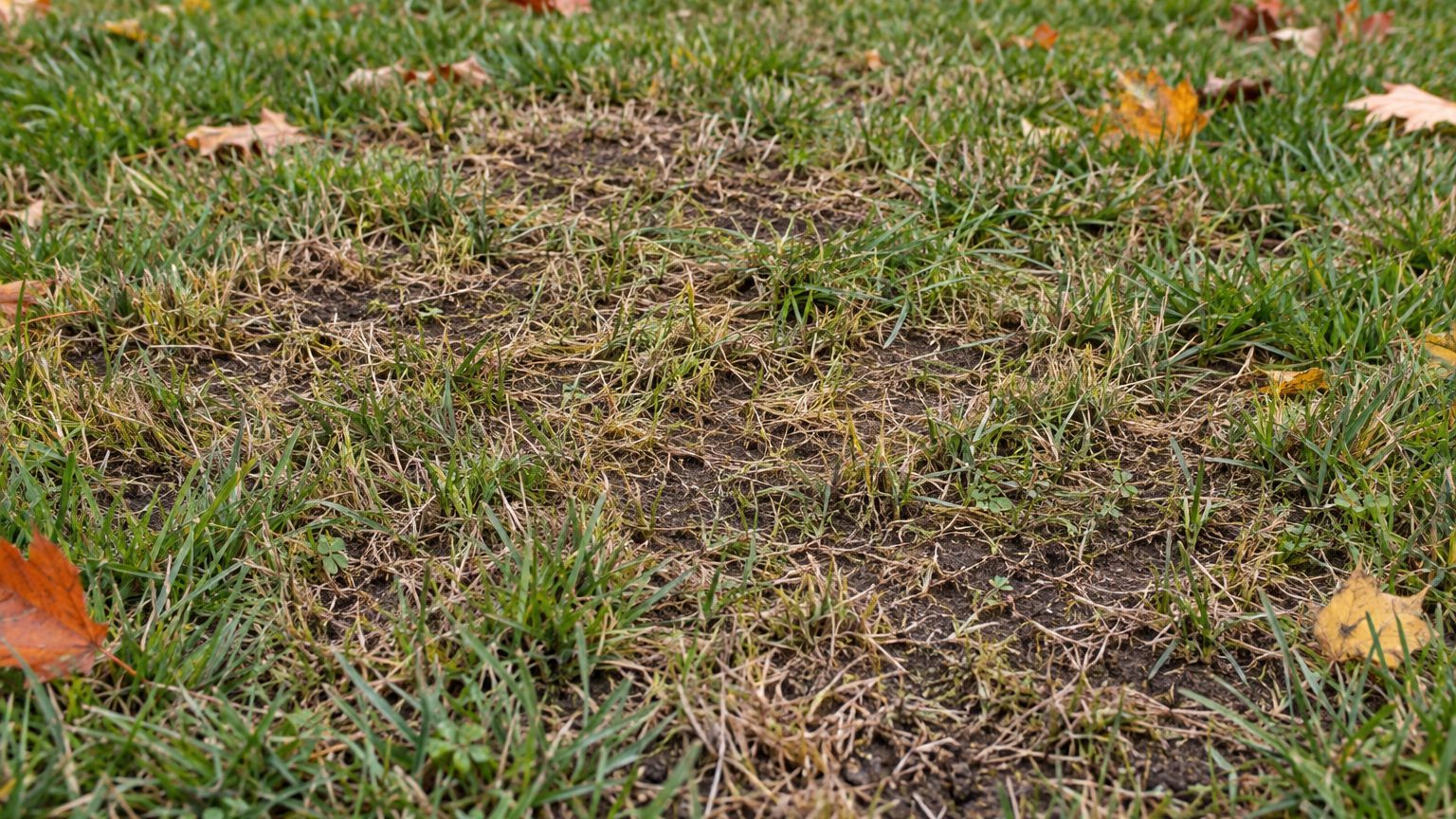
A scalped lawn is one that was mowed so low the green leaf is gone and the brown, stemmy base shows through. It usually follows a single pass with the deck set too low, or a mow that waited too long. The lawn rarely dies from it, and how fast it bounces back depends on the grass you grow.

How to Recognize a Scalped Lawn

Scalped Lawn on a lawn

Start with the color and texture of the cut itself, since the damage shows up right after mowing, in any growing season.

  • The canopy looks brown and stemmy, because too much of the leaf blade came off in one mowing.
  • The stems are exposed at the surface, so the turf looks bare and wiry instead of green and soft.
  • Damaged patches turn yellow or brown, often in the shape of a hill crest, a mower wheel track or a low spot.
  • On bermudagrass cut too low and too seldom, the shoots and leaves are often yellow.
  • The pattern follows the mower, with streaks or blotches where the deck dipped, rather than spreading outward over time.

Green leaf left standing between the brown streaks is a good sign, since it means the plant still has something to photosynthesize with.

Problems Mistaken for a Scalped Lawn

Brown turf has plenty of causes, and some look a lot like a bad mow. The quickest way to tell is to ask whether the damage lines up with where the mower went.

Check the mower itself too. Set it on a hard, flat surface and measure from the surface to the cutting edge of the blade, and you will know whether the deck was really set where you thought.

Looks like How to tell them apart
Drought stress Grass looks dull and grayish, and footprints stay pressed in, across the whole lawn rather than only on mower passes. Leaf blades are still there.
Dull blades or tearing Leaf tips look frayed and tan right after mowing, evenly across the lawn. Stems are not exposed, and the soil is not showing.
Thatch buildup The turf feels spongy underfoot and a brown layer sits between green blades and soil. It shows up in patches that do not follow mower tracks.

Thick thatch and very weedy turf can make scalping more likely, so these problems sometimes show up together. Sort out which one you have before you treat anything.

What Causes a Scalped Lawn

Scalping is usually caused by the mower or the mowing schedule. Equipment trouble, dull blades, blades that are not turning properly, or letting the grass grow too long between mowings will all strip too much leaf in one pass.

The ground matters too. Mowing on hills or uneven surfaces, especially where a wheel drops into a low spot, lets the deck dig into the high ground and shave it to the stems.

This can happen in any region and with any turf. Thick thatch layers and extremely weedy turf also add to the risk, since they raise the surface the blades meet. Grass left to get tall is a common trigger, because cutting it back in a single mowing leaves little green behind.

How to Fix a Scalped Lawn

Most scalped lawns need patience more than repair, and the order below keeps the grass from taking a second hit.

  1. Raise the mower to its highest setting, so the leaf that remains can feed the plant while it recovers.
  2. Check the blade and the deck, and sharpen or fix whatever is dull or not turning properly, so the same damage does not repeat.
  3. Mow at the recommended height for your turf species and never remove more than 1/3 of the leaf blade at each mowing, as advised in California.
  4. Dethatch if the thatch layer is more than 1/2 inch thick, as California guidance puts it, because a deep mat keeps raising the surface the mower catches.
  5. If the turf has grown excessively tall, take a different route. According to Kansas State University Extension, spend the next three or four mowings slowly bringing it down, starting with the mower as high as it can go and mowing every few days.
  6. Wait and let the grass fill back in on its own.

How long that wait lasts depends on the grass. Bermudagrass and other creeping types will generally outgrow scalping injury with proper care (California), and in Arizona bermudagrass bounces back quickly. Cool-season grasses grow slowly in summer, so full recovery takes probably several weeks.

How to Prevent a Scalped Lawn

Prevention comes down to mower height, mowing frequency and a quick look at the lawn before mowing begins.

  • Before mowing, sharpen the blade, check that it turns properly and measure the cutting height on a hard, flat surface.
  • Keep cool-season lawns between 2 and 3 inches, which is where most of them perform best.
  • Through the growing season, mow often enough to follow the 1/3 rule. For Kentucky bluegrass that means mowing when the turf reaches 3 inches.
  • If the lawn already shows scalping, raise the deck and mow frequently enough at the raised height to stop further damage.
  • Before each mowing on slopes and uneven ground, walk the lawn and note the humps and dips, then raise the deck or change your path around them.

Common Questions

Will a Scalped Lawn Grow Back?

Usually yes, because the crowns and roots are still alive. Creeping grasses such as bermudagrass fill in sooner, while cool-season lawns take longer, especially in summer heat.

Can You Scalp a Lawn on Purpose?

Intentional scalping depends on the grass and local conditions. Before scalping intentionally, confirm the timing with your state extension office.

Should You Fertilize a Scalped Lawn Right Away?

Recovery depends mostly on leaf area, water and the right mowing height.
Mushrooms in the Lawn: What It Means and What to Do

Mushrooms in the Lawn: What It Means and What to Do

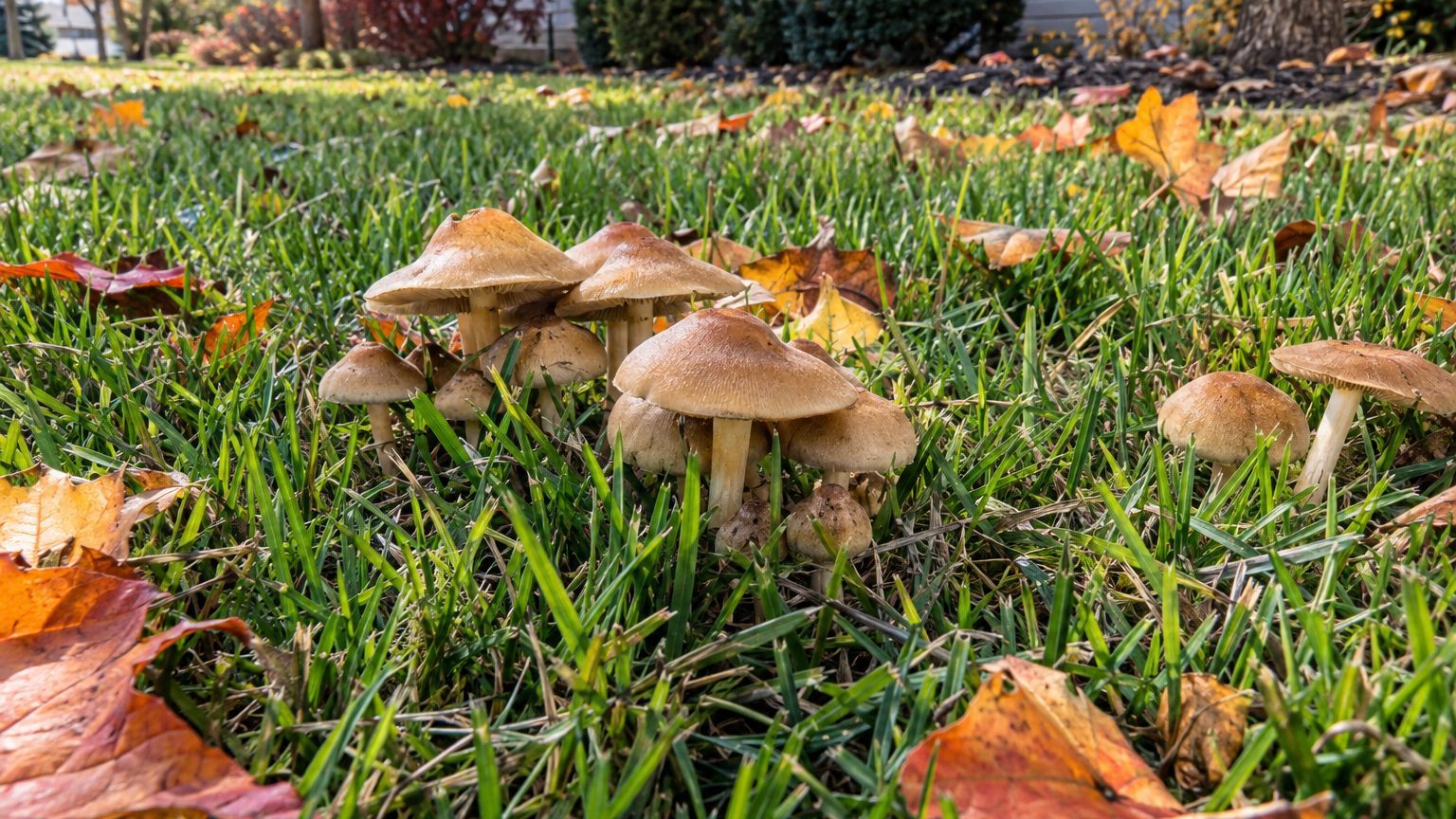
Pale caps pushing up through the grass after a stretch of wet weather are one of the more surprising sights in a lawn. Mushrooms are the fruiting part of a fungus living in the soil, and they rarely hurt the grass itself. The real question is what the fungus is feeding on, and whether anything needs to change.

How to Recognize Lawn Mushrooms

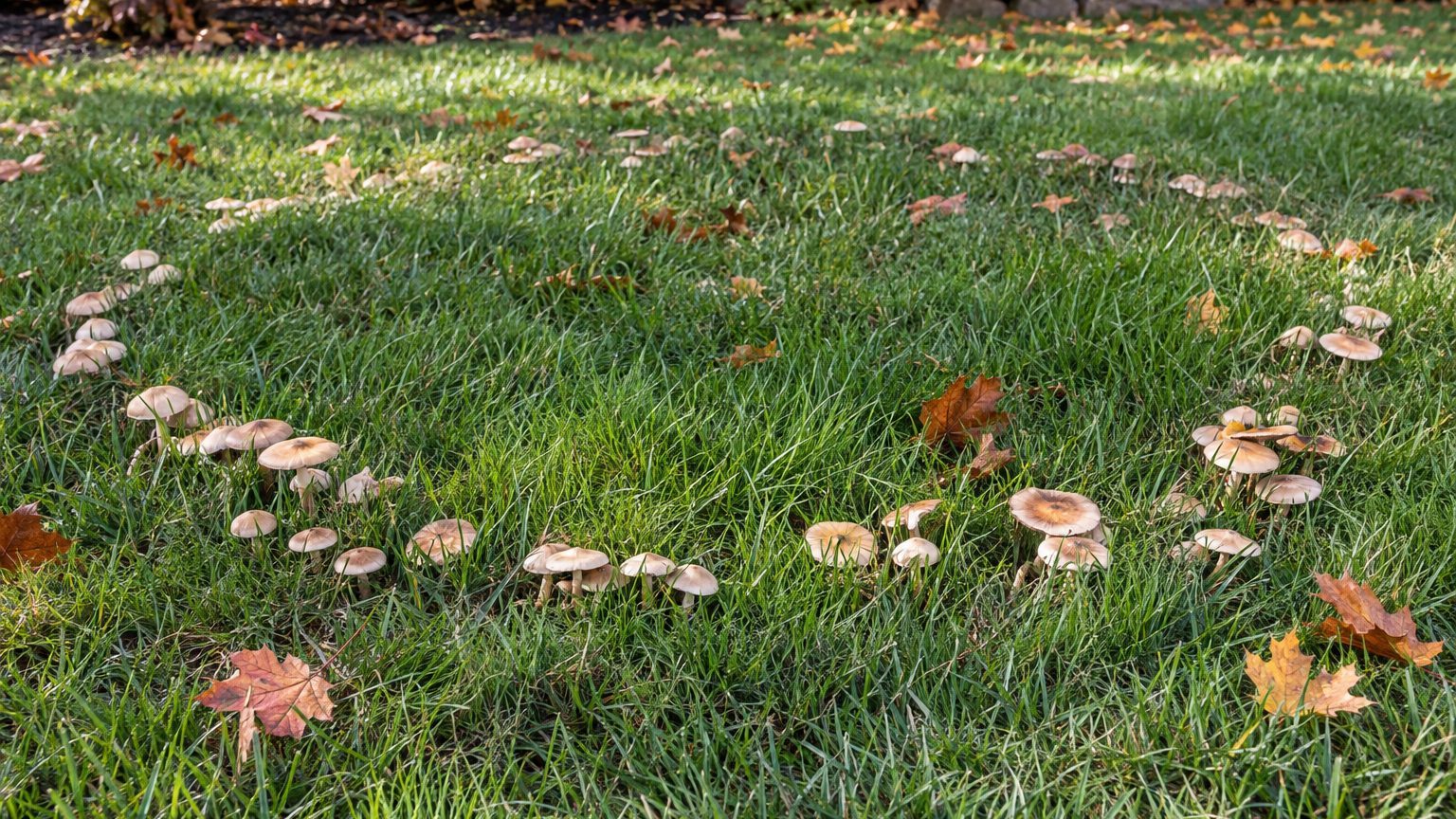
Mushrooms in the Lawn on a lawn

Look for the feature that sets them apart: a cap on a stalk, or a round puffball, appearing on bare-looking turf rather than growing from a grass blade.

  • The fruiting body is short-lived, so it may stand firm in the morning and be collapsed or gone a little later.
  • Shape, size and color vary from one fungus to another, from tiny tan caps to large white balls.
  • Mushrooms often cluster over a buried spot, such as old wood or a dead root, rather than spreading evenly across the yard.
  • They tend to show up after wet weather, when the soil stays damp.
  • Some grow in a circle or arc, and fairy rings can be 1 to 12 or more feet in diameter, with or without mushrooms present.

Puffballs and mushrooms both count as nuisance fungi in turf, and neither means the grass is dying.

Problems Mistaken for Lawn Mushrooms

Not every odd growth on the lawn is a mushroom. A few other things look similar from across the yard, but each gives itself away when you check where it sits and how it behaves.

Fairy rings can include mushrooms, so look at the surrounding grass before deciding what you are seeing.

Looks like How to tell them apart
Slime mold A crust or smear on blades, not a cap on a stalk, that fades when left alone and can leave shaded, smothered grass underneath.
Fairy ring A ring or arc of dark or dead grass that widens slowly, whether or not caps appear; the diameter tends to run 1 to 20 feet.
Puffball A round, stalkless ball sitting on the turf that turns powdery inside as it ages, not a flat cap on a stem.

Fairy rings are sorted into type 1, 2 or 3 by how much the fungus affects the grass, and a ring can expand about 3 to 19 inches per year. A mushroom-free ring is still a ring, so look at the grass pattern too.

What Causes Lawn Mushrooms

The cause is food in the soil. Mushrooms in lawns often grow from buried wood or dead plant roots, and the fungus lives quietly underground until moisture pushes up the fruiting bodies.

Typical hidden sources include scraps of construction lumber left under the sod, old tree roots from a removed tree, and other organic matter. New housing lots and yards where a stump was ground out are common spots.

Wet conditions finish the job. Mushrooms in lawns are commonly tied to overirrigation or poor drainage, so a low corner that stays soggy or a sprinkler zone that runs long will often produce a crop. In Maryland, mushrooms tend to appear after wet weather.

How to Fix Lawn Mushrooms

You can’t pull a fungus out of the ground, but you can clear the fruiting bodies and make the soil less inviting.

  1. Pick and bag mushrooms where children or pets might reach them; mowing removes the caps but leaves the fungus in the soil.
  2. Cut back on watering, because in California the mushrooms don’t harm the lawn and will disappear when irrigation is reduced.
  3. In California, core-aerate the area, removing plugs at least 1/4 to 1 inch in diameter and slightly deeper than the fungal mat, so water and air move in more freely.
  4. Apply nitrogen fertilizer where the mushrooms grow from organic matter, since in California 1 pound of actual nitrogen per 1,000 square feet can hasten decomposition of the buried material.
  5. Dig out the source if you find it, such as buried lumber or a dead root, and fill the hole with clean soil and fresh sod.

For a fairy ring where you want it gone completely, California guidance is to remove soil and sod to at least a depth of 1 foot and 18 inches beyond the outside edge of the ring. Begin 2 feet outside the margin and work inward so no fungus is left behind. Your state’s extension office can tell you what treatments are approved locally.

How to Prevent Lawn Mushrooms

Prevention follows the wet and dry seasons, because moisture is the trigger. Good habits through the year keep the buried food source from turning into a flush of caps.

  • In California, dethatch if the layer is thick and aerate compacted areas; removing excess thatch and improving water penetration can help in some cases.
  • Once the grass is growing actively, water deeply and less often, and check that sprinklers are not soaking one low corner.
  • In Maryland, avoid over-fertilizing and unnecessary pesticide use, which may harm beneficial mycorrhizal fungi.
  • Fix any spot that holds water after rain by regrading or aerating it.
  • After removing a tree or building anything in the yard, pick buried wood and roots out of the soil before laying sod.

Even with all of this, a wet stretch can still bring mushrooms, and in Maryland they tend to appear after wet weather and disappear on their own in time.

Common Questions

Are Lawn Mushrooms Poisonous to Dogs and Children?

Some wild mushrooms are toxic and you can’t tell safe from unsafe by looking. Remove them promptly, keep pets and children away, and call a vet or poison control if something was eaten.

Will Mowing Over Mushrooms Get Rid of Them?

Mowing knocks the caps down for now, but the fungus stays in the soil. Bag the pieces when you mow, then deal with moisture and buried organic matter to stop a repeat.

Do Mushrooms Mean the Lawn Is Unhealthy?

Not by themselves. They usually point to decaying material below the surface or soil that stays damp, and the turf around them can look perfectly fine.

Mole Tunnels in the Yard: What It Means and What to Do

Mole Tunnels in the Yard: What It Means and What to Do

Raised, winding ridges across the grass and the occasional cone of loose soil mean a mole is working underneath. The lawn looks rough, but the animal is after food in the soil, not your grass. Knowing what the tunnels are, and what they are not, tells you how much to worry and what to do first.

How to Recognize Mole Tunnels

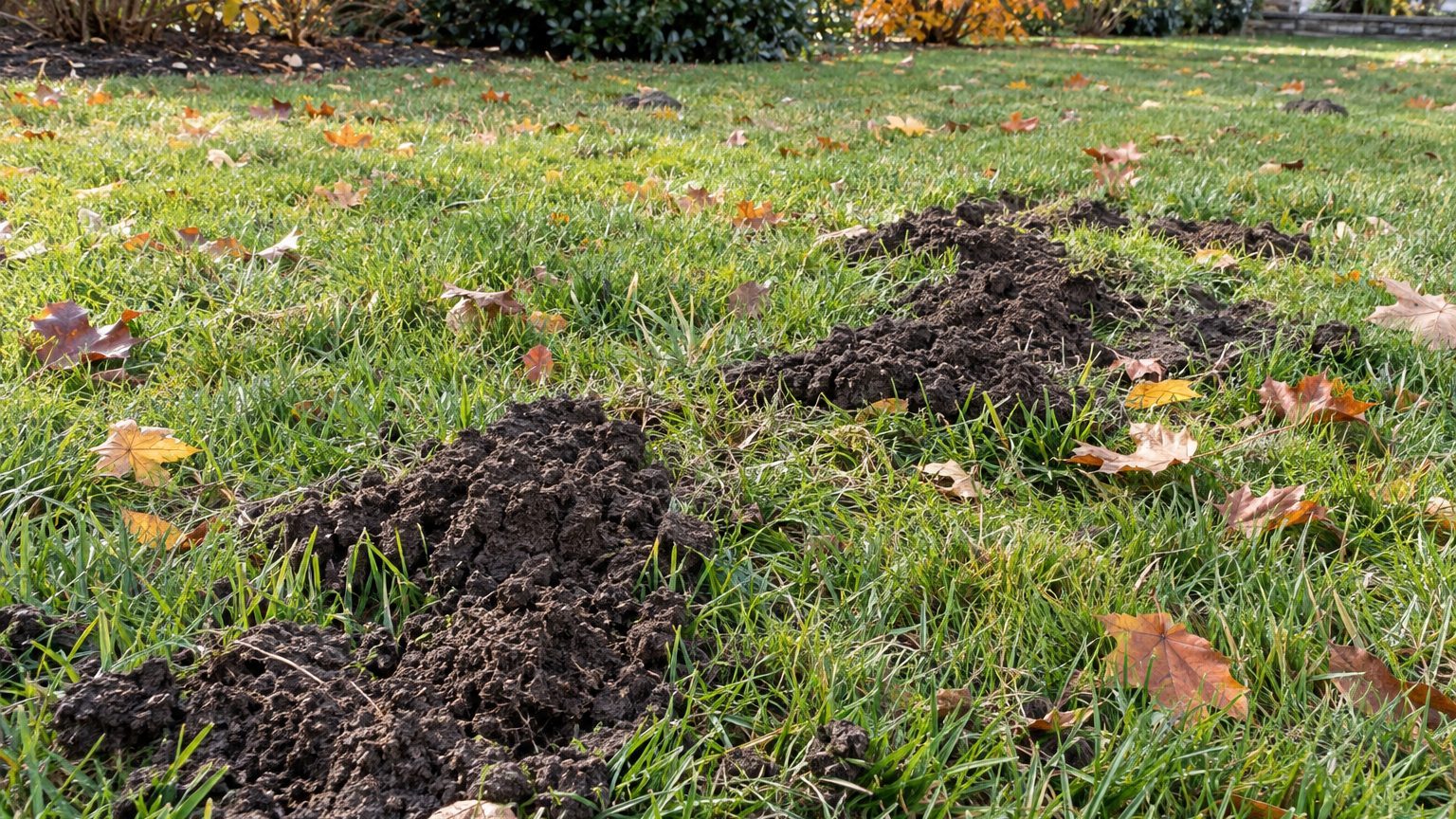
Mole Tunnels in the Yard on a lawn

Mole activity leaves a few signs that are easy to read once you know what to look for.

  • Raised ridges push up the sod and seem to wander aimlessly across the lawn, which is the surface feeding tunnel and the sign that sets a mole apart.
  • Volcano-shaped mounds of loose soil sit on top of the grass, pushed up from deep tunnels below.
  • The sod feels spongy or hollow underfoot where a run lies just beneath it.
  • New ridges can appear fast, since a mole can dig surface runs at 1 to 3 ft. per minute.
  • Tunnels also show up in shrub beds, not only in turf.

Ridges and mounds often turn up together, and the pattern tends to follow wherever the soil is easiest to dig.

Problems Mistaken for Mole Tunnels

Voles also leave trails in a lawn, and so do other burrowing animals. Each leaves a different mark, so look at the shape of the damage and then check the opening or the soil.

To check whether a ridge is active, press it down and see whether it gets pushed back up.

Looks like How to tell them apart
Mole ridges Raised, wandering ridges of lifted sod with no open hole, often with volcano-shaped mounds nearby. Pressed-down ridges get rebuilt.
Vole runways Open surface trails and small holes in the grass, with no soil mounds. In South Carolina, a wire fence with a mesh of ¼ inch or smaller helps keep voles out.
Mounded soil from other burrowers An open burrow with soil fanned to one side, rather than a cone of soil with no visible hole.

If you see open holes and bare trails but no raised ridges, voles are the likelier cause, and the fix differs from what works on moles.

What Causes Mole Tunnels

Moles dig tunnels through the soil for burrows and for feeding. The shallow runs that lift your sod are feeding tunnels, made while the animal hunts for food, and the soil from deeper tunnels gets pushed up to the surface as mounds.

The eastern mole, Scalopus aquaticus, is the mole you will most often meet in Iowa lawns. It is 4 to 7 inches long, with paddle-shaped feet and prominent digging claws that make quick work of loose ground.

Away from the surface, moles spend the rest of the year in deep tunnels 6 to 24 inches under the lawn. That is why damage can seem to stop and then start again: the animal moves between deep and shallow runs.

How to Fix Mole Tunnels

Trapping is the usual way to stop an active mole, and repairing the turf comes after the animal is gone.

  1. Walk the lawn and find the main runways, since a trap only works where a mole travels regularly.
  2. Set several traps unless activity is very light, because in New Jersey, 3 to 5 traps per acre (7 to 12 per hectare) give better and faster control.
  3. Check each trap daily so a catch is found quickly.
  4. Move a trap to a different part of the main runway system if it has not caught a mole in 3 to 4 days, since the animal may be using another stretch of tunnel.
  5. Press the raised ridges back down once the activity stops, so the roots touch the soil again.
  6. Reseed or patch any bare spots left behind, so weeds do not move in.

Repellents are sold for moles, and in South Carolina a castor oil treatment on the lawn repels moles and voles for about two weeks. Your state extension office can tell you which products and methods are allowed where you live.

How to Prevent Mole Tunnels

Prevention comes down to barriers and steady watching, and the timing follows the seasons.

  • Walk the lawn regularly and look for fresh ridges and mounds so you catch activity before the runs spread.
  • Before planting a bed you want to protect, build a barrier from 3′ (91.5 cm) width of galvanized hardware cloth or aluminum sheathing, as advised in New Jersey.
  • When you set that barrier in New Jersey, bury it 2′ (61 cm) deep, or 1.5′ in hard ground, with 6″ (15 cm) left above the ground.
  • Bend the bottom 3″ (7.5 cm) outward, which in New Jersey is advised to discourage moles from digging underneath.
  • Keep watching for new ridges.

Mole damage is usually temporary in Florida, so a lawn that gets caught early generally recovers once the animal is gone.

Common Questions

Do Moles Eat Grass Roots?

No. Moles dig through the soil in search of food, and the ridges and mounds are the unsightly result. Roots can still dry out where a tunnel leaves a gap beneath them, which is why pressing ridges back down helps.

Can You Just Flatten Mole Ridges?

You can, and it helps the grass reconnect with the soil, but the mole will rebuild if it is still active. When activity has stopped, flatten the ridges and repair any bare turf.

Will a Lawn Recover from Mole Damage?

Mole damage is generally temporary, and a lawn typically fills back in once the tunneling stops and any bare patches are reseeded.

Herbicide Damage: What It Means and What to Do

Herbicide Damage: What It Means and What to Do

A patch of lawn that curls, twists or browns in a streak after a weed treatment is usually herbicide damage, and it often looks worse before it looks better. Grass and nearby plants can recover or not, depending on how much product landed and how healthy they were to begin with.

How to Recognize Herbicide Damage

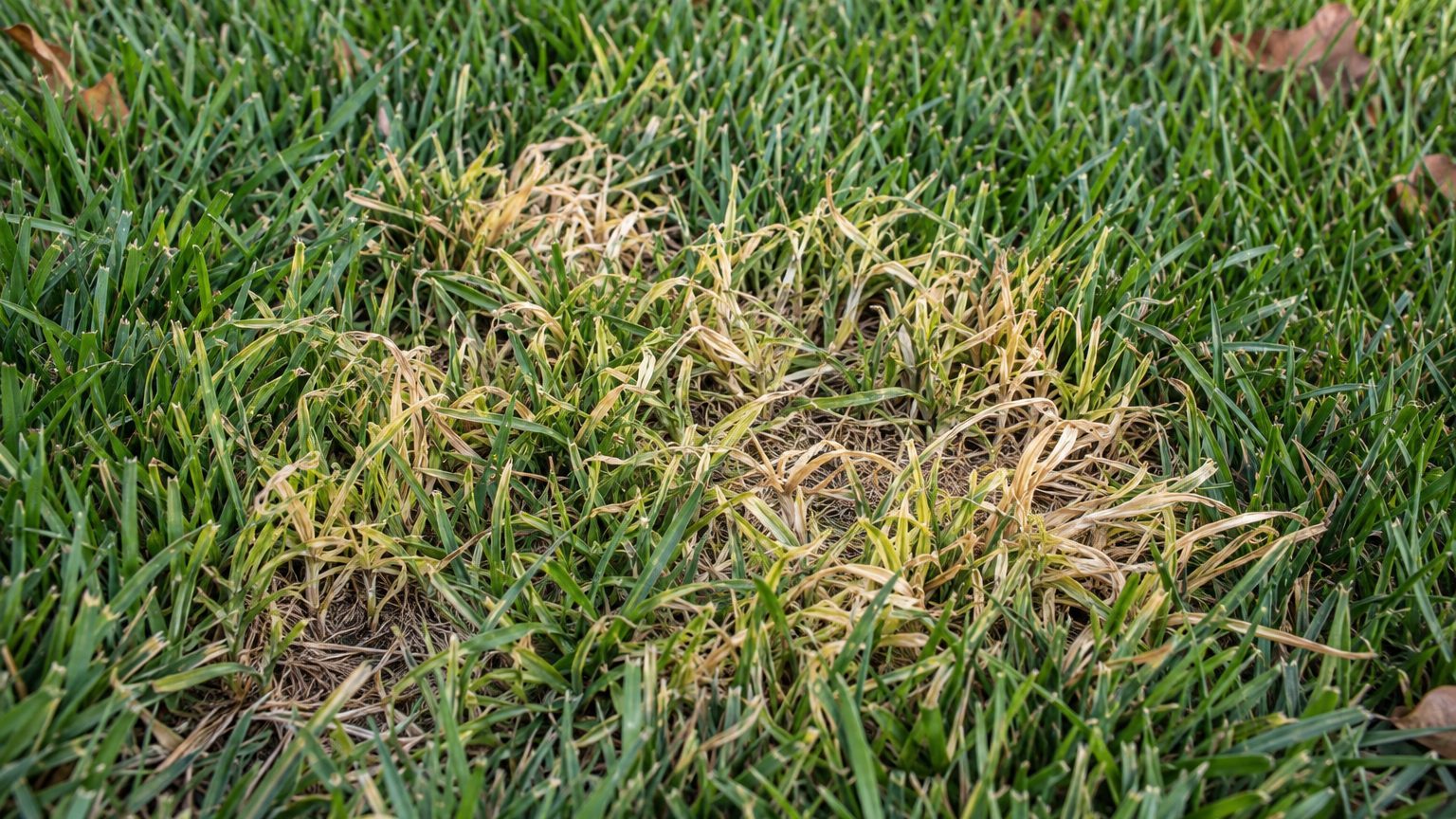
Herbicide Damage on a lawn

The clearest sign is a pattern of twisting and bending that shows up on neighboring plants.

  • Stems and leaf stalks look twisted or bent, and leaves may cup, which is typical of phenoxy-type injury.
  • Leaves and other green parts curl or distort instead of simply yellowing.
  • Neighboring plants show the same symptoms, because overspray or drift rarely touches just one plant.
  • Damage looks like what the product does to the weeds it was meant to kill.
  • In South Carolina, symptoms can take days to weeks to appear after an application.

Some plants shrug it off: new growth may come in clean, and long-term harm may never develop.

Problems Mistaken for Herbicide Damage

Drought, disease and insects can all leave a lawn looking scorched or distorted. The difference is usually in the pattern, so pair what you see with where it sits in the yard.

A lab test of leaves or stems will not settle it, since residue testing is rarely conclusive.

Looks like How to tell them apart
Drought stress Grass wilts and browns in the driest, sunniest spots and perks up after a deep watering. Herbicide injury shows twisting and curling and does not respond to water.
Disease Spots or rings with a defined edge appear on blades, often in humid weather. Herbicide damage may follow the path of a sprayer or wind drift and affect neighboring plants.
Insect feeding Turf pulls up easily and shows chewed or hollowed roots or blades. Herbicide injury often bends stems and leaves and may follow the path of a sprayer or drift.

Check the neighbors in the bed or along the fence line. Injury from drift hits a band of plants on the side facing the spray, while a pest or disease tends to be patchy.

What Causes Herbicide Damage

Herbicide damage can come from product landing where it was never aimed. Improper application and drift to desirable plants cause damage that looks like what the targeted weeds go through, and some landscape plants are more susceptible than others.

Contaminated material is the quieter route. Mulch, manure or compost can carry residues, and grass clippings from a treated lawn are a common example. Spreading them on a garden bed or around shrubs delivers the herbicide straight to the roots.

Conditions matter too. In South Carolina, skip spraying in excessive heat or high winds because these conditions increase off-target movement.

How to Fix Herbicide Damage

There is no quick reversal, so the fix is about protecting what is left and cleaning up the source.

  1. Stop the exposure by removing any contaminated mulch, compost or clippings, so no more residue reaches the roots.
  2. Check nearby plants for the same symptoms, so you know how far the damage reaches and where it came from.
  3. Give affected grass good care and wait to see how it responds.
  4. Skip rescue sprays and extra fertilizer because neither can reverse injury once it appears.
  5. Treat the soil only if the source is soil-active, since in Utah activated charcoal at 1 to 2 lbs. per 100 sq. ft. worked in to a depth of 6 inches inactivates or absorbs most soil-active products.

Recovery can be slow. In Utah, a plant that took a sub-lethal dose may show symptoms for several seasons before recovering; in South Carolina, light damage to healthy, well-established landscape plants may not kill them. If the damage is widespread or unclear, your state extension office can help you decide whether to reseed.

How to Prevent Herbicide Damage

Prevention follows the season: apply carefully, keep the lawn healthy and keep contaminated material out of beds.

  • In Iowa, read the label before any treatment and follow its application conditions carefully.
  • Once weeds start growing and you decide to spray, pick a calm day, since in South Carolina the guidance is to avoid winds above 10 mph.
  • In South Carolina, skip spraying on days over 90 °F; in Iowa, water the lawn through hot, dry stretches to keep stress low.
  • Whenever the soil tests low, fertilize as needed and watch for disease and insects, because in Iowa fewer stresses mean less injury from any exposure.
  • After each use, clean all equipment so leftover product does not contaminate the next job.
  • Before spreading clippings, compost or manure on beds, confirm they did not come from a treated lawn.

Treated clippings are best kept out of garden beds altogether.

Common Questions

Can You Test Grass or Leaves to Confirm Herbicide Damage?

Testing is rarely conclusive. Even a known concentration does not guide action, because the acceptable damage threshold is unknown for most garden plants. Comparing symptoms on neighboring plants is the more useful check.

Will a Lawn Recover from Herbicide Damage?

It depends on how severe the exposure was and how healthy the grass is. New growth may come in unaffected, and in Utah plants given a sub-lethal dose may show symptoms for several seasons before recovering.

Can You Use Treated Grass Clippings as Mulch?

Clippings from a treated lawn may carry herbicide residue and can injure plants in beds. Keep them out of gardens and around shrubs unless you know the lawn was untreated.

Grass Tips Turning White After Mowing: What It Means and What to Do

Grass Tips Turning White After Mowing: What It Means and What to Do

A freshly mowed lawn that looks pale, almost frosted at the tips, is telling you something about the mower. The grass may not be sick. The blade did not cut the leaf cleanly, and the torn ends dry out and fade to a washed-out color.

How to Recognize White Grass Tips

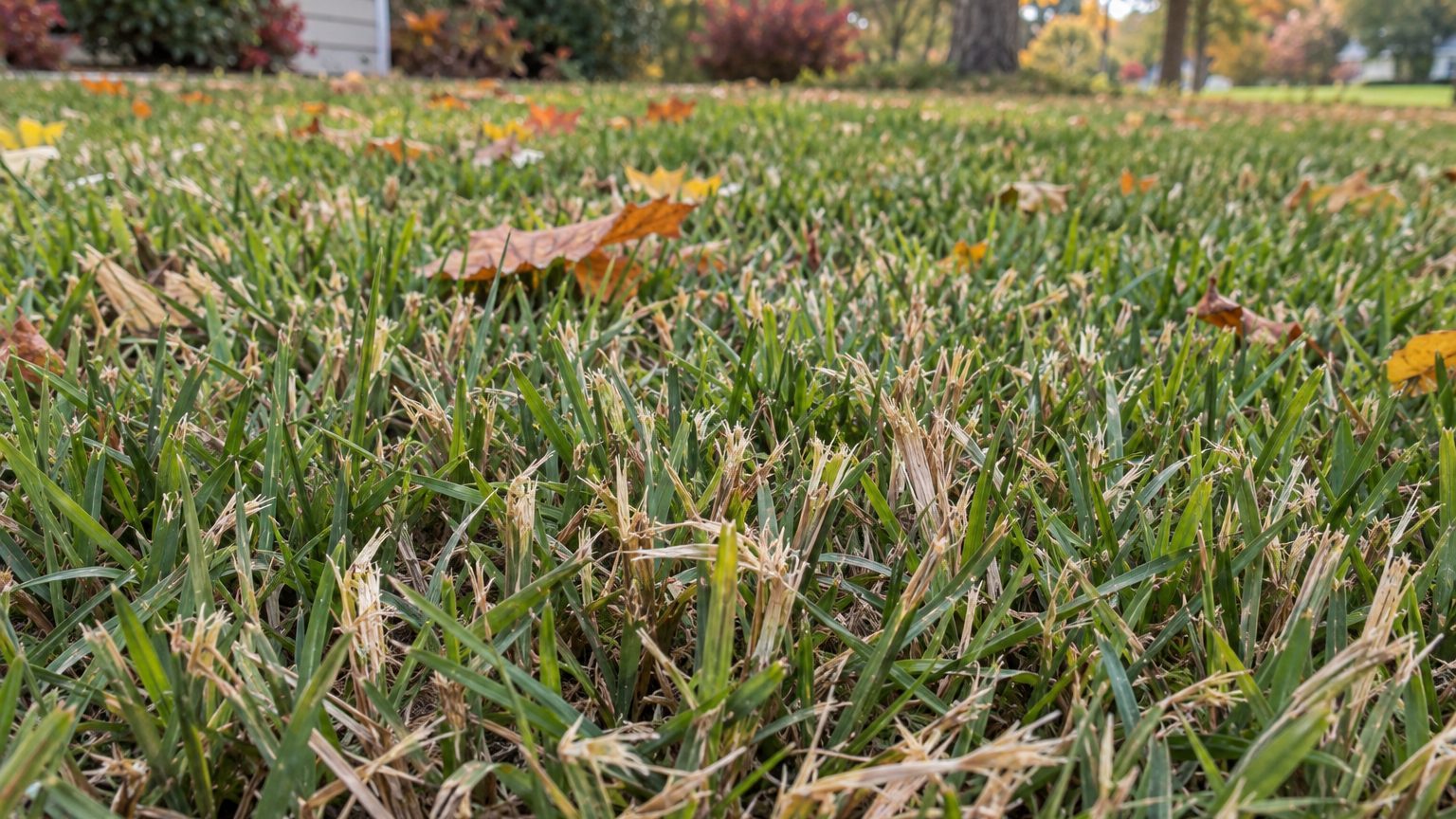
Grass Tips Turning White After Mowing: What It Means and What to Do

Crouch down and look at the ends of individual leaves in the cut area, because the clues sit right at the tips.

  • The leaf ends look torn, frayed or shredded instead of sliced straight across.
  • The lawn takes on a somewhat gray cast soon after mowing, which is easy to see when you look across the yard.
  • The damage stays at the tips while the rest of each blade is still green.
  • Over time the ragged ends turn yellow to brown and die back.
  • The pattern repeats in every strip you mow with the same blade rather than staying in an isolated patch.

Ragged brown tips are the classic signal that mower blades need sharpening, and they show up in any lawn, whatever the grass type.

Problems Mistaken for White Grass Tips

Pale grass after mowing does not always point to the blade. A leaf disease can bleach turf in a similar way, so inspect the whole leaf to distinguish the causes.

Checking the leaf from tip to base is the habit that matters, since a torn tip and a bleached blade call for different responses.

Looks like How to tell them apart
Ascochyta leaf blight The bleaching starts at the tip but can run down the whole blade, and the tip is not torn. Damage is seldom permanent, and the lawn recovers quickly in good growing weather.

A dry, stressed lawn can also look dull and pale, but it fades across entire leaves and whole areas rather than only at cut ends. If the cause stays unclear after you have checked the blade and the leaves, your state extension office can help identify what is going on in your turf.

What Causes White Grass Tips

Dull mower blades are the cause. Instead of slicing, a worn edge tears and shreds the end of each leaf, and the damaged tissue dries out and fades, first to a gray or whitish cast and later to brown.

Mowing conditions can make it worse. In California, the advice is to avoid mowing under drought conditions or when the leaf blades are wet.

How to Fix White Grass Tips

The fix starts with the mower and ends with how you cut. Work through these steps in order.

  1. Inspect leaf blades up close so you can tell torn tips from bleaching that runs down the whole leaf.
  2. Sharpen the mower blade, since a sharp edge slices the leaf cleanly instead of shredding it. In New York, the advice is to do this at least once a season or whenever ragged brown tips appear, and in California, as needed.
  3. Take the mower in for a tune-up and blade sharpening at the start of the season if you do not do it yourself. New York guidance suggests doing this at the start of the season.
  4. Wait for the grass to dry before mowing, following the California advice.
  5. Mow again with the sharpened blade and look at the tips afterward, so you can see whether the cut is clean.
  6. Check the leaf blades regularly after mowing, which catches a dulling blade before the whole lawn turns gray.

Tips that are already torn will not mend themselves. As the grass grows, mowing with a sharp blade leaves clean ends.

How to Prevent White Grass Tips

Prevention is mostly a matter of timing the blade work and choosing the right moment to mow.

  • At the start of the season, have the mower tuned up and the blade sharpened, following the New York advice.
  • Through the growing season, sharpen again as soon as ragged brown tips appear, rather than waiting for the whole lawn to look gray.
  • During dry spells and drought, hold off on mowing, as California guidance recommends, so drought-stressed grass is not cut.
  • After rain or heavy dew, wait until the leaf blades are dry before you mow, which also follows the California advice.
  • After each mow, take a moment to look at the leaf tips, so a dulling blade shows up early.

A sharp blade and dry grass support a clean cut that keeps tips green.

Common Questions

Will White Grass Tips Kill the Lawn?

Damage from a dull blade stays at the leaf tips, which die back and turn brown, while the rest of the plant keeps growing. If the cause is Ascochyta leaf blight instead, the damage is seldom permanent and the lawn recovers quickly in good growing weather.

How Can You Tell the Mower Is the Problem and Not Disease?

Compare the condition of the tips with the pattern across the lawn. Torn, shredded tips that line up with the mowing pattern point to the blade, while bleaching that runs down the whole blade without a torn tip points toward leaf blight.

Should You Keep Mowing While the Tips Look Bad?

Yes, once the blade has been sharpened and the grass is dry. Mowing with a dull blade keeps tearing fresh leaf tips, so sharpen it before mowing again.

Fertilizer Burn: What It Means and What to Do

Fertilizer Burn: What It Means and What to Do

After a fertilizer pass across the lawn, straw-colored stripes sometimes show up exactly where the spreader ran. That is fertilizer burn: the grass is dehydrated by the product meant to feed it. Knowing the pattern, the cause and the cleanup steps helps you distinguish burn from other lawn troubles and support recovery.

How to Recognize Fertilizer Burn

Fertilizer Burn on a lawn

A strong clue is that the damage follows the path you walked with the spreader.

  • Stripes of browning turf appear where spreader passes overlapped.
  • Patches of brown, dead grass show up at turns, and at the spots where you started and stopped, where extra product tends to drop or spill.
  • Browning is spread evenly over each affected plant rather than appearing as scattered speckles or spots.
  • Blade tips and leaf edges turn dry and dead, and some leaves look bleached, twisted or cupped.
  • Growth in the affected areas is stunted, and severely affected spots may die outright.

Compare the damaged area with the route taken by the spreader; overlap stripes and spill patches are the useful clues.

Problems Mistaken for Fertilizer Burn

Brown turf can have other causes, some close enough to burn to send people reaching for the hose when they should be looking at something else.

Use the shape of the damage together with the application history. Check the shape of the damage, then think back to what you applied and when.

Looks like How to tell them apart
Disease or insect damage, with brown patches in the lawn The symptoms are not evenly distributed on each plant and do not follow the fertilizer application pattern, while burn lines up with that pattern.
Injury from a pesticide or other chemical, with scorched, twisted or bleached blades The symptoms can match burn closely, so look at which product went down and where. Damage that traces your fertilizer pass points to burn.

Drought stress and pet urine spots also leave brown turf. These problems do not follow a spreader pattern, so compare the shape of the damage with the recent fertilizer application.

What Causes Fertilizer Burn

Mineral fertilizers are salt-based products. When mineral fertilizer spills on turf, the high salt concentration pulls water out of plant cells, causing them to die. Salts building up in the soil also damage roots and cut down the water they can take up.

Anywhere grass is fertilized, the same few habits lead to trouble:

  • Quick-release products that are not watered in properly.
  • Applying in hot weather.
  • Putting down far more than the lawn needs.
  • Dropping extra at turns, starts and stops, or spilling product on the turf.

Region matters less than these habits. Lawns are at risk when quick-release products are applied in hot weather or are not watered in properly. Grass that is already stressed has less room for error.

How to Fix Fertilizer Burn

Act quickly when you catch a spill, then be patient while you watch the damaged turf.

  1. Pick up loose granules, since every bit you remove is salt the soil no longer has to absorb. Extension guidance for a spill on turf is to use a shop vacuum or another method to collect as much as possible.
  2. Flush the area with water once the product is picked up, which dilutes whatever remains and moves salts down away from the roots.
  3. Skip any further fertilizer on the damaged turf, because more salt on stressed roots only deepens the injury.
  4. Continue providing good care while you wait to see whether the grass recovers.
  5. Hold off on judging the damage, since in Iowa the advice for a burned plant is that all that can be done is to wait and see while providing good care.
  6. Reseed or patch with sod any spots that stay brown and bare after new growth has filled in everywhere else, because dead turf does not return on its own.

Your state’s extension office can tell you which seed or sod suits your lawn and the best planting window for patches where you live.

How to Prevent Fertilizer Burn

Careful application habits can reduce the risk of fertilizer burn.

  • In Washington, fertilize moderately according to the lawn’s needs.
  • Keep each application within the recommended rate. According to Kansas State University Extension, no more than 1 pound of actual nitrogen per 1,000 square feet per application reduces burn potential dramatically.
  • Split potash applications throughout the growing season. According to Kansas State University Extension, potash goes down in 1.5-pound increments because rates above 1.5 pounds per 1,000 square feet may cause burning.
  • In hot weather, hold off on quick-release products, which are a common cause of burn under those conditions.
  • Water quick-release products in properly after application.

Shut the spreader before turns and sweep stray granules off the driveway to help prevent overlap stripes.

Common Questions

How Soon Does Fertilizer Burn Show Up?

It depends on the product. Symptoms can develop within a few hours, a few days, or take more than a week after the application. The pattern in which you spread the fertilizer is the giveaway.

Will Burned Grass Grow Back?

Sometimes. Recovery depends on how severe the damage is, the grass itself, its overall health and the product involved. New growth may be unaffected, but badly burned turf can die, and those areas need reseeding or sod.

Can Potted Plants Recover from Too Much Fertilizer?

Leaching may remove some excess salts, but recovery is not guaranteed. Water the container heavily and let the wastewater drain away from the pot, which flushes out some of the excess salts.

Rings in the Lawn (fairy ring): What It Means and What to Do

Rings in the Lawn (fairy ring): What It Means and What to Do

A ring or arc of darker, faster-growing grass, sometimes with mushrooms along its edge, can appear in a lawn in any year. Fungi living in the soil cause this pattern; recognizing it helps you choose how to restore water penetration.

How to Recognize Fairy Rings

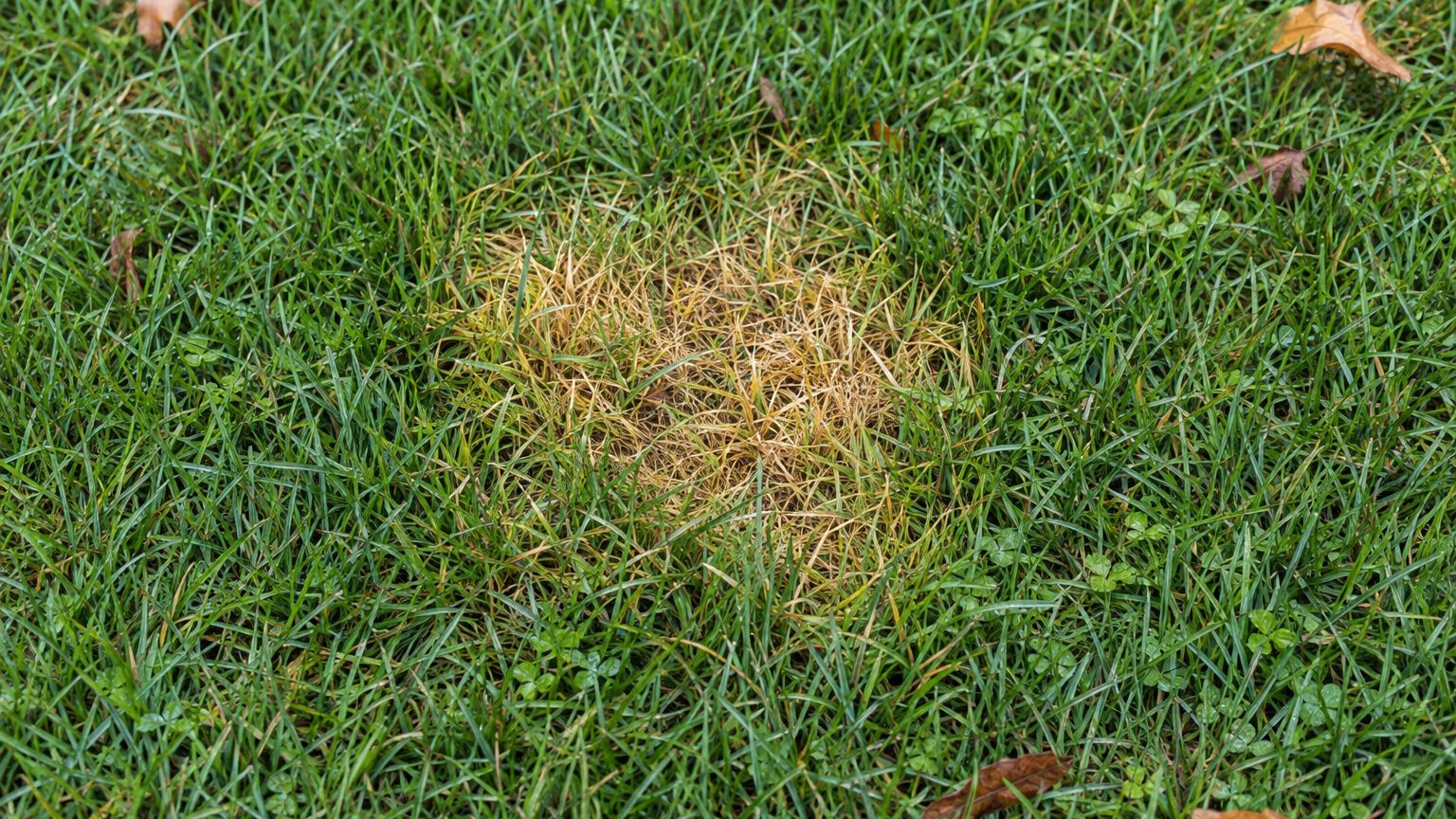
Rings in the Lawn (fairy ring) on a lawn

Start with the shape, because a circle or arc is the signature, and the other signs vary with the fungus involved.

  • Look for a circle or arc of grass that is darker green and grows faster than the lawn around it.
  • Measure the span, since most rings run from 2 to 15 feet across but some pass 50 feet.
  • Check the soil just inside the ring, where grass may be thin, brown or dead because the soil there has turned dry and hard to wet.
  • Watch for mushrooms along the ring after wet weather, though some rings never produce any.
  • Notice that sometimes the only effect is the green arc, with no dead grass and no mushrooms at all.

In California, a ring that keeps growing outward for many years is consistent with fairy ring rather than an isolated spill or patch.

Problems Mistaken for Fairy Rings

Other lawn troubles can also make curved or circular patches. Look for a supporting clue before settling the diagnosis.

Probing the soil is a useful check. Push a trowel, shovel or long screwdriver into the affected area and look for a white, cottony mass in the soil.

Looks like How to tell them apart
Dead ring of grass from a dry, compacted strip Compacted soil is hard to probe, and it lacks the white, cottony mass associated with the fungal mat.
Dark green arc from fertilizer or a spill The edges match the spread or spill pattern; the absence of mushrooms does not rule out a fairy ring.
Ring of dead turf where a tree stump or buried lumber once sat In Illinois, buried wood is identified as a potential food source for a fairy ring, so this clue does not rule one out.

Other causes can also leave brown patches, so color alone does not confirm a fairy ring.

What Causes Fairy Rings

Around 50 species of fungi can cause fairy rings, and all of them feed on decaying organic matter buried in the soil. Tree stumps, large roots and construction lumber left under a lawn are identified as potential food sources.

The green growth comes from the fungus itself. As its threads break down organic matter, they release plant nutrients, and the grass above responds with a burst of color and growth.

The dead zone has a different cause. The soil just inside the ring can become so full of fungal growth that water struggles to penetrate, and the grass there grows poorly or dies. All grasses are susceptible, and several mushroom-forming fungi can be involved.

How to Fix Fairy Rings

The right fix depends on how thick the fungal mat is, so probe first and then pick the level of effort you want.

  1. Probe the ring with a trowel, shovel or long screwdriver to determine the depth of the fungal mat.
  2. Aerate the ring a few times a year if the mat is under 3 inches thick, because the cores open the soil and let water in.
  3. Pull cores at least 1/4 to 1 inch in diameter and slightly deeper than the mat, as advised in California, since shallow cores miss the layer that repels water.
  4. Water the ring well after aerating, so moisture follows the new holes into the dry soil.
  5. Dig out the soil and sod when the mat is over 3 inches thick, because an aerator may not pull cores long enough to reach it.
  6. Remove turf and root zone to a depth of 12 inches and 2 feet beyond the outer edge of the ring if you want it gone, as advised in California, then refill with clean soil and reseed or resod.

Grass that is still alive can reestablish if the dense fungal mat is broken up and water penetration improves. Your state extension office can say whether any treatment is approved where you live.

How to Prevent Fairy Rings

Prevention is mostly about food supply and thatch, and the timing follows the stage of the lawn.

  • Before planting a new lawn, clear out tree stumps, large roots and construction lumber, as advised in Illinois, because they feed the fungus.
  • Apply adequate nitrogen.
  • During regular lawn care, check the thatch layer and verticut if more than 1/2 inch accumulates, as advised in California.
  • Break up the dense fungal mat so grass that is still alive can reestablish once water penetrates again.

Old rings may fade as their food source runs out or conditions change. They may persist for several years, but in Illinois they are expected to disappear as their food source runs out or conditions change.

Common Questions

Do Fairy Rings Go Away on Their Own?

Sometimes, depending on local conditions. In Illinois, they may persist for several years and fade once the buried food is used up or conditions change. In California, rings can keep enlarging for many years, with the older center dying off.

Are the Mushrooms in a Fairy Ring Dangerous to Pets or Kids?

Mushroom species vary, and you cannot judge safety by looking. Keep children and pets away from them, and remove them by hand or mow them off before they are tempting to touch or chew.

Why Does the Grass Inside My Ring Look Dry Even After Rain?

The fungal growth in the soil can block water from soaking in. Water runs off or sits on top while the roots stay dry, which is why opening the soil with a lawn aerator helps.

Dog Urine Spots: What It Means and What to Do

Dog Urine Spots: What It Means and What to Do

A round patch of straw-colored grass, often ringed by a band of unusually lush green, can show up where a dog has a favorite spot. The patch is urine burn, and it comes from concentrated salts rather than acidity.

How to Recognize Dog Urine Spots

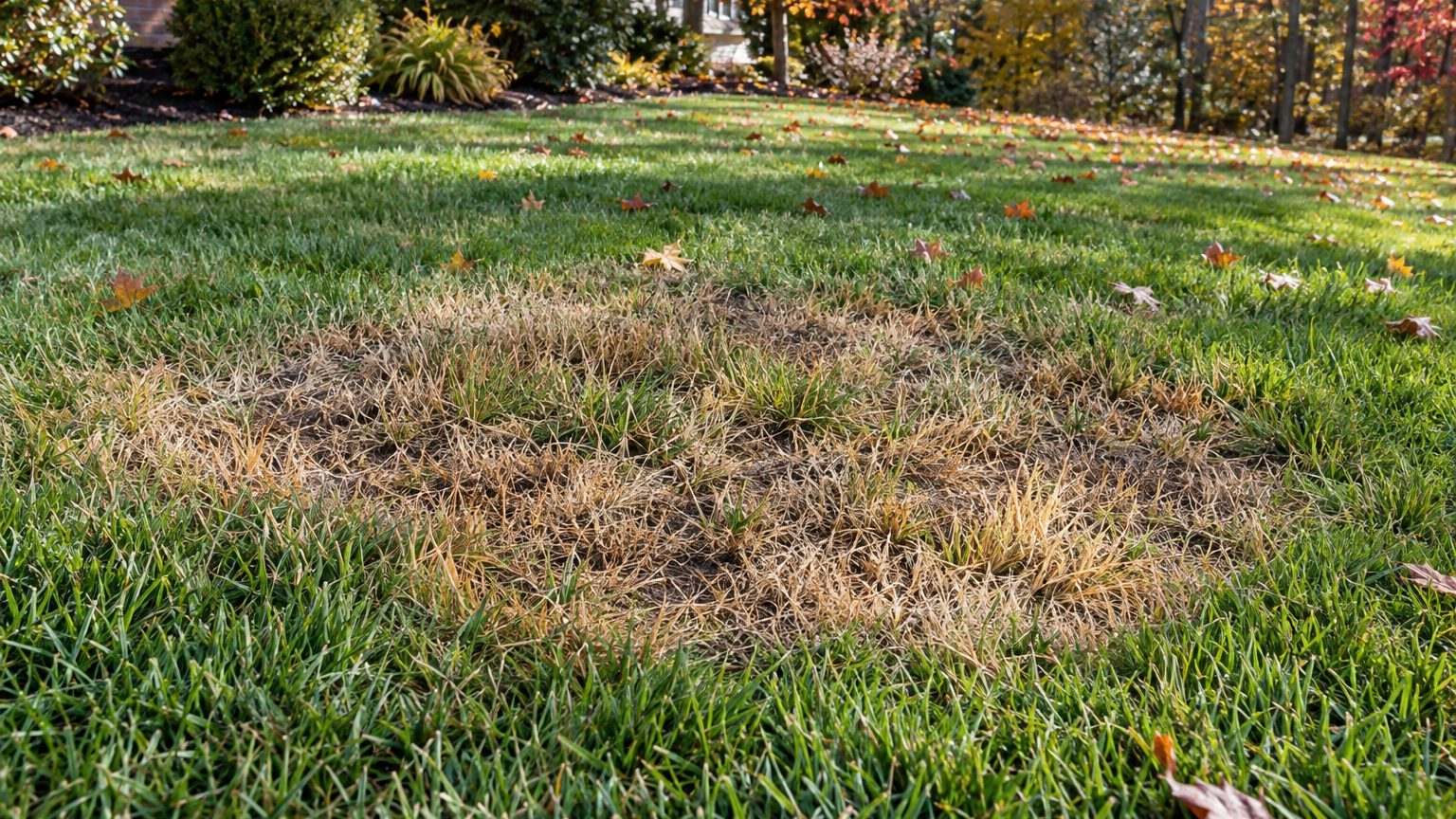
Dog Urine Spots on a lawn

Look first at the edge of the patch, because that is where urine spots give themselves away.

  • A ring of darker, greener grass surrounds the dead center, since the diluted edge acts like fertilizer and the turf there grows faster than the lawn around it.
  • The center turns tan or straw-colored and looks dry, as if scorched.
  • Patches are often rounded and scattered over the lawn.
  • Spots may cluster where the dog repeatedly stops, such as along the fence line, near the back door or at corners of the yard.
  • Damage is most severe during dry periods, when soil moisture is low and the turf is poorly hydrated.

Pull gently on a dead patch and the leaf blades often come away dry, while the crowns and roots may still be alive.

Problems Mistaken for Dog Urine Spots

Several lawn troubles leave brown patches too. Fungal disease and fertilizer burn can be confused with urine damage, and a close look at the blades and the pattern helps sort them out.

Check the grass blades up close, then look at where the patches fall across the yard.

Looks like How to tell them apart
Turf disease Fungal patches show cottony threads on the grass, and the dying blades look water-soaked or mat down. Urine damage shows neither, and the spots sit where the dog goes.
Fertilizer burn Scorched streaks or stripes follow the path of the spreader, while urine spots are separate rounds with a green rim.
Drought stress Large, uneven dry areas fade on the sunniest or highest ground, and the grass greens up again after a deep watering. Urine spots stay brown and keep their green rings.

Grubs can also thin a lawn into brown patches, but the turf feels loose and lifts like carpet. Dog spots stay rooted until the damage is deep.

What Causes Dog Urine Spots

Dog urine has a pH between 6.0 and 8.0, yet the pH is not what kills the grass. Damage is believed to occur mainly because of the highly concentrated salts the urine carries. A dose that concentrated pulls moisture out of the leaf and root tissue, much like pouring salt on a garden bed.

Conditions decide how bad it gets. The most severe damage seems to occur during dry periods, when soil moisture is low and the turf is poorly hydrated. Dry soil cannot dilute the salts, so they stay near the roots.

According to Kansas State University Extension, turf death may occur in 24 hours or less under favorable environmental conditions. Lawns with a dog that visits the same patch repeatedly will keep losing that ground.

How to Fix Dog Urine Spots

Repair depends on how much of the lawn died, but the order of work stays the same.

  1. Rake out the dead grass and loosen the surface, so water and new seed can reach the soil.
  2. Increase irrigation amount and/or frequency to dilute salts in the soil.
  3. Remove 0.5-1 inch of soil where the turf is completely killed, since in Washington that is the advised depth before re-sodding, and it takes out the salt-laden layer.
  4. Re-sod or reseed the bare area with grass suited to your lawn, then keep it moist so the new roots can settle.
  5. Mow as high as practically possible, 2 ½ to 3 inches for most lawn turfgrass species, so taller blades shade the soil and the new grass stays healthy.

Small spots may need no repair at all. According to University of Wisconsin Extension, if the spot is smaller than your fist, the surrounding grass will fill in after just a few weeks. Check your state extension office for what suits local grasses and seed timing.

How to Prevent Dog Urine Spots

Prevention is especially important during dry periods, when soil moisture is low and the turf is poorly hydrated.

  • Keep the dog off the most visible parts of the lawn or train it to use a designated low-visibility area.
  • Set the mower to the tall end of the range so the grass stays dense and shades the soil.
  • Increase irrigation during dry periods to help dilute salts in the soil.
  • Right after each visit, flood the spot with water as soon as possible, because in Washington that quickly dilutes the salts before they burn.
  • In any season, if neighborhood animals are the culprits, commercially available animal repellants have been suggested in Kansas for cases where the animals are not yours.

Prompt watering after the dog goes out is far easier than patching a bare lawn.

Common Questions

Will the Grass Grow Back on Its Own After a Dog Urine Spot?

Often it does when the spot is small. According to University of Wisconsin Extension, a spot smaller than your fist fills in from the surrounding grass in just a few weeks. Fully killed turf is repaired by removing the surface soil and re-sodding the area.

Does the pH of Dog Urine Kill the Grass?

No. Urine falls between pH 6.0 and 8.0, and acidity is not the cause. The concentrated salts do the harm, which is why dilution with water works better than trying to change the soil.

Why Is the Grass Around the Dead Spot Extra Green?

The edge gets a weaker dose of urine, which feeds the turf instead of burning it. The affected grass there often looks greener and grows faster than the lawn around it, leaving the telltale ring around the dead center.

Compacted Lawn Soil: What It Means and What to Do

Compacted Lawn Soil: What It Means and What to Do

Footpaths worn bare across the grass, puddles that linger in the same low spot after a storm, and a screwdriver that will not sink into the turf all point to the same thing. Compacted lawn soil is soil pressed so tight that roots, air and water cannot move through it.

How to Recognize Compacted Soil

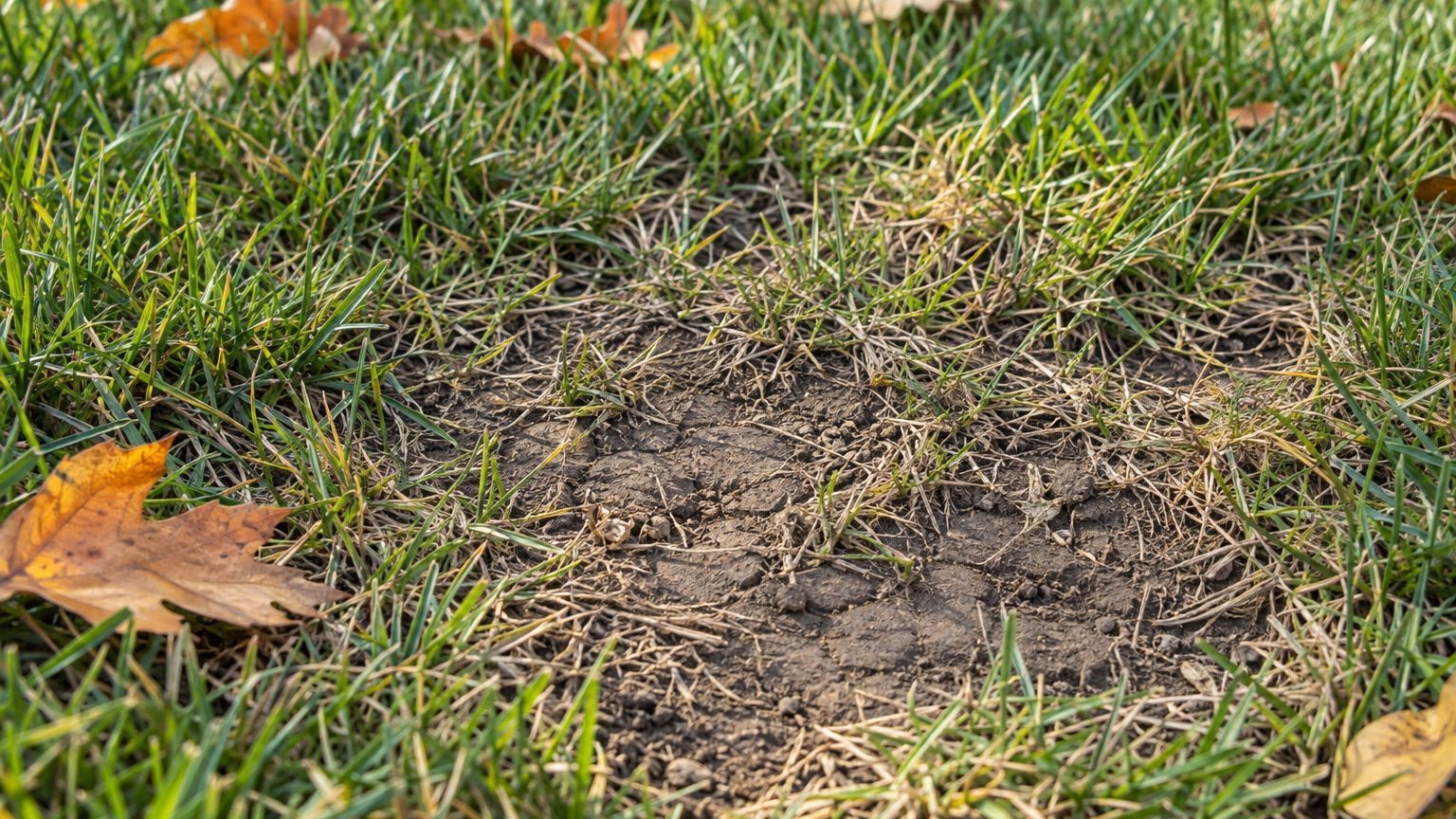
Compacted Lawn Soil on a lawn

The clearest sign is how the ground resists a probe, and a few signs on top of the grass back it up.

  • A soil probe or hollow metal pipe barely enters the ground when you push it in.
  • Water puddles after rain in the same spots instead of soaking in.
  • Grass is sparse along tracks and pathways where people regularly walk.
  • The soil feels hard packed at garden gates and along the edges of driveways or sidewalks.
  • Roots come up badly formed, and the grass shows nutrient deficiencies even when you feed it.

These symptoms usually progress slowly, so a lawn can slip from healthy to struggling before you notice.

Problems Mistaken for Compacted Soil

Thin, weak turf has many causes, and compaction is only one of them. No sign settles it on its own, so pair what you see with a simple check.

The probe test helps sort out the cause. If the probe slides in easily, look elsewhere.

Looks like How to tell them apart
Nutrient deficiency in the grass Pale, weak turf across the whole lawn, but the probe goes in easily and water soaks in normally.
Poor drainage from a low spot Puddles in a dip after rain, but the soil around the dip is soft to the probe and the grass beside it grows well.
Foot-traffic wear on healthy soil Thin grass along a path, but the probe sinks in and the turf fills back in where people stop walking.

Where several of these signs show up together and the probe stops short, compaction is the likely cause.

What Causes Compacted Soil

Pressure is the cause. Heavy foot traffic, cars and trucks parked on the grass, and construction equipment all squeeze the soil particles together and damage its structure. Working or walking on wet soil does the same thing, because wet ground gives way under weight and packs down.

Construction is a major source of compaction, so a lawn laid over a builder’s graded and driven-over yard often struggles from the start.

Soil type matters too. Soils high in clay are more likely to compact than sandier soils, which is why a clay yard can turn hard under traffic that a sandy yard shrugs off.

How to Fix Compacted Soil

Loosening the soil means opening channels for air and water, and timing the work to the grass keeps the lawn from suffering for it.

  1. Confirm the problem with a probe or hollow pipe, so you know which areas need work.
  2. In Nebraska, wait until the lawn is actively growing before you aerate, because the grass then recovers quickly from the damage and puts out new roots.
  3. Pull cores at least 3 inches deep, as Nebraska guidance advises, since shallow holes do little to open the soil.
  4. Spread compost evenly over the site if you are amending a bed, and in Delaware the advice is to till it in to a depth of 18 inches.
  5. Dig trenches around established trees, 4-6 inches wide and 12 inches deep from the trunk out to the drip line at about three-foot intervals, following Delaware guidance.
  6. Keep traffic off the treated ground so it does not pack down again.

For tools, rates and timing that suit your grass and soil, your state extension office can give local advice.

How to Prevent Compacted Soil

Prevention is mostly about keeping weight off the soil, and a few habits through the year carry most of it.

  • When the ground is wet, stay off the lawn and beds, since walking on wet soil packs it quickly.
  • Once beds are planted, cover the soil with mulch or a groundcover. According to University of Delaware Cooperative Extension, a layer of plants or 2-3 inches of mulch is recommended to keep compaction from setting in.
  • Lay a path of wooden planks or permeable fabric covered with gravel wherever temporary traffic across a bed is unavoidable. Delaware advice also allows a mulch layer of 6+ inches for temporary traffic.
  • According to University of Maryland Extension, a 3-inch layer of organic mulch is suggested.
  • All season, park cars and trucks on the driveway rather than under trees or on the turf.

Where a shortcut keeps wearing a path, a stepping-stone walk is easier than fighting the bare strip.

Common Questions

Can You Fix Compacted Soil Without Aerating?

For lawns, aeration is the usual route; in Delaware, compost and trenching are also used in beds and around trees. Fixing the cause also helps prevent the soil from compacting again, so keep weight and wet-soil work off the area.

Do Clay Soils Compact More than Sandy Soils?

Yes. Clay compacts more readily, so a clay yard needs more care about where people and vehicles go.

How Do You Know the Lawn Has Recovered?

Run the probe again. If it goes in more easily, puddles clear after rain, and the thin tracks fill in with grass, the soil has opened up.

White Grubs in Lawns: How to Spot Them and Get Rid of Them

White Grubs in Lawns: How to Spot Them and Get Rid of Them

A patch of turf that goes limp and brown even after a good soaking, then lifts like a loose rug, is the classic mark of white grubs feeding on the roots. Recognizing the damage, separating it from look-alikes, and counting the grubs helps you decide whether to act.

Signs of White Grubs in a Lawn

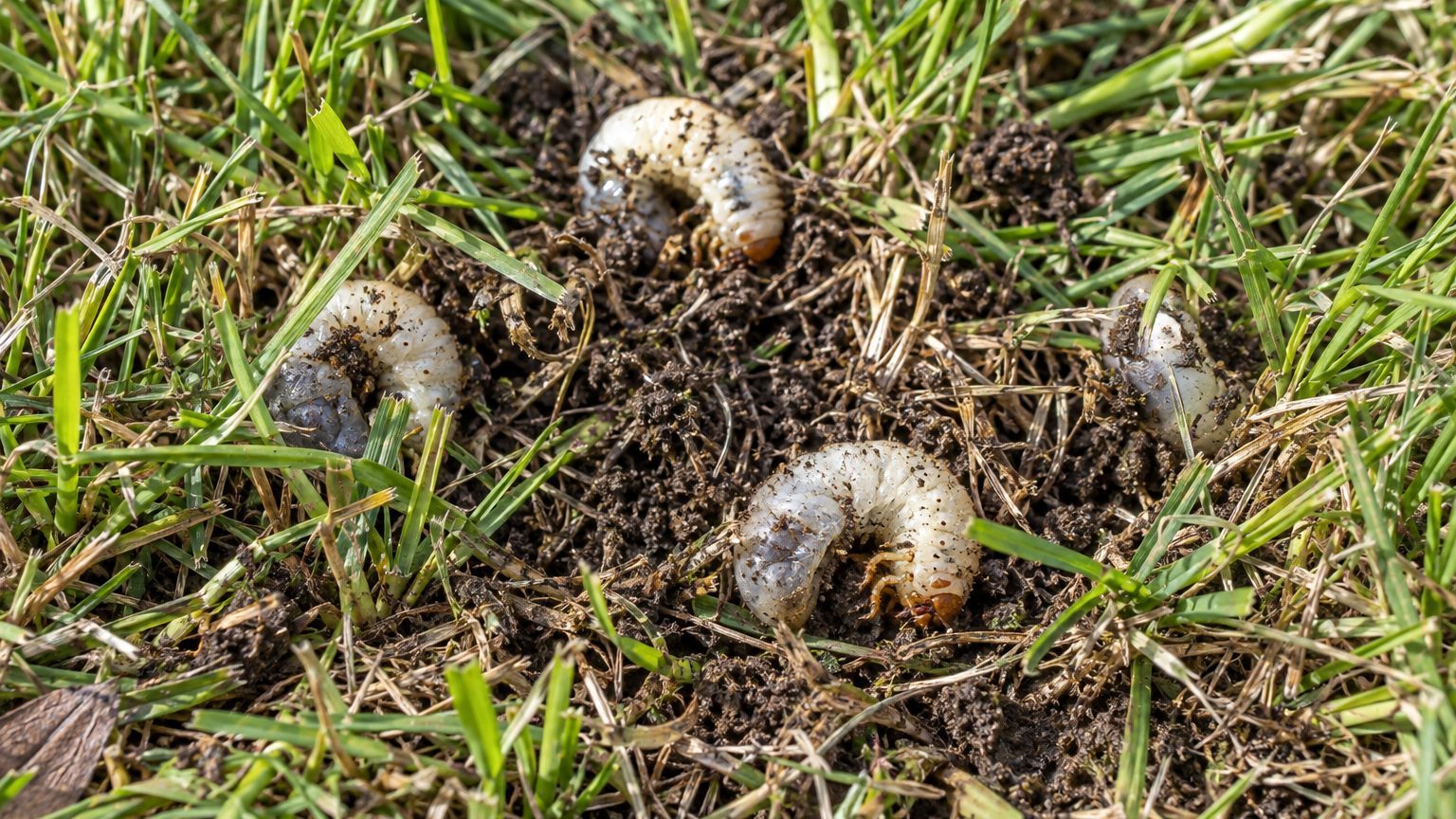
White Grubs on a lawn

The grub itself is easy to recognize when you lift turf at the edge of a damaged patch.

  • Pull back a loose piece of sod and you find plump, off-white, C-shaped larvae with a brown head and 3 pairs of legs, sitting in the root zone.
  • Older larvae reach up to 1-1/2 inches long and are wrinkled and whitish to yellow, which makes them hard to miss once exposed.
  • Grass in scattered patches wilts and stays stressed even after you irrigate, because the roots that carry water are gone.
  • Wilting turf may take on a blue or purple cast before it collapses into dead or very thin patches.
  • The sod lifts or pulls up with little effort, and the white grubs show up underneath.

In Indiana and adjacent states, large larvae are present by September, when damage may become easier to spot.

Lawn Damage Mistaken for White Grubs

Dry, brown turf is not always a grub problem. Drought and several other root problems also leave patches that look much the same from the sidewalk.

A quick dig and a tug on the grass settles most cases. Check the roots and the soil, not just the color of the blades.

Looks like How to tell them apart
Drought stress: grayish, wilted patches The sod stays rooted when you tug it, unlike grub-damaged turf, which lifts easily. With grubs, turf does not respond to irrigation and the sod lifts easily.
Dead patches from thatch or compaction Roots are present but shallow in hard or spongy soil, and no grubs turn up when you dig. With grubs, roots are chewed off and C-shaped larvae sit beneath the surface.

Some fungal diseases can also leave brown patches, so confirm grub damage by lifting the turf and checking for larvae. If the roots hold firm and no larvae appear, look away from grubs.

When White Grubs Damage Shows Up

The cause is the larval stage of scarab beetles feeding on grass roots, thatch and organic matter in the soil. They damage both warm-season and cool-season grasses, and they favor bluegrass and ryegrass in particular.

Timing follows the life cycle. In Indiana and adjacent states, annual white grubs overwinter as larvae, pupate in late spring or early summer, and adults fly in early to mid-summer. Eggs hatch by the end of July, and large larvae are present by September, which is when patches usually show.

According to Iowa State University Extension, eggs hatch in 2 to 3 weeks after they are laid, and the tiny larvae begin eating roots right away. Damage often appears well after the feeding started, since the lawn holds on until the roots are mostly gone.

How to Get Rid of White Grubs

Start with a count, because many lawns carry grubs without needing any treatment at all.

  1. Cut a square foot of sod in a few places along the edge of a damaged patch, so you know how many grubs live in each square foot.
  2. Compare the count with the local threshold: in Indiana and adjacent states, populations below 5 grubs per square foot rarely require treatment, while 5 to 10 grubs per square foot are usually needed for significant damage.
  3. Leave the lawn alone if the count is low, because in Indiana and adjacent states most turfgrass tolerates up to 5 grubs per square foot without visible damage.
  4. Act when counts run high, since in Iowa 10 or more annual white grubs per square foot will kill the grass.
  5. Ask your state extension office which treatments are approved where you live and when to apply them, since registrations differ by state.
  6. According to Cornell Cooperative Extension, fall fertilization with 0.25-5 lb. of N per 1,000 square feet enhances turf recovery from grub damage.

Reseed or sod any bare patches after the grubs are dealt with, so weeds do not move into the gaps.

How to Prevent White Grubs

A thick, deep-rooted lawn shrugs off moderate grub numbers, so prevention mostly means good routine care through the year.

  • In Indiana and adjacent states, choose grass species and cultivars suited to the site and its use when you reseed.
  • In early summer, when adult beetles begin to fly in Indiana and adjacent states, keep mowing at the proper height so the turf stays dense.
  • Use proper irrigation and thatch management to keep turf healthy and vigorous.
  • By late July in Indiana and adjacent states, when eggs are hatching, scout a few spots so you catch a rising count early.
  • In New York, fall fertilization can help turf recover from grub damage.

Appropriate cultivation also helps keep turf healthy and vigorous.

Common Questions

Do a Few Grubs in the Lawn Mean You Need to Treat?

Usually not. According to Purdue Extension, a few scattered grubs are not a cause for concern, and densities as high as 20 per square foot may not cause noticeable damage.

How Can You Tell If Grubs Are Eating Your Lawn or It Is Just Dry?

Tug the turf. Grass damaged by grubs lifts like a loose mat and shows larvae below, while dry grass stays rooted and perks up after a deep watering.

What Do White Grubs Look Like?

They are pudgy, off-white, C-shaped larvae with a brown head and 6 legs, and older ones can reach 1-1/2 inches in length.

The almanac, state by state. Every date on this site comes from a state’s own frost facts and its extension service’s calendar — and says where it comes from.