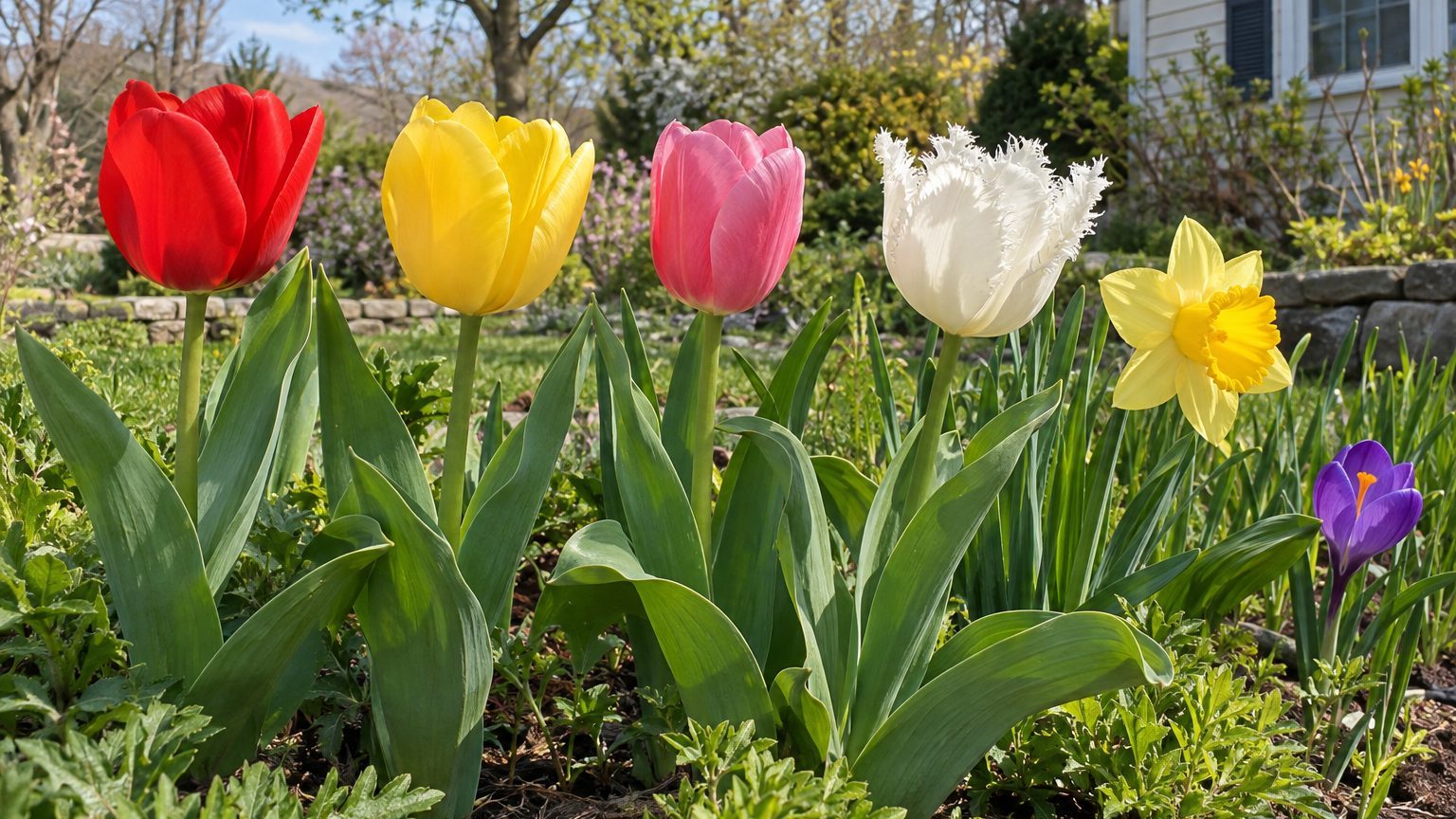
Daffodils pushing up through cold soil are often the first real color in an Ohio yard, with tulips following as the weather warms. Both come from bulbs planted the autumn before.
Best Spring Bulbs to Grow in Ohio

Daffodils are a dependable choice in Ohio, with tulips, crocus and alliums filling in around them. Ohio sits in USDA hardiness zones 5b to 6b, so winters are cold enough to give most bulbs the long chill they need before they flower. Mild-winter tricks like refrigerator chilling are not part of the routine here.
Daffodils

Daffodils are the reliable perennial bulb. They are more vigorous than tulips and most other spring bloomers and often return and spread over the years; deer and other animals leave them alone.
That makes them a practical first purchase for a front yard, a slope near woods, or any bed that critters visit.
Wister Award Daffodils

The Wister Award recognizes cultivars with long-lasting flowers, disease resistance and strong plant vigor. Choosing from that list takes some of the guesswork out of a catalog, since those traits are what you want in a bed that must perform year after year.
Tulips
Tulips bring plenty of color and flower from April into May in Ohio. They are often short-lived in the garden, though, and the larger types are sometimes treated as annuals and lifted in late spring to make room for summer plantings.
Expect a great first spring, then fewer blooms in later years.
Crocus
Crocus are small, early and cheerful, but voles, squirrels and rabbits go after them just as they do tulips. They suit a protected spot, such as a bed close to the house, better than an open lawn edge where animals roam freely.
Alliums
According to Iowa State University Extension, alliums need the cold of winter to bloom. Their round purple flower heads stand above the foliage of other plants and add height to a bed after the daffodils fade.
Ohio — the year and the numbers
- State
- Ohio
- USDA zones
- 5b-6b
- Last spring frost
- May 5 to May 15
- First fall frost
- October 5 to October 15
- Annual rain
- 42 in
- Lawn zone
- cool-season
- Source
- Ohio State University Extension — Ohio Gardening Calendar · Columbus
How to Choose Spring Bulbs for Your Ohio Garden
The right bulb depends less on the state than on what happens in your yard: who visits the beds, how much time you have, and how long you want the planting to last.
Ohio winters already supply the cold that tulips and most other bulbs require, so the choice comes down mostly to wildlife and upkeep.
| Your situation | What suits it in Ohio | Why |
|---|---|---|
| Deer, rabbits or voles in the yard | Daffodils | Animals leave them alone, while tulips and crocus get eaten |
| Little time for upkeep | Daffodils | Vigorous plants that last longer than tulips and keep returning |
| Want tulips with no disappointment | Tulips treated as annuals | They are often short-lived, so replanting keeps the show full |
| Worried about winter cold | Any common spring bulb | Winters supply the 12 to 16 weeks of cold most bulbs need |
Small beds and containers need no special variety. Pick the bulb by the animal pressure and the attention you can give it, then plant in generous clumps rather than single rows so a bed looks full the first spring.
Which Spring Bulbs Suit Different Parts of Ohio
Ohio spans USDA hardiness zones 5b to 6b, while local conditions affect how early bulbs wake.
- Lake Erie shore and northern Ohio: Colder winters can keep spring bulbs dormant longer than in southern Ohio.
- Cincinnati and the Ohio River valley: Milder winters mean bulbs emerge and bloom a little earlier than in the north, and the earliest daffodils can open in late February.
- Appalachian foothills of southeast Ohio: Where deer browse, daffodils are a practical backbone for the planting.
Across these areas, the planting routine stays the same, while bloom dates can shift.
Spring Bulb Buying Mistakes to Avoid in Ohio
Expecting Tulips to Return Forever
Tulips are often short-lived, and a bed bought as a long-term investment can thin out within a few seasons. Buy them with that in mind, plant a fresh batch when the show fades, and rely on daffodils for the permanent layer.
Planting Before the Soil Cools
Bulbs set in warm ground can sprout leaves in autumn, and that soft growth gets caught by winter. Wait until the soil has cooled below about 60°F, which gives roots time to form before the ground freezes without pushing top growth too soon.
Cutting Leaves Too Soon
After bloom, remove only the faded flowers. The leaves feed the bulb for next year’s flowers, so leave them until they turn brown. Braiding or tying them neatly costs the bulb some of that feeding, and mowing them off costs the following spring’s display.
Where to Get Spring Bulb Advice in Ohio
Ohio State University Extension publishes planting guidance written for Ohio soils and winters, and a county office can answer questions about your own yard.
- The extension website carries fact sheets on daffodils and other bulbs, and early autumn is a good moment to read them before ordering.
- Your county extension office can point you to local plant sales and the pests that are active near you.
- Master gardener volunteers answer questions in many counties, and spring is a good time to walk a neighbor’s bed and note which bulbs came back.
Common Questions
When Do Tulips and Daffodils Bloom in Ohio?
Tulips flower in April through May, while daffodils start earlier, with the first blooms opening in late February in a mild spell. Bulbs usually push up in March or early April.
How Late Can You Plant Spring Bulbs in Ohio?
September and October are the planting months. November and even December still work if the ground is unfrozen and you can dig a hole.
Can You Plant Forced Daffodils Outdoors in Ohio?
Yes. Daffodils are an exception among forced bulbs, and many forced cultivars do well when moved outdoors after flowering. Keep the leaves growing and plant them out when the soil can be worked.