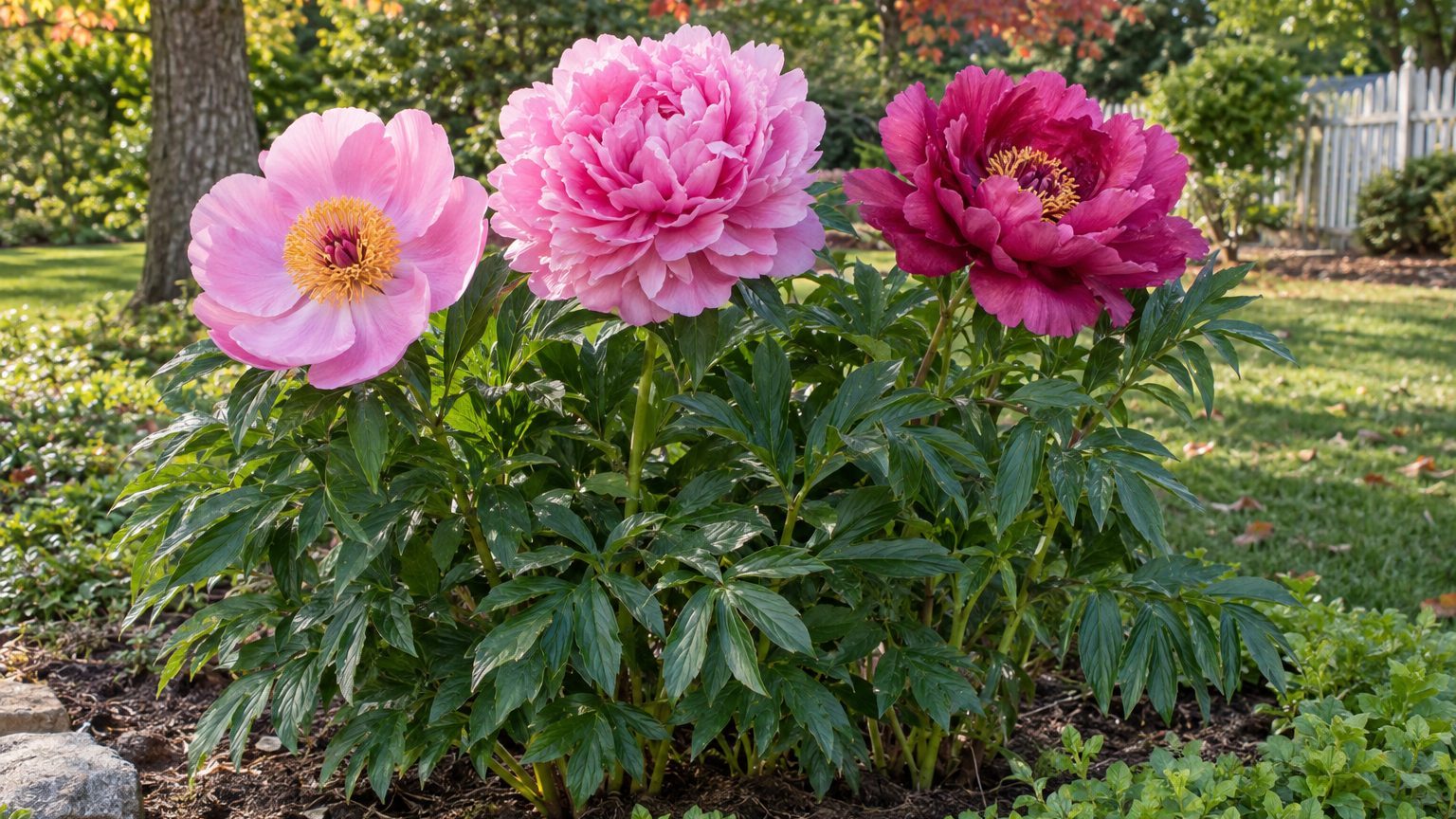
Peony stems poke through the soil in spring, and by May the buds are fat and heavy. In Kansas, a few types handle the winters and the bloom season with little fuss, and some varieties have even been trialed in Kansas beds. Knowing which type you are planting makes every later choice simpler.
Best Peonies to Grow in Kansas

Herbaceous and intersectional peonies are the easiest types to grow in a Kansas yard, with tree peonies as a woody alternative. Peonies need a cold winter rest to flower, and Kansas winters supply it, so the climate is not the obstacle. Bloom runs May into June, and each type below handles that season in its own way.
Herbaceous Peonies

This is the classic garden peony, and most of the ones in home landscapes descend from Paeonia lactiflora. Herbaceous peonies are among the easiest types to grow in Kansas. Each fall they die back to the ground, and new growth comes up again in spring.
The flowers come as single, semi-double, double, Japanese or anemone, and bomb forms, in white, pink, red and other colors. If you want one dependable plant for a sunny bed, start here.
Intersectional Peonies

Also sold as Itoh peonies, these are hybrids of the garden peony and the tree peony. In Kansas they are treated the same as herbaceous types, so the care you already know carries over.
Like their herbaceous parent, they die back to the ground each fall and send up fresh growth in spring. That shared routine makes Itoh peonies an easy addition once an herbaceous peony is thriving.
Tree Peonies
Despite the name, tree peonies are woody shrubs. They go dormant over winter, and each spring new growth is renewed on the woody stems rather than from the ground.
That structure gives a bed some height and presence even before the flowers open. Give them a spot where a permanent shrub makes sense, since the stems stay in place year after year.
Shawnee Chief
This red double has real Kansas credentials. A commercial-size trial of it was set up in 1993, after an earlier cultivar trial for quality cut flowers in Manhattan, Kansas.
If you want a deep red double that has been grown and watched here, it is a sensible variety to look for.
Snow Mountain
A white bomb-type, Snow Mountain was grown in the same Kansas trial beds as Shawnee Chief. Planted together, the pair gives you a red and white combination that has been tested in this state.
Bomb forms have a dense, rounded center, so the flowers look full and neat in a vase or in the border.
Kansas — the year and the numbers
- State
- Kansas
- USDA zones
- 5b-7a
- Last spring frost
- April 4 to April 18
- First fall frost
- October 23 to November 2
- Annual rain
- 34 in
- Lawn zone
- transition-season
- Source
- NOAA NCEI 1991-2020 Climate Normals, 32F freeze probabilities · Wichita
How to Choose a Peony for a Kansas Garden
Kansas gardeners rarely need to fight the climate with peonies. The choice usually comes down to how much care you want to give and what you plan to do with the flowers.
Match your situation to a type, then pick a variety in the color and form you like.
| Your situation | What suits it in Kansas | Why |
|---|---|---|
| Very cold winter | Herbaceous or intersectional peonies | They die back to the ground each fall and regrow in spring |
| Little time to spare | Herbaceous or intersectional peonies | They are the easiest to grow and share the same culture |
| Want a permanent woody shrub | Tree peonies | They go dormant in winter and renew growth on woody stems |
| Need winter cold to bloom | Any peony, in a cold-winter spot | Peonies do best where winters are cold and flower poorly in mild ones |
| Cut flowers for the vase | Cultivars with acceptable vase lives | Trials in Kansas found some cultivars unsuitable for cutting |
Gardeners in southern Kansas should ask their county extension office whether local winter conditions affect peony flowering. Small beds and hot, humid summers vary from yard to yard, so your county extension office is the place to ask.
Which Peonies Suit Different Parts of Kansas
Kansas spans USDA zones 5b to 7a, so winter cold is not the same across the state, and that shapes how carefully you choose.
- Northern Kansas: Winters are colder here than in the south, which gives peonies the cold rest they need. Herbaceous and intersectional types, which die back to the ground, are a natural fit.
- Southern Kansas: Winters are milder, and peonies still need a cold rest to flower well. Choose your planting spot with that in mind and favor the dependable herbaceous types.
Suburban and rural frost timing can differ from an airport’s, so check with your county before relying on these general patterns.
Peony Buying Mistakes to Avoid in Kansas
Cutting Tree Peonies to the Ground
A herbaceous peony dies back each year and is cut back after frost. A tree peony keeps its woody stems and is never cut back.
Treating a tree peony like its herbaceous cousin removes the stems that carry next spring’s growth. Check the plant tag before you reach for the shears.
Planting Too Deep
A peony planted too deep may bloom poorly or not come up at all. Keep the eyes near the soil surface when you plant or divide, which in Kansas is September, or October at the latest.
Even a correctly planted peony may not bloom the first spring, so a quiet first year is not a sign of failure.
Buying for Cut Flowers Without Checking
Not every cultivar lasts in a vase. In Kansas trials, Apache and Lovely Rose had vase lives of less than 5 days, which made them unsuitable for cutting.
If you plan to bring blooms indoors, check a cultivar’s vase-life results rather than choosing on color alone.
Where to Get Peony Advice in Kansas
Peony questions often depend on your soil and microclimate. Kansas State University Extension and your county extension office can answer them for your yard.
- The state extension site has Kansas-specific peony publications and cultivar trial results to read at any time of year.
- Your county office can tell you what grows well locally, so call in late summer before the September planting window opens.
Common Questions
When Do Peonies Bloom in Kansas?
Peonies bloom in May and June. The exact week shifts with the variety and the spring weather.
When Should You Plant or Divide Peonies in Kansas?
September is the target, and October is the latest. Planting in early fall gives the roots time to settle in before winter arrives.
When Should You Cut Back Herbaceous Peonies in Kansas?
Cut them back in October or November, after frost has blackened the foliage. Early spring, in March or April, also works if you would rather wait.