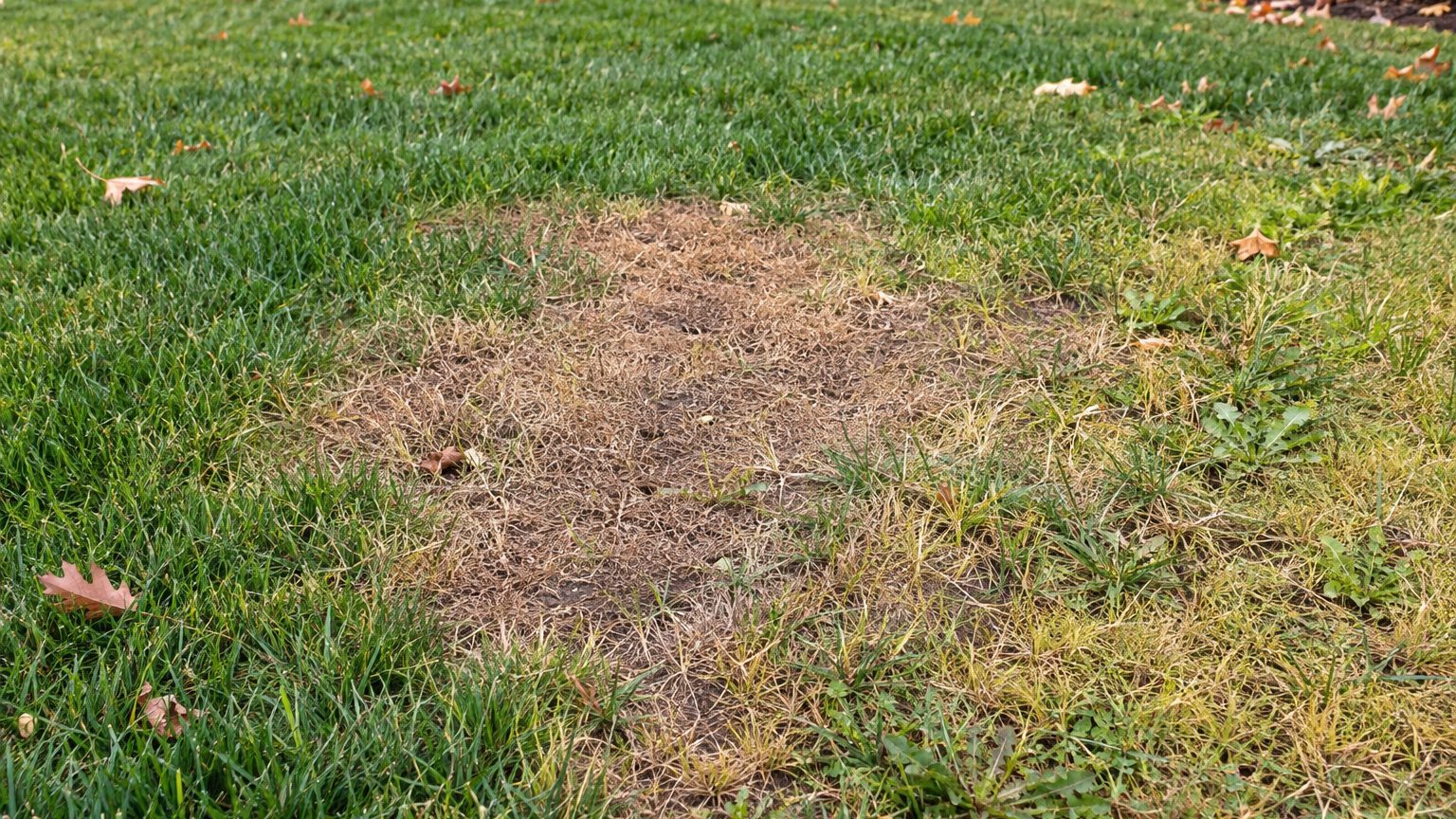
Brown patches that spread through July, thin turf in the shade of a maple, crabgrass crowding the driveway edge: Delaware lawns show their troubles in familiar ways. Most of them trace back to a warm, humid summer on cool-season grass, and most can be told apart by a few simple clues.
Lawn Pests and Diseases in Delaware
Crabgrass Along Edges
Crabgrass sprouts as a coarse, light green clump that sprawls flat, usually along driveways and in thin spots. It germinates as the soil warms in spring, so a pre-emergence preventer works best in April, and March or May still helps.
Once it is up, thicker turf is the lasting fix, because dense grass shades out new seedlings.
Thatch Buildup
Thatch is the spongy brown mat between the green blades and the soil. A layer up to 1/2 inch is healthy, but above that, water and fertilizer struggle to reach the roots.
Dethatch or core aerate in August or September, or in April or May if you missed the window.
Brown Patch in Humid Weather

Brown patch shows up as roughly circular tan to brown areas, often with a darker ring at the edge, when summer nights stay warm and the blades stay wet. Tall fescue is a common victim in Delaware.
Water in the early morning so the grass dries quickly, and avoid heavy nitrogen in the heat of summer.
Grubs Under Browning Turf
Grubs are plump, C-shaped white larvae that chew grass roots. Damaged turf feels loose and lifts like a carpet, and birds or skunks may tear at the lawn to feed on them.
Pull back a flap of sod to look before treating anything. Healthy roots help turf withstand grub damage, and watering helps damaged turf recover in late summer.
Thin Grass Under Trees
Shade thins grass slowly, leaving weak blades, bare soil and moss under mature trees. Tall fescue tolerates shade better than bluegrass, but even it struggles under dense canopy.
Mow high, water deeply when the weather turns dry, and overseed in August or September when the leaf cover is lighter and the soil is still warm.
Delaware — the year and the numbers
- State
- Delaware
- USDA zones
- 7a-8a
- Last spring frost
- April 3 to April 14
- First fall frost
- October 26 to November 7
- Annual rain
- 45 in
- Lawn type
- cool-season
- Source
- NOAA NCEI 1991-2020 Climate Normals, 32F freeze probabilities · Wilmington
How to Tell Which Lawn Problem You Have
Appearance alone rarely settles it. Pair what the patch looks like with where it sits and when it appeared, then test by tugging the grass or lifting the sod.
Here is how the common signs line up for Delaware lawns.
| What you see | Where and when | Likely cause |
|---|---|---|
| Coarse, sprawling light green clumps | Driveway edges and thin spots, from spring into summer | Crabgrass |
| Round tan patches with a darker rim | Humid summer spells, after wet nights | Brown patch |
| Turf that rolls back like a rug | Late summer, with roots barely attached | Grubs |
| Spongy, bouncy turf that sheds water | Anywhere, with a thick brown layer at the soil | Thatch |
| Thin grass, bare soil, moss | Under trees and beside buildings | Shade stress |
Grass that pulls up easily with no roots points to grubs. Grass that stays firmly anchored while the blades turn tan points to disease or dry weather instead.
Where Lawn Problems Are Worst in Delaware
Delaware is small, but the north and south pull lawns in slightly different directions.
- Wilmington and New Castle County: Heavier clay soil and older, shaded suburban lots mean compaction and thin turf under trees show up often. Core aeration helps water reach roots.
- Dover and Kent County: Soils vary from clay to sandier ground, so brown patch and drought stress can sit side by side on neighboring lawns.
- Sussex County and the Delaware beaches: Sandy soil drains fast and dries out quickly, and coastal humidity keeps leaf diseases active on grass that stays damp overnight.
Check your own county, since frost timing and soil shift even within a few miles. Around Wilmington, the last spring frost falls between April 3 and April 14, but suburban and rural yards usually see it later.
Lawn Care Mistakes That Invite Problems in Delaware
Mowing Too Short
Cutting the grass low weakens it, exposes bare soil to crabgrass seed and stresses the roots in summer heat. Mowing runs from April through November here, so the habit repeats for many months.
Raise the mower deck and keep blades sharp, and take off only a small part of the height at a time.
Watering a Little Every Day
Light, frequent watering keeps the surface wet and the roots shallow, which feeds brown patch. Summer watering matters most in June, July and August.
Water deeply and less often, early in the morning, so blades dry quickly and roots follow the moisture down.
Feeding in the Wrong Season
Heavy nitrogen in midsummer pushes soft growth that disease loves. Cool-season lawns do better fed in May and September, and April or November also work.
Skip the summer feeding, and put your effort into the early fall application, when roots are building for winter.
Where to Get Lawn Advice in Delaware
The University of Delaware Cooperative Extension offers research-based help for local conditions, and your county office can look at problems in person.
- Use the extension service’s lawn resources before you buy treatments, especially when you are unsure whether a patch is disease, insects or drought.
- Contact your county office when a problem keeps returning, and bring a clear photo or a small turf sample.
Common Questions
Why Does My Delaware Lawn Go Brown in July Even When I Water?
Brown patch and grub damage both look like drought. Check the pattern, then tug the grass. If it comes up with no roots, suspect grubs. If roots are firm and patches are round with a darker edge, suspect disease.
Can You Fix a Thin Lawn Without Replacing It?
Often yes. Core aerate and overseed in August or September, or in April or May, then keep the seedbed moist until the new grass is established.
Is It Better to Lay Sod or Seed a Damaged Area?
Sod gives instant cover and suits slopes or high-traffic areas. Seed costs less and works well for large areas. Both do best in August or September, and sod can also go down in October.