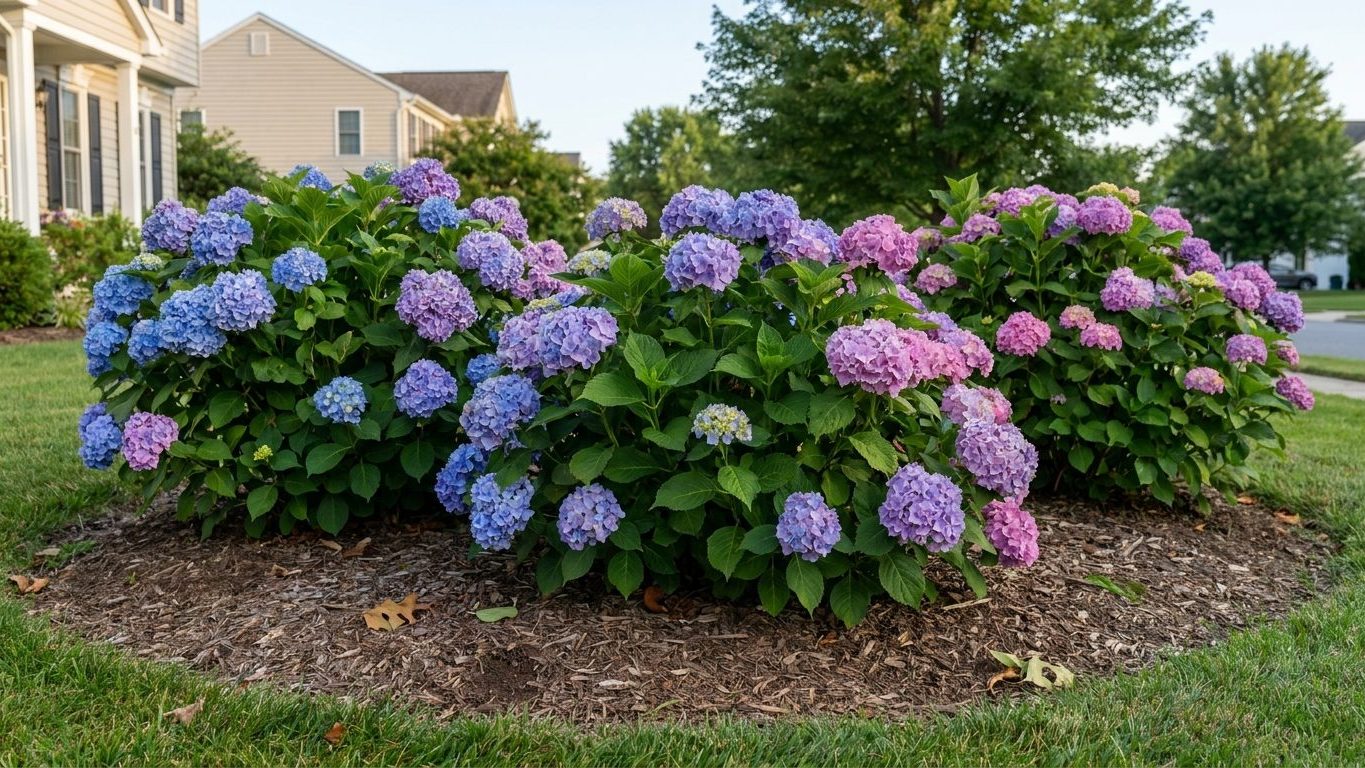
Six problems account for nearly every hydrangea complaint in Delaware, and they follow the calendar rather than showing up at random. Aphids and frost-blackened buds open the season, powdery mildew and leaf spot take over through the humid Mid-Atlantic summer, and deer pressure closes it out each fall. Here’s how to tell them apart and what actually works.
Hydrangea pests and diseases Delaware: The Short Answer
NOAA NCEI 1991-2020 Climate Normals puts Wilmington’s last spring frost between April 3 and April 14, and the first fall frost between October 26 and November 7, which brackets the growing season most Delaware pests and diseases work inside. Six problems tend to show up in a fairly predictable order between those two dates, and knowing which one you’re looking at saves a season of guessing.
Aphids on new growth
Aphids cluster on soft spring shoots as soon as leaves unfurl, curling them and leaving a sticky residue that draws ants across the whole shrub. A hard blast from the hose most mornings knocks the colony down before it spreads, and ladybugs usually finish the job by late spring.
Blackened buds after a late frost

A frost that lands after mid-April can blacken flower buds on bigleaf hydrangea overnight, since Wilmington’s frost window still runs into that stretch some years. There’s no fix once it happens: the shrub usually leafs out fine, it just skips bloom that year.
Powdery mildew
A gray-white film coats leaves by early summer once humidity settles in, more of a look than a real threat to the plant itself. Space shrubs for airflow and water the soil instead of the leaves, and it mostly stays cosmetic through the rest of the season.
Cercospora leaf spot
Small purple-brown spots appear on lower leaves first, then climb the shrub as humid weeks stack up, sometimes causing early leaf drop by late summer. Pulling and trashing (not composting) fallen leaves each fall cuts down the spores that overwinter and reinfect the shrub next year.
Botrytis blight
Gray fuzzy mold shows up on flower heads and stems after a stretch of wet, still weather, usually mid to late summer. Cutting out affected blooms and improving airflow around the base of the shrub keeps it from spreading into healthy wood nearby.
Deer browsing before frost

Deer strip buds and leaves hardest in fall as other browse thins out, right before Wilmington’s first frost shuts the season down. A repellent spray rotated every few weeks, or a simple fence panel, protects the shrub through its most vulnerable stretch.
Delaware — the year and the numbers
- State
- Delaware
- USDA zones
- 7a-8a
- Last spring frost
- April 3 to April 14
- First fall frost
- October 26 to November 7
- Annual rain
- 45 in
- Lawn zone
- cool-season
- Source
- NOAA NCEI 1991-2020 Climate Normals, 32F freeze probabilities · Wilmington
How to Work Out the Dates for Your Own Yard
Delaware’s frost window sets the clock for the two problems people confuse the most, frost damage and disease, and walking through the same checks nails down which one you’re actually seeing.
- Check the calendar first: buds blackened within two weeks after Wilmington’s last spring frost window of April 3 to April 14 point to frost, not disease.
- Look for a pattern across the shrub: frost damage hits buds evenly on the exposed side, while disease spreads in patches that start low and climb.
- Check the underside of the leaf: sticky residue or clusters of small insects point to aphids rather than a fungal problem.
- Note the weather of the past two weeks: a stretch of wet, still days points to Botrytis or powdery mildew, since both need lingering moisture to take hold.
- Compare against the plant’s zone: the USDA Plant Hardiness Zone Map lists Delaware at 7a to 8a, and a shrub pushed a zone colder than its rating shows stress that mimics disease but isn’t.
- Photograph it and call the county office: a clear photo sent to the local extension office settles the harder cases in a day.
None of this replaces an actual diagnosis, but running through these six checks before reaching for a spray saves most yards an unnecessary treatment.
Delaware North to South: How the Dates Shift
Delaware is a small state, but it still splits into three growing conditions that change when these problems show up and how bad they get.
- New Castle County (Wilmington, Newark): the coolest, most humid corner near the Piedmont, so powdery mildew and Cercospora tend to show up earliest and linger longest into fall.
- Kent County (Dover, Camden): flatter and a touch warmer, buds break earlier in spring, which raises the odds of a late frost catching an early bloom.
- Sussex County (Rehoboth Beach, Georgetown, Seaford): closest to the Atlantic and the bay, salt spray stresses leaves right along the coast, while inland pockets run the warmest summers in the state and see the worst mildew pressure.
Whichever county you’re in, start from the state guide’s frost window and adjust from there for your own yard.
Mistakes Delaware Punishes
Pruning bigleaf too early
Cutting back bigleaf hydrangea outside the June to July prune window removes next year’s flower buds along with this year’s dead wood, since the shrub sets buds on old growth. Wait for that window and cut only what’s clearly dead first.
Watering the leaves in humid weather
Overhead watering on a still, humid evening is exactly the setup powdery mildew and Botrytis need, since the leaves stay wet for hours after dark. Switch to a soaker hose or drip line at the base, watering in the morning instead.
Feeding a plant that’s already sick
Feeding a shrub fighting leaf spot or mildew, instead of sticking to the March, May, and July fertilize window, pushes soft new growth that disease moves into fastest. Treat the problem first, then feed on schedule once the plant recovers.
Delaware Extension Offices and County Contacts
Delaware’s zone and frost window are a starting point, not the final word for your yard. University of Delaware Cooperative Extension and your county office fill in the rest, from soil tests to a call-out for a stubborn leaf spot.
- University of Delaware Cooperative Extension: the state’s land-grant extension service, with offices covering New Castle, Kent, and Sussex counties.
- Your state page: the frost dates and hardiness zone for Delaware in one place.
- Which ones hold up here: the hydrangea varieties suited to Delaware’s 7a to 8a range.
Call before you spray. Most county offices will look at a photo for free.
Common questions
Do hydrangeas in Delaware need spraying every year?
No, most yards only see one or two of these problems in a given season, and simple watering and airflow fixes handle most of them without a spray.
Can frost damage look like disease?
Yes, blackened buds after a late frost are often mistaken for blight, but frost damage shows up all at once across the shrub rather than spreading in patches over days.
When should I stop worrying about pests each year?
Once the first fall frost hits, between October 26 and November 7 in Wilmington, most insect activity and fungal spread stop for the season.