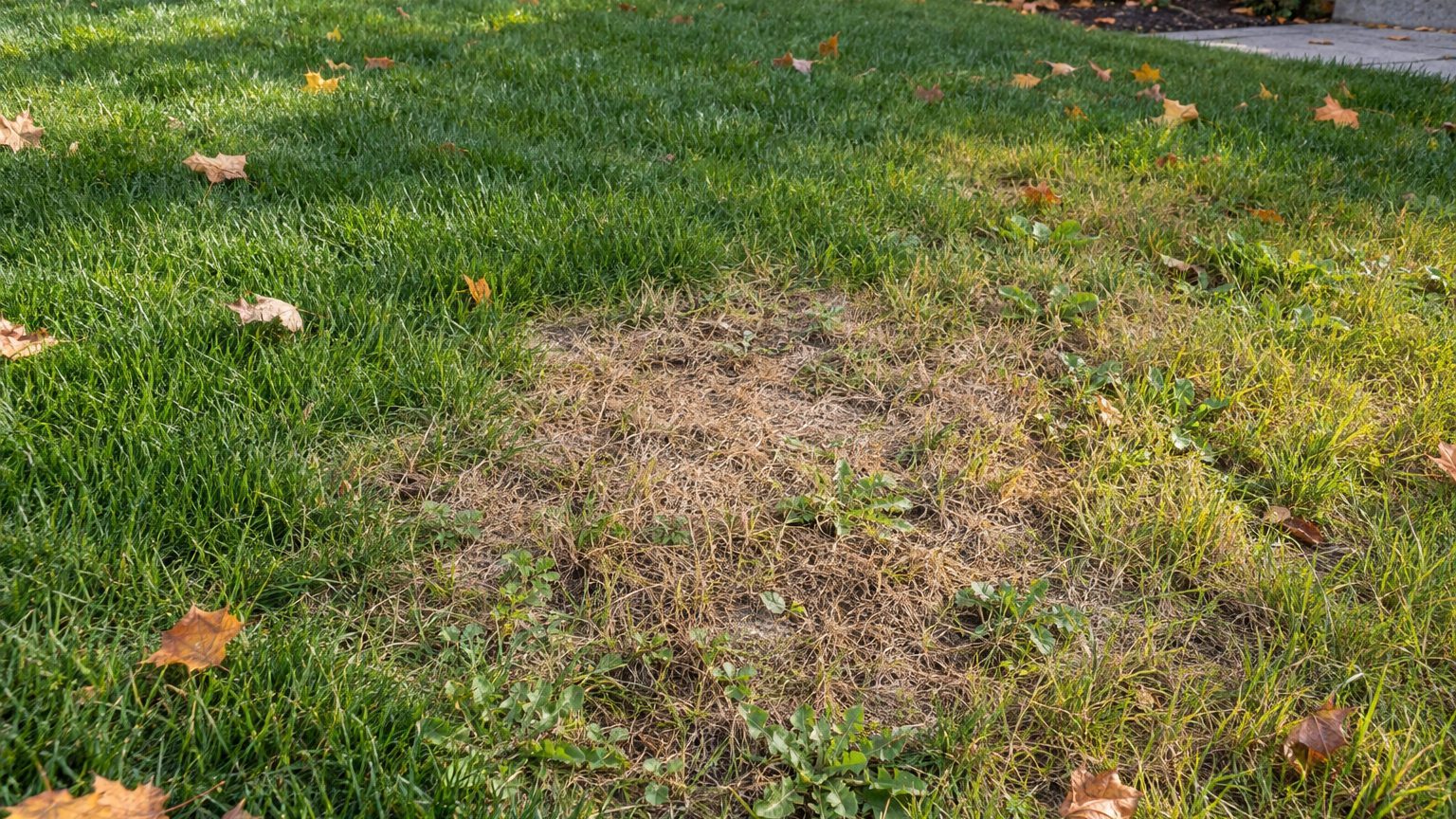
Spongy green moss after a wet coastal winter, crows tearing up turf in late summer, or a lawn gone straw-colored during a dry spell. British Columbia has signature lawn troubles, and the problem you meet depends on where your yard sits. Whether your lawn is soggy on the coast or parched inland, you can pinpoint the likely cause of its trouble and pick the right fix.
Lawn Pests and Diseases in British Columbia
Moss in Wet Winters
Moss shows up as a soft, bright green carpet crowding out thin grass, mostly in shade, on compacted soil, or where water lingers. Coastal rain feeds it. Moss is a symptom, so raking it out only helps if you also fix the shade, drainage or poor soil.
Leatherjackets in Spring
Leatherjackets are gray-brown, legless crane fly larvae that chew grass roots. You see yellowing patches that peel back easily, often with birds pecking at them. Healthy, well-watered turf can tolerate light leatherjacket pressure. Heavy patches need targeted treatment and reseeding afterward.
Red Thread in Cool, Damp Weather
Red thread leaves pale tan patches dotted with pinkish-red threads clinging to the blades. It favors lawns that are hungry for nitrogen. A feeding at the right time usually helps the grass outgrow it, and you rarely need anything stronger.
Chafer Grubs in Late Summer
Chafer grubs are fat, white, C-shaped larvae that feed on roots. Crows, raccoons and skunks dig up the lawn to reach them, and the damage often looks worse than the pest itself. Turf damaged by grubs lifts like a loose rug, with little root underneath.
Thatch Buildup
Thatch is the spongy mat of dead stems and roots between the soil and the green blades. A layer up to 1.3 cm (1/2 inch) is healthy. Above that, dethatch or core aerate, with dethatching working best in August and September.
Snow Mold and Fusarium Patch

These show up as circular, matted, grayish or pinkish patches after cold, wet stretches or snow melt. Avoid piling snow on the lawn and stay off soggy turf. Gently rake affected spots in spring so the blades stand up and dry out.
British Columbia — the year and the numbers
- State
- British Columbia
- Hardiness zones
- 9a
- Last spring frost
- March 18
- First fall frost
- November 10
- Annual rain
- 47 in
- Lawn type
- cool-season
- Source
- Environment and Climate Change Canada — Canadian Climate Normals 1981-2010, station VANCOUVER INT'L A · Vancouver
How to Tell Which Lawn Problem You Have
A symptom rarely settles it. Match what the patch looks like with where it is and when it appeared, then try a simple test: tug the grass and see whether it comes up.
Grass that lifts in a mat is a different story from grass that stays put and simply looks dull.
| What you see | Where and when | Likely cause |
|---|---|---|
| Soft green carpet, thin grass | Shady, soggy spots, winter and spring | Moss |
| Patches that peel up, birds pecking | Open lawn, spring | Leatherjackets |
| Tan patches, pink threads | Cool, damp spells on lean soil | Red thread |
| Turf rolls back, dug-up ground | Late summer | Chafer grubs |
| Matted gray or pink circles | After snow melt or cold rain | Snow mold |
| Dull straw color, grass stays rooted | Sunny, dry stretches in summer | Drought stress |
Spongy turf that feels bouncy underfoot points to thatch, so pull back a small plug and look at the layer. A lawn that browns evenly across a sunny slope, with grass that does not pull up, is thirsty rather than diseased.
Where Lawn Problems Are Worst in British Columbia
The province is a patchwork of climates, and the problem list changes with every mountain range you cross.
- Lower Mainland and Vancouver Island: Mild, rainy winters favor moss, red thread and leatherjackets. Shaded lawns under evergreens and neighborhoods with heavy clay can struggle.
- Okanagan: Hot, dry summers make drought stress the main worry. Lawns brown fast on sandy or sloped ground without deep, steady watering.
- Kootenays and the Northern Interior: Cold winters and lingering snow cover bring snow mold, and spring growth starts later than on the coast. Lawns here have a shorter season to recover from damage.
Wherever you live, a spot that stays wet in one place and bone dry in another usually has a soil or grading problem worth fixing first.
Lawn Care Mistakes That Invite Problems in British Columbia
Mowing Too Short
Scalped grass has shallow roots, lets sunlight reach weed seeds, and gives moss an opening. Raise the blade and take off only a little at a time. Mowing does its best work from May through October, and April and November still work in mild spells.
Watering Lightly and Often
Short, frequent sprinkling keeps roots near the surface, which hurts most in dry interior summers. Water deeply and let the surface dry between sessions. Summer watering matters most in June, July and August, while coastal lawns in wet seasons may need none.
Feeding at the Wrong Time
Heavy spring feeding pushes soft growth that invites red thread and does little for roots. Feed in September, when grass is recovering and building strength. October still works if you miss September; May is another fallback.
Where to Get Lawn Advice in British Columbia
For local help, turn to provincial guidance and local growers. Bring a photo and a small plug of the affected turf when you ask.
- The British Columbia agriculture ministry publishes plant health and pest guidance, a good first stop when you cannot identify a pest.
- Local master gardener groups answer questions on soil, shade and seasonal timing, and often run clinics in spring.
- A neighborhood garden center can help match grass seed to your sun and shade before you reseed.
Common Questions
When Should You Put Down Crabgrass Preventer in British Columbia?
May is the month to apply it, before the weed seeds sprout. Applying it later means it will not stop plants already growing.
Can You Seed a Lawn in November in British Columbia?
Yes, dormant seeding works in November. The seed sits on cold soil through winter and sprouts when spring warms the ground. For faster results, seeding in August and September gives seedlings time to root before cold weather.
How Do You Repair Bird and Raccoon Damage on a Lawn?
Rake the loose turf flat, fill any hollows with soil, and reseed bare spots. If the digging continues, grubs are probably still feeding, so deal with them before reseeding or the animals will tear up the new grass too.