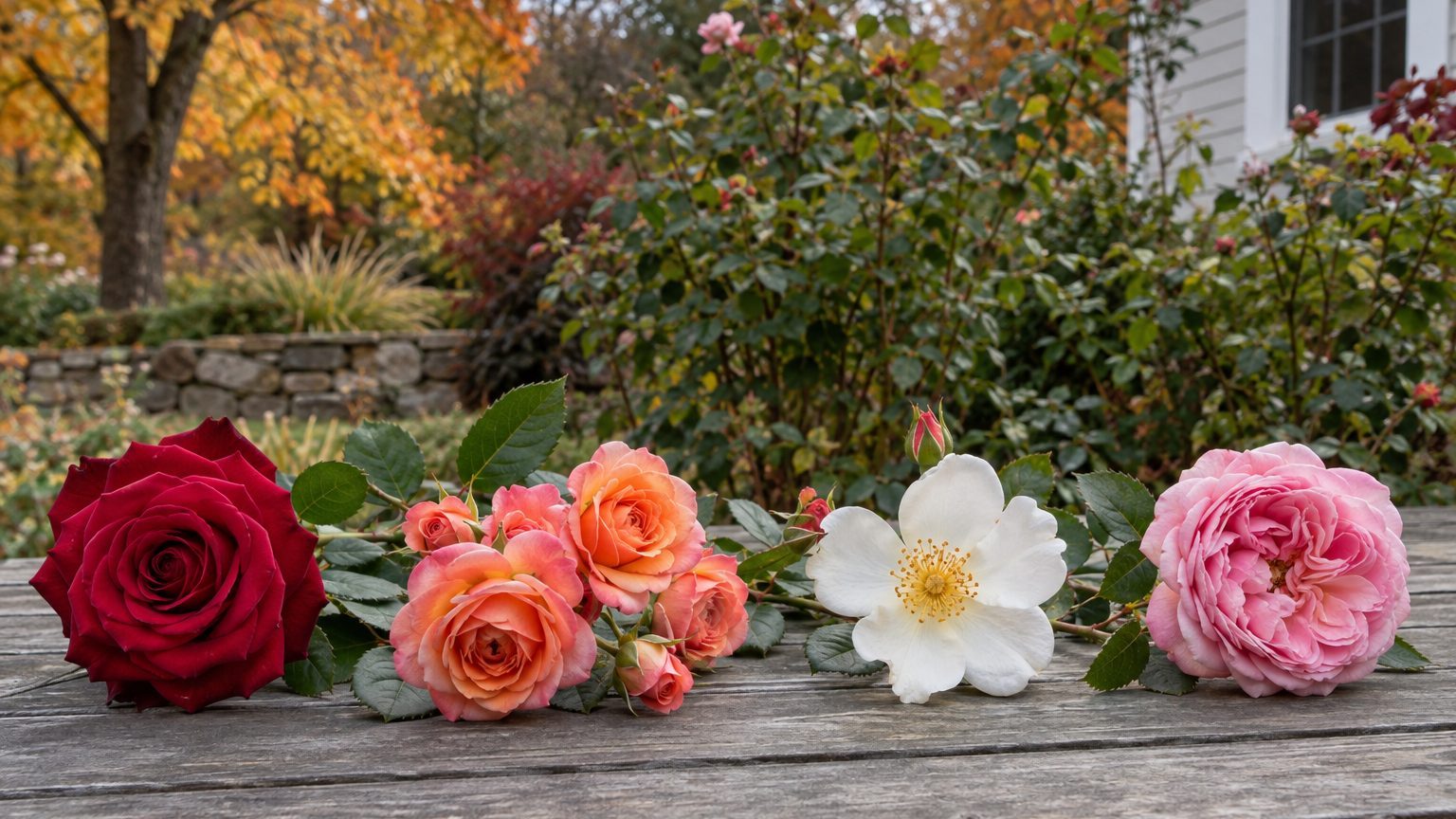
A rose that stays healthy without constant spraying usually starts with the choice made at the garden center in late winter. In British Columbia, that choice leans toward hardy shrub, rugosa and species roses, and toward disease-resistant varieties wherever summer air stays damp.
Best Roses to Grow in British Columbia

The roses that hold up here are the tough ones: shrub, rugosa, species and old garden roses, plus any variety bred to shrug off leaf diseases. Hardy choices cope with winter cold, while disease-resistant varieties stay healthier in damp summer weather.
Shrub Roses

Often called hardy shrub roses, these carry the scent and blooms people want without the upkeep of other roses. That makes them the easy starting point for a front yard or a mixed border.
Vancouver sits in Canadian hardiness zone 9a, a separate system from USDA zones that does not convert to them. Other districts of the province differ, so match the rose to your own garden.
Rugosa Roses
Rugosas can look like wild roses, and they behave like them too. They need less care than most garden roses, which suits a hedge or a corner that rarely gets attention.
Plant bare-root rugosas in February or March while they are dormant. Potted ones can go in later, up to early summer.
Species Roses
Species roses are the wild forms, and they live through hard winters unharmed. In colder pockets of the province, where a tender rose would need a mound of mulch, a species rose simply carries on.
Give them room, because they are shrubs and not tidy bedding plants.
Old Garden Roses
Many old garden roses are hardy choices for cold gardens. Once-blooming old garden roses flower on last year’s wood, so prune them right after flowering and never in early spring, or you cut off the season’s flowers.
Disease-Resistant Varieties
Whatever type you pick, look for varieties labeled disease resistant. In a damp summer, a resistant rose stays cleaner and needs fewer interventions than a susceptible one planted in the same bed.
Feed established roses from bud break, March through July, and ease off as growth slows in late summer.
British Columbia — the year and the numbers
- State
- British Columbia
- Hardiness zones
- 9a
- Last spring frost
- March 18
- First fall frost
- November 10
- Annual rain
- 47 in
- Lawn zone
- transition-season
- Source
- Environment and Climate Change Canada — Canadian Climate Normals 1981-2010, station VANCOUVER INT'L A · Vancouver
How to Choose a Rose for a British Columbia Garden
Start with the problem your garden presents, whether that is a cold pocket, a damp corner or a bed that bakes in July. The right type follows from that, and a little thought now can prevent replanting later.
Hardiness matters most where winters bite, while disease resistance matters where air stays wet through summer.
| Your situation | What suits it in British Columbia | Why |
|---|---|---|
| Very cold winter | Species roses, hardy shrub roses, many old garden roses | They live through hard winters unharmed, so they need little protection |
| Cold area with a tender rose | Mound loose mulch over the base in November or December | Mulch goes on once the plant is dormant, and only in cold areas |
| Humid summer | Disease-resistant varieties | They stay healthier when leaves stay damp |
| Heat and dry spells | Potted roses planted in early summer | Roots settle before the high temperatures of midsummer arrive |
| Little time | Shrub or rugosa roses | They do not require as much care as other roses |
Small gardens are harder to answer in general terms. Ask a garden center which shrub or disease-resistant varieties stay compact enough for a tight bed, and check the mature size on the tag before buying.
Which Roses Suit Different Parts of British Columbia
British Columbia’s climate varies sharply, so the same rose can be an easy choice locally and a gamble elsewhere.
- Vancouver and the Lower Mainland: Winters here are milder than in many other parts of the province, so a wider range of roses is open to you, and the spring pruning and planting months run earlier than elsewhere.
- Upland districts of the Interior: Spring arrives later here, so favor hardy shrub, rugosa and species roses and lean toward the later end of the pruning and planting months.
- Peace River country and the north: Frost runs weeks behind the coast, which makes species roses and hardy shrub roses the safer bet, with mulch ready for dormant plants in November.
Wherever you garden, a neighbor’s thriving rose is a useful clue to what suits your own soil and exposure.
Rose Buying Mistakes to Avoid in British Columbia
A Tender Rose in a Cold District
A tender rose in an upland or northern garden can lose canes in winter and start the season from the base. Choose a hardy shrub, rugosa or species rose instead. If you already own a tender one, mound loose mulch such as shredded leaves or compost over the base in November or December, once the plant is dormant.
A Disease-Prone Variety in a Wet Summer
A disease-prone variety can shed foliage in a damp summer and may need regular treatment. Read the tag or ask the garden center staff, and pick a variety described as disease resistant. Spacing plants so air moves between them also helps leaves dry.
Feeding Late into Summer
Roses begin to go dormant as summer ends, and fertilizer at that point asks for growth the plant is trying to wind down. Start feeding at bud break and stop in late summer, in August at the latest.
Where to Get Rose Advice in British Columbia
British Columbia has no local extension page on rose timing. Confirm the timing for your own district with a local garden center, rose society, or provincial gardening group.
- The British Columbia agriculture ministry publishes provincial growing information, and it is a good first stop before you plan a new bed.
- A local rose society or master gardener group knows which varieties perform in your district, and its members are often most helpful in late winter before planting.
- A neighborhood garden center can tell you what has done well locally and which bare-root roses have just arrived.
Common Questions
When Should You Prune Roses in British Columbia?
Repeat-blooming roses such as hybrid teas, floribundas and modern shrub roses are pruned in February or March. The job can also be done in April, around the time forsythia blooms. Waiting for mild weather avoids dieback that forces more pruning.
When Should You Plant Bare-Root Roses?
February or March suits bare-root roses, because dormant plants can build roots before spring growth begins. Roses that come in pots are more flexible. They can be planted later, into early summer.
Is March 18 a Safe Date to Set Out Roses in Vancouver?
No. That is the average date of the last spring frost, which means frost arrives later than that in one year out of two. Treat it as the middle of a window, and remember that northern and upland districts run weeks behind Vancouver.