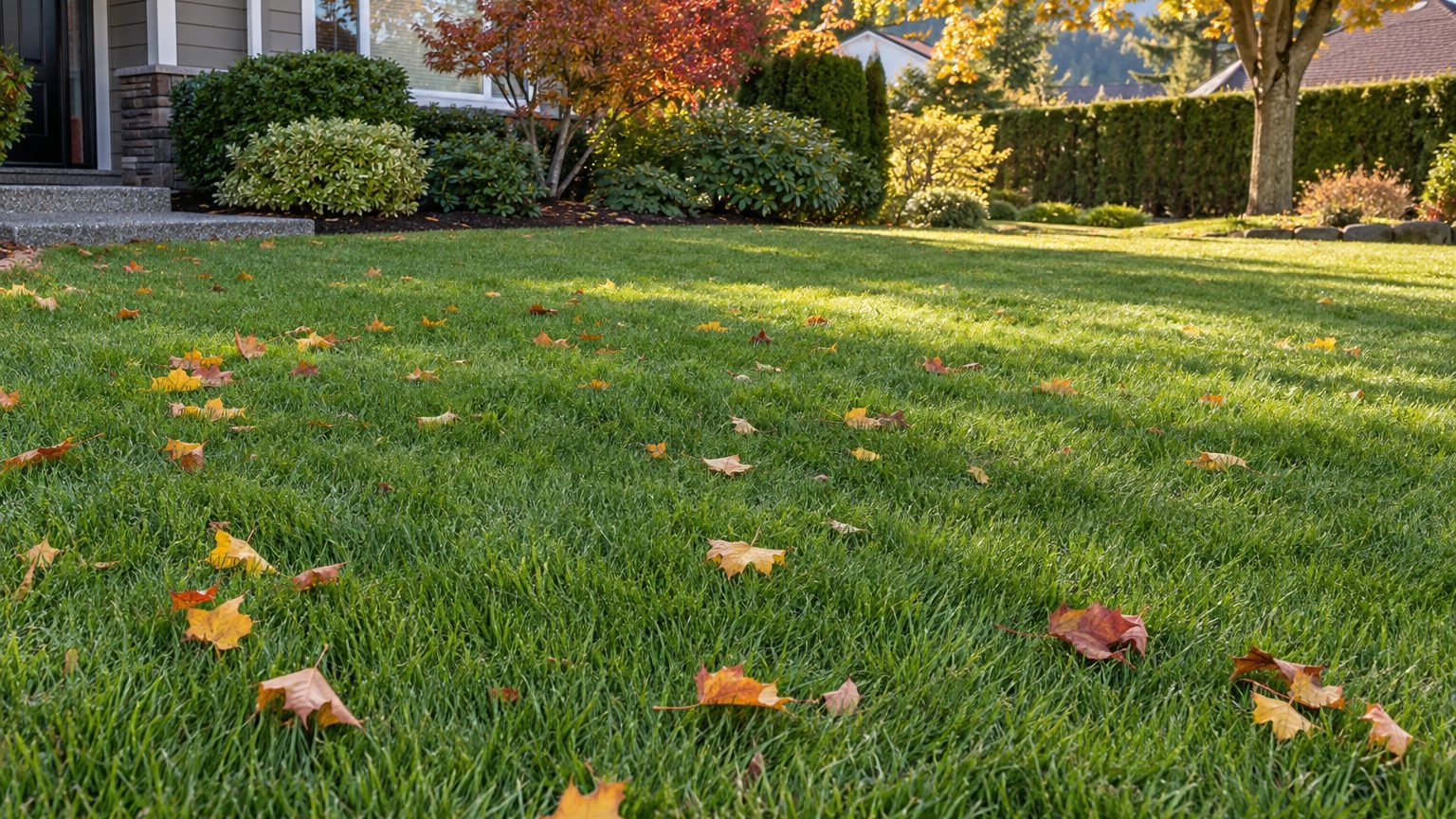
Grass in coastal British Columbia greens up early and keeps growing long after much of the country has gone dormant, so the lawn year here is a long one. Mowing starts in spring and can run into November. The big jobs, from seeding to feeding, cluster in late summer and early fall.
What to Do Each Month in a British Columbia Lawn

Each job below sits in the months when the grass can use it. Where a task also works in a shoulder month, the entry says so, and in the dormant months you mostly watch and wait.
| Month | In the lawn |
|---|---|
| January | Rest. The grass is dormant or barely moving, so keep off soggy turf to protect the crowns. |
| February | Rest. Check for pooled water and bare spots, and plan your seed and feed purchases. |
| March | No big jobs yet. The grass is waking slowly, and you watch for frost on any new growth. |
| April | Mowing also works this month once the grass is clearly growing, so take just the tips off the blades. |
| May | Apply crabgrass preventer before weed seed sprouts, and start regular mowing. Aeration, feeding and seeding also work now if the fall slips by. |
| June | Mow regularly and start watering as the rain thins out and the soil dries. |
| July | Keep mowing and water deeply as the soil dries during coastal summer weather. |
| August | Dethatch, then seed thin patches while the soil is still warm. Keep mowing and watering. |
| September | Aerate, feed, seed and dethatch. Warm soil and returning rain give new grass its best start. |
| October | Keep mowing as long as the grass grows. If you missed September, a feeding still works now. |
| November | Mowing also works on mild days. Seed spread on cold soil sits until spring and then sprouts. |
| December | Rest. The grass is dormant, so leave it alone and clear fallen leaves so they do not smother it. |
September brings seeding, feeding, aeration and dethatching together, and it rewards you for showing up. If your fall lawn time is limited, prioritize September.
British Columbia — the year and the numbers
- State
- British Columbia
- Hardiness zones
- 9a
- Last spring frost
- March 18
- First fall frost
- November 10
- Annual rain
- 47 in
- Lawn type
- cool-season
- Source
- Environment and Climate Change Canada — Canadian Climate Normals 1981-2010, station VANCOUVER INT'L A · Vancouver
When Does the Lawn Season Start and End in British Columbia?
Grass starts when the soil warms, not when the last frost passes. Seed needs soil between 10 to 18 °C (50 to 65 °F) to germinate, and the cool-season grasses common here keep growing in mild weather. That is why mowing can begin early and end late.
Frost dates only tell you when young grass is at risk. In Vancouver, the last spring frost comes around March 18 on average, and in one year out of two it arrives later than that. Treat it as a midpoint, never as a safe date for tender seedlings.
In fall in Vancouver, the first frost arrives around November 10 on average, again with half of years running later. By then September seed has had time to root and knit together. Upland and northern districts run weeks behind these coastal dates, so give them extra margin.
How the Lawn Calendar Shifts Across British Columbia
The schedule above fits the mild southwest coast best, and it moves with altitude, distance from the ocean and latitude.
- Lower Mainland and Vancouver Island: Spring arrives early here and fall lingers, so mowing can stretch at both ends of the season. The wet winters mean you protect saturated turf, and the dry summer means watering carries real weight.
- The Okanagan: Summers run hotter and drier and winters colder, so lean harder on the watering months and hold spring jobs a little later than on the coast.
- The Kootenays: Valley bottoms warm sooner than the surrounding slopes, so a yard’s elevation matters more than its town. Higher lots wake later and slow down earlier.
- Prince George and the north: The season is shorter and starts later. Seed at the front of the fall window so roots set before hard cold arrives.
Your own yard may sit a notch off its region, so watch when the grass actually starts to grow, and adjust from there.
Lawn Care Timing Mistakes to Avoid in British Columbia
Seeding on Cold Spring Soil
A mild March tempts people to scatter seed early. Cold, wet soil leaves seed sitting, and a late frost can nip what does sprout. Wait for May if you must seed in spring, and treat August and September as the real window.
Preventer After the Weeds Sprout
Crabgrass preventer works by stopping seed as it germinates, so it has nothing to do once weeds are up. Apply it in May, before the soil warms enough for weed seed to sprout. Applied later, it is money spent with little effect, and you will be pulling weeds by hand.
Dethatching in the Wrong Season
Raking out thatch tears the turf, and the grass needs strong growth to fill in afterward. Do it in August or September, when recovery is quick, and follow with seed. Doing it in cold spring leaves bare soil open to moss and weeds for longer.
Where to Get Lawn Advice in British Columbia
Canada has no county extension offices, so local help comes from a few other places. The provincial government keeps gardening and growing information through British Columbia’s agriculture ministry, and nearby groups fill in what a province cannot.
- Check the provincial agriculture ministry for growing guidance before you plan your fall seeding and feeding.
- Ask a local master gardener group about your soil, shade and watering, especially in spring when you plan the season.
- Visit a nearby garden centre in August to match grass seed to your sun and shade before the September window opens.
Common Questions
Is a Canadian Hardiness Zone the Same as a USDA Zone?
No. Vancouver sits in Canadian zone 9a, but that system uses seven climate variables where the USDA uses one, so the numbers do not convert. Use the Canadian zone for plants you buy in Canada and do not match it to a US map.
What Is the Difference Between Aerating and Dethatching?
Aerating pulls small plugs of soil from the lawn to relieve compaction and let air and water reach the roots. Dethatching removes the spongy layer of dead stems and roots that builds up at the surface. They are separate jobs, and a lawn may need one without the other.
Is a Brown Summer Lawn Dead or Just Dormant?
Look at the lawn pattern and the crowns together. Dormant grass turns straw brown across sunny, dry areas while shaded edges stay greener, and its crowns stay firm when you tug the blades. If it greens up after watering and the fall rain, it was resting and not dead.