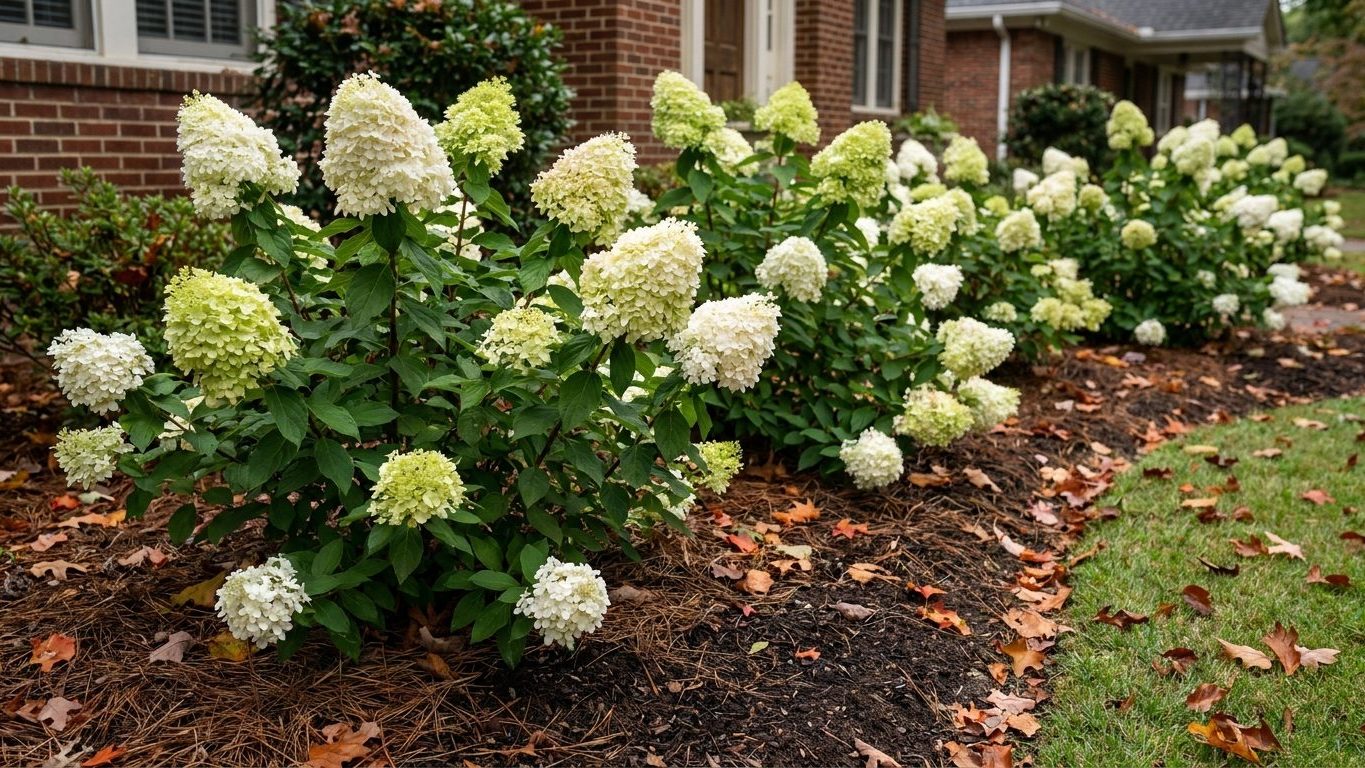
Alabama’s warm, humid summers hand hydrangeas a predictable lineup of problems: aphids on tender new growth, spider mites once July turns dry, powdery mildew and Cercospora leaf spot as humidity settles in, botrytis blight on spring buds, and root rot in soil that never drains. Humidity and timing decide which one shows up first in your yard.
Hydrangea pests and diseases Alabama: The Short Answer
Huntsville sits in USDA Hardiness Zone 7a-9a on the USDA Plant Hardiness Zone Map, and that stretch of mild winters and long humid summers is exactly what keeps six problems cycling through Alabama hydrangea beds year after year.
Alabama’s hydrangea trouble list runs from aphids and spider mites to powdery mildew, Cercospora leaf spot, botrytis blight, and root rot, with humidity deciding which shows up first.
Aphids
Clusters of small green or black insects crowd new stem tips in early spring, curling leaves and leaving a sticky residue that draws sooty mold. A strong hose spray every few days knocks most colonies down before ladybugs take over. Check new growth weekly through the spring planting window.
Botrytis blight
Gray, fuzzy patches appear on flower buds and stems during cool, wet spring stretches, turning petals brown and mushy almost overnight. Cutting out infected buds and spacing plants for airflow stops it from spreading to healthy wood. It hits hardest right after the last frost window closes in Huntsville.
Spider mites

Tiny stippled yellow speckling on leaf tops, with fine webbing underneath, shows up once July heat turns dry and dusty. A forceful water spray under the leaves every few days breaks their webs and washes most of them off. Mulch keeps roots cool so plants resist the stress that invites them.
Powdery mildew
A white, flour-like coating on leaves and stems spreads once August humidity sits heavy overnight but afternoons stay warm and dry. Pruning for airflow, watering the soil instead of the leaves, and morning watering all cut down the hours leaves stay damp. Bigleaf varieties show the most trouble.
Cercospora leaf spot
Small purple-brown spots ring older, lower leaves first, spreading upward and dropping foliage by late summer in wet years. Removing and disposing of fallen leaves each fall breaks the fungus’s cycle before next season’s new growth. Good spacing at planting time keeps this one from becoming an annual habit.
Root rot

Wilting leaves on a plant sitting in soggy, poorly drained soil signal Phytophthora working through the roots, no matter how much water gets added. Pulling mulch back from the stem and improving drainage before the next planting window is the only fix that works. Once wilting starts, the fix is prevention next time, not rescue.
Alabama — the year and the numbers
- State
- Alabama
- USDA zones
- 7a-9a
- Last spring frost
- March 19 to April 3
- First fall frost
- November 2 to November 16
- Annual rain
- 54 in
- Lawn zone
- warm-season
- Source
- NOAA NCEI 1991-2020 Climate Normals, 32F freeze probabilities · Huntsville
How to Work Out the Dates for Your Own Yard
Working out which problem you actually have starts with the calendar, not the leaf, since Huntsville’s last spring frost falls between March 19 and April 3 according to NOAA NCEI 1991-2020 Climate Normals, and every fungus or insect on this list waits for its own stretch of humidity or heat after that date.
- Mark the last frost window: count two to three weeks past the closing date before blaming cold damage for spotted or curled leaves, since bud-break stress shows up right at that window.
- Check the season first: aphids and botrytis blight cluster in the weeks right after the frost window closes, while spider mites and powdery mildew wait for July and August heat.
- Look at the leaf, not just the flower: a powdery white coating means mildew, purple-brown rings mean Cercospora, and sticky residue points to aphids.
- Test the soil around the roots: wilting despite regular watering points to root rot in soil that has stayed wet since spring rains.
- Match the fix to the calendar: fertilizing falls in March, May, and July, and bigleaf pruning falls in June and July, so timing treatments to those same months avoids stacking a second problem on a stressed plant.
Once the season and the symptom line up, the fix is almost automatic, and a call to the county extension office settles anything that still looks unclear after a week of watching it.
Alabama North to South: How the Dates Shift
Frost timing and humidity pressure shift across Alabama, and that shift changes which hydrangea problem shows up first and how long it sticks around.
- North Alabama and the Tennessee Valley (Huntsville, Decatur, Florence): the coolest, driest stretch of the state, where spider mites and powdery mildew arrive later in the summer and root rot stays rare outside heavy clay pockets.
- Central Alabama (Birmingham, Montgomery, Tuscaloosa): summer humidity settles in earlier here, pushing Cercospora leaf spot and powdery mildew ahead of the northern counties in most years.
- The Gulf Coast and Wiregrass (Mobile, Baldwin County, Dothan): the mildest winters and heaviest summer humidity in the state keep botrytis blight and root rot active longest, since soil rarely dries out between storms.
Check how these regional differences line up with your own county before assuming the Huntsville figures apply exactly where you garden.
Mistakes Alabama Punishes
Watering leaves in the evening
Overhead watering after work keeps foliage wet through the night, exactly the window powdery mildew and Cercospora leaf spot need to take hold in Alabama’s humidity. Switching to a soaker hose at the base, watered in the morning, dries leaves by midday and cuts fungal spread noticeably within a season.
Skipping fall leaf cleanup
Leaving fallen leaves under the shrub through winter lets Cercospora and botrytis spores overwinter right where next spring’s new growth will emerge. Raking and disposing of dropped foliage each fall, rather than composting it nearby, breaks that cycle before the next fertilizing window in March.
Planting too close together
Crowded shrubs trap the humid air that spider mites, mildew, and leaf spot all depend on, especially along the Gulf Coast and Wiregrass. Spacing new plants for airflow at the September or October planting window matters more here than in drier states further north.
Alabama Extension Offices and County Contacts
The Huntsville figures above are a starting point, and Alabama Cooperative Extension System agents in your own county diagnose the specific pest or disease sitting in front of you, often for free with a photo or sample.
- Alabama Extension (aces.edu): find your county office, submit a plant problem question, and get a same-week response from an agent.
- Your state guide: the hardiness zone and frost windows that set the calendar for every hydrangea in the yard.
- Which ones hold up here: the varieties that shrug off Alabama humidity instead of feeding it.
Bring a sample bag and a clear photo of both healthy and affected leaves when you call.
Common questions
What’s the most common hydrangea problem in Alabama?
Powdery mildew and Cercospora leaf spot show up most often, both fed by the same humid stretch that settles over the state from July through September.
Do healthy hydrangeas ever get pests without any care mistakes?
Yes, aphids and spider mites can find even a well-tended shrub, since they travel in from neighboring plants and weeds regardless of watering habits. Regular leaf checks catch them early, before populations build.
Should I treat for disease before I see symptoms?
Preventive spacing, morning watering, and fall cleanup do more good than any spray applied without a confirmed problem, and a county extension agent can confirm what’s actually present before you treat anything.