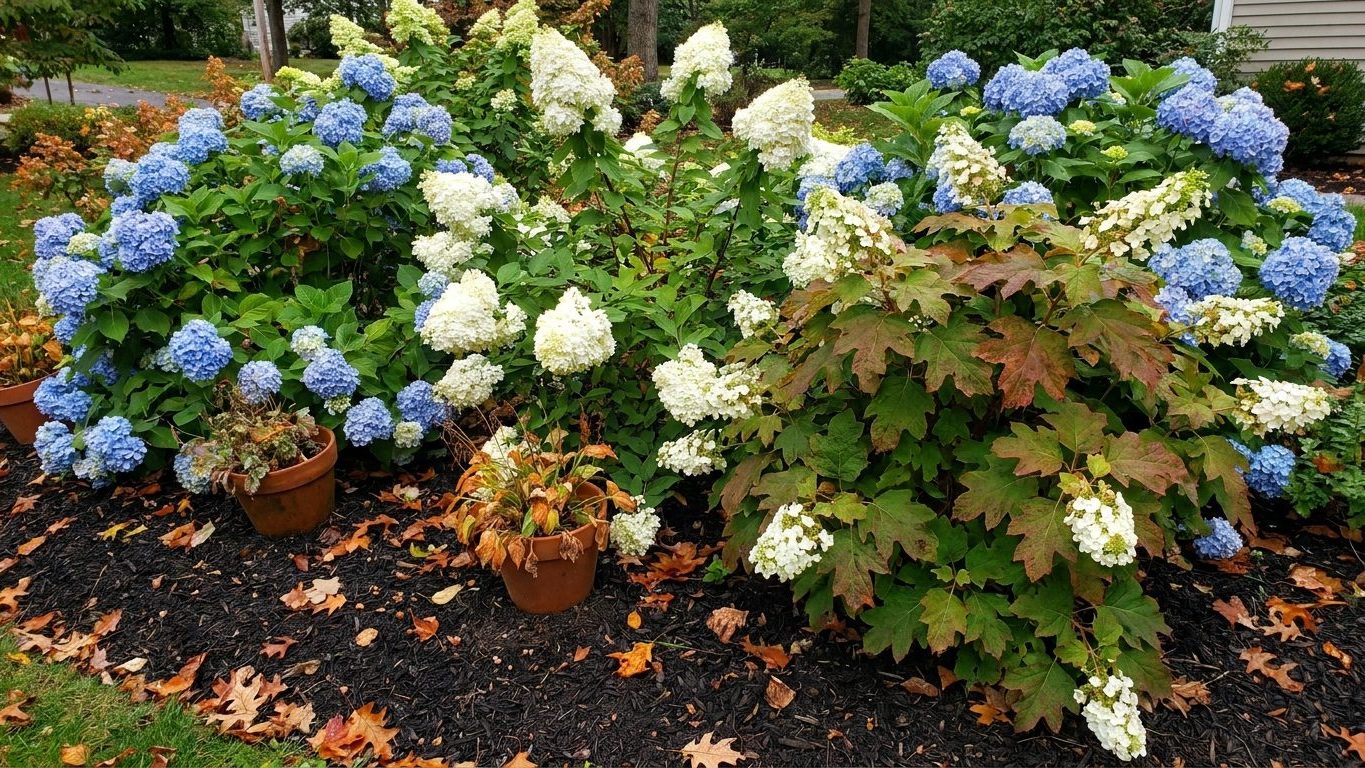
Oakleaf, panicle, and smooth hydrangeas grow reliably across Alabama, from the foothills near Huntsville to the Gulf Coast near Mobile. Bigleaf hydrangeas, the ones with the classic mophead blooms, work too, but Alabama’s swings between a mild fall and a stray hard freeze can cost you a season of flowers if you don’t plant the right kind for your yard.
The Short Answer
The USDA Plant Hardiness Zone Map puts Alabama at 7a to 9a, and Birmingham, the reference city for this guide, sits in the middle of that range. That single fact decides most of the list below: shrubs that bloom on new wood or set buds late shrug off Alabama’s mild-but-unpredictable winters, while shrubs that bloom on old wood risk losing a season of flowers to a stray freeze.
Oakleaf hydrangea

Hydrangea quercifolia is native to Alabama’s woodlands, so it already knows the state’s heat, humidity, and clay soil. It blooms reliably even after a rough winter and turns deep red-bronze in fall, making it the safest pick on this list.
Panicle hydrangea

Hydrangea paniculata blooms on new wood, so a late freeze can’t touch flower buds that haven’t formed yet. It tolerates more direct sun than most hydrangeas, which matters through Alabama’s long, bright summers.
Smooth hydrangea

Hydrangea arborescens, the type behind the popular Annabelle cultivar, also flowers on new growth each year. It’s forgiving of Alabama’s clay soil and bounces back fast even after a hard pruning or a cold snap.
Bigleaf hydrangea

Hydrangea macrophylla is the classic mophead most people picture, and it grows across Alabama, but it sets its flower buds on old wood the previous fall. A freeze that lands inside Birmingham’s spring frost window can knock out that year’s blooms even though the shrub itself survives.
Mountain hydrangea

Hydrangea serrata behaves like a smaller, slightly tougher cousin of bigleaf hydrangea, with buds that hold up a little better through a cold snap. It still struggles with Alabama’s heavy summer humidity, which limits it mostly to the northern part of the state.
Climbing hydrangea

Hydrangea anomala subsp. petiolaris prefers cooler summers than Alabama offers and can take years to establish before it flowers at all. It’s the riskiest name on this list south of the Tennessee Valley.
Alabama — the year and the numbers
- State
- Alabama
- USDA zones
- 7a-9a
- Last spring frost
- March 19 to April 3
- First fall frost
- November 2 to November 16
- Annual rain
- 54 in
- Lawn zone
- warm-season
- Source
- NOAA NCEI 1991-2020 Climate Normals, 32F freeze probabilities · Huntsville
How to Work Out the Dates for Your Own Yard
Picking the right hydrangea for your own yard means matching its bud habit to Birmingham’s frost calendar, then adjusting for whatever makes your particular lot warmer or colder than the airport station.
- Find your last spring frost window: NOAA NCEI 1991-2020 Climate Normals puts Birmingham’s last spring freeze between March 19 and April 3, the stretch when a bigleaf hydrangea’s new growth is most exposed.
- Find your first fall frost window: the same station puts the first fall freeze between November 2 and November 16, marking when active growth stops for the year.
- Widen both windows for your own lot: a yard in a low spot or a shaded hollow often sees frost one to two weeks earlier or later than the airport figures, so treat these dates as a starting point.
- Check the bloom habit of the shrub you want: oakleaf hydrangea sets its buds late enough in the season to dodge most of that spring window, which is why it survives Alabama winters with almost no fuss.
- Weigh the shrub against Alabama’s summer, not just its winter: climbing hydrangea can survive the frost dates just fine but often fails anyway, because it dislikes the long stretch of heat and humidity that follows.
Once you know your own frost dates and your soil, matching a shrub’s bloom habit to that window matters more than its name on a nursery tag.
Alabama North to South: How the Dates Shift
Elevation, distance from the Gulf, and simple latitude all push Alabama’s frost dates and hardiness zone in different directions across the state.
- North Alabama and the foothills (Huntsville, Fort Payne, Sand Mountain): higher elevation and cooler nights push the safe planting window later and favor cold-hardy oakleaf and mountain hydrangea over tender bigleaf buds.
- Central Alabama (Birmingham, Montgomery, Tuscaloosa): sits closest to the reference-city numbers used throughout this guide, with a moderate frost calendar and the state’s middle hardiness zones.
- South Alabama and the Gulf Coast (Mobile, Dothan, Baldwin County): milder winters and a longer humid summer stretch the growing season but stress cool-loving types, favoring heat-tolerant panicle and oakleaf varieties instead.
The Alabama hydrangea guide breaks the state’s frost dates and hardiness zones down further for whichever part of Alabama you garden in.
Mistakes Alabama Punishes
Pruning bigleaf hydrangea in late fall
Alabama’s mild autumns tempt gardeners to tidy up hydrangeas after the first cool snap, but bigleaf and mountain hydrangea have already set next year’s flower buds by then. Prune bigleaf hydrangea right after it finishes blooming in summer instead, never in fall or winter.
Full afternoon sun on a mophead
A west-facing bed that looked fine in April turns brutal by July, and bigleaf hydrangea leaves scorch and wilt in Alabama’s humid heat. Give mopheads morning sun and afternoon shade, and save the sunniest spots for panicle hydrangea instead.
Heavy clay soil with no drainage
Alabama’s red clay holds water long after a summer thunderstorm, and hydrangea roots sitting in that water rot within a season. Work compost into the planting hole and raise the bed a few inches before you plant, not after the shrub starts wilting.
Alabama Extension Offices and County Contacts
The 7a to 9a range covers the whole state, but your county’s soil, rainfall, and pest pressure are what actually decide which hydrangea thrives in your yard.
- Your state page: the frost dates and the pruning window where you live.
- Which ones hold up here: the varieties ranked by risk.
- What goes wrong here: the pests and problems specific to Alabama’s hydrangeas.
The Alabama Cooperative Extension System connects to local agents who can confirm what will actually grow in your county’s soil.
Common Questions
Can bigleaf hydrangeas survive Alabama winters?
Yes, the shrub itself is hardy across Alabama’s 7a to 9a range, but its flower buds form on old wood the previous fall. A hard freeze that lands close to Birmingham’s spring frost window can kill those buds even though the plant leafs out fine.
What is the best hydrangea for full sun in Alabama?
Panicle hydrangea tolerates more direct sun than any other type on this list and holds up well through Alabama’s long, humid summers. Oakleaf hydrangea also handles a half day of sun once established.
Do hydrangeas need special care in Alabama’s clay soil?
Most hydrangeas struggle in Alabama’s dense red clay unless the bed drains well, since standing water rots their roots faster than cold ever does. Working compost into the planting hole and slightly raising the bed solves most of the problem.