Skip to content
  1. Jan
  2. Feb
  3. Mar
  4. Apr
  5. May
  6. Jun
  7. Jul
  8. Aug
  9. Sep
  10. Oct
  11. Nov
  12. Dec
State
Alabama
USDA zones
7a-9a
Last spring frost
March 19 to April 3
First fall frost
November 2 to November 16
Annual rain
54 in
Lawn zone
warm-season
Source
NOAA NCEI 1991-2020 Climate Normals, 32F freeze probabilities · Huntsville

The year in Alabama, from the calendar

  1. JanPlant fruit trees
  2. FebPlant roses · Prune roses · Plant fruit trees · Prune fruit trees
  3. MarFeed hydrangeas · Plant hydrangeas · Feed roses · Plant roses · Prune roses
  4. AprPlant hydrangeas · Peonies bloom · Feed roses · Mow
  5. MayFeed hydrangeas · Seed the lawn · Peonies bloom · Feed roses · Aerate
  6. JunPrune bigleaf hydrangeas · Feed roses · Dethatch · Fertilize the lawn · Mow
  7. JulFeed hydrangeas · Prune bigleaf hydrangeas · Feed roses · Fertilize the lawn · Mow
  8. AugFeed roses · Fertilize the lawn · Mow · Water
  9. SepPlant hydrangeas · Plant peonies · Feed roses · Mow · Plant trees
  10. OctPlant hydrangeas · Plant peonies · Plant trees · Mow
  11. NovPlant spring bulbs · Cut back peonies · Plant trees · Mow
  12. DecPlant spring bulbs · Plant trees · Plant fruit trees

From the state frost facts and extension calendars: University of Georgia Cooperative Extension ; University of Georgia CAES · Clemson HGIC factsheet — Hydrangea · Clemson Cooperative Extension, HGIC — Bermudagrass / Zoysiagrass / Centipedegrass / St. Augustinegrass maintenance calendars · Clemson Cooperative Extension (HGIC).

When to Plant Roses in Alabama: Dates and Varieties

When to Plant Roses in Alabama: Dates and Varieties

Bare-root roses go into Alabama ground while the plants are still asleep, in late winter, and potted roses follow once the soil warms. Pruning waits until the buds begin to swell, and feeding starts in spring.

When to Plant Roses in Alabama

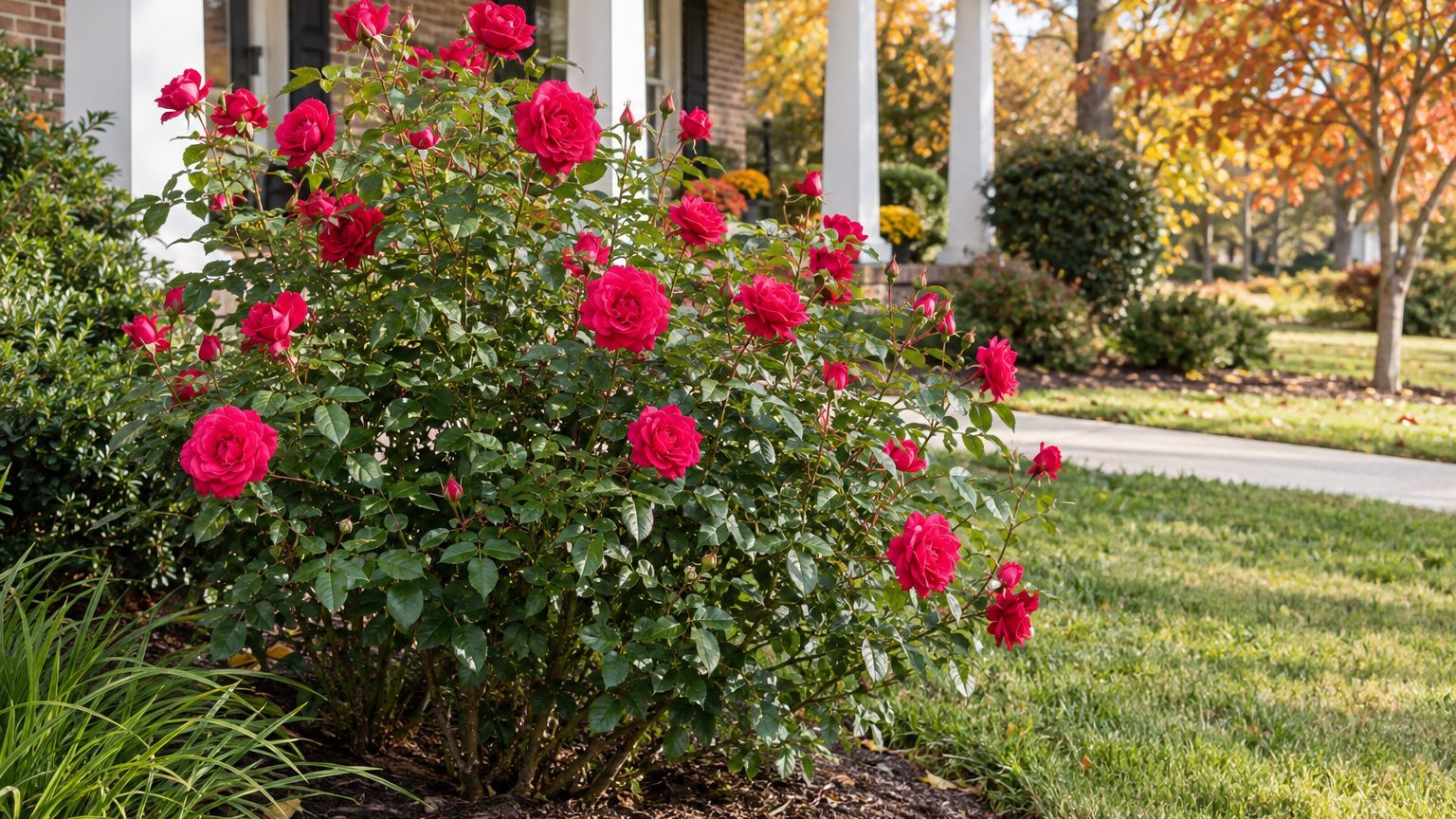
A rose bush in bloom in a home garden

Bare-root roses go in first, in February and March, while the canes are dormant. Potted roses can go in later, once spring has settled. Alabama sits in USDA zones 7a to 9a, so the right moment shifts a little with your county.

  • In winter, from December into January, bare-root roses can already go in the ground if the soil is workable, though February and March are the months to aim for.
  • In February and March, plant bare-root roses while they are dormant, so the roots settle in before leaves and tender new growth appear.
  • In April, a bare-root rose can still be planted, and potted roses can go in as the weather steadies.
  • From March through September, feed on a monthly rhythm so the plant keeps making new growth and bloom.
  • In November and December, late-fall planting of bare-root roses is a fallback, when the plants are dormant again and the heat has gone.

At the Huntsville reference location, the last spring frost falls between March 19 and April 3, which matters because a young rose with fresh, soft shoots is easily hurt by a late freeze. The first fall frost arrives between November 2 and November 16. Gardens outside the city often see the last spring frost later and the first fall frost sooner, so check your own county before you buy plants.

Which Roses Grow Best in Alabama?

Alabama’s warm, humid summers favor black spot and other leaf diseases, so the roses that thrive are the ones that shrug off disease or that get a regular spray program. USDA zones describe winter cold, but they do not by themselves determine how much protection a rose needs.

Rose type How it does in Alabama Why
Shrub roses Bloom beautifully with few chemical controls Better disease resistance, so less spraying in humid weather
Hybrid teas Need a rigorous spray program Susceptible to black spot, so protection must start before the growing season
Old garden roses Reliable with light pruning Hard pruning ruins their graceful shape and cuts flowering

For floribundas and climbers, ask local gardeners how they handle humid summers. If you want fewer sprays, start with shrub roses. Once-blooming old garden roses, ramblers and climbers flower on last year’s wood, so prune them right after they bloom, never in early spring.

When to Prune, Feed and Protect Roses in Alabama

Late winter brings pruning and planting, followed by steady feeding through the growing season. Cutting back follows the buds more than the calendar, so look at the canes before you pick up the shears.

Task When to do it in Alabama Why then
Pruning repeat-blooming roses February, March Cut as the buds swell, after the worst cold has passed
Planting bare-root roses February, March Plants are dormant, and roots settle in before growth starts
Feeding roses March through September Monthly feeding supports steady growth and repeat bloom

For bush roses such as hybrid teas and floribundas, swelling buds give the pruning signal in early spring; mid-February is a rule of thumb, but timing varies with location. The swelling buds, not a fixed date, give the signal. Winter-protection timing varies with the rose and the garden, so ask your county extension office for local guidance.

How Rose Care Dates Change Across Alabama

Alabama stretches from the cooler north to the warm Gulf, and rose timing moves with it. Buds wake earlier in the south and later in the north, so the same task lands on different days.

  • Gulf Coast: Mild winters bring the buds up earlier, so pruning and bare-root planting fall toward the start of the February to March window.
  • Birmingham and the central counties: Spring arrives a bit later than on the coast, so pruning and planting tend to fall near the middle of the window.
  • Huntsville and the Tennessee Valley: Colder nights keep the buds asleep longer, so pruning and planting move toward the later part of the window.

When in doubt, let the buds decide. Once the buds swell on a repeat-blooming rose, it is ready for spring pruning, wherever you garden in the state.

Where to Get Rose Advice in Alabama

Rose problems often come down to soil, disease or timing, and a local expert can sort them out faster than guesswork. The Alabama Cooperative Extension System runs offices that serve every county.

  • The extension website has rose-growing articles that you can read before you shop for plants in late winter.
  • Your county extension office can test your soil, so take a sample before planting bare-root roses in February or March.
  • Bring a leaf with spots or a cane with damage to the county office for a diagnosis during the growing season.

Common Questions

Can You Plant a Potted Rose in Summer in Alabama?

Potted roses can go in later than bare-root plants, but the calendar does not give them a summer planting window. Late winter and spring are the safer choices, when the roots have time to settle before the hottest weather.

Do Roses Need Winter Protection in Alabama?

Winter-protection needs vary by rose and location, so ask your county extension office for local guidance. The bigger risk is a late freeze after the buds have started to swell, so watch the forecast in March.

How Often Should You Feed Roses in Alabama?

Feed monthly from March through September. Ask your county extension office for a fertilizer recommendation based on a soil test.
Best Spring Bulbs for Alabama

Best Spring Bulbs for Alabama

Daffodils pushing up through cold, damp ground in late winter are one of the surest signs of spring in an Alabama yard. Tulips are a different story, because the state’s mild winters give them less cold than they want.

Best Spring Bulbs to Grow in Alabama

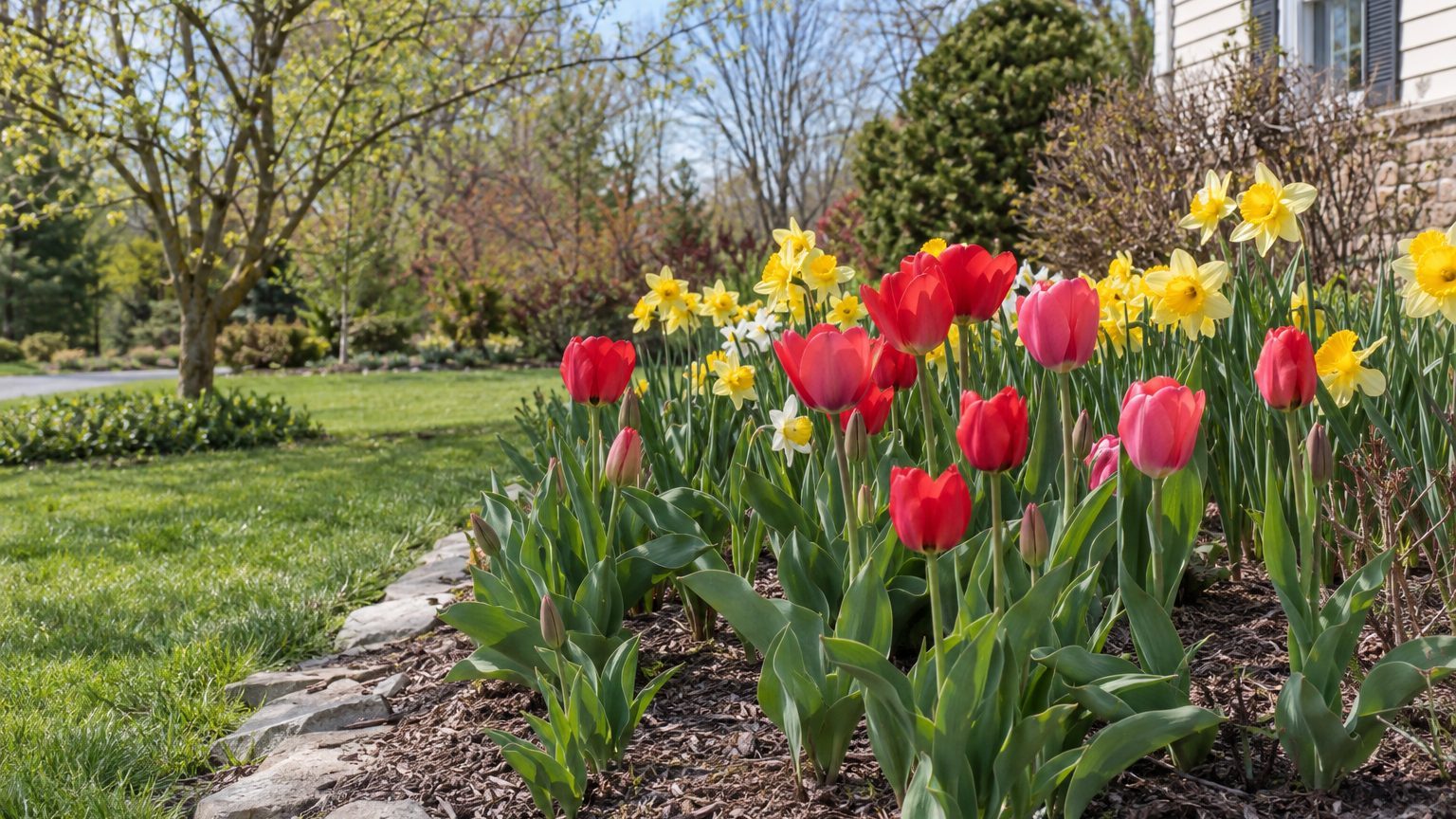
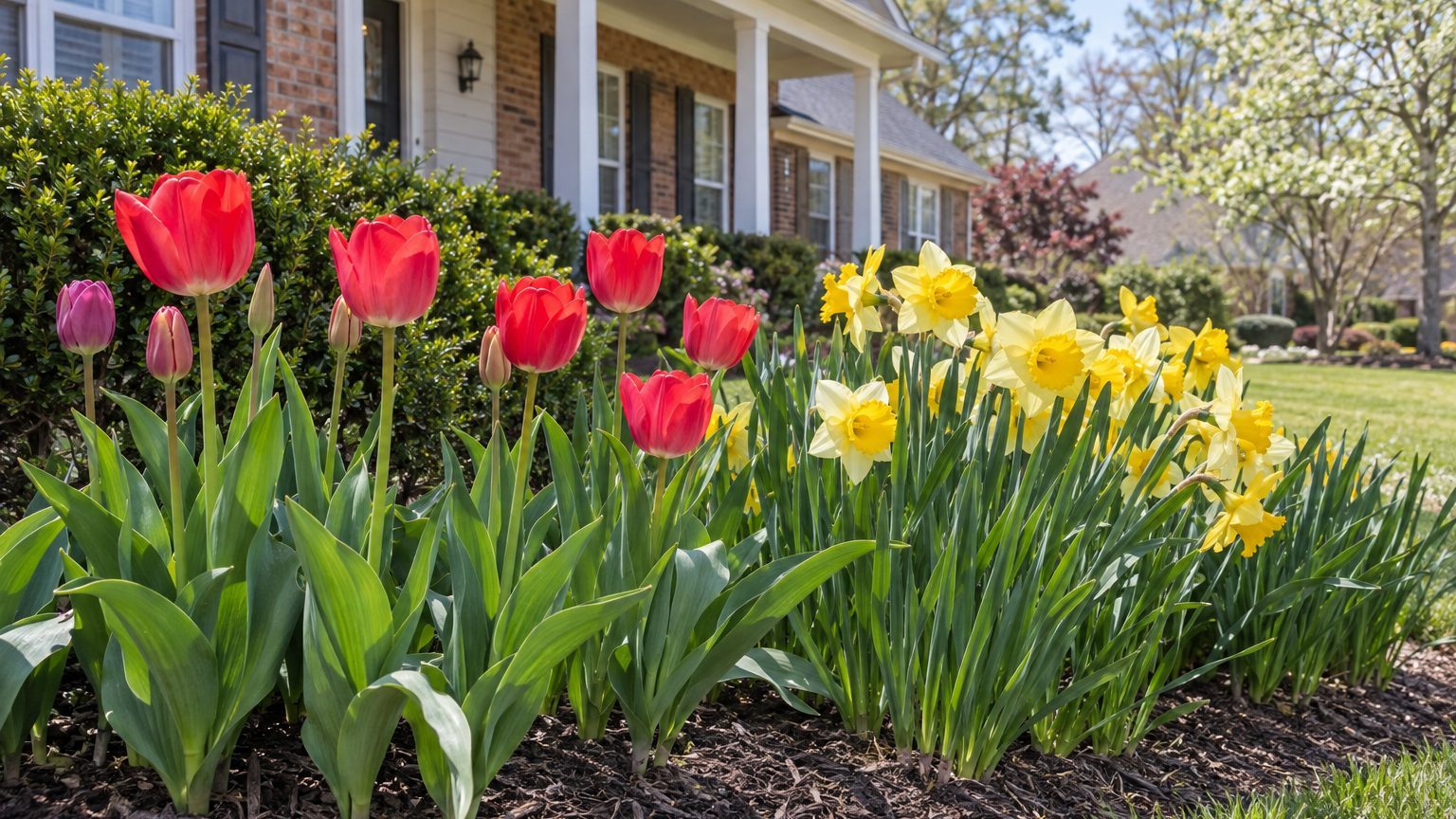
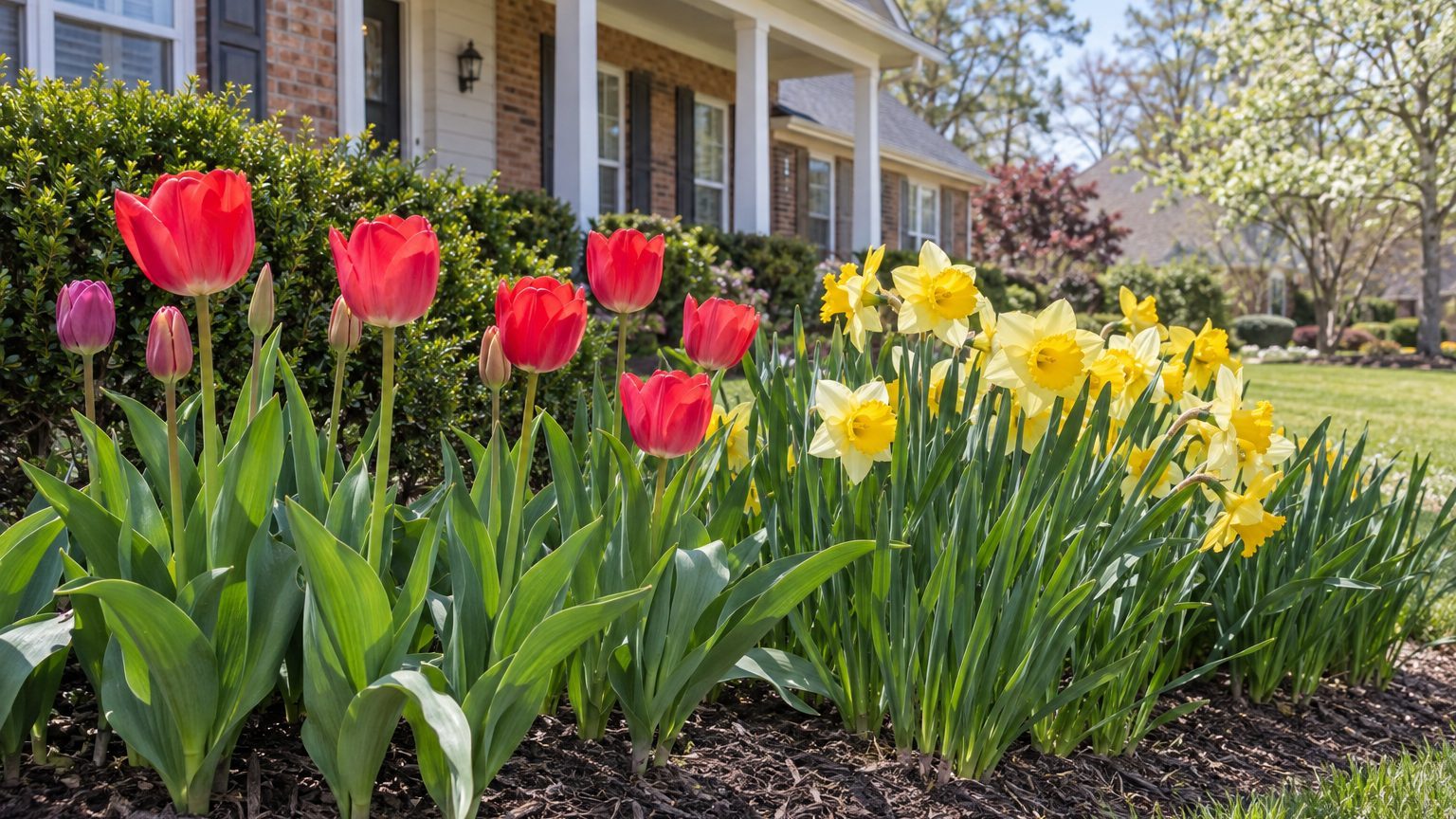
Healthy spring bulbs in bloom

Daffodils, single late tulips, species tulips and alliums are the bulbs that hold up in Alabama, where USDA hardiness zones run from 7a to 9a. Winters here often fall short of the cold that classic tulips and hyacinths need, so the reliable choices are bulbs that either ignore that gap or shrug it off.

Daffodils

Daffodils are the most dependable of the popular spring bulbs for naturalizing across the South. Jonquil hybrids, tazetta hybrids, poeticus and species daffodils all grow reliably through the region, and they return and spread for years where tulips fade.

Leave the foliage alone after bloom until it turns brown, and take off only the faded flowers. The leaves are feeding the bulb for next year.

Single Late Tulips

Single late tulips are among the best groups for warm climates. They carry long, strong stems topped with deep, cup-shaped blooms in a wide range of colors.

Plant them for a strong first spring, and treat any repeat bloom as a bonus rather than a promise.

Species Tulips

A few species tulips come from warm climates and do not need a cold period to flower. That makes them a natural fit for Alabama’s mild winters, and the ones suited to the South will naturalize in the garden.

They are smaller and more modest than the showy hybrids, but they are the tulips most likely to come back.

Alliums

According to Iowa State University Extension, alliums, the ornamental onions, need the cold of winter to bloom. They arrive at the end of the spring bulb season and carry the show on after the earlier flowers have faded.

They suit beds where you want height and a late finish.

Chilled Tulips and Hyacinths

Most spring-flowering bulbs need about 12 to 16 weeks of cold to flower. Where winters cannot supply that, tulips and hyacinths are chilled in the refrigerator before planting.

The effort pays off in a good first bloom, though tulips in particular tend to be short-lived in the garden afterward.

How to Choose Spring Bulbs for Your Alabama Garden

Planting runs from November into December, and it can also be done in October or January. Bulbs chilled in the refrigerator can go in even into early January. Your own yard decides the rest, from how much winter you get to how much attention you want to give.

Your situation What suits it in Alabama Why
Hot, humid summers Jonquil and tazetta daffodils They grow reliably across the South and settle in for years
Mild winters, but you want tulips Single late tulips or species tulips Single late tulips handle warm climates, and some species tulips need no cold period
Little time to fuss Daffodils They last longer than tulips and are the more reliable perennial bulb
A need for cold you cannot supply Tulips and hyacinths chilled in the refrigerator first Most spring bulbs want about 12 to 16 weeks of cold, and the fridge makes up the gap
Deer, squirrels or voles in the yard Daffodils Animals leave them alone, while tulips and crocus get eaten

Daffodils cover the widest range of situations, which is why they anchor most Alabama bulb plantings. Add tulips where you can accept a single season of color, and give them a chill if winters run mild in your area.

Which Spring Bulbs Suit Different Parts of Alabama

The state stretches from the Tennessee Valley down to the Gulf, and winter cold changes a good deal along the way, which shifts both the choice and the planting date.

  • North Alabama, including the Huntsville area: Winters are colder here, so tulips and hyacinths get more of the chill they want. Daffodils are still the dependable base, with tulips as a worthwhile addition.
  • Gulf Coast, around Mobile and Baldwin County: Winters are mildest here, so lean on daffodils, species tulips and alliums. Plant in November or December, or in January, and chill tulips and hyacinths in the refrigerator first.

Central Alabama sits between the two, so a mix of daffodils with some chilled or single late tulips works well. Your own county’s microclimate matters too, since low spots and shaded north slopes stay colder than open south-facing beds.

Spring Bulb Buying Mistakes to Avoid in Alabama

Counting on Tulips to Return

Tulips can usually be counted on for a single season of color in the South, and many decline after the first year. If you plant them expecting a permanent display, you will be replanting every fall.

Treat them like annual flowers, or choose single late and species tulips, which hold on longer. Put your lasting investment into daffodils.

Skipping the Chill

Tulips and hyacinths planted straight from the bag into Alabama’s mild winters may bloom poorly because they never got their cold. That wastes the cost of the bulbs and a season of space in the bed.

Chill them in the refrigerator before planting, or pick bulbs that skip the requirement, such as species tulips, but alliums need the cold of winter to bloom.

Planting Tulips and Crocus Where Animals Roam

Voles, squirrels, rabbits and deer eat tulips and crocus, and a bed can be stripped before it ever blooms. Daffodils are left alone.

If animals visit your yard, plant daffodils in the exposed beds, and keep tulips closer to the house or in places you can protect.

Where to Get Spring Bulb Advice in Alabama

Local conditions vary from the Tennessee Valley to the coast, so a quick check with local experts helps you match bulbs to your own soil and winter.

  • The Alabama Cooperative Extension System publishes home gardening guidance, which is worth reading before fall planting season opens.
  • Your county extension office can tell you what grows in your local soil and climate, so call or stop by before you buy bulbs in autumn.

Common Questions

When Can You Cut Back Daffodil and Tulip Leaves After Bloom?

Wait until the leaves turn brown, and remove only the faded flowers in the meantime. The foliage keeps feeding the bulb for next year’s bloom, so cutting or tying it while green costs you flowers.

What If You Still Have Bulbs in the Bag After Planting Season?

Plant them as long as the ground can be dug. A bulb planted late does better than one stored over the winter.

How Do You Know When the Soil Is Ready for Planting?

Wait until the soil has cooled below about 60°F. That leaves time for roots to form before the ground freezes, yet keeps the bulbs from sprouting in the fall.

When Do Tulips and Daffodils Bloom in Alabama?

When Do Tulips and Daffodils Bloom in Alabama?

Daffodil leaves poking through cold ground and tulip buds fattening on their stems are the first real signs of spring in an Alabama yard. Both bloom as the weather warms in spring, and the exact week shifts from year to year and from Mobile Bay to the Tennessee Valley. What follows explains what sets the timing and what to do around it.

When Do Tulips and Daffodils Bloom in Alabama?

When Do Tulips and Daffodils Bloom in Alabama?

Tulips and daffodils bloom in spring in Alabama, and the flowers follow the warming of the weather rather than a fixed date. No single month fits every yard, so watch your own bulbs and your own soil. Bulbs planted in November or December have the winter to settle and set buds.

Planting in October or January also works. Alabama sits in USDA zones 7a to 9a, which is why winter cold varies so much from one yard to the next.

Bulb When it blooms in Alabama What sets the timing
Daffodils Spring, as the weather warms Jonquil, tazetta, poeticus and species types grow reliably in the South and come back year after year
Tulips Spring, as the weather warms Need winter cold to flower and are often short-lived, so many yards treat them as one season of color
Hyacinths Spring, as the weather warms Need about 12 to 16 weeks of cold, so mild winters call for chilling the bulbs in the refrigerator before planting
Alliums Late in the spring bulb season Need the cold of winter to bloom

Crocus belong to the same early parade as daffodils, though voles and squirrels often dig them up. Daffodils are the exception to that appetite, since animals leave them alone.

How to Tell Your Bulbs Are About to Bloom

Your bulbs announce themselves in stages, long before the first petal opens, and each stage tells you something to do or to leave alone.

  • Green tips pushing through the soil mean the bulb is alive and rooted, so you can stop worrying about whether the planting took.
  • Leaves that unfold and widen show the bulb is gathering energy, which is the moment to keep mowers and edgers away from the bed.
  • A fat bud rising from the center of the leaves means flowers are close, and a cold snap now calls for a light covering at most.
  • A bud that starts to show color on the tip is hours or days from opening, which is a good moment to cut a few stems for a vase.
  • Foliage with no bud at all, especially on tulips, usually points to a bulb that has worn out and will not flower again.

Wet soil and heavy shade slow every one of these stages, so a bed that lags behind the neighbor’s is often just cooler.

What to Do After Tulips and Daffodils Bloom in Alabama

Once the petals fade, snip off only the spent flowers. Leave the leaves exactly where they are until they turn brown, because they are feeding the bulb for next year. Skip any braiding, tying or folding of the foliage, since that shades the leaves and cuts the supply.

Tulips are often short-lived in the garden, and in Alabama they are commonly treated like annuals, dug out after they flower. Daffodils last longer and are the more reliable perennial bulb. Plan on replanting tulips in fall and letting daffodils spread on their own.

A tidy cover of daylilies or other perennials planted nearby can hide the yellowing leaves while they finish their work. Any bulb still unplanted goes into the ground as soon as the soil can be dug, and soil below about 60°F is the signal that fall planting can start.

How Bloom Time Shifts Across Alabama

Alabama stretches from mountain foothills to saltwater, and bulbs respond to that difference in the same direction every year.

  • Gulf Coast: Mild winters bring flowers sooner than inland, and tulips and hyacinths need chilling in the refrigerator before planting. In coastal areas, bulbs are generally planted later in the season.
  • Birmingham and central Alabama: Bloom lands between the coast and the northern hills, and the winter chill is usually enough for daffodils and most tulips.
  • Tennessee Valley and the northeastern foothills: Colder winters and higher ground push bloom later than on the coast, and a late freeze can nip open flowers.

Your own yard can run ahead or behind its neighbors, so treat a south-facing wall as a head start and a shady low spot as a delay.

Where to Get Bulb Advice in Alabama

Local help starts with the state land-grant system and the county office, both of which know your soil and your winters better than any general chart.

  • Alabama Extension publishes planting and care guidance for home gardeners, and the site is worth a visit before you order bulbs in fall.
  • Your county extension office answers questions about your soil and local varieties, and early fall is a good time to call or stop by.

Common Questions

Can You Still Plant Bulbs in January in Alabama?

Yes. November and December are the usual planting months, while October and January also work. Refrigerated bulbs can go in even into early January. A bulb still in the bag is better planted late than stored.

Which Spring Bulbs Do Deer and Squirrels Leave Alone?

Daffodils. Voles, squirrels, rabbits and deer eat tulips and crocus, so a bed of daffodils is the safer choice where animals visit often.

Which Tulips Handle Warm Winters Best?

In Alabama, single late tulips are among the groups recommended for warm climates, with long, strong stems and cup-shaped blooms. A few species tulips come from warm regions and flower without a cold period, and they naturalize in the South.

When to Plant Tulips and Daffodils in Alabama

When to Plant Tulips and Daffodils in Alabama

Bulb bags start showing up at garden centers once the heat finally loosens its grip, and the question is always how long they can wait. In Alabama, tulips and daffodils go into the ground later than most gardeners expect, well after the first cool snap.

When to Plant Tulips and Daffodils in Alabama

When to Plant Tulips and Daffodils in Alabama

Plant spring bulbs in November and December, and the ground stays workable enough that October or January can also do the job when the calendar gets away from you. The bulb’s fall, from the shelf to the first shoot, runs like this.

  • In early fall, buy bulbs while the selection is full, choosing ones that feel firm and heavy for their size.
  • Right after buying, tulips and hyacinths go into the refrigerator, because Alabama winters usually run too mild to give them the cold they need. Alliums skip this step.
  • In November and December, plant once the soil has cooled well below summer warmth. Refrigerated bulbs can go in even into early January.
  • Right after planting, spread a layer of mulch to hold the soil steady through winter swings, and water once to settle the soil around the bulbs.
  • In late winter, the first green shoots break the surface, and the roots formed over the cool months now feed them.

Frost dates give a rough sense of the season. The first fall frost typically arrives between November 2 and November 16 at the reference weather station, in USDA zone 7a to 9a country. Yards outside town often see frost sooner, so check the date for your own county.

Which Spring Bulbs Do Best in Alabama?

Daffodils are the dependable choice here. Alabama winters are mild across zones 7a to 9a, and that shortens the life of tulips, which often fade after a single season. According to Iowa State University Extension, alliums need the cold of winter to bloom.

Bulb type How it does in Alabama Why
Daffodils Reliable year after year Longer-lived than tulips, and animals leave them alone
Single late tulips A good tulip for warm climates Long, strong stems and deep, cup-shaped blooms (a pick for Alabama)
Species tulips Can naturalize in the South A few come from warm climates and flower without a cold period
Other tulips Often fade after the first year Mild winters give too little cold, and animals eat them
Alliums Needs winter cold to bloom Needs a winter chill period

Hyacinths can flower here when chilled in the refrigerator before planting. Crocus is worth planting only where voles, squirrels, rabbits and deer leave it alone, since they eat crocus as readily as tulips. Daffodils escape all of that.

When to Plant, Chill and Care for Spring Bulbs in Alabama

The year’s work comes down to three jobs: planting in the cool months, chilling the bulbs that need it, and leaving the leaves alone after bloom. Each one has its own signal, and none of them depends on a date you have to calculate.

Task Best timing in Alabama Why then
Plant November to December, with October or January as fallbacks Cool soil lets roots settle without pushing top growth too early
Chill tulips and hyacinths In the refrigerator, starting as soon as the bulbs come home Most spring bulbs need about 12 to 16 weeks of cold to flower
Leave the leaves As long as they are green, until they turn brown The leaves feed the bulb for next spring

After bloom, remove only the faded flowers. Cutting or tying the leaves while they are green starves the bulb, and a weak bulb gives a thin show the next year.

How Bulb Planting Time Changes Across Alabama

Alabama stretches from the Tennessee line to the Gulf, and the soil does not cool at the same pace everywhere. Where you live decides where in the planting season you aim.

  • Tennessee Valley and the Huntsville area: Soil cools sooner here, so planting can start at the early end of the season. Winters give tulips more real cold than in the south.
  • Birmingham and central Alabama: The middle of the planting season fits well. Refrigerating tulips and hyacinths first is still the safe route.
  • Mobile, Baldwin County and the Gulf Coast: Soil stays warm much longer, so plant late in the season. Chilling tulips and hyacinths in the refrigerator is a must on the coast.

Higher ground in the Appalachian foothills runs cooler than the valleys beside it, which nudges planting a little earlier there.

Where to Get Bulb Advice in Alabama

A county office can sort out a failing bed faster than guessing can. Questions about bulbs that came up weak or never came up are what these offices handle all year.

  • The Alabama Cooperative Extension System publishes fact sheets on bulbs and bed preparation, worth a read before you shop.
  • Your county extension office can test your soil and help diagnose a bed where bulbs keep failing, so call before planting.
  • Master gardener volunteers answer questions about local conditions, and the extension office can connect you with them any time of year.

Common Questions

What If the Bulbs Are Still in the Bag in January?

Plant them. A bulb in the bag is better planted late than stored over the winter, so plant as long as the ground can be dug.

Do Tulips Come Back Every Year in Alabama?

Usually not for long. In Alabama, many tulips are not persistent in the South and decline after the first year. In Alabama, they are treated like annuals, dug and discarded after bloom. Daffodils are the dependable perennial bulb.

Why Wait for the Soil to Cool Before Planting?

Bulbs planted into warm ground can sprout in the fall, and that growth is lost to the first hard frost. Waiting until the soil has cooled below about 60°F gives roots time to form without early top growth.

Best Grass Seed for Alabama

Best Grass Seed for Alabama

Walk across an Alabama lawn in July and you can often tell whether the grass was picked well: thick, green and shrugging off the heat, or thin and sulking. Warm-season grasses carry the state, and the seed question comes down to which of them can actually be grown from seed. Spring into early summer is when that choice pays off.

Which Grass Grows Best in Alabama?

Alabama spans USDA zones 7a to 9a, and warm-season grasses generally suit its long, hot summers better than cool-season lawns. Among the lawn grasses used in the state, bermudagrass, centipedegrass and bahiagrass are the standard seeded choices.

Bermudagrass

Bermudagrass is the dependable seeded choice for full sun. It handles heat, traffic and dry spells, and it spreads on its own to fill thin spots. Give it open sun all day, because it fades quickly in shade.

Centipedegrass

Centipedegrass grows from seed and suits homeowners who want a lawn that asks for little. It grows slowly, needs less mowing and less fertilizer, and does well in the acidic soils common across the state. It does not stand up to heavy foot traffic.

Bahiagrass

Bahiagrass is a tough seeded grass for sandy, poor or sloping ground where other lawns struggle. It has a coarse look and sends up tall seed stalks, so it fits utility areas and large, casual yards better than a showpiece front lawn.

Zoysiagrass

Zoysiagrass makes a dense, soft lawn with some shade tolerance, but it is mostly installed as sod or plugs rather than seed. Seed is slow and patchy, so plan on sod or plugs if zoysia is what you want.

St. Augustinegrass

St. Augustinegrass is a favorite for shady, warm yards, yet it is never sold as seed. If it is your goal, you will be laying sod or setting plugs. A seed bag labeled with it should be treated with suspicion.

How to Choose Grass Seed for a Alabama Yard

Start with the light, because sun or shade quickly narrows the choice. Then think about how much the lawn is walked on, whether you can water through dry spells, and how often you are willing to mow.

Seed is also a May job here, with June as a fallback, so the choice is worth settling before spring warms the soil.

Grass Sun or shade Traffic and care
Bermudagrass Full sun Stands up to heavy use, mows often
Centipedegrass Sun to light shade Light traffic, low upkeep
Bahiagrass Full sun Tough on poor soil, little watering

Zoysiagrass and St. Augustinegrass belong in yards where you are happy to buy sod or plugs: zoysia for a dense, traffic-tolerant lawn, St. Augustine for warm, shadier spots. If you want to mow less, centipede is the easy pick. If kids and dogs use the yard daily, bermuda is a strong fit.

Which Grasses Grow Where in Alabama

Alabama runs from the Tennessee Valley to the Gulf, and the grass that suits one end can struggle at the other.

  • Tennessee Valley and the Appalachian foothills: Winters are colder here and frost lingers later in spring, so bermudagrass and zoysiagrass are the safer picks, while centipede can be nipped in a hard winter.
  • Birmingham and central Alabama: Most of the seeded warm-season grasses do well, and the choice turns on sun, soil and how much you want to mow.
  • Mobile and the Gulf Coast: Mild winters and sandy soils favor centipedegrass, bahiagrass and St. Augustinegrass, and shaded coastal yards lean toward sod of the latter.

In the reference city of Huntsville, the last spring frost falls between March 19 and April 3, but your own yard may lag by a week or two, so check with your county before sowing.

Grass Seed Mistakes to Avoid in Alabama

Buying Cool-Season Seed

Cool-season grasses such as fescue and ryegrass can struggle in Alabama’s summer heat, especially outside the cooler parts of the state. Match the seed to a warm-season grass from the start, and read the label for the species rather than the picture on the front.

Seeding at the Wrong Time

Warm-season seed needs warm soil to sprout, so sowing in fall or winter wastes the bag. May is the month to seed, and if you miss it, June still works. Warm soil supports germination, but the seedbed still needs consistent moisture while seedlings establish.

Burying or Spreading Seed Badly

Seed buried deep rarely comes up, and seed left sitting on bare dirt dries out or washes away. Cover it with no more than 0.25 inch of soil and press it down so it touches the ground firmly. Follow the rate printed on the bag rather than adding extra.

Where to Get Lawn Advice in Alabama

Local advice beats general guides, because soil and frost timing change from one county to the next.

  • The Alabama Cooperative Extension System publishes lawn guides for each grass, worth reading before you buy seed.
  • Your county extension office can test your soil and answer questions about your own yard, so visit it before spring seeding.

Common Questions

Can You Grow St. Augustinegrass from Seed in Alabama?

No. St. Augustinegrass is sold only as sod or plugs, so any seed claiming to be it is not what it says.

Is June Too Late to Seed a Lawn in Alabama?

June still works as a fallback, though seeding in May gives seedlings more warm weather to root.

Which Seeded Grass Needs the Least Mowing in Alabama?

Centipedegrass grows slowly, so it needs less mowing than bermudagrass, and it suits a low-upkeep yard.

Lawn Problems and Solutions in Alabama

Lawn Problems and Solutions in Alabama

Thin spots, tan patches and weeds that outrun the grass show up in Alabama lawns every year. Warm, wet weather feeds fungus, insects and weeds as readily as it feeds grass. Telling the problems apart and recognizing which ones come from lawn-care habits helps keep the fix small.

Lawn Pests and Diseases in Alabama

Spring Weeds in Thin Turf

Spring Weeds in Thin Turf — Lawn Problems and Solutions in Alabama

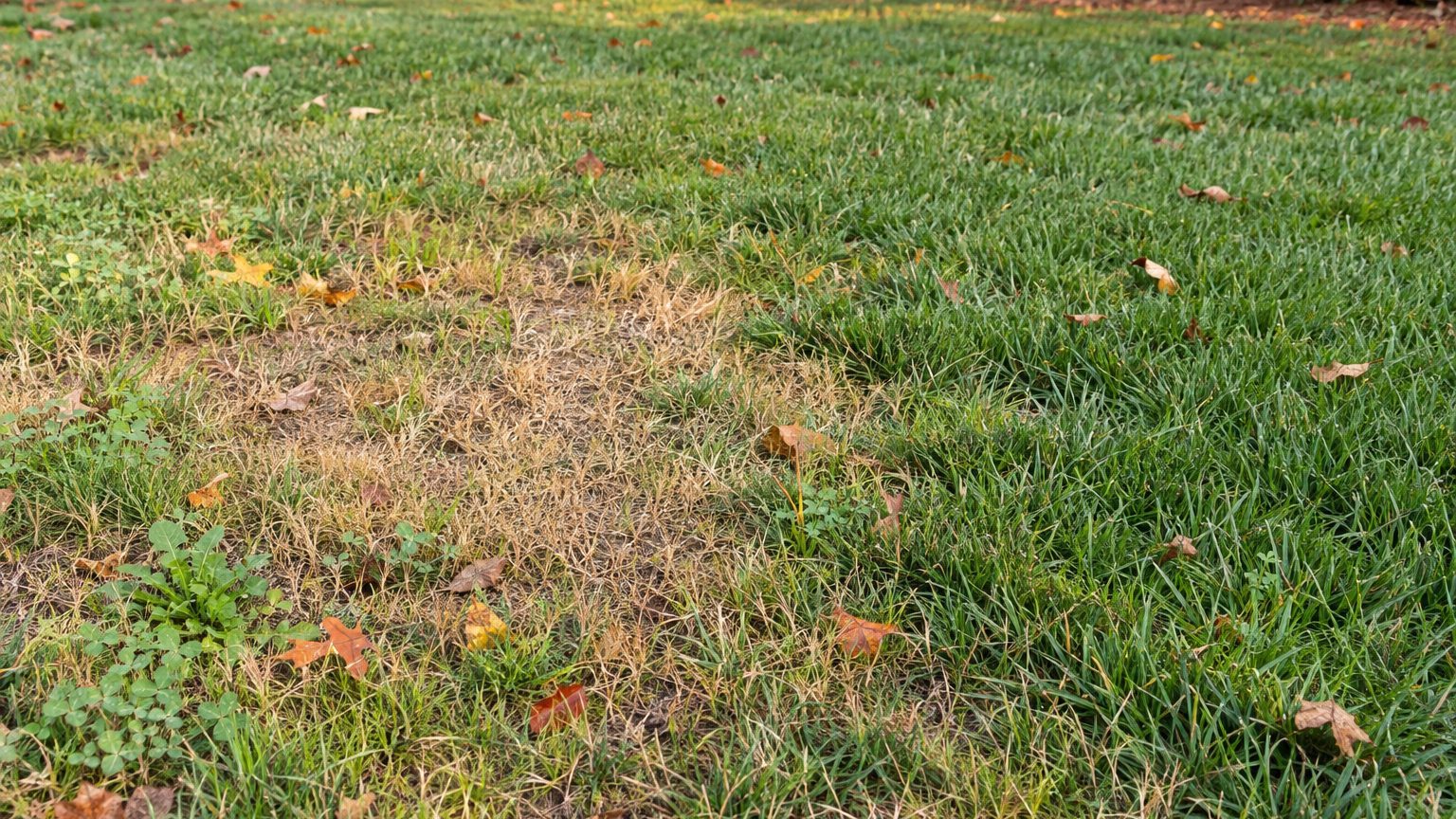
Clover, henbit and wild onion appear where the lawn is thin or still waking up. They move into bare soil, so the lasting fix is a denser lawn. Mowing regularly from March through November keeps grass thick enough to crowd them out, and hand-pulling works well on small patches.

Large Patch in Cool Wet Weather

Large patch is a fungus of warm-season grasses such as zoysia, centipede and St. Augustine. Look for rounded, tan to orange patches that grow wider, with leaf sheaves that pull loose at the base. It strikes in spring and fall dampness. Water in the morning, skip heavy nitrogen when the grass is slowing down, and let the turf dry between waterings.

Crabgrass in Summer

Crabgrass is a coarse, light green grass that sprawls out from a center in a star shape and sets seed late in the season. It takes hold in thin, scalped or drought-stressed turf. A taller mowing height shades the soil, and pulling young plants before they seed prevents next year’s crop.

Chinch Bugs in Hot Dry Spots

Chinch bugs favor St. Augustine in full sun. Yellowing patches near driveways or sidewalks that keep browning even after watering are a strong clue. Part the grass at the edge of a patch and look at the soil surface for tiny dark insects. Heavy thatch and drought stress make the damage worse.

White Grubs in Late Summer

Grubs are fat, C-shaped beetle larvae that chew roots. Damaged turf feels spongy and lifts like a loose carpet, and skunks or armadillos digging in the lawn often give them away. Healthy, deeply rooted grass can tolerate limited grub activity. Confirm them by lifting a small section of sod and checking the root zone.

Armyworms After Storms

Armyworms are caterpillars that can strip a lawn quickly, often after warm, wet spells in late summer. Brown, ragged patches with birds feeding on them point to an outbreak. Check at dawn or dusk, when the caterpillars climb up to feed, and act while the damage is still small.

How to Tell Which Lawn Problem You Have

A clue is rarely conclusive on its own. Pair what you see with where it happens and when, then confirm with a simple test, such as tugging the grass or digging up a small square of sod.

Patch shape can help narrow the possibilities. Rings and circles can suggest fungus, irregular patches near pavement can point to insects, and even thinning under trees often points to shade.

What you see Where and when Points to
Tan or orange rounded patches, sheaths pull loose Spring and fall dampness Large patch
Yellow then brown patches that ignore watering Sunny edges by pavement, summer Chinch bugs
Spongy turf that rolls back like carpet Late summer, animals digging White grubs
Ragged brown patches, birds feeding Late summer after warm rain Armyworms
Coarse, star-shaped sprawl Summer, thin or scalped turf Crabgrass
Even thinning, moss at the soil Under trees, shade year-round Too little light

If grass pulls out with no roots attached, suspect grubs or fungus. If it stays firmly rooted but looks brown, think drought, heat or a nutrient issue before reaching for any treatment.

Where Lawn Problems Are Worst in Alabama

The state stretches from the Tennessee line to the Gulf, and soil, winters and humidity change along the way.

  • Tennessee Valley: Cooler winters mean more winter injury to warmer-climate grasses, and tall fescue lawns struggle in summer heat. Fungus follows long humid spells.
  • Black Belt: Heavy clay holds water, so lawns suffer from poor drainage, compaction and root rot after wet periods.
  • Mobile and the Gulf Coast: Sandy soil dries fast, humidity feeds disease, and mild winters let insects such as chinch bugs stay active longer. Salt spray adds stress near the beach.

Check your county conditions, since a lawn on a north-facing slope can behave differently from one on a nearby sunny ridge.

Lawn Care Mistakes That Invite Problems in Alabama

Scalping the Lawn

Cutting too low stresses grass, exposes soil to weed seed and weakens roots just when summer heat arrives. Mow regularly from March through November, raise the blade for shaded areas, and avoid removing so much leaf that the lawn looks scalped.

Watering Little and Often

Short, frequent sprinkling keeps roots shallow and leaves blades wet, which invites fungus. During the main watering months, May through September, soak the lawn thoroughly and let the surface begin to dry before watering again. Water in the early morning.

Feeding Too Early

Fertilizer applied in early spring pushes top growth before the roots are ready, and warm-season lawns are more prone to large patch. Wait for steady growth and feed from May through August, following a soil test and label rates.

Where to Get Lawn Advice in Alabama

Local help matches your soil and grass. Alabama Extension publishes lawn guidance for the whole state and has an office in every county.

  • Statewide guides cover grass types, weeds and diseases, so check them before buying anything for an unexplained patch.
  • Your county office can take a soil sample and help identify insects or diseases, which is useful when a patch keeps spreading.
  • Bring a plug of affected turf in a bag, with a photo of the whole yard, on your next visit.

Common Questions

When Should You Dethatch a Lawn in Alabama?

Dethatch only if the layer is thicker than 1/2 inch, since up to 1/2 inch is healthy. Dethatch in May or June; April also works. Core aeration is an alternative for thick thatch.

Can You Plant St. Augustine Grass from Seed in Alabama?

No, St. Augustine has no seed and must be established from sod or plugs. Lay St. Augustine in May; April, June and July also work. Bermuda, centipede and bahia can be seeded in May, or in June.

When Should You Aerate a Lawn in Alabama?

Aerate in May; June also works. Core aeration can help compacted clay in the Black Belt because it improves drainage and gives roots more room.

Alabama Lawn Care Schedule, Month by Month

Alabama Lawn Care Schedule, Month by Month

Warm-season grass in Alabama wakes slowly in spring, greens up as the soil warms, and keeps growing through the long, hot summer. That rhythm sets the whole year of lawn care here, from the first mowing in March to the last one in November.

What to Do Each Month in a Alabama Lawn

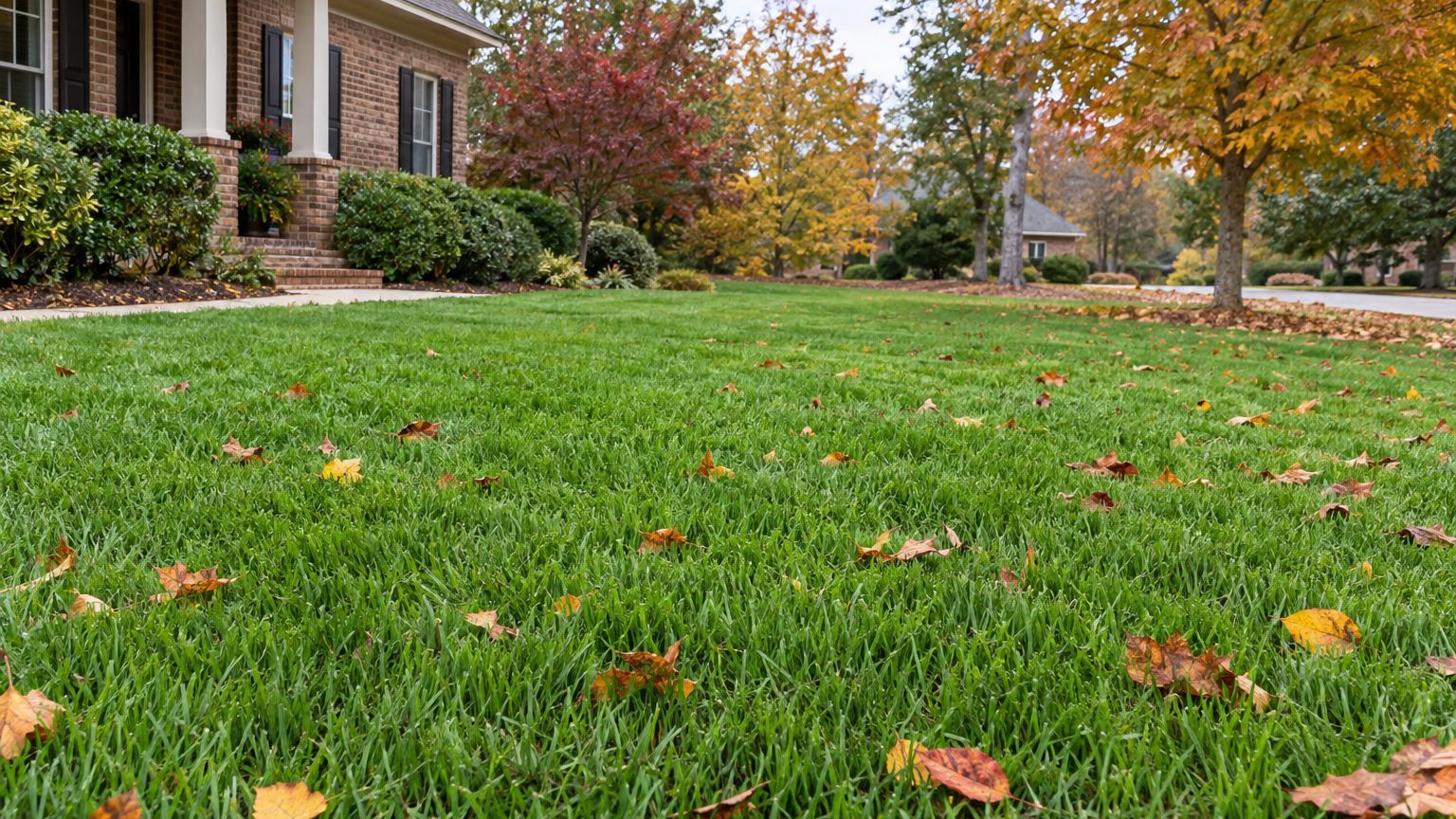
Lawn in Alabama

Alabama lawns are mostly warm-season grasses such as bermuda, centipede, zoysia and St. Augustine, so the busy months run from spring through early fall. Winter is mostly rest.

Month In the lawn
January Rest. The grass is dormant, so keep traffic light and pull winter weeds by hand when you see them.
February Rest. Dormant turf is not ready for feeding or seed, so use the time to sharpen the mower blade.
March Mowing begins as the first green returns. Resume mowing at the proper height for your grass as green growth returns.
April Mow regularly as growth picks up. Dethatching also works now, and sod can go down if you are ready to lay it.
May The main month for the big jobs: core aeration, dethatching, seeding bermuda, centipede or bahia, and laying sod. Fertilizing and watering start too.
June Fertilize, water deeply when rain falls short, and dethatch if you skipped May. Aeration and seeding still work, and sod can be laid.
July Feed the lawn, water through dry spells, and keep mowing. Sod laid now needs steady moisture to root in the heat.
August Fertilize if the lawn needs it and keep watering. Heat stress often shows on thin or shaded turf, so watch for dry, curling blades.
September Keep mowing and watering as growth slows with shorter days. No feeding or planting is needed now.
October Mow as needed while the grass winds down. Rake fallen leaves so they do not smother the turf.
November Make the last mowings of the year as the grass fades toward dormancy. Then put the mower away.
December Rest. The lawn is dormant, so just keep leaves off it and stay off frozen or soggy ground.

St. Augustine has no seed, so sod or plugs are the way to plant it. Check the grass type before you buy anything.

When Does the Lawn Season Start and End in Alabama?

Growth follows soil warmth and grass type, not the calendar. Warm-season grasses start moving when the soil sits at 65 to 70 °F and rising, which is why seeding waits for May rather than the first mild days of spring.

Frost dates only tell you the risk to young plantings. In Huntsville, the last spring frost falls between March 19 and April 3, and a fresh seeding or new sod caught by a late freeze can be set back.

In fall, the first frost arrives between November 2 and November 16 in Huntsville. Your own yard will likely differ. Suburban and rural lots usually freeze later in spring and earlier in fall, and more so at elevation, so check with your county before you plan around any date.

How the Lawn Calendar Shifts Across Alabama

Spring arrives earlier on the Gulf Coast than in the Tennessee Valley, and Alabama spans USDA hardiness zones 7a to 9a.

  • Huntsville and the Tennessee Valley: Spring warms later and fall cools sooner, so green-up and the first jobs sit toward the later side of each window.
  • Birmingham and central Alabama: This is the middle of the pattern, and the calendar above fits it well.
  • Mobile and the Gulf Coast: Soil warms earlier and stays warm longer, so mowing starts sooner and the growing season runs later into fall.

Higher ground in the northeast corner behaves like the Tennessee Valley, only cooler still.

Lawn Care Timing Mistakes to Avoid in Alabama

Seeding Too Early

Warm-season seed sown on cool spring soil sits and rots, or sprouts into a frost. Wait for May, when the soil has warmed, and if you miss it, June still works.

Fertilizing Too Late

Feeding in September or October can leave tender growth vulnerable just as the grass is slowing. Keep fertilizer to May through August, when the grass can use it.

Aerating or Dethatching in Dormancy

Tearing into a dormant lawn in winter opens bare soil to weeds and the grass cannot fill it in. Aerate in May, with June as a backup, and dethatch in May or June, with April also fine.

Where to Get Lawn Advice in Alabama

Lawn problems vary by soil, grass and county, so local advice beats general rules.

  • Alabama Cooperative Extension System publishes lawn guides by grass type, and it is a good first stop before you plan spring work.
  • Your county extension office can answer questions about your own yard and tell you how local frost and soil conditions shift the timing.

Common Questions

Which Grass Types Grow Best in Alabama?

Bermuda, centipede, zoysia and St. Augustine are the common warm-season choices. Bermuda wants full sun, centipede suits low-maintenance yards, and St. Augustine handles some shade but comes only as sod or plugs.

Can You Plant Sod Outside the Main Window?

Yes. Sod goes down best in May, and it also works in April, June and July. Water it steadily so the roots take hold before the heat peaks.

Should You Mow Dormant Grass in Winter?

No. Mowing starts in March once the grass greens up and stops in November when growth fades, so winter is a rest from the mower.

Alabama Lawn Care: What to Do and When

Alabama Lawn Care: What to Do and When

Warm-season turf in Alabama turns tan after the first hard frost, sleeps through winter, then greens up again once spring settles in. Lawns in Alabama run on soil warmth, not the calendar, so the work clusters in late spring and summer.

Frost Dates and Growing Season in Alabama

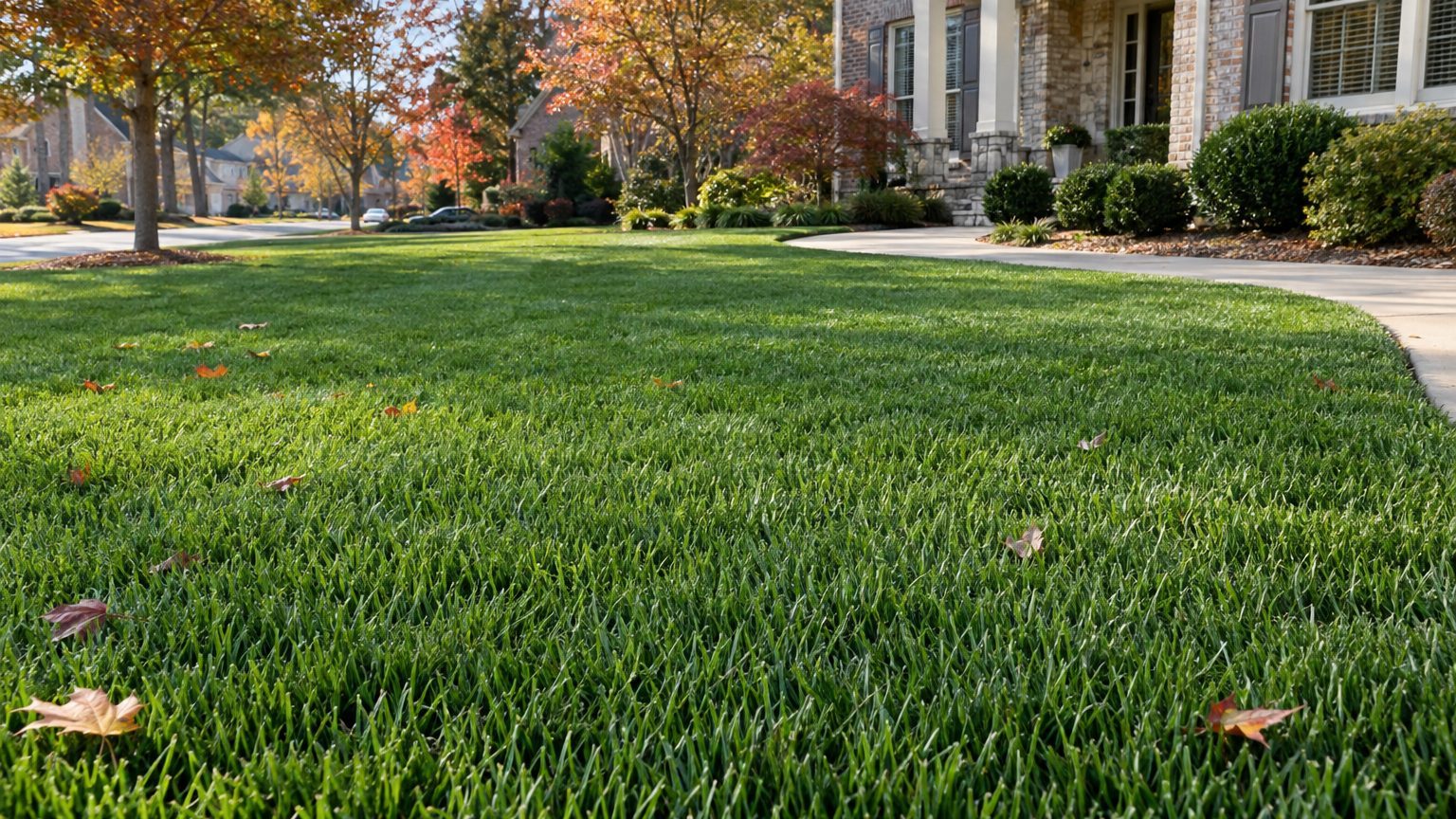
Lawn in a Alabama home landscape

Around Huntsville, the last spring freeze usually lands between March 19 and April 3, and the first fall freeze between November 2 and November 16. Your own yard will differ, so check with your county, because suburban and rural lots often freeze later in spring and earlier in fall, and higher ground more so. Hardiness zones run from 7a to 9a (USDA system), and the lawn year runs roughly like this.

  • In late winter and early spring, dormant grass is still brown, and a late freeze can nip any new green that jumps the gun. Mowing begins in March or April, once the first growth appears.
  • Once the soil warms in April, lawns fill in and sod can go down, though May is the stronger month for it. By May, the planting window is more favorable, but local conditions still matter.
  • From May into June, the lawn is in its busiest stretch. This is the window for aeration, dethatching, seeding where the grass allows it, and the start of regular feeding.
  • Through July and August, the lawn stays active, and feeding and watering carry it through the heat. Mowing continues without a break.
  • In September and October, growth slows, watering tapers off after September, and mowing keeps going through November as the grass fades toward dormancy.

Because a warm-season lawn grows with the soil and not with the last frost date, a seed put down too early simply sits there. Fall frost matters mainly because it ends the seeding season for good.

Cool-Season or Warm-Season Grass in Alabama?

Warm-season grass is the right call across Alabama. Summers are long, hot and humid, and winters are mild enough that these grasses go dormant rather than die. Cool-season types often struggle through the heat.

The common choices are all warm-season, but the planting method varies by grass.

Grass Season How it does here
St. Augustinegrass Warm Planted as sod or plugs only, never seed
Centipedegrass Warm Can be seeded, plugged or sodded
Bermudagrass Warm Can be seeded or laid as sod
Zoysiagrass Warm Usually installed as sod or plugs
Bahiagrass Warm Can be seeded

If you want to start from seed, your options narrow to bermudagrass, centipedegrass and bahiagrass. Zoysiagrass is mostly a sod or plug job, and St. Augustinegrass is strictly vegetative.

When to Seed, Fertilize and Aerate a Lawn in Alabama

Nearly every big lawn job here belongs to late spring and summer, when the grass is actively growing and can recover from the work. Doing them in fall or winter, while the lawn is dormant, gains you nothing.

Seeding applies only to the seeded grasses, since St. Augustinegrass has no seed. If you miss May, June still works for seeding and aeration.

Task Best months in Alabama Why then
Seeding May (June also works) Warm soil gets seed up and rooted quickly
Laying sod May (April, June and July also work) Roots knit into warm ground
Core aeration May (June also works) Grass recovers fast while growing
Dethatching May to June (April also works) Turf fills the gaps quickly
Fertilizing May to August Feeds active growth through summer
Watering May to September Heat and dry spells stress the lawn
Mowing March to November Covers the whole growing season

Mowing has the longest run of any task, so keep the blade sharp from the first spring growth to the last mow in fall.

Lawn Problems to Watch for in Alabama

Thin Grass in Summer Heat

Thinning turf with dry, curling blades points to heat and drought stress, especially if the soil beneath them is dry. Water deeply when the lawn needs it, since May through September is the watering season here. Once the grass is no longer drought-stressed, feeding during the recommended summer window can support recovery.

Thatch Buildup

A spongy lawn that feels bouncy underfoot, with water running off instead of soaking in, usually carries too much thatch. Warm, humid growing seasons build it quickly in grasses such as bermuda and zoysia. Dethatch in May or June, when the grass can regrow fast.

Winter Browning

Brown grass after the first freeze is normal dormancy, not death, as long as the stolons are still firm and green at the base. Leave it alone. Pulling or overseeding a dormant lawn wastes money, and green returns once spring warms the soil.

How Lawn Care Dates Change Across Alabama

Alabama stretches from the Tennessee Valley to the Gulf, and the season shifts accordingly. Use the dates above as a guide and adjust for where you live.

  • Huntsville and the Tennessee Valley: Spring arrives later and fall frost comes sooner, so green-up and planting start later than in the south.
  • Birmingham and the central hills: Higher ground runs a little cooler, so frost lingers longer in spring on ridges and in low pockets.
  • Mobile and the Gulf Coast: Mild winters bring earlier green-up and a longer growing season, and the lawn stays active later into fall.

Wherever you live, let soil warmth tell you when to start, and treat your own county’s frost timing as the better guide.

Where to Get Lawn Advice in Alabama

The state’s land-grant extension system offers grass recommendations that fit local soils and climate. Alabama Cooperative Extension System is the place to start, and your county office handles the hands-on questions.

  • Your county extension office can run a soil test, which tells you what the lawn needs before you buy fertilizer.
  • Bring a sample of a struggling patch to the office for diagnosis, ideally while the problem is still visible.

If May is near, a soil test now means you can feed and plant with real numbers in hand.

Common Questions

Can You Plant Grass Seed in Alabama in Winter?

Warm-season seed will not sprout in cold soil, so winter planting mostly wastes seed. Wait for late spring, when the ground has warmed.

Why Is My Alabama Lawn Brown After a Freeze?

Brown blades paired with firm, green growth at the base mean the grass is dormant, not dead. Wait for spring warmth before judging it.

How Often Should You Mow Lawns in Alabama?

Mow regularly from March through November, more often in the peak growth of summer. Keep the blade sharp and avoid cutting too much at once.

Hydrangea Pests and Diseases in Alabama

Hydrangea Pests and Diseases in Alabama

Alabama’s warm, humid summers hand hydrangeas a predictable lineup of problems: aphids on tender new growth, spider mites once July turns dry, powdery mildew and Cercospora leaf spot as humidity settles in, botrytis blight on spring buds, and root rot in soil that never drains. Humidity and timing decide which one shows up first in your yard.

Hydrangea pests and diseases Alabama: The Short Answer

Huntsville sits in USDA Hardiness Zone 7a-9a on the USDA Plant Hardiness Zone Map, and that stretch of mild winters and long humid summers is exactly what keeps six problems cycling through Alabama hydrangea beds year after year.

Alabama’s hydrangea trouble list runs from aphids and spider mites to powdery mildew, Cercospora leaf spot, botrytis blight, and root rot, with humidity deciding which shows up first.

Aphids

Clusters of small green or black insects crowd new stem tips in early spring, curling leaves and leaving a sticky residue that draws sooty mold. A strong hose spray every few days knocks most colonies down before ladybugs take over. Check new growth weekly through the spring planting window.

Botrytis blight

Gray, fuzzy patches appear on flower buds and stems during cool, wet spring stretches, turning petals brown and mushy almost overnight. Cutting out infected buds and spacing plants for airflow stops it from spreading to healthy wood. It hits hardest right after the last frost window closes in Huntsville.

Spider mites

Spider mites — Hydrangea Pests and Diseases in Alabama

Tiny stippled yellow speckling on leaf tops, with fine webbing underneath, shows up once July heat turns dry and dusty. A forceful water spray under the leaves every few days breaks their webs and washes most of them off. Mulch keeps roots cool so plants resist the stress that invites them.

Powdery mildew

A white, flour-like coating on leaves and stems spreads once August humidity sits heavy overnight but afternoons stay warm and dry. Pruning for airflow, watering the soil instead of the leaves, and morning watering all cut down the hours leaves stay damp. Bigleaf varieties show the most trouble.

Cercospora leaf spot

Small purple-brown spots ring older, lower leaves first, spreading upward and dropping foliage by late summer in wet years. Removing and disposing of fallen leaves each fall breaks the fungus’s cycle before next season’s new growth. Good spacing at planting time keeps this one from becoming an annual habit.

Root rot

Root rot — Hydrangea Pests and Diseases in Alabama

Wilting leaves on a plant sitting in soggy, poorly drained soil signal Phytophthora working through the roots, no matter how much water gets added. Pulling mulch back from the stem and improving drainage before the next planting window is the only fix that works. Once wilting starts, the fix is prevention next time, not rescue.

How to Work Out the Dates for Your Own Yard

Working out which problem you actually have starts with the calendar, not the leaf, since Huntsville’s last spring frost falls between March 19 and April 3 according to NOAA NCEI 1991-2020 Climate Normals, and every fungus or insect on this list waits for its own stretch of humidity or heat after that date.

  1. Mark the last frost window: count two to three weeks past the closing date before blaming cold damage for spotted or curled leaves, since bud-break stress shows up right at that window.
  2. Check the season first: aphids and botrytis blight cluster in the weeks right after the frost window closes, while spider mites and powdery mildew wait for July and August heat.
  3. Look at the leaf, not just the flower: a powdery white coating means mildew, purple-brown rings mean Cercospora, and sticky residue points to aphids.
  4. Test the soil around the roots: wilting despite regular watering points to root rot in soil that has stayed wet since spring rains.
  5. Match the fix to the calendar: fertilizing falls in March, May, and July, and bigleaf pruning falls in June and July, so timing treatments to those same months avoids stacking a second problem on a stressed plant.

Once the season and the symptom line up, the fix is almost automatic, and a call to the county extension office settles anything that still looks unclear after a week of watching it.

Alabama North to South: How the Dates Shift

Frost timing and humidity pressure shift across Alabama, and that shift changes which hydrangea problem shows up first and how long it sticks around.

  • North Alabama and the Tennessee Valley (Huntsville, Decatur, Florence): the coolest, driest stretch of the state, where spider mites and powdery mildew arrive later in the summer and root rot stays rare outside heavy clay pockets.
  • Central Alabama (Birmingham, Montgomery, Tuscaloosa): summer humidity settles in earlier here, pushing Cercospora leaf spot and powdery mildew ahead of the northern counties in most years.
  • The Gulf Coast and Wiregrass (Mobile, Baldwin County, Dothan): the mildest winters and heaviest summer humidity in the state keep botrytis blight and root rot active longest, since soil rarely dries out between storms.

Check how these regional differences line up with your own county before assuming the Huntsville figures apply exactly where you garden.

Mistakes Alabama Punishes

Watering leaves in the evening

Overhead watering after work keeps foliage wet through the night, exactly the window powdery mildew and Cercospora leaf spot need to take hold in Alabama’s humidity. Switching to a soaker hose at the base, watered in the morning, dries leaves by midday and cuts fungal spread noticeably within a season.

Skipping fall leaf cleanup

Leaving fallen leaves under the shrub through winter lets Cercospora and botrytis spores overwinter right where next spring’s new growth will emerge. Raking and disposing of dropped foliage each fall, rather than composting it nearby, breaks that cycle before the next fertilizing window in March.

Planting too close together

Crowded shrubs trap the humid air that spider mites, mildew, and leaf spot all depend on, especially along the Gulf Coast and Wiregrass. Spacing new plants for airflow at the September or October planting window matters more here than in drier states further north.

Alabama Extension Offices and County Contacts

The Huntsville figures above are a starting point, and Alabama Cooperative Extension System agents in your own county diagnose the specific pest or disease sitting in front of you, often for free with a photo or sample.

  • Alabama Extension (aces.edu): find your county office, submit a plant problem question, and get a same-week response from an agent.
  • Your state guide: the hardiness zone and frost windows that set the calendar for every hydrangea in the yard.
  • Which ones hold up here: the varieties that shrug off Alabama humidity instead of feeding it.

Bring a sample bag and a clear photo of both healthy and affected leaves when you call.

Common questions

What’s the most common hydrangea problem in Alabama?

Powdery mildew and Cercospora leaf spot show up most often, both fed by the same humid stretch that settles over the state from July through September.

Do healthy hydrangeas ever get pests without any care mistakes?

Yes, aphids and spider mites can find even a well-tended shrub, since they travel in from neighboring plants and weeds regardless of watering habits. Regular leaf checks catch them early, before populations build.

Should I treat for disease before I see symptoms?

Preventive spacing, morning watering, and fall cleanup do more good than any spray applied without a confirmed problem, and a county extension agent can confirm what’s actually present before you treat anything.

When to Prune Hydrangeas in Alabama

When to Prune Hydrangeas in Alabama

Plant hydrangeas in Alabama during one of two windows the calendar allows, March and April in spring or September and October in fall, timed around Birmingham’s frost dates. Skip the deep summer months entirely. Prune only bigleaf types, and only in June or July, right after the last blooms fade, since cutting later strips out next year’s flowers before they even form.

When to prune hydrangeas in Alabama: The Short Answer

Birmingham’s calendar splits hydrangea work into three separate jobs, planting, fertilizing, and pruning bigleaf types, and none of them share a month by accident.

  • January: The shrub is dormant and there’s nothing to plant or feed yet. Use the month to pick a planting site with morning sun and afternoon shade.
  • February: Still too early for the plant or fertilize windows. Wait for warmer, more stable soil before breaking ground.
  • March: The plant window opens, but NOAA NCEI 1991-2020 Climate Normals put Birmingham’s last spring frost between March 19 and April 3. Hold new hydrangeas until the tail end of that window if frost still threatens.
  • April: The safer half of the plant window, with soil warm enough for roots to establish before summer heat arrives.
  • May: The second fertilizing round of the year. Established shrubs are pushing new growth and can use the nutrients right away.
  • June: The pruning window for bigleaf hydrangeas opens once the last blooms fade. Cut spent flower stems to the first healthy bud pair, no lower.
  • July: The bigleaf pruning window closes, and the third fertilizing round begins. Prune later than this and the cuts remove next year’s flower buds along with this year’s spent wood.
  • August: No scheduled gesture this month. Deep, weekly watering matters more than any pruning or feeding right now.
  • September: The plant window reopens as the heat breaks. Fall-planted hydrangeas spend the cooler months building roots instead of fighting drought stress.
  • October: Often the better of the two fall planting weeks, with weeks still ahead before the ground cools toward frost.
  • November: Birmingham’s first fall frost lands somewhere between November 2 and November 16. Stop planting by mid-month and add mulch instead.
  • December: Fully dormant. Leave faded flower heads on bigleaf types alone, they help insulate next year’s buds through cold snaps.

Three jobs, three windows: plant in spring or fall, feed three times through the growing season, and prune bigleaf hydrangeas only right after they bloom.

How to Work Out the Dates for Your Own Yard

The state calendar is a starting point built on one weather station, and your yard likely needs a small adjustment in one direction or the other.

  1. Check your county’s frost window: Birmingham’s last spring frost runs March 19 to April 3, but a county further north or sitting higher often catches frost a week or two later.
  2. Push your planting date past the late end: if your yard has ever frosted after Birmingham’s own reported dates, treat early April as the real start rather than mid-March.
  3. Match the zone to the plant: the USDA Plant Hardiness Zone Map places Alabama across 7a to 9a, so a hydrangea rated for zone 6 winters coasts through anything Birmingham throws at it, while one rated only to zone 8 wants a warmer, more sheltered spot.
  4. Count backward from the fall frost: with Birmingham’s first fall frost between November 2 and November 16, give roots **at least six weeks** before that window closes for fall planting to settle in.
  5. Watch the bloom, not the date, before pruning: bigleaf types flower on old wood, so wait until the flowers fully fade, usually by June, before the first cut of the year.

None of these steps replace a local check. A county office ten miles from Birmingham’s airport gauge can read frost, soil, and bloom timing differently than the numbers above.

Alabama North to South: How the Dates Shift

Altitude, latitude, and distance from the Gulf all nudge these dates in Alabama, and knowing which way helps more than any single number.

  • North Alabama and the Tennessee Valley (Huntsville, Florence, Scottsboro): the coolest corner of the state, where spring lags behind Birmingham and the early edge of the plant window carries more risk.
  • Central Alabama (Birmingham, Tuscaloosa, Montgomery): the reference band the calendar above is built on, so most of it applies here without adjustment.
  • The Gulf Coast and South Alabama (Mobile, Baldwin County, Dothan): frost arrives later and leaves earlier here, stretching the season and making the later half of the fall plant window a safer, lower-risk choice.

Check the state guide for the full zone breakdown if your yard sits near either edge of Alabama.

Mistakes Alabama Punishes

No flowers after a fall pruning

Bigleaf hydrangeas bloom on old wood, so any cut made after July removes next year’s buds along with this year’s spent stems. Prune only in June or July, right after the blooms fade, and nowhere else on the calendar.

Shrub planted too early

A warm stretch in late February tempts a lot of planting, but Birmingham’s last frost can still land as late as April 3. New roots and tender growth don’t survive that swing. Hold planting for the true window in April, or shift to fall.

Wilting through August afternoons

Alabama’s summer heat and humidity stress shallow, newly planted roots fast, especially with no fertilizing scheduled that month. Water deeply once a week, keep mulch on, and save feeding for the March, May, or July rounds instead.

Alabama Extension Offices and County Contacts

Birmingham’s dates are a starting point, not a guarantee for every county. The Alabama Cooperative Extension System keeps local offices that read soil and frost differently than the airport gauge behind the numbers above.

  • Your state page: the frost dates and pruning window gathered for Alabama in one place.
  • Which ones hold up here: hydrangea varieties matched to Alabama’s zones.
  • What’s going wrong: the pests and problems local shrubs actually run into.

Common questions

Can I plant hydrangeas in Alabama in summer?

No. The calendar skips summer entirely because heat and humidity stress new roots before they can establish. Stick to the March-April spring window or the September-October fall window instead.

Do hydrangeas need full sun in Alabama?

Most do better with morning sun and afternoon shade here. Full, unbroken afternoon sun through an Alabama summer scorches leaves on most varieties, even well-watered ones.

When should I prune hydrangeas in Alabama if mine already look overgrown?

For bigleaf types, wait for the June or July window right after the blooms fade. Pruning outside that window, even to tidy up an overgrown shrub, cuts off next year’s flower buds.

The almanac, state by state. Every date on this site comes from a state’s own frost facts and its extension service’s calendar — and says where it comes from.