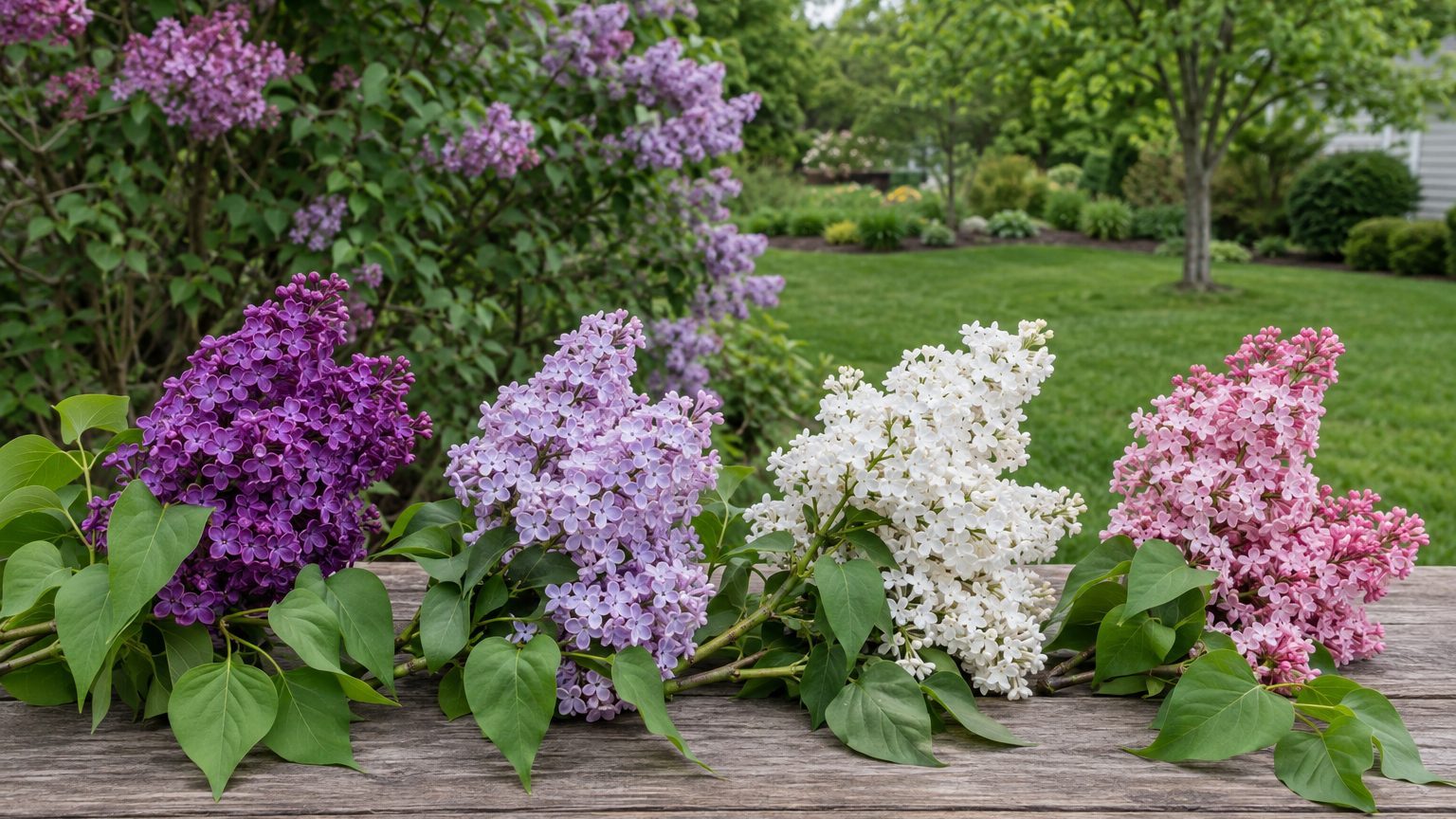
When the first purple clusters open in May, the whole street smells of it, and New Hampshire has good reason to love the moment: the common lilac is the state flower. A well-matched variety will fit its space, handle the site, and stay easier to care for.
Best Lilacs to Grow in New Hampshire

Lilacs suit New Hampshire because they need a cold winter rest to mature their flower buds. The USDA hardiness system places New Hampshire in zones 3b to 6a, so winter cold varies across the state. Hot, humid summers are what trouble lilacs elsewhere, so the real choices here come down to disease, size and bloom timing.
Common Lilac

Syringa vulgaris is New Hampshire’s official state flower, known for fragrant masses of purple, lavender and white blooms in May. It is the natural first pick. The trade-off is its susceptibility to powdery mildew, bacterial blight, scale and borers, so give it sun and open air.
Other Lilac Species
More than 20 species of lilac exist, originating in Europe and Asia. Beyond purple, lilacs come in red, blue, pink, white, mauve and yellow, so a New Hampshire yard has room for color beyond the classic shade. Less susceptible species and hybrids are available if mildew bothers your common lilac.
Bloomerang Series
This series is resistant to powdery mildew and reblooms. Like many dwarf hybrid lilacs, it is more disease-resistant than typical Syringa vulgaris and matures shorter, which suits a front yard border or a smaller bed.
Hyacinthiflora Hybrids
These vigorous hybrids look like French hybrids but bloom earlier. Because they bloom early, plant them only where late frosts are less frequent. A frost-prone New Hampshire hollow calls for the same caution.
French Hybrid Types
French hybrids offer the familiar lilac form many gardeners picture. Choose from named cultivars in lilac, purple, white, pink and a reddish hue. Lilacs generally do well in New Hampshire.
New Hampshire — the year and the numbers
- State
- New Hampshire
- USDA zones
- 3b-6a
- Last spring frost
- April 16 to April 27
- First fall frost
- October 13 to October 26
- Annual rain
- 40 in
- Lawn zone
- cool-season
- Source
- NOAA NCEI U.S. Climate Normals 1991-2020, 32F freeze probabilities · Manchester
How to Choose a Lilac for a New Hampshire Garden
Start with the site: lilacs like sun and good air circulation. After that, the choice depends on how much cold, humidity and upkeep your yard brings.
Cold is rarely the limit here, since lilacs are adapted to zones 3, 4 and 5. Humid summer air and spring frost are the things to plan around.
| Your situation | What suits it in New Hampshire | Why |
|---|---|---|
| Very cold winter | Common lilac | Lilacs are adapted to zones 3, 4 and 5, and winter chill matures their buds |
| Hot, humid summer | Bloomerang series | It resists powdery mildew, which humid air encourages |
| Little time for care | Disease-resistant hybrids | Less susceptible species and hybrids reduce the risk of common problems |
| Small space | Dwarf hybrid lilacs | They mature shorter than typical Syringa vulgaris |
| Need for cold | Any lilac | The chill of winter is needed for bud development and maturation |
Spring frost is a separate matter. Frost in May can catch early bloomers, so a Hyacinthiflora is better in a spot that avoids late frost.
Which Lilacs Suit Different Parts of New Hampshire
Cold and frost timing vary across the state, and that shifts which lilac you favor.
- White Mountains: Winters here are colder than in the southern part of the state. Common lilacs handle it, but early bloomers risk May frost, so favor later bloomers.
- Seacoast: Milder winters here still give lilacs a cold winter rest. Humid summer air makes mildew resistance worth prioritizing.
- Lakes Region: Cold winters suit lilacs well. Keep them in full sun with open air around them.
Spring frost varies across the state, so check your own county.
Lilac Buying Mistakes to Avoid in New Hampshire
Picking an Early Bloomer for a Frosty Spot
Hyacinthiflora lilacs open earlier, so a late frost can take the flowers. If your yard sits low where cold air settles, choose a later-blooming type instead.
Ignoring Mildew Resistance
Common lilacs are prone to powdery mildew, blight, scale and borers. Buying one without checking can mean a sick-looking shrub. Choose a resistant cultivar or a less susceptible species.
Forgetting Mature Size
A lilac in a pot looks small, but many grow far taller than dwarf hybrids. A crowded plant loses the air circulation it needs. Read the tag for adult size and leave room. If one outgrows its spot, it can be cut back hard in March or April, but it will not flower for a few years afterward. Routine pruning comes right after the flowers fade, in May or June, because next year’s buds form soon after.
Where to Get Lilac Advice in New Hampshire
Local help turns a general choice into a specific one for your site. University of New Hampshire Extension publishes guidance on lilacs and answers questions from residents.
- Its articles on lilac types and care are useful before you shop.
- Your county extension office can speak to local frost and soil, so call before planting.
Common Questions
When Do Lilacs Bloom in New Hampshire?
Bloom runs April and May, and later species can carry into June.
Do Lilacs Come in Colors Besides Purple?
Yes. Lilacs also come in red, blue, pink, white, mauve and yellow.
Is It Safe to Prune a Lilac in Fall?
Pruning in late summer, fall or winter can remove the next spring’s flower buds, so wait until right after bloom.