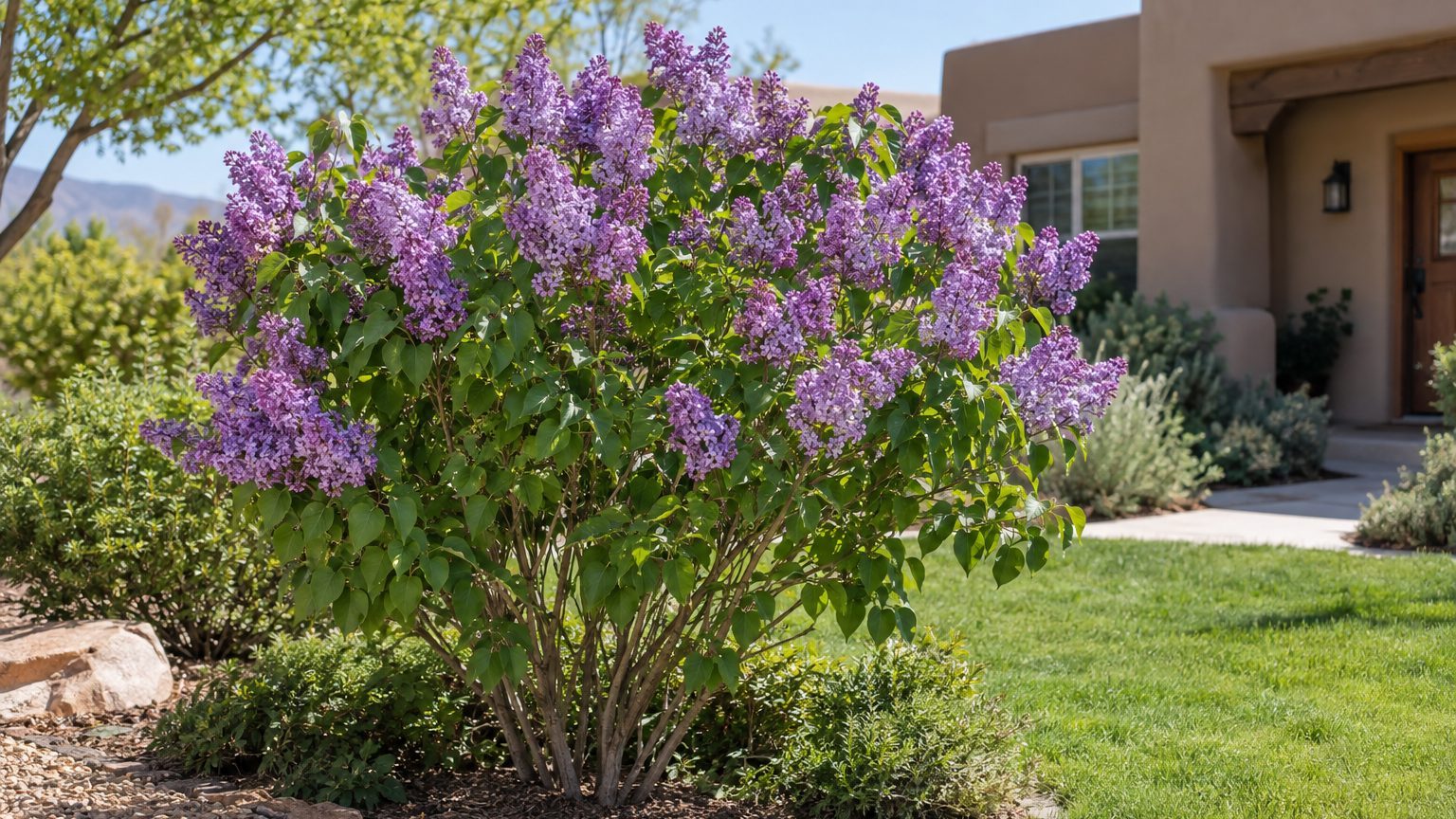
A lilac in full bloom, with its heavy, scented clusters, is a sight in a New Mexico yard in any year the winter was cold enough. The bloom follows the local spring, and how well it performs depends on how much winter chill your spot gets. Elevation matters here, so the answer changes from town to town.
When Do Lilacs Bloom in New Mexico?

Lilacs in New Mexico flower in spring, as the weather turns mild and the buds that waited out the winter finally open. The rest of the lilac’s year hangs on that moment.
- In spring, the flower clusters open on last year’s wood, and the bloom runs with the local weather rather than a fixed date.
- Soon after the last flowers fade, the shrub is ready for light pruning, before it starts setting buds for the following year.
- Through summer, the shrub sets its flower buds for next spring, so this is a time to leave the branches alone.
- In fall, the first freeze in Albuquerque arrives between October 29 and November 9, and growth slows as the leaves drop.
- In winter, the shrub needs a real cold rest to mature those buds, and a mild winter can mean fewer flowers in spring.
At the same reference location, the last spring freeze falls between March 31 and April 12. Gardens outside town usually see the last frost later and the first frost earlier than those dates, and more so at elevation, so check your own county. The USDA hardiness zones here run from 4b to 9a, which is why a lilac in the mountains and one in the southern desert live very different lives.
New Mexico — the year and the numbers
- State
- New Mexico
- USDA zones
- 4b-9a
- Last spring frost
- March 31 to April 12
- First fall frost
- October 29 to November 9
- Annual rain
- 9 in
- Lawn zone
- transition-season
- Source
- NOAA NCEI U.S. Climate Normals 1991-2020, 32F freeze probabilities · Albuquerque
Which Lilacs Grow Best in New Mexico?
Lilacs can grow in New Mexico, but they favor the colder parts of the state. A lilac needs a cold winter rest to mature its flower buds, and it struggles in hot summers.
In the warmer parts of the state, low-chill and southern-adapted types give you a better chance of flowers.
| Lilac type | How it does in New Mexico | Why |
|---|---|---|
| Common lilac (Syringa vulgaris) | Suited to colder-winter areas, harder in hot ones | Needs a pronounced winter chill. Heat and humidity invite powdery mildew. |
| Low-chill cultivars | Worth trying where winters are milder | They bloom with less chilling, though they still do best with a long, cold rest. |
| Descanso hybrids | Worth a try in warmer yards | Bred for mild-winter gardens, including the white ‘Angel White’ and blue ‘Blue Boy’. |
| Southern lilacs | Usually grow and bloom in warmer areas | Early-blooming types sold under labels like “lilacs for the South,” though less fragrant. |
Heat-tolerance claims on plant tags do not always hold up, so a lilac sold as heat tolerant may still thrive only where winters are properly cold. Match the label to your elevation and your winter before you buy.
When to Plant, Prune and Feed Lilacs in New Mexico
Lilacs do not follow a rigid calendar. Their key job, pruning, follows a sign on the shrub rather than a month on the wall.
| Task | Best timing in New Mexico | Why then |
|---|---|---|
| Prune | Right after the flowers fade | The shrub blooms on last year’s wood and sets next year’s flower buds in summer, soon after it flowers. |
| Skip pruning | Late summer, fall and winter | Cuts made then remove the buds that would open the next spring. |
For planting advice, ask your county extension office about your site. A fuller walk through pruning cuts is on the page called When to Prune Lilacs in New Mexico.
How Lilac Bloom Time Changes Across New Mexico
Winter cold is what a lilac wants, so the colder the place, the better the shrub tends to do.
- Santa Fe and the northern mountains: Higher ground means colder winters, which suits lilacs well, and spring arrives later than in the lower valleys.
- Albuquerque and the Rio Grande Valley: Winters are milder than in the mountains, so bloom comes earlier and a lilac can be less reliable, especially in a hot, exposed spot.
- Las Cruces and the southern desert: Winters are mild and summers are hot, so lilacs may flower poorly, and low-chill or southern types are the better bet.
Within a single town, a shaded north-facing yard can bloom later than a sunny, sheltered one.
Where to Get Lilac Advice in New Mexico
For help with a lilac that will not bloom or a soil question, New Mexico State University Extension is the place to start, and your county office handles local questions.
- The extension website offers plant guidance written for New Mexico conditions, useful when choosing a lilac type.
- Your county extension office can run a soil test and help diagnose problems from photos or a sample, so bring them when the shrub shows trouble.
Common Questions
Why Is My Lilac Not Blooming in New Mexico?
Look at the winters and the light together. A lilac that leafs out well but never flowers, and sits in a mild-winter spot, probably lacked its cold rest. A shrub that stays dense and green in heavy shade, with few buds along the stems, is more likely short on sun.
Are Southern Lilacs as Fragrant as Common Lilacs?
Not quite. Southern types usually grow and bloom in warmer areas, but they are not as fragrant as the common lilacs many people remember. Expect earlier, softer scent rather than the heavy perfume of a cold-climate shrub.
How Do You Choose a Lilac for Your Yard?
Start with your winter. If your yard is high and cold, a common lilac makes sense. If winters are mild, look for low-chill or southern-labeled types, and ask your county extension office what has worked locally before you plant.