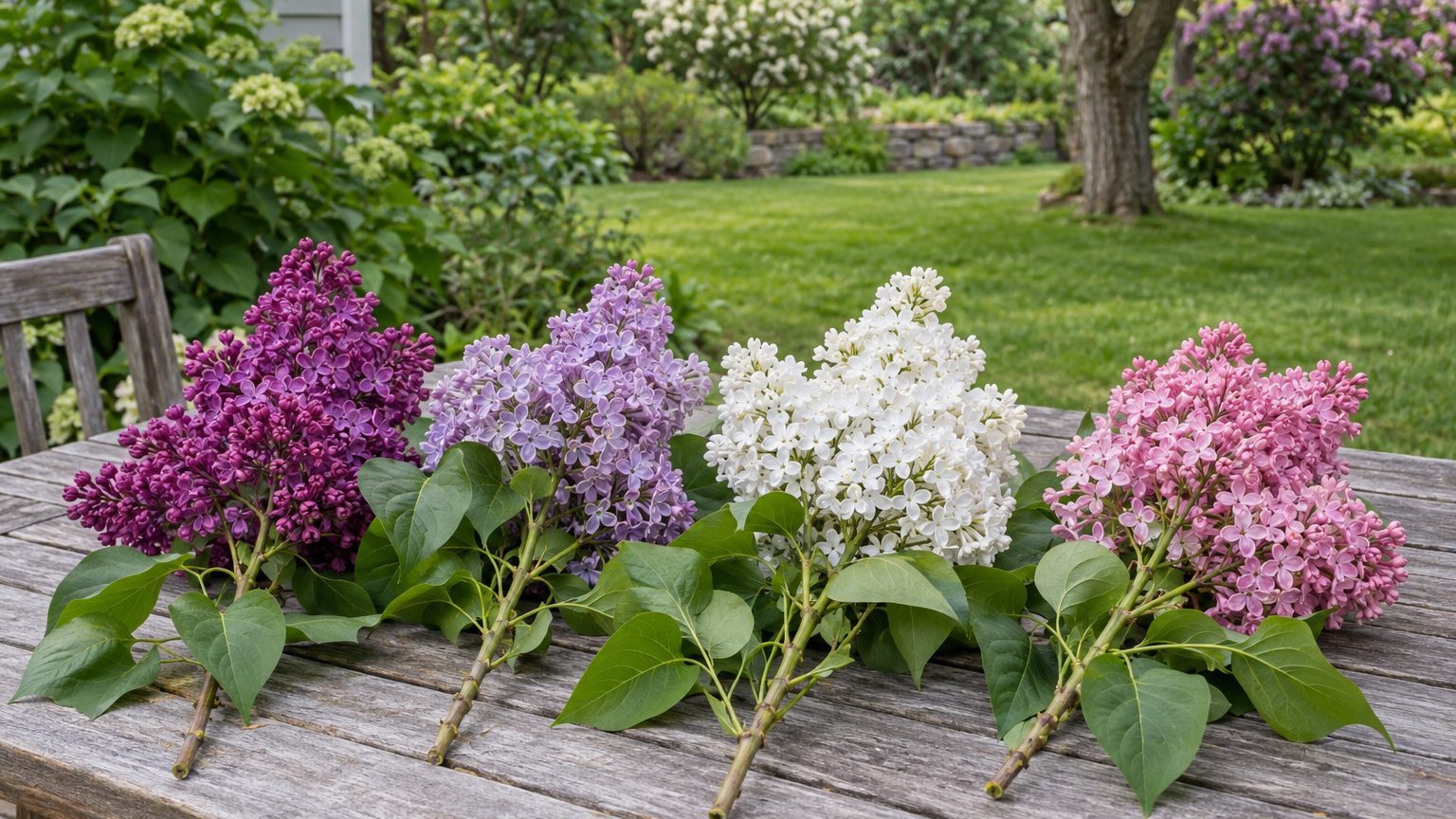
A lilac in full bloom in May, heavy with fragrance, draws Maryland gardeners to plant one. The shrub does not always cooperate here, since the state’s summers are hot and humid and its winters are mild. Which lilacs hold up, and why, comes down to a few well-chosen types.
Best Lilacs to Grow in Maryland

Lilacs need a cold winter rest to mature their flower buds, so they do best in cold-winter climates and struggle in hot, humid summers. Maryland sits on the warm edge of that range, which means disease-resistant, heat-tolerant selections and dwarf types fare better than the old-fashioned kinds. Gardeners set on lilacs should pick cultivars with above-average disease resistance and heat tolerance.
Common Lilac

Syringa vulgaris is the most commonly planted lilac in Maryland, grown for extremely fragrant flowers in mid to late spring. Its flower buds need winter chill to develop and bloom fully, and warmer winters work against that. Most cultivars are susceptible to blight, so choose carefully.
Blight-Resistant Common Lilacs

Lilac blight is difficult to control, so buying resistant plants matters more than treating them later. Some common lilac cultivars have shown less disease in gardens, including ‘Edith Cavell’, ‘Glory’, ‘Ludwig Spaeth’ and ‘Pink Elizabeth’. Named cultivars come in lilac, purple, white, pink and reddish hues.
Dwarf Lilacs
Dwarf lilac species and hybrids handle Maryland conditions much better than the traditional varieties. They suit gardeners who want fragrance without gambling on a tall common lilac through a humid summer.
Meyer Lilac
Syringa meyeri ‘Palibin’ is a medium, dense shrub resistant to powdery mildew, which commonly afflicts common lilac. Give it full sun for the heaviest flowering.
Miss Kim
‘Miss Kim’ is a round, compact cultivar with pale lavender-purple flowers that has been around for decades. Its small size and long track record make it an easy fit for a Maryland front yard.
Bloomerang Lilacs
The Bloomerang series is powdery mildew resistant and reblooms. Other newer varieties offer pink or deeper purple blooms and may flower sporadically into summer and early autumn, though high heat can still hamper that.
Maryland — the year and the numbers
- State
- Maryland
- USDA zones
- 5b-8a
- Last spring frost
- April 3 to April 16
- First fall frost
- October 26 to November 5
- Annual rain
- 45 in
- Lawn zone
- transition-season
- Source
- NOAA NCEI 1991-2020 Climate Normals, 32F freeze probabilities · Baltimore
How to Choose a Lilac for a Maryland Garden
Your yard’s biggest challenge sets the choice. In Maryland that is usually summer heat and humidity, which invites mildew and blight, more than winter cold. Hardiness here runs from USDA zone 5b to 8a, so the colder and warmer ends of the state call for different leanings.
Lilacs also bloom on last year’s wood and set next year’s buds in summer, soon after flowering. Prune right after the flowers fade to protect the next show. Pruning in late summer, fall or winter removes the next spring’s flowers.
| Your situation | What suits it in Maryland | Why |
|---|---|---|
| Hot, humid summers | Dwarf lilacs, Meyer lilac, Bloomerang series | Dwarf types handle Maryland conditions better, and these are resistant to powdery mildew |
| Disease worries | Blight-resistant cultivars such as ‘Edith Cavell’ or ‘Ludwig Spaeth’ | Most common lilac cultivars are susceptible to blight |
| Small space | ‘Miss Kim’ or a dwarf lilac | ‘Miss Kim’ is round and compact |
| Mild winters | Dwarf types over traditional common lilac | Common lilac buds need winter chill to bloom fully |
| Wanting more blooms | Bloomerang series or other rebloomers | They may flower sporadically into summer and early autumn |
Lilacs that bloom at different times can stretch the season from April into June, so planting several species gives a longer show. Lilacs also fade to the background in summer, so place them where their brief May flowering is enjoyed.
Which Lilacs Suit Different Parts of Maryland
Maryland’s range of conditions shifts the odds for these shrubs, mostly through winter cold.
- Western Maryland (Garrett and Allegany counties): Spring arrives weeks later in the mountains, and colder winters give common lilacs the chill their buds want.
- Eastern Shore: Milder conditions mean less winter rest, so lean toward dwarf and heat-tolerant selections.
- Central Maryland and the Baltimore-Washington corridor: Hot, humid summers favor mildew-resistant and blight-resistant choices.
Wherever you garden, a sunny spot with good air movement helps any of them.
Lilac Buying Mistakes to Avoid in Maryland
Choosing a Susceptible Common Lilac
Most common lilac cultivars are susceptible to blight, and blight is difficult to control once it arrives. The cost is a patchy, struggling shrub. Look for the resistant cultivars named above, or consider the resistant species such as S. josikaea, S. komarowii, S. microphylla, S. pekinensis and S. reflexa.
Ignoring the Winter Chill Need
A variety that wants more cold than Maryland offers can grow leaves and still flower poorly, because flower buds need a winter rest to mature. Warmer winters make this more likely. Dwarf lilacs and hybrids are the safer swap.
Buying Without Knowing Mature Size
A small pot hides what a lilac becomes. An overgrown lilac can be cut back hard in late winter, in March or April, but it will not flower for a few years afterward. Check the adult size on the tag and pick a compact type like ‘Miss Kim’ if space is tight.
Where to Get Lilac Advice in Maryland
For guidance tailored to Maryland lilacs, start with local problem-identification resources or ask your county office about symptoms on your shrub.
- The University of Maryland Extension site has lilac problem guides to read before you buy.
- Your county extension office can look at leaf spots or poor flowering.
Common Questions
When Do Lilacs Bloom in Maryland?
Most flower in April and May, and some species run into June.
When Should You Prune Lilacs in Maryland?
May and June, right after the flowers fade, before next year’s buds form.
Can You Grow Lilacs in Maryland’s Heat?
Yes, with disease-resistant and heat-tolerant cultivars, and dwarf types in particular.