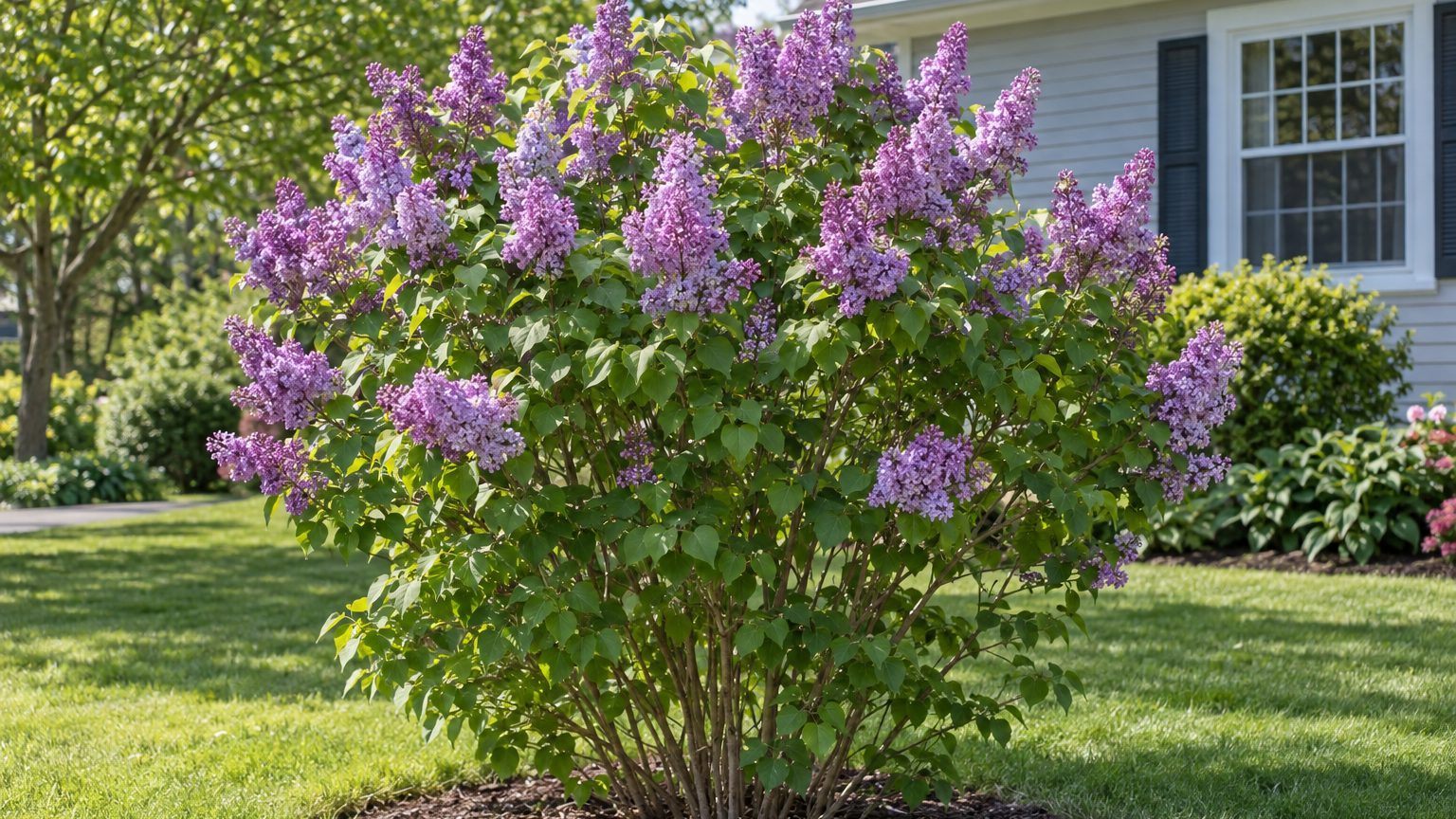
A lilac in bloom is hard to miss, and in New Brunswick it usually announces itself once the lawn has greened up and the garden is still waking. Lilac flowers open at different times across the province, with timing shifting from one part to another, and each season brings its own jobs for the yard.
When Do Lilacs Bloom in New Brunswick?

Lilacs in New Brunswick bloom in April and May, and later-flowering species can carry on into June. New Brunswick has no local extension page for lilac timing, so these dates follow the nearest comparable climate; confirm them with a local garden center, garden society, or provincial gardening group.
- In April and May, the flower clusters open and the scent fills the yard, with later species stretching the show into June.
- Right after the flowers fade, usually in May and into June, routine pruning should happen, before the shrub starts building its next crop.
- Through summer, the buds for next spring form on the new growth, which is why the shrub looks plain but is busy.
- Across winter, the bare shrub rests in the cold, and that chill is what matures those buds into flowers.
- In March and April, while the shrub is still dormant, an overgrown lilac can take a hard renovation cut, though it gives up the next flowers for it.
At Moncton, the last spring frost falls on average around May 23, which means that in one year out of two it arrives later, so treat that date as the middle of a window and never as a safe day. The first fall frost comes on average around October 2, with the same caution. Moncton sits in Canadian hardiness zone 5a, a rating that belongs to the Canadian system and does not convert to a USDA zone.
New Brunswick — the year and the numbers
- State
- New Brunswick
- Hardiness zones
- 5a
- Last spring frost
- May 23
- First fall frost
- October 2
- Annual rain
- 47 in
- Lawn zone
- cool-season
- Source
- Environment and Climate Change Canada — Canadian Climate Normals 1981-2010, station MONCTON · Moncton
Which Lilacs Grow Best in New Brunswick?
Lilacs suit New Brunswick well. They belong to the olive family and are built for cold climates, and the winter chill is what ripens their flower buds. Cool springs and a proper winter rest work in the province’s favor.
Heat is the weak point. Lilacs struggle in hot, humid summers, so a muggy, sheltered corner will serve them worse than an open, sunny spot with air moving through.
| Lilac type | How it does in New Brunswick | Why |
|---|---|---|
| Lilacs in general | Reliable and long-lived | They are suited to cold climates and need winter chill to set flower buds |
| Later-blooming species | Flower into June | They open after the main spring wave has passed |
| Lilacs in sun with open air | Strong growth and good flowering | Sun and air circulation suit the shrub and keep foliage dry |
| Lilacs in hot, humid, closed-in spots | Weaker and less dependable | Lilacs struggle in humid summer heat |
Early- and later-blooming species can stretch the season, so mixing them gives you flowers for longer. Whatever you choose, give it room and sun, and the province’s winters will do the rest of the work.
When to Plant, Prune and Feed Lilacs in New Brunswick
The calendar months for lilac work in the province center on pruning, where timing decides whether you get flowers next year. A lilac sets next year’s flower buds on this year’s growth soon after it blooms.
For that reason pruning in late summer, fall or winter cuts off the next spring’s flowers, and the shrub is left leafy but bare of blooms.
| Task | Best timing in New Brunswick | Why then |
|---|---|---|
| Routine pruning | May, June, right after the flowers fade | The next buds are not yet formed, so nothing is cut away |
| Hard renovation cut of an overgrown shrub | March, April, while still dormant | The shrub is leafless and easy to shape, though it costs the next flowers |
A renovated lilac will not flower for a few years afterward, so reserve that cut for shrubs that are truly overgrown. Planting and feeding are quieter jobs. Set a new shrub when the soil is workable and the plant has time to settle before winter, and test the soil before deciding whether to feed it. The page on when to prune lilacs in New Brunswick goes deeper on cutting technique.
How Lilac Bloom Time Changes Across New Brunswick
New Brunswick is not one climate, and the Moncton dates above run ahead of some districts and behind others. Open water and elevation pull bloom earlier or later than your neighbor’s yard may suggest.
- Saint John River Valley: Around Fredericton, inland warmth builds sooner in spring, so lilacs here tend to open earlier than along the coast.
- Bay of Fundy coast: Near Saint John, cold water and fog keep spring cooler, which holds flowers back compared with inland yards.
- Edmundston and the Restigouche: The north and the upland districts run behind Moncton, with frost lingering and flowers opening later.
Within a single town, a south-facing slope will open ahead of a shaded, low corner where cold air settles, so watch your own yard from year to year.
Where to Get Lilac Advice in New Brunswick
Canada has no county extension office, so local help comes through the province, garden societies and nurseries. A lilac that will not flower or looks sickly is easier to sort out with someone who can see it.
- The provincial agriculture department and Agriculture and Agri-Food Canada publish horticulture guidance, and spring is a good time to ask about soil testing.
- Local master gardener groups and garden societies answer questions about bloom timing in your own town, and many hold plant sales in late spring.
- Garden centres can look at a cutting or a leaf, so bring a sample when the shrub is in leaf, and note the day your lilac opens this year for comparison next spring.
Common Questions
Why Does a Lilac Leaf Out Well but Never Flower?
Look at the bloom timing and the regional differences together. A shrub pruned long after bloom or growing in heavy shade may have lost buds or failed to make them. Cut only right after bloom and give it sun, and flowers should return.
Can a Late Frost Hurt Lilac Flowers?
An open flower cluster can be browned by a hard freeze, especially on a low spot where cold air pools. Buds on a shrub in an open, airy site usually shrug off a light frost. Cut a few clusters for a vase when a freeze is forecast.
Is a Canadian Hardiness Zone the Same as a USDA Zone?
No. The Canadian system draws on many climate measures and has no simple conversion to the USDA scale. When you read lilac advice from the United States, judge it by winter cold and summer heat in your own yard rather than by matching zone numbers.