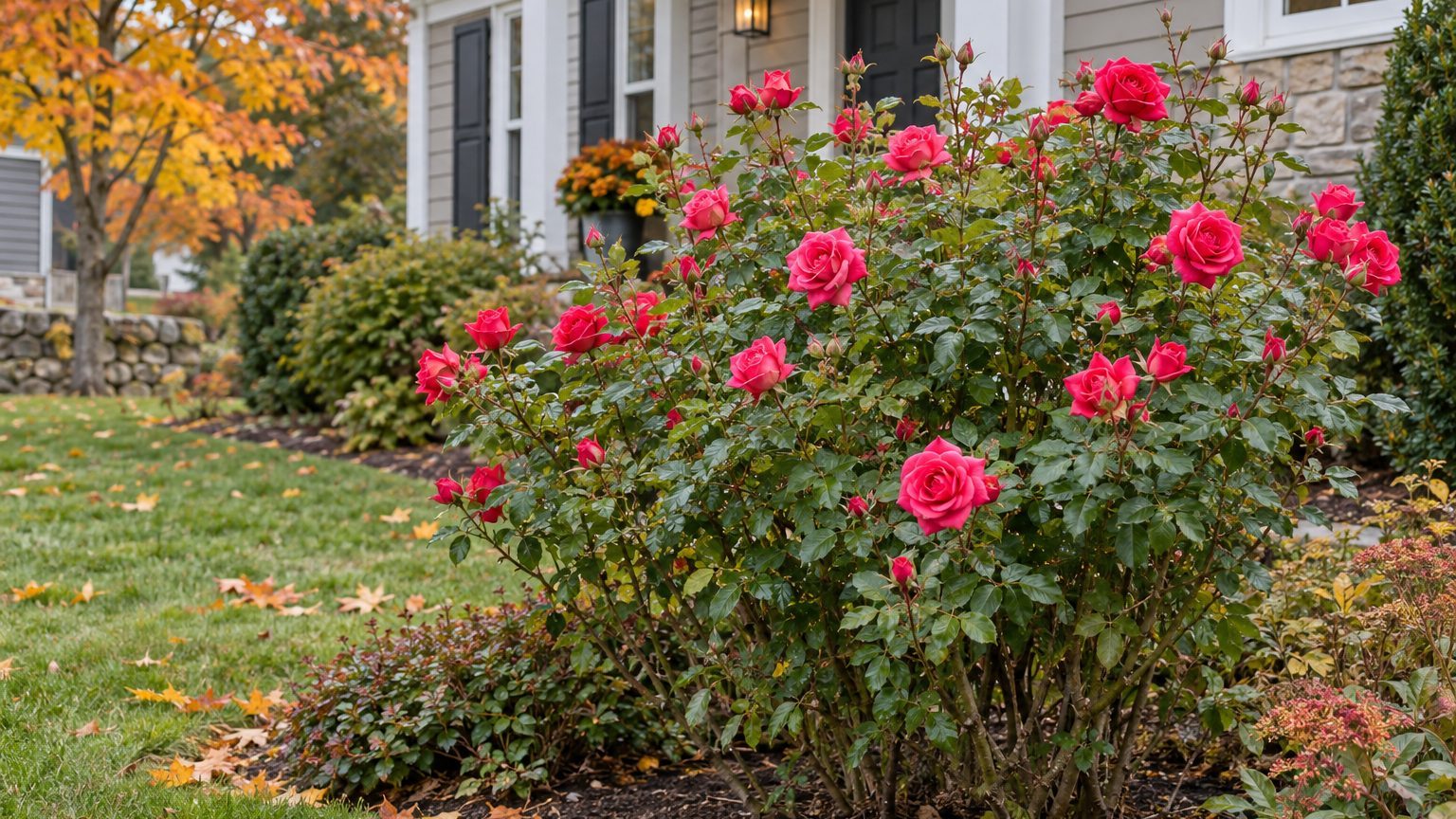
Bare-root roses go into Connecticut soil in March and April, while the ground is workable and the canes are still asleep. Container roses follow once the weather settles, and they can keep going into midsummer.
When to Plant Roses in Connecticut

Connecticut sits in USDA zones 6a to 7b, and in Bridgeport, the last spring freeze comes around April 2 to April 12, earlier than in the northern part of the state. Inland and northwest Connecticut freeze later in spring, so those gardeners lean toward the end of each window. Here is the rose year in order.
- In March and April, plant bare-root roses while they are still dormant and before growth starts, since a leafed-out bare-root plant struggles to settle in.
- From April through midsummer, set out container roses, which carry their own root ball and tolerate a later start than bare-root plants.
- In late spring and early summer, from May into July, bare-root planting is still possible as a fallback, though the plants need more watering to catch up.
- From April through July, feed on schedule and let the young plant spend its energy on roots and first blooms rather than on stress.
- In November, once several hard freezes have passed, cover tender roses, because in Bridgeport the first fall freeze arrives around October 28 to November 10, and it comes sooner inland.
A young rose fears a hard freeze after it has leafed out, which is why a planting date follows the soil and the buds rather than a single day on the calendar.
Connecticut — the year and the numbers
- State
- Connecticut
- USDA zones
- 6a-7b
- Last spring frost
- April 2 to April 12
- First fall frost
- October 28 to November 10
- Annual rain
- 44 in
- Lawn zone
- cool-season
- Source
- NOAA NCEI 1991-2020 Climate Normals, 32F freeze probabilities · Bridgeport
Which Roses Grow Best in Connecticut?
Hardy shrub roses handle Connecticut winters with little fuss. Hybrid teas, floribundas and grandifloras give beautiful flowers but are not reliably winter hardy, so they need protection in cold winters. Old garden roses are generally tougher than hybrid teas.
Humid summers favor roses that shrug off wet foliage, and a hardy cultivar bred for colder zones needs little extra care even in the milder parts of the state.
| Rose type | How it does in Connecticut | Why |
|---|---|---|
| Hardy shrub roses (Knock Out, Explorer series) | Perform well without extra protection | They perform well without extra winter protection |
| Hybrid teas | Need winter cover | Not reliably winter hardy |
| Floribundas and grandifloras | Need winter cover | Not reliably winter hardy |
| Old garden roses | Generally cold tolerant | Many are extremely tolerant of low temperatures |
Climbers vary by variety, and some are tender enough to need the same cover as a hybrid tea. Once-blooming roses, including old garden roses, ramblers and many climbers, flower on last year’s wood, so prune them right after they bloom, never in early spring.
When to Prune, Feed and Protect Roses in Connecticut
The rose year turns on a few gestures with clear months. Prune when the forsythia blooms and winter cover is off, feed after pruning, and tuck tender roses in only after the ground has seen several killing freezes.
Pruning here refers to repeat-blooming roses such as hybrid teas, floribundas and modern shrub roses.
| Task | Best months in Connecticut | Why then |
|---|---|---|
| Pruning repeat-blooming roses | March, April (February works too) | Buds are swelling and the forsythia is in bloom |
| Feeding | April through July | After pruning, at first bloom and again in mid-July, with none after July |
| Winter protection on | November (December works too) | Plants are dormant after several killing freezes |
| Winter protection off | March, April | Between mid-March and mid-April, once the ground thaws |
Do not fertilize after mid-August, because late feeding can produce soft growth that winter would damage. Pruning in detail has its own page for Connecticut.
How Rose Care Dates Change Across Connecticut
The state is small, but Long Island Sound and the hills shift the season enough that timing moves from one town to the next.
- Bridgeport and the Sound shore: The water keeps this coast mild, so spring planting starts at the early end of March and April and winter cover can wait longer in fall.
- The Northwest Hills: Freezes come sooner in fall and linger later in spring, so planting and uncovering lean toward April and cover goes on earlier in November.
- The Connecticut River Valley and inland towns: These sit between the two, with freezes arriving noticeably earlier in fall than on the shore, so watch your own buds and soil.
When in doubt, let the forsythia and the swelling buds in your own yard set the pace.
Where to Get Rose Advice in Connecticut
When a rose fails or the soil is a question mark, local help is close. University of Connecticut Extension and its county offices handle diagnoses and soil testing for home gardeners.
- The extension office can identify a problem from a photo or a cane sample, so take one in whenever leaves spot or canes darken.
- A soil test is worth doing before planting in March or April, since it shows what the bed needs before you feed.
- Local master gardener volunteers can offer advice on varieties that suit your part of the state.
Common Questions
Can You Plant a Rose in July in Connecticut?
Yes, a container rose can go in through midsummer, and bare-root plants can still be set out in July as a fallback. Water the new plant regularly so its roots establish before fall.
Do Roses Need Winter Protection in Connecticut?
Hybrid teas, floribundas and grandifloras do, and most hardy shrub roses do not. Cover goes on in November after several hard freezes and comes off between mid-March and mid-April.
Which Roses Grow Well in Connecticut?
Hardy shrub roses such as Knock Out and the Explorer series perform well without extra protection, which makes them a low-effort choice for most Connecticut yards.