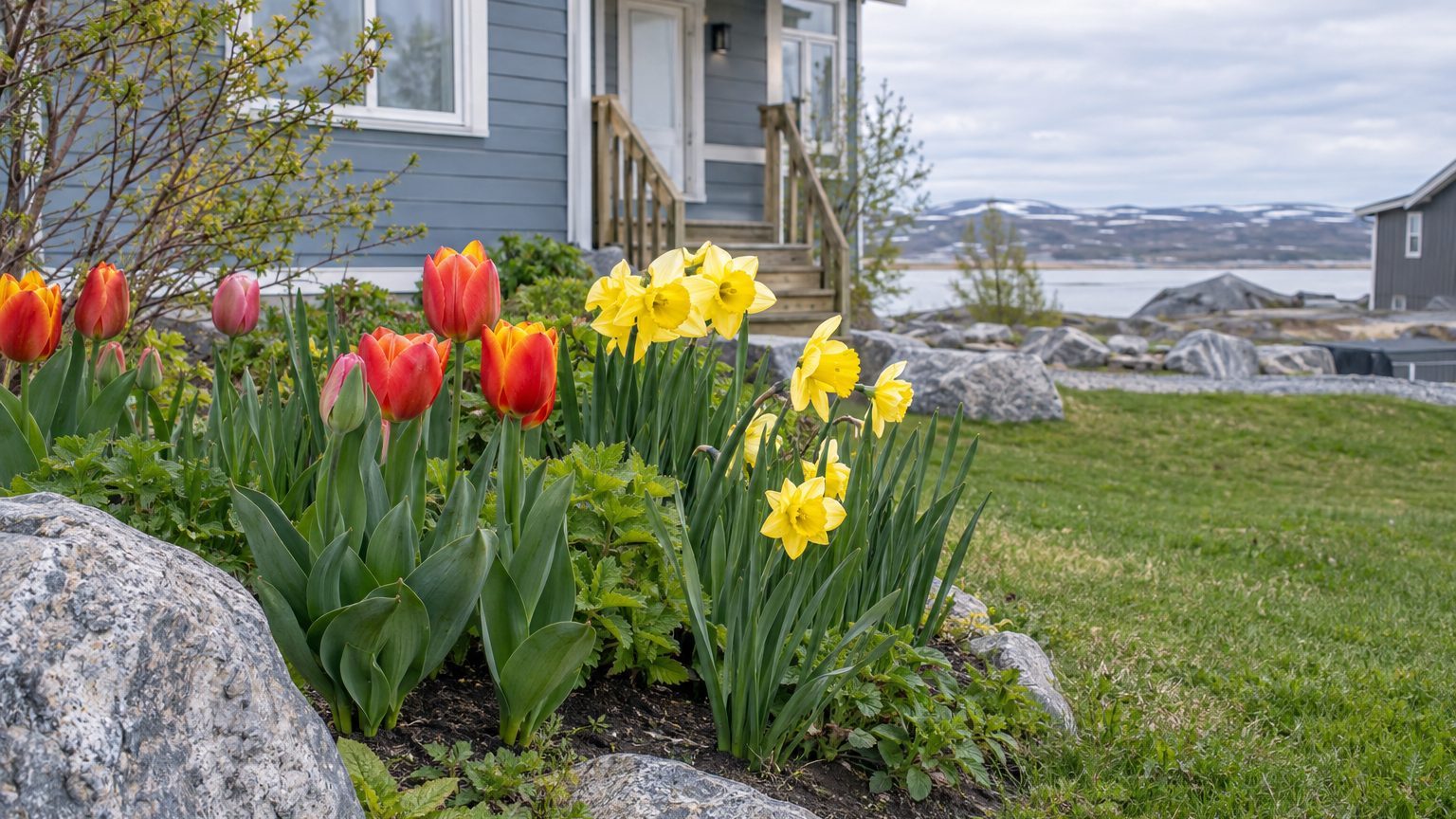
Snow still sits on the beds when the first green shoots of hardy bulbs push through in the short northern spring. Gardeners in Nunavut work with some of the harshest winters in North America, so the question is which bulbs can sit out that cold underground and still flower. A few small, tough species can, and a few showier ones are worth a gamble.
Best Spring Bulbs to Grow in Nunavut

Scilla, snowdrops and ornamental alliums are the safest picks, with grape hyacinth and Greigii tulips as bets that sometimes pay off. Nunavut sits in plant hardiness zone 0a in the Canadian system (not a USDA zone), so winter cold is the main test. Small, early, tough bulbs pass it most reliably.
Scilla
Scilla tends to winter over well in far-northern gardens, which is why it leads this list. Plant it in late summer or early fall so the roots settle before the ground freezes.
Once established, it comes back without fuss. Leave the foliage alone after the blue flowers fade.
Snowdrops
Snowdrops are also hardy, and that single fact earns them a place in nearly every cold-climate bulb bed. They are small, so plant them in groups where the display will be seen from a window or doorway.
Purple Sensation Allium
The showy allium called ‘Purple Sensation’ is recommended as a fall-planted bulb. According to Iowa State University Extension, alliums, like other spring-flowering bulbs, need the cold of winter to bloom.
Plant it in fall alongside the others, and let the leaves yellow after bloom.
Grape Hyacinth
Grape hyacinth sometimes winters over as well, though the word is sometimes, not always. Treat it as an experiment: plant a modest handful in the most sheltered spot you have, and expand the planting only if it returns the following spring.
Greigii Tulips
A Greigii tulip called Pinochio came up the first spring after a mild winter. Tulips are often short-lived in the garden, so think of them as a bonus to enjoy.
Daffodils last longer and are the more reliable perennial bulb, so they make a steadier companion where you want repeat bloom.
Nunavut — the year and the numbers
- State
- Nunavut
- Hardiness zones
- 0a
- Last spring frost
- June 19
- First fall frost
- September 13
- Annual rain
- 12 in
- Lawn zone
- cool-season
- Source
- Environment and Climate Change Canada — Canadian Climate Normals 1981-2010, station RANKIN INLET A · Rankin Inlet
How to Choose Spring Bulbs for Your Nunavut Garden
Your choice depends on what your garden throws at the bulb and how much attention you can give it. Winter severity matters most here, so start with the toughest small bulbs and add showier ones as you learn what survives in your own bed.
Time, pests and the bulbs left over from a late purchase all shift the answer a little, as the table sets out.
| Your situation | What suits it in Nunavut | Why |
|---|---|---|
| Very cold winter | Scilla, snowdrops | Both winter over well in hard climates |
| Little time to fuss | Daffodils | Longer lived and the more reliable perennial bulb |
| Need for cold to flower | Alliums | They need winter cold to bloom |
| Rodents or rabbits around | Daffodils | Tulips and crocus get eaten, daffodils are left alone |
| Bulbs still unplanted | Whatever you have, planted soon | Plant as long as the ground can be dug |
Grape hyacinth and Greigii tulips fit the gambler in you rather than a firm situation, so try them in small numbers beside the dependable choices.
Which Spring Bulbs Suit Different Parts of Nunavut
Nunavut covers a huge area, and the climate shifts a lot from one community to the next, so no single list fits every yard.
- Rankin Inlet: the average last spring frost falls on June 19, which means frost comes later than that in one year out of two. Treat the date as the midpoint of a window and favor the hardiest small bulbs.
- Communities north of Rankin Inlet: northern and upland districts run weeks behind that date, so stick to scilla and snowdrops and hold the tulips for a sheltered corner.
Wherever you garden, a spot shielded from wind and warmed by a south-facing wall gives bulbs a better chance than open ground.
Spring Bulb Buying Mistakes to Avoid in Nunavut
Counting on Tulips and Crocus
Tulips are often short-lived, and tulips and crocus are the bulbs that voles, squirrels, rabbits and deer eat. Buying a large bag of them can mean a small return. Make daffodils the backbone of your planting, and treat tulips as a bonus.
Planting at the Wrong Time
Plant spring bulbs once the soil has cooled below about 60°F, which gives roots time to form before the ground freezes without tempting the bulbs to sprout. For Nunavut, the calendar points to August and September, late August to early September, or when the soil is in the low to mid 50s °F. Those dates follow the nearest comparable climate, so confirm local timing with your own garden contacts.
Keeping Bulbs in the Bag
A bulb left in its bag over the winter is a bulb wasted. Plant as long as the ground can be dug, even if the season has slipped, because a late bulb in the soil does better than one in storage.
Where to Get Spring Bulb Advice in Nunavut
Agriculture and Agri-Food Canada is the federal department, and it offers a good starting point for general growing information.
- A local garden centre can tell you which bulbs arrive in your community and when, so visit in late summer before stock runs out.
- A garden society or territorial gardening group can share what has survived in nearby yards, and the answers are most useful before you plant.
Common Questions
Do Spring Bulbs Need to Be Chilled Before Planting in Nunavut?
Most spring-flowering bulbs need about 12 to 16 weeks of cold to flower. Nunavut winters supply that, so the refrigerator step used in mild climates is not needed here.
When Should You Remove the Leaves After Bulbs Bloom?
Take off only the faded flowers and leave the leaves in place until they turn brown. The leaves feed the bulb for next year’s bloom.
Do All Spring Bulbs Flower at the Same Time?
No, spring bulbs bloom in a long succession, from snowdrops and winter aconites at the start of the season to ornamental onions (alliums) at the end. Mixing a few types stretches the display.