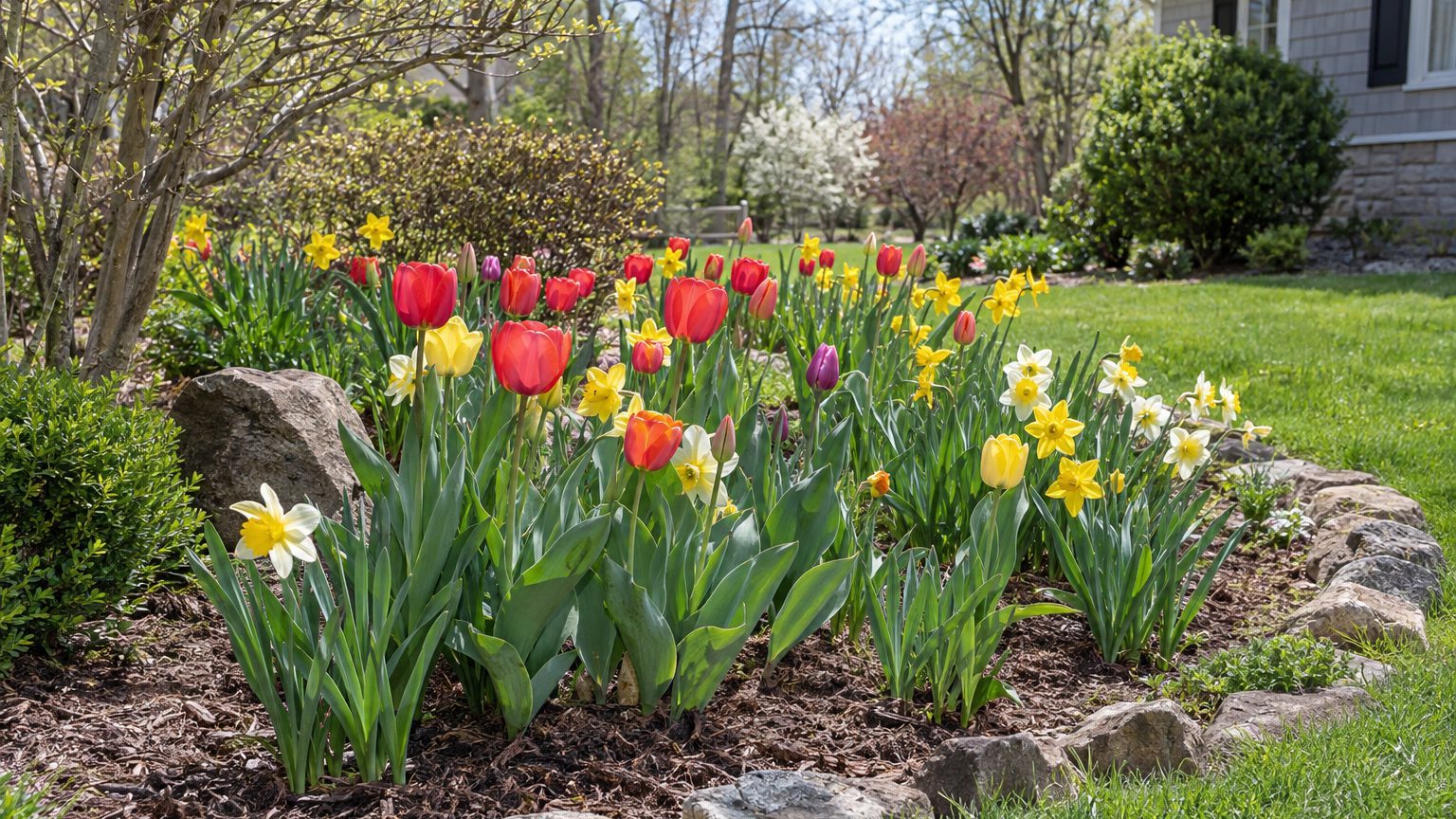
When the snow pulls back from the south wall of the house and the first green tips show, bulb season has started, though in the far north that moment comes late. Tulips and daffodils in Nunavut flower with the warming of spring, not on a fixed date, so the signs in the soil matter more than the calendar.
When Do Tulips and Daffodils Bloom in Nunavut?

Tulips and daffodils bloom in Nunavut as spring warms the ground, and no set month applies. The bulbs wait out the long winter, then open when the season turns, so the weather of each year moves the date.
Rankin Inlet falls in Canadian hardiness zone 0a, a rating that is not a USDA zone and does not convert to one. It describes a bulb’s winter, which is long and cold and gives bulbs the rest they need.
| Bulb | When it blooms in Nunavut | What sets the timing |
|---|---|---|
| Daffodils | Follows the warming of spring | Winter cold, then spring warmth. The most dependable perennial bulb |
| Tulips | Follows the warming of spring | Needs about 12 to 16 weeks of cold. Often short-lived |
| Alliums | Follows the warming of spring | Needs the cold of winter to bloom |
Nunavut has no local guidance on bulb timing of its own, so the planting months here follow the nearest comparable climate: August and September, when the soil sits in the low to mid 50s °F (about 10 to 13°C). Confirm local timing with a garden centre, a garden society or a territorial gardening group. Crocus, hyacinths and grape hyacinths are worth a trial, though voles and rabbits eat crocus, and daffodils are left alone.
Nunavut — the year and the numbers
- State
- Nunavut
- Hardiness zones
- 0a
- Last spring frost
- June 19
- First fall frost
- September 13
- Annual rain
- 12 in
- Lawn zone
- cool-season
- Source
- Environment and Climate Change Canada — Canadian Climate Normals 1981-2010, station RANKIN INLET A · Rankin Inlet
How to Tell Your Bulbs Are About to Bloom
Bulbs announce themselves in stages, and each stage tells you what to do or leave alone.
- Pointed green tips breaking the soil mean the bulb has survived the winter and roots are working, so keep the bed clear of heavy debris.
- Leaves that open into a clump tell you the flower stalk is forming inside, and this is the time to protect the bed from foraging animals.
- A fat bud that rises above the leaves means bloom is close, and cold snaps at this stage do little harm to daffodils.
- A bud showing color at its tip means the flower will open soon, and tulips in particular are worth watching for browsing damage.
- A gap where tulip or crocus tips should be points to voles, squirrels or rabbits, since they eat those bulbs and leave daffodils alone.
Alliums send up a strap of leaves before the round flower head, so a bare patch in a bed of alliums usually means the bulbs are simply later.
What to Do After Tulips and Daffodils Bloom in Nunavut
Snip off only the faded flowers and leave everything else in place. Do not cut the leaves back and do not tie or braid them while they are green. The leaves feed the bulb for next year’s flowers, so they stay on the plant until they turn yellow or brown.
Tulips are often short-lived in the garden, so plan to replace some after a few seasons. Daffodils last longer and are the more reliable perennial bulb, which makes them the backbone of a northern bed. Gardeners in subarctic Interior climates have also had good results with scilla, snowdrops and sometimes grape hyacinth wintering over.
For color after the tulips fade, the allium called Purple Sensation is a useful companion. A Greigii tulip such as Pinochio came up the first spring after a mild winter in a comparable cold climate, so smaller, tougher tulips are worth trying alongside the showier ones.
How Bloom Time Shifts Across Nunavut
Nunavut covers a vast area, and spring arrives at very different times depending on where your yard sits.
- Rankin Inlet: On Hudson Bay’s western shore, the last spring frost falls on June 19 on average, which means frost can still arrive later than that in about half of years.
- Cambridge Bay and communities farther north: Spring runs behind Rankin Inlet, so bulbs in these places wake later and bloom later.
- Sheltered spots against a south wall: The ground warms sooner there than in open ground, so shoots tend to appear earlier in those pockets.
Treat any frost date as a midpoint, never a safe date, and watch your own soil first.
Where to Get Bulb Advice in Nunavut
Canada has no county extension offices, so local advice comes from a few other places. Start with the national department and then add people who grow in your community.
- Agriculture and Agri-Food Canada has general growing information, and it is a good first stop before planting season.
- A garden centre or a garden society can tell you what has survived in your community, so ask in late summer, before bulbs go in the ground.
- A territorial gardening group can confirm planting timing near you, and it is worth contacting well before August.
Common Questions
Can You Plant Bulbs That Are Still in the Bag?
Yes. A bulb still in the bag is better planted late than stored over the winter, so plant as long as the ground can be dug.
Do Tulips Need to Be Chilled Before Planting in Nunavut?
Most spring bulbs need about 12 to 16 weeks of cold to flower, and Nunavut winters supply that on their own. Chilling in the refrigerator is for places where winters are too mild.
Which Bulbs Handle Cold Northern Gardens Best?
In subarctic Interior gardens, scilla tends to winter over well, snowdrops are hardy, and grape hyacinth sometimes survives. Daffodils are the more reliable perennial bulb, and according to Iowa State University Extension, alliums need the cold of winter to bloom.