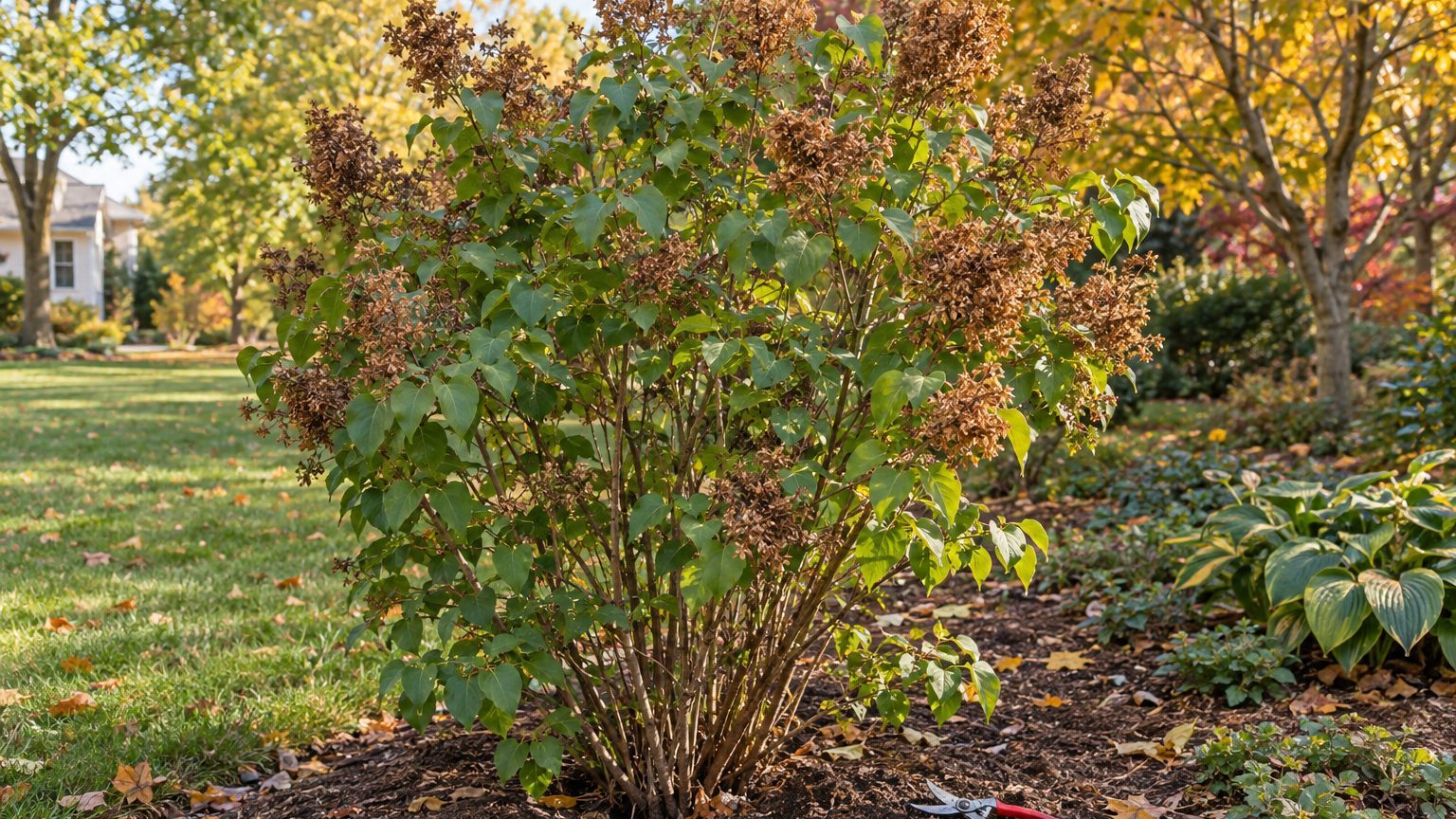
A lilac that finishes flowering in a Nunavut summer is already busy setting next year’s buds. That makes the period after the last purple fades the right time to prune a once-blooming lilac.
When to Prune Lilacs in Nunavut

Prune right after the flowers fade, which in Nunavut means June into July. The territory has no local lilac timing guide of its own, so these months follow the nearest comparable northern climate. Confirm them with a local garden centre, a garden society or the territorial gardening groups.
| Type of pruning | When in Nunavut | Why |
|---|---|---|
| Routine upkeep: trimming spent flower clusters and shaping | June, July, right after the flowers fade | Next year’s flower buds form in summer, soon after bloom |
| Hard renovation cut on an overgrown lilac | Late winter | Renews the shrub, but it will not flower for a few years afterward |
Lilacs flower on last year’s wood, so every cut made after the buds are set removes some of next spring’s show. Bloom itself comes in June for most lilacs here, with May possible for early types, so the pruning window opens as soon as your own shrub finishes. Prune lilacs right after their flowers fade.
Nunavut — the year and the numbers
- State
- Nunavut
- Hardiness zones
- 0a
- Last spring frost
- June 19
- First fall frost
- September 13
- Annual rain
- 12 in
- Lawn zone
- cool-season
- Source
- Environment and Climate Change Canada — Canadian Climate Normals 1981-2010, station RANKIN INLET A · Rankin Inlet
How to Tell When Your Lilacs Are Ready to Prune
Your shrub gives better timing than any date, because a cool summer or a sheltered wall can shift bloom by a good stretch.
- The flower clusters have turned brown and dry, which tells you the show is over and pruning can begin.
- Petals are dropping and the florets look tired, so you can cut the clusters off before the plant spends energy on seed.
- Small green buds are showing just below the old flower heads, a sign the next year’s flowers are already forming and you should cut above them, not through them.
- New leafy shoots are pushing from the base, which tells you the shrub is in active growth and heals cuts readily.
- The flowers are still fresh, even in July, so hold off, because early cuts remove bloom you could still enjoy.
Late-blooming lilacs finish later in the season, so the same signs apply, just a little further along.
Should You Prune Lilacs in Fall or Winter in Nunavut?
No. Cutting in fall or winter takes off the buds that would open next spring, so you trade a year of flowers for a tidier shape. Late summer is no better, since the buds are already set by then.
The exception is a lilac that has grown into a tangle of old stems. You can cut it back hard in late winter to renew it, but expect no flowers for a few years afterward. If your shrub still blooms reasonably well, remove old stems gradually after flowering instead.
Lilacs do need a cold winter rest to mature their flower buds, so Nunavut’s long winters work in their favor. Hardiness varies by variety, though, so ask your garden centre which types are tough enough for your community.
How Lilac Pruning Time Shifts Across Nunavut
Nunavut covers a huge span of tundra and coast, and your own community’s season decides when the flowers fade.
- Rankin Inlet: this is the reference point for frost timing in the territory, and lilacs here follow the June to July pruning window once the flowers have finished.
- Iqaluit: coastal gardens on the southern Baffin side warm slowly, so wait for your own shrub to finish flowering rather than going by a calendar date.
- Cambridge Bay: districts farther north run weeks behind Rankin Inlet, so flowers and pruning both come later in the summer.
A sheltered spot against a south-facing wall will usually bloom and finish sooner than an open yard in the same community.
Where to Get Lilac Advice in Nunavut
Agriculture and Agri-Food Canada is the federal source for general growing guidance in the territory.
- A local garden centre or garden society can tell you which lilacs have survived winters in your community, so ask in spring before you buy.
- Territorial gardening groups can confirm when lilacs in your area finish blooming, which is the moment to pick up the pruners.
Common Questions
Does the Last Frost Date Tell You When to Prune Lilacs?
No. At Rankin Inlet the average last spring frost falls on June 19, but that is a midpoint, so frost comes later in half of all years. A frost date marks risk to tender growth, not the day to cut a lilac. Your cue is the fading of the flowers.
Can Lilacs Handle Nunavut’s Cold?
Lilacs need a cold winter to mature their flower buds, so cold alone is not the obstacle. Rankin Inlet sits in zone 0a of the Canadian hardiness system, which is a different scale from the USDA zones and cannot be converted to them. Pick varieties known to do well in cold northern gardens.
What If Your Lilac Blooms Late?
Late-blooming lilacs flower after the common ones, usually in June. Prune them soon after the last flowers fade, still within the June to July window, so the next buds are left intact.