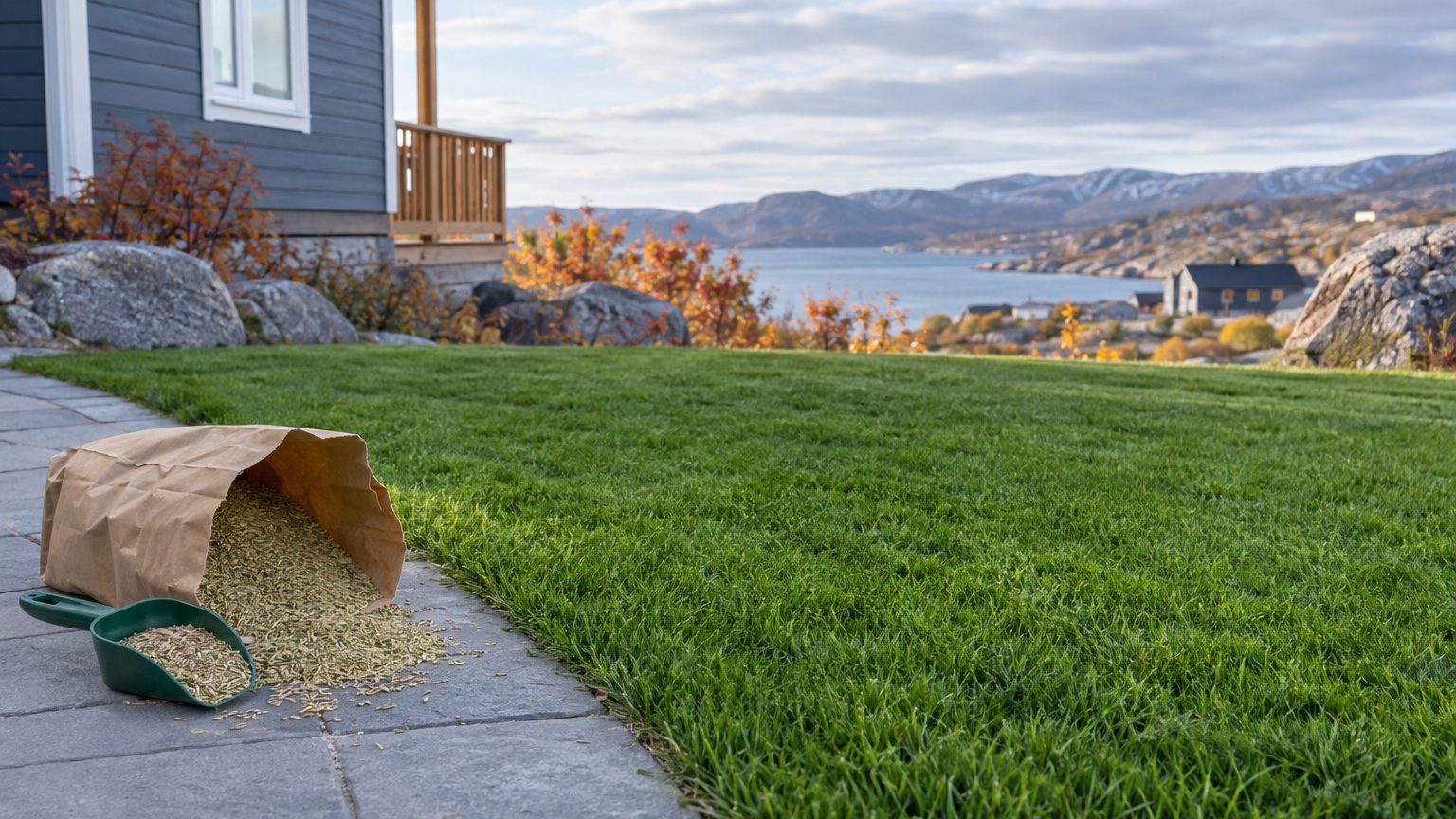
A Nunavut lawn starts with a short stretch of thawed ground and a lot of patience. Cool-season grasses are the only kind with a chance up here, and a blend led by fine fescues is the sensible place to begin. Expect a modest, slow-growing patch of turf rather than a southern carpet.
Which Grass Grows Best in Nunavut?
Cool-season grasses suit Nunavut because they grow in cold soil and shrug off long winters. Warm-season grasses need heat the territory never delivers. Rankin Inlet sits in Canadian hardiness zone 0a (a Canadian rating, not a USDA zone), and much of the territory is colder than that. Three lawn species are realistic.
Fine Fescues
Creeping red, Chewings, and hard fescues are practical choices for the territory. Their fine, narrow blades handle cold, thin soil and low fertility without fuss. They also tolerate shade better than bluegrass.
Choose fine fescues as the backbone of any mix, especially where the soil is poor or the site is sheltered but not rich.
Kentucky Bluegrass
Kentucky bluegrass is very winter hardy and spreads by underground stems, so it can fill thin spots on its own. The catch is speed. It is slow to germinate, and a short season leaves little room for a slow start.
Use it as a partner to fine fescues in sunny, sheltered spots where the lawn will see foot traffic. Alone, it is a gamble.
Perennial Ryegrass

Perennial ryegrass sprouts quickly, which is tempting when summer is brief. The trouble is that it is short-lived in Nunavut’s coldest winters.
A small share in a blend can give quick early green while the slower grasses catch up. Plan on reseeding it, because it will not last the way fescue does.
Nunavut — the year and the numbers
- State
- Nunavut
- Hardiness zones
- 0a
- Last spring frost
- June 19
- First fall frost
- September 13
- Annual rain
- 12 in
- Lawn type
- cool-season
- Source
- Environment and Climate Change Canada — Canadian Climate Normals 1981-2010, station RANKIN INLET A · Rankin Inlet
How to Choose Grass Seed for a Nunavut Yard
Match the seed to what your yard actually does. Sun, shade, foot traffic and how much you want to mow all point toward different species. Nothing here needs a brand name, only the right grass in the right spot.
Watering also matters. Seeding and the first summer of growth fall in June through August, so a yard where you can water through that stretch gives any of these grasses a better chance.
| Grass | Season | Best for | How it does here |
|---|---|---|---|
| Fine fescues | Cool | Shade, poor soil, infrequent mowing | Practical in a low-input mix |
| Kentucky bluegrass | Cool | Sunny, sheltered, walked-on lawns | Hardy but slow to start |
| Perennial ryegrass | Cool | Quick early cover in a mix | Short-lived in the coldest winters |
If you would rather mow rarely, lean on fine fescues and accept a shaggier look. If you want a tougher play area, add bluegrass and water it through the growing season.
Which Grasses Grow Where in Nunavut
Nunavut spans a huge area, and conditions shift a great deal from one community to the next. Seasons generally become colder and shorter toward the north, while the sea moderates or chills the coast depending on the ice.
- Rankin Inlet and the Kivalliq coast: Hudson Bay keeps spring slow in this part of the territory. A mix of fine fescues and some bluegrass is reasonable.
- Iqaluit and southern Baffin Island: Cold water and long ice cover delay the thaw. Stay with fine fescues and plan for a thin, slow lawn.
- Cambridge Bay and the Kitikmeot: Cold, exposed and windy. A patch in the lee of a building has a better chance than open ground.
- Resolute and the High Arctic: The season is so brief that a lawn is a long shot. A sheltered pocket planted with fine fescue offers a possible starting point.
Wherever you live, microclimate matters more than the map. A south-facing wall can make a small patch behave like a place farther south.
Grass Seed Mistakes to Avoid in Nunavut
Choosing a Warm-Season Grass
Warm-season grasses go dormant in cool weather and rarely survive a Nunavut winter. They also need sustained heat, and the summer here is brief. Buy a cool-season mix built on fine fescues instead, and check the label before you pay.
Seeding Too Late
Fall seeding does not work here because the season is too short. Seed in June once the ground has thawed, and if you miss it, July still works. In Rankin Inlet, frost can arrive later than the average last date of June 19, and in half of years it does, so cold nights may follow sowing.
Seedlings need time to root before freeze-up. In Rankin Inlet, the average first fall frost is September 13, and the earlier you seed, the more growth you get before it.
Burying the Seed
Grass seed is small and needs shallow coverage to establish. Rake it in so it is covered by no more than 6 mm (0.25 inch) of soil. Deeper than that, the seedlings use up their energy before reaching the surface. Press the seed in lightly and water gently so it stays put.
Where to Get Lawn Advice in Nunavut
Canada has no county extension offices, so advice comes from different places. Local conditions vary so much across the territory that a neighbor’s results can help you judge what will work.
- Agriculture and Agri-Food Canada has general guidance on soil and plant information, which is useful before you buy seed in spring.
- Local garden groups and greenhouse growers know which sites hold snow and which thaw early, so ask them before you mark out a patch.
- Your nearest garden center or hardware supplier can tell you which cool-season seed they can get, so ask before the short season begins.
Common Questions
Is a Lawn Practical in Nunavut?
It can work in a sheltered yard with soil that thaws fully, but it will be thin and slow compared with a southern lawn. Start small and choose cool-season seed.
When Should You Water and Mow a New Lawn?
Water regularly from June through August, keeping the surface of the soil moist while seedlings establish. Mowing runs from June through September, once the grass is tall enough to cut.
When Should You Fertilize Grass in Nunavut?
Feed once the grass is growing, which means June this far north. If you miss June, August still works.