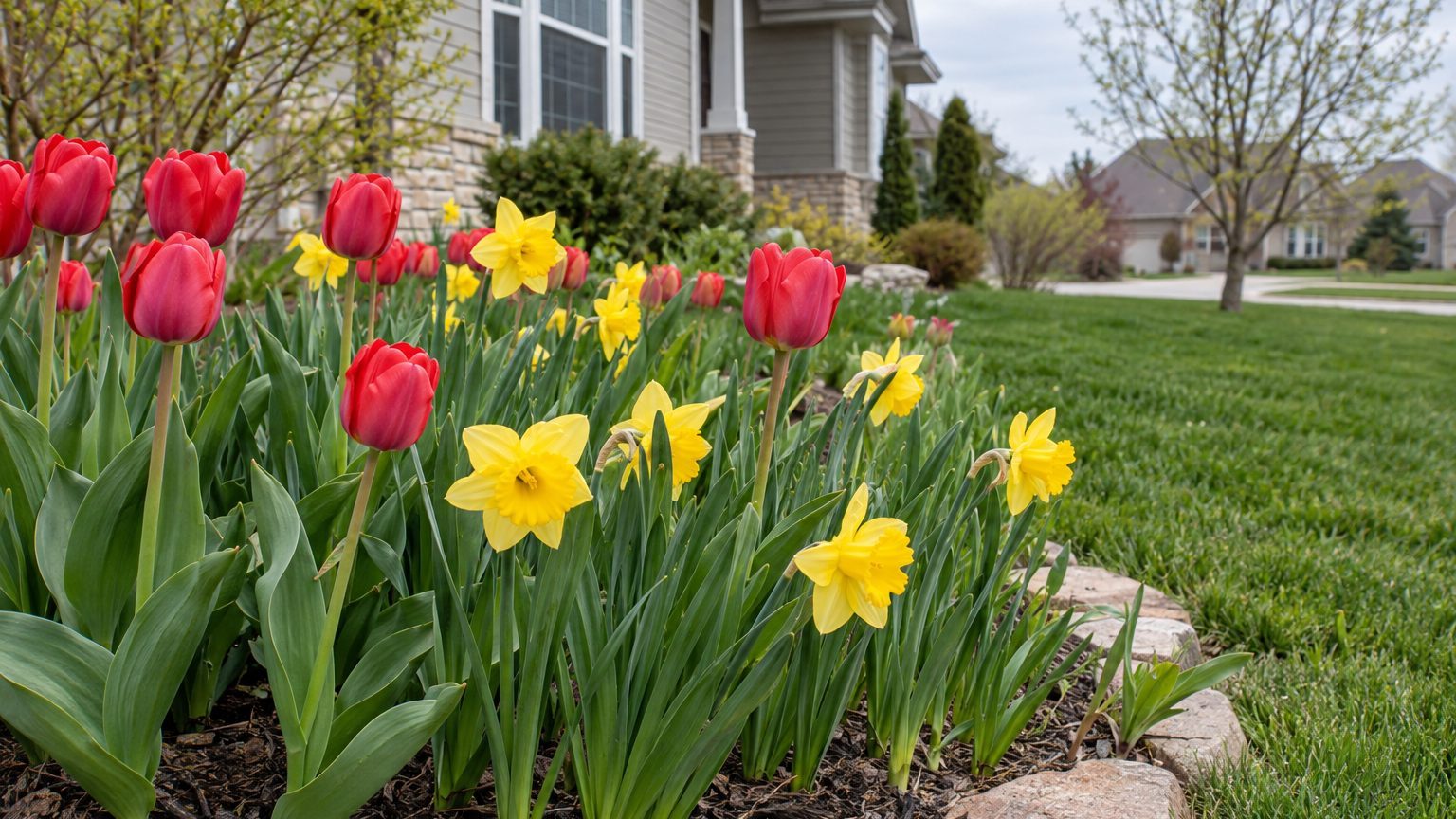
Daffodil leaves poking through the last crust of snow are one of the first signs that a North Dakota yard is waking up. Planted the previous fall, some bulbs come back for many springs and others fade after a few. Daffodils and alliums are the ones that settle in and keep returning, and species tulips may work better.
Best Spring Bulbs to Grow in North Dakota

Daffodils, alliums and the small species tulips hold up best here. The state sits in USDA hardiness zones 3a to 4b, so winters give bulbs all the cold they ask for. The real test is how long a bulb keeps returning, and that depends on soil moisture and on how much the plant has been bred away from its wild parents.
Daffodils
Daffodils live longer in the ground than tulips, which makes them the more reliable perennial bulb for a yard that gets planted once and left alone. Choose them for borders, the edge of a lawn, or under shrubs, spots you would rather not dig up again and again.
Plant them in fall and let the leaves stay after bloom until they turn yellow. That foliage is what feeds the bulb for next spring.
Alliums
Alliums are not as picky as many bulbs, so they can go in a few weeks before a hard frost. That makes them forgiving for the gardener who meant to plant in September and found the calendar turning to October.
They are ornamental onions, with round purple heads on tall stems. They tend to bloom late in the bulb season, which fills the gap once tulips and daffodils are done.
Species Tulips
Most hardy bulbs evolved in desert or Mediterranean climates, and many hybrid tulips do not adapt well to wet, heavy clay. Species tulips are the shorter types with smaller flowers, and they tend to work better where drainage is slow.
Tuck them into a rock garden, a raised bed, or the front of a sunny border. They look less formal than the big hybrids, and they usually keep coming back.
Hybrid Tulips
Tulips are perennial on paper, but years of hybridizing have weakened the bulb’s ability to return. In heavy clay, hybrids may come back for only a few years, especially when thirsty annuals are planted on top of them or right beside them.
If you love the big, bold blooms, plant them anyway and treat them as annuals. Replace them each fall, and plant the long-lived bulbs around them.
North Dakota — the year and the numbers
- State
- North Dakota
- USDA zones
- 3a-4b
- Last spring frost
- May 4 to May 15
- First fall frost
- September 25 to October 5
- Annual rain
- 24 in
- Lawn zone
- cool-season
- Source
- NOAA NCEI U.S. Climate Normals 1991-2020, 32F freeze probabilities · Fargo
How to Choose Spring Bulbs for Your North Dakota Garden
Start with how much work you want to put in each year. Plant from mid-September through mid-October, once the soil has cooled below about 60°F. The bulb then has time to root before the ground freezes, without sprouting too early.
After that, match the bulb to your yard and your patience.
| Your situation | What suits it in North Dakota | Why |
|---|---|---|
| Very cold winters | Daffodils, alliums, species tulips | Zones 3a to 4b give these bulbs the cold they need to flower. |
| Heavy, wet clay soil | Daffodils and species tulips | Hybrid tulips are poorly adapted to wet clay and may return only a few years. |
| Little time or a late start | Alliums | They are not picky and can go in a few weeks before a hard frost. |
| Small space | Species tulips | They are shorter, with smaller flowers. |
| You want planting once and done | Daffodils | They live longer in the ground than tulips. |
| You want big hybrid tulips | Hybrid tulips treated as annuals | Their ability to come back year after year has weakened over time. |
Hyacinths and crocus can join the same fall planting. Check your own county for the hardiness conditions in your yard, since a sheltered garden and an open prairie lot can behave quite differently.
Which Spring Bulbs Suit Different Parts of North Dakota
The state runs from USDA zone 3a to 4b, and the bulb choice shifts a little from one part to the next.
- Red River Valley: Heavy clay is common around Fargo and Grand Forks, which favors daffodils and species tulips over big hybrid tulips.
- Where winters run colder, lean on daffodils and alliums and plant at the early end of the planting window.
- Where winters are a little milder, hybrid tulips are easier to try, especially in a sheltered bed.
Wherever you garden, a spot protected from wind and with drainage that never holds water gives every bulb a better chance.
Spring Bulb Buying Mistakes to Avoid in North Dakota
Expecting Hybrid Tulips to Return
The big hybrid tulips in garden centers look like a bargain until the second spring, when fewer come up. In wet, heavy clay they may last only a few years, and thirsty annuals planted right on top of them make it worse.
Buy them as a seasonal display, or choose species tulips and daffodils if you want bulbs that stay.
Planting Too Early or Not at All
Bulbs that go in while the soil is still warm can sprout in fall and get hurt by winter. Bulbs that sit in the bag all season never flower. Aim to get them in the ground four to six weeks before the ground freezes.
If a bag is still sitting in the garage after that, plant it anyway. A bulb planted late is better than one stored over winter, and you can plant as long as the ground can be dug.
Cutting the Leaves Too Soon
Tulips and daffodils flower on the energy stored by their leaves, so a tidy-looking bed in May often means a weak bed next spring. Do not braid, tie or cut the foliage while it is green.
Remove only the faded flowers and wait until the leaves turn yellow and brown before clearing them away. Planting perennials that grow up around the bulbs hides the fading foliage.
Where to Get Spring Bulb Advice in North Dakota
Local conditions vary from one county to the next, and the best answers come from people who know your soil. North Dakota State University Extension publishes planting guidance and runs offices around the state.
- Your county extension office can answer questions about soil, drainage and which bulbs are doing well nearby.
- The extension website has fall planting guidance that is worth reading in late summer, before the bulbs go on sale.
- Call or visit the county office before planting time, so your questions are answered.
Common Questions
Do You Need to Chill Spring Bulbs in the Refrigerator in North Dakota?
No. Most spring-flowering bulbs need about 12 to 16 weeks of cold to flower, and North Dakota winters supply it in the ground. Refrigerator chilling is for tulips and hyacinths in places with winters too mild to give them the cold. Alliums need the cold of winter to bloom.
When Do Tulips and Daffodils Bloom in North Dakota?
Both bloom in April and May. Peak tulip bloom usually runs from late April to mid-May, though the exact timing shifts from year to year with spring temperatures and with how sheltered your yard is.
Which Spring Bulbs Do Deer and Rodents Leave Alone?
Daffodils are left alone, and alliums have a slight skunky odor that repels rodents and deer. Voles, squirrels, rabbits and deer will eat tulips and crocus, so plant those where you can protect them, or surround them with daffodils.