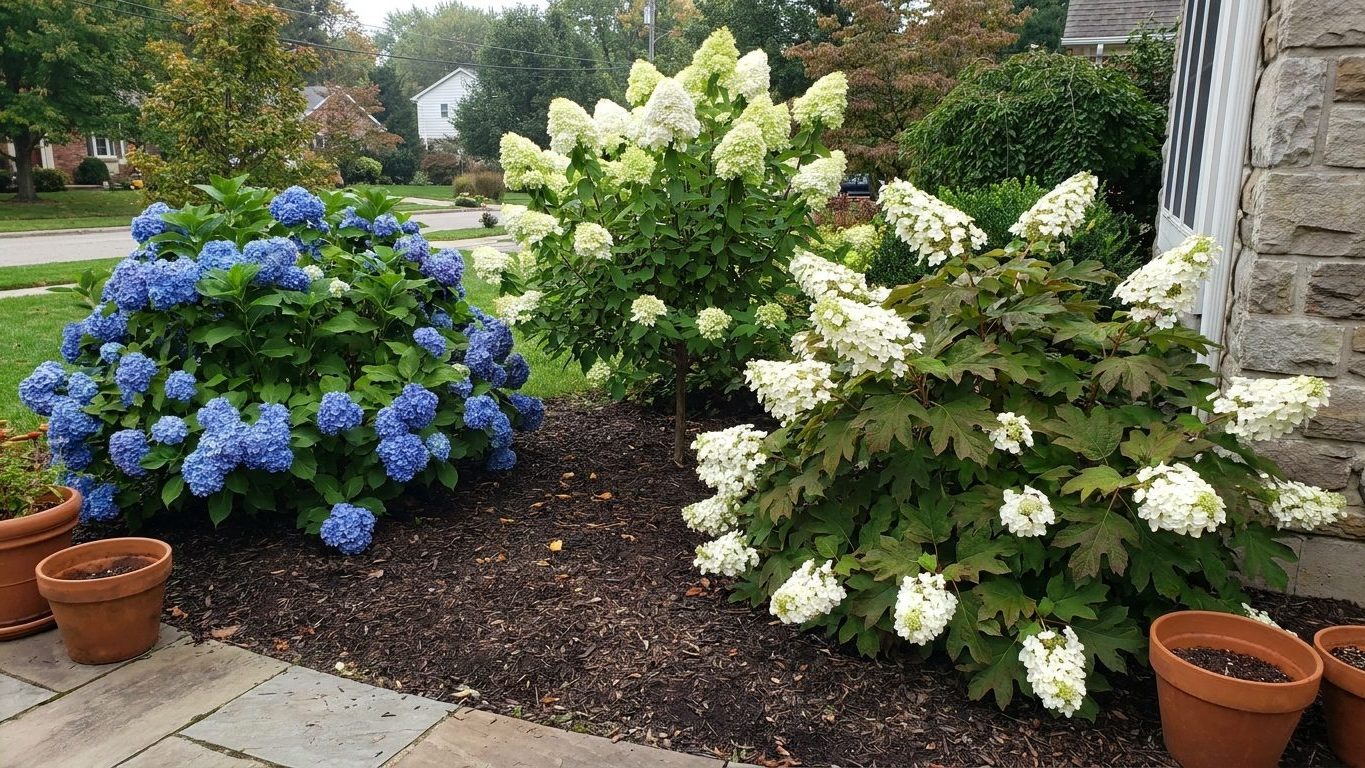
Two hydrangea species handle a North Dakota winter without any special protection: smooth hydrangea and panicle hydrangea, both suited to the coldest end of the state’s zone 3a to 4b range. Bigleaf, oakleaf, and climbing types can survive in a sheltered yard, but they rarely flower here. The safest picks bloom on new wood, so winter dieback never costs you the flowers.
Hydrangeas that grow well in North Dakota: The Short Answer
USDA Plant Hardiness Zone Map puts North Dakota at zone 3a to 4b, and Bismarck, the state’s reference city, sits well inside that cold range. Only a handful of hydrangeas are built for a Bismarck winter, and the list below runs from the safest bet to the one most gardeners end up disappointed by.
Smooth hydrangea (Hydrangea arborescens)

This native shrub survives Bismarck winters at ground level and pushes fresh stems every spring, since it flowers on new wood. Cold kills the top growth most years, but the roots don’t care, and blooms still open by midsummer. It’s the safest choice for a North Dakota yard.
Panicle hydrangea (Hydrangea paniculata)

Panicle hydrangea handles the same zone range as smooth hydrangea and blooms on new wood too, so a hard freeze in January doesn’t cost the flower show in August. It also tolerates more sun and wind than most hydrangeas, which matters on an open prairie lot.
‘Annabelle’ hydrangea

‘Annabelle’ is the arborescens cultivar most nurseries stock in Bismarck, prized for basketball-sized white blooms that hold up to prairie wind better than some newer smooth hydrangea cultivars. Cut it back hard each spring and it rewards you with flowers by July.
‘Limelight’ hydrangea

‘Limelight’ is a paniculata cultivar bred for cold hardiness, and its lime-to-pink blooms hold color through a North Dakota fall better than most panicle types. It needs almost no winter protection here beyond a layer of mulch.
Oakleaf hydrangea (Hydrangea quercifolia)

Oakleaf hydrangea is rated for warmer zones than Bismarck sits in, so it only survives here in a sheltered spot against a south-facing wall with heavy mulch. Expect dieback most winters and skip the fall color you’d get farther south.
Bigleaf hydrangea (Hydrangea macrophylla)

Bigleaf hydrangea is the riskiest pick for a North Dakota yard, since it sets flower buds on old wood the previous fall, and Bismarck’s winters kill those buds almost every year. The shrub itself often survives, but count on foliage without blooms unless it winters in a pot indoors.
North Dakota — the year and the numbers
- State
- North Dakota
- USDA zones
- 3a-4b
- Last spring frost
- May 4 to May 15
- First fall frost
- September 25 to October 5
- Annual rain
- 24 in
- Lawn zone
- cool-season
- Source
- NOAA NCEI U.S. Climate Normals 1991-2020, 32F freeze probabilities · Fargo
How to Work Out the Dates for Your Own Yard
Frost, not the calendar, decides when a hydrangea goes into the ground or breaks dormancy in a Bismarck yard.
- Start from the frost window: NOAA NCEI U.S. Climate Normals 1991-2020 puts Bismarck’s last spring frost at May 4 to May 15, so anything planted before that range risks losing tender new growth to a hard freeze.
- Give the soil two more weeks: roots on panicle or smooth hydrangea establish faster once soil has warmed past that frost window, usually by late May here.
- Check the fall side too: the first fall frost arrives September 25 to October 5, so a plant going in during August has roughly six to eight weeks to root before the ground locks up.
- Match the bloom habit to that math: panicle hydrangea builds flower buds on wood grown after the frost window closes, so winter dieback still leaves you a bloom by late summer.
- Rule out old-wood bloomers: bigleaf hydrangea sets buds the previous fall, and those buds rarely survive a Bismarck winter, which is why it flowers so unreliably here.
Your own yard may run a week or two later than the airport station these dates come from, especially in a low spot that collects cold air, so treat the range as a starting point rather than a guarantee.
North Dakota North to South: How the Dates Shift
Nothing about frost timing in North Dakota is flat, and a hydrangea planted in the Red River Valley faces a different clock than one on the Missouri Slope.
- The Red River Valley (Fargo, Grand Forks): flatter land and air moderated by the river tend to push the last frost a touch later into spring than Bismarck sees, so gardeners there often wait a few extra days to plant.
- The Missouri Slope and west (Bismarck, Dickinson): drier air and more wind exposure stress hydrangeas planted in open, unshaded spots.
- The far north (near the Canadian border): a shorter frost-free stretch favors panicle and smooth hydrangea over any old-wood type, since the growing season leaves less room for recovery.
- The south central counties (near the South Dakota line): slightly warmer summer nights can help oakleaf hydrangea hold on in a sheltered bed, though it still needs winter protection most years.
Check the North Dakota hydrangea planting calendar for the closest match to your own county before you commit a shrub to the ground.
Mistakes North Dakota Punishes
Planting bigleaf and expecting blooms
Bigleaf hydrangea sets its flower buds on old wood, and Bismarck’s cold kills those buds most winters, so the shrub leafs out but stays bare of flowers. Plant panicle or smooth hydrangea instead, and see the varieties above for names that bloom on new wood.
Pruning in fall instead of spring
Cutting stems back in September or October removes the new-wood buds a panicle or smooth hydrangea needs for next summer’s flowers. Wait until June or July, inside the pruning window, and cut only stems that show no green.
Skipping mulch before the first hard freeze
Bare soil around a hydrangea’s crown lets deep cold reach the roots, which kills stems all the way to ground level even on hardy types. Pile mulch a few inches deep before the first fall frost hits, and pull it back once new growth appears in spring.
North Dakota Extension Offices and County Contacts
A statewide hardiness zone is only a starting point, and a county extension agent can confirm what actually survives on your block.
- North Dakota hydrangea planting calendar: the month-by-month planting, fertilizing, and pruning windows for the full season.
- What goes wrong with hydrangeas in North Dakota: the winter damage and pest patterns local growers report most.
- NDSU Extension: county offices that can answer soil and hardiness questions specific to your yard.
Common questions
Can bigleaf hydrangea survive in North Dakota at all?
It can survive as a plant, since the roots often live through winter under mulch, but it rarely flowers because the buds it needs form the fall before and don’t survive Bismarck’s cold. Growing it in a large pot that winters indoors is the more reliable route.
Which hydrangea blooms most reliably here?
Panicle hydrangea and its cultivars, including ‘Limelight’, bloom the most consistently across zone 3a to 4b because they set flower buds on new wood grown after winter dieback.
Do North Dakota hydrangeas need winter protection?
Smooth and panicle types generally don’t need more than a layer of mulch over the root zone, while oakleaf and bigleaf need heavier protection and still may not flower well.