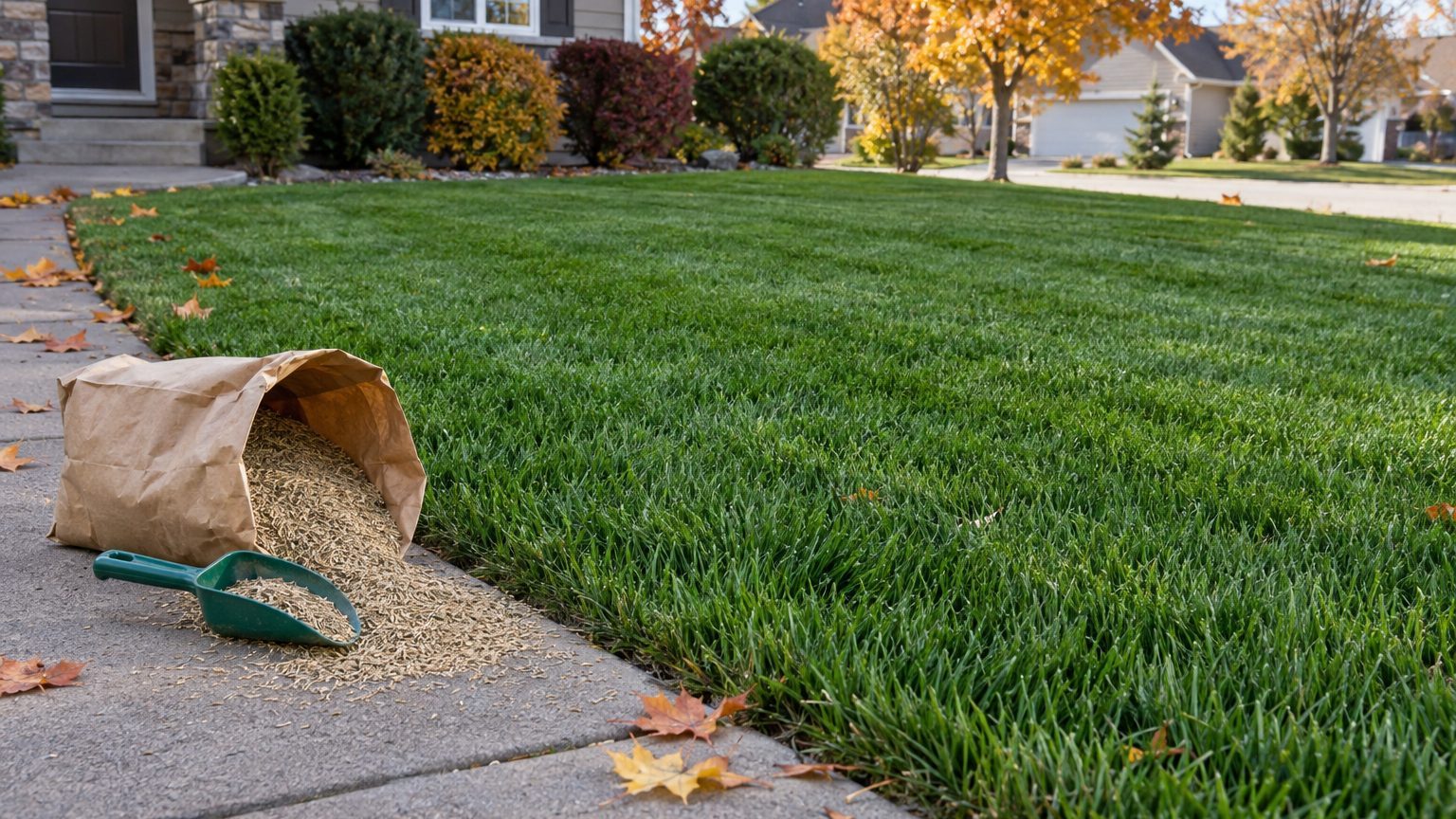
A North Dakota lawn spends much of winter under snow, then has to thrive through a short, bright summer. Grass that shrugs off bitter winters wins here, and that narrows the field quickly. A few cool-season species do nearly all the work, and the right seed depends on your sun, your traffic and how much watering you will do.
Which Grass Grows Best in North Dakota?
Cool-season grasses fit North Dakota because warm-season grasses are not reliably winter-hardy there. The lawn grasses recommended here differ in cold tolerance, shade tolerance and care needs.
Kentucky Bluegrass
Kentucky bluegrass is the dependable standard across the state. It handles deep winter cold well and spreads by underground stems to fill thin spots on its own.
It is slow to sprout, so give it patience and keep the seedbed evenly moist. It does well in full sun.
Fine Fescues
Creeping red, chewings and hard fescue all cope well with North Dakota cold. They tolerate shade and poorer soil better than bluegrass does, and they need less fertilizer and water.
Fine fescues fit under trees and on the north side of the house. Many lawns do well with a fescue and bluegrass blend.
Perennial Ryegrass

Perennial ryegrass sprouts fast, which makes it handy for quick cover and for mixing in with slower grasses. The catch is that it is short-lived in the coldest winters, so it can thin out after a hard one.
Treat it as a helper in a blend, not the main grass, and expect to reseed bare patches over time.
North Dakota — the year and the numbers
- State
- North Dakota
- USDA zones
- 3a-4b
- Last spring frost
- May 4 to May 15
- First fall frost
- September 25 to October 5
- Annual rain
- 24 in
- Lawn type
- cool-season
- Source
- NOAA NCEI U.S. Climate Normals 1991-2020, 32F freeze probabilities · Fargo
How to Choose Grass Seed for a North Dakota Yard
Start with the light your yard gets, since it strongly shapes the choice. Then think about foot traffic, how willing you are to water, and how often you want to mow.
Many yards use a blend, and that is a sound choice. A mix gives the lawn a backup when one grass struggles in a given spot or year.
| Your yard | Grass | Why it fits |
|---|---|---|
| Full sun, kids and pets | Kentucky bluegrass | Spreads to repair worn spots |
| Shade under trees | Fine fescues | Tolerates low light |
| Little watering | Fine fescues | Needs less water and feeding |
| Fast green cover | Perennial ryegrass in a blend | Sprouts quickly |
| Less frequent mowing | Fine fescues | Grows slowly and stays fine |
If you want a neat, dense look and will water regularly, lean on bluegrass. If you would rather mow less and fuss less, lean on fine fescues.
Which Grasses Grow Where in North Dakota
The state is fairly uniform in grass choice, but cold and soil shift the balance a little from one region to the next.
- Red River Valley: Fargo and Grand Forks sit on the eastern side of the state, where bluegrass blends can do well.
- Bismarck and the Missouri River area: Winters are cold and summers can turn dry, so fine fescues earn a bigger share of the blend where watering is limited.
- Minot and the north: Winter cold is harsher here, so lean on bluegrass and fescues and skip ryegrass as a main grass.
Frost dates run later in spring and earlier in fall as you move away from town and toward higher ground, so check your own county before planning around any date.
Grass Seed Mistakes to Avoid in North Dakota
Choosing a Grass That Can’t Take the Winter
Warm-season grasses and ryegrass-heavy mixes can die back or thin out after a hard winter. Read the label and pick a blend built on bluegrass and fine fescues.
Seeding at the Wrong Time
Late summer is the strongest window, August and September, because warm soil and cool air help seed root before winter. May also works if you missed the fall. If late summer has passed, dormant seeding can still work in October or November and sprout in spring.
Burying the Seed or Spreading It Thin
Cover seed no more than 0.25 inch and press it firmly against the soil so it holds moisture. Spread it evenly at the rate on the bag, since thin coverage invites weeds and heavy coverage makes seedlings compete.
Where to Get Lawn Advice in North Dakota
Local advice beats general advice here, because soil, shade and weather shift from one county to the next. Local sources can answer many lawn questions.
- NDSU Extension publishes lawn guidance written for North Dakota, useful before you buy seed in late summer or spring.
- Your county extension office can tell you about local soil and frost timing, so call before you seed.
Common Questions
Can You Grow Bermudagrass or Zoysia in North Dakota?
Not reliably. Winters in zones 3a-4b are too cold for warm-season grasses, which go dormant and often die. Stick with cool-season species.
Is It Better to Seed or Lay Sod?
Both work. Seed costs less and gives you a choice of grasses, while sod gives instant cover. Seeding in August or September gives new grass time to establish.
Can You Seed Over an Existing Lawn?
Yes. Core aeration in August or September opens the soil so seed reaches it, and it pairs well with overseeding thin areas.