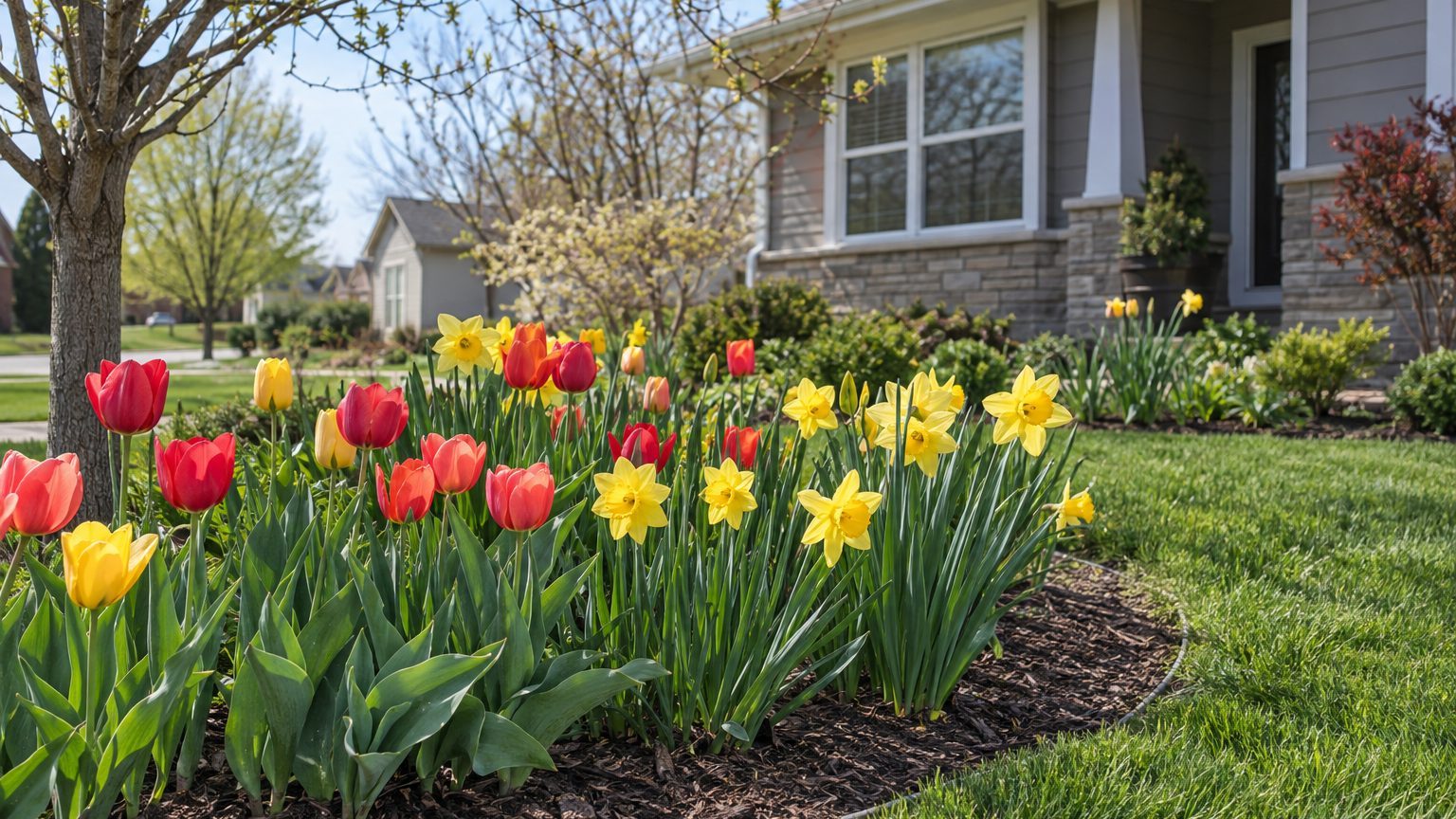
Daffodils pushing through cold soil are one of the first signs of spring in a Nebraska yard, and the bulbs behind them went into the ground the autumn before. A few kinds handle the state’s winters and its hungry wildlife far better than others.
Best Spring Bulbs to Grow in Nebraska

Daffodils are the dependable choice here, with alliums close behind, while tulips and crocus work but need more care. Nebraska sits in USDA hardiness zones 4a to 5b, and the winter cold that most spring bulbs need to flower arrives without any help from you.
Daffodils
Daffodils are deer-resistant and reliable bloomers, and they are more vigorous than tulips and most other spring-flowering bulbs. Voles, squirrels, rabbits and deer leave them alone, which matters in a yard where those animals roam.
Plant them where they can stay. They last longer than tulips and come back as true perennials.
Tulips
Tulips give the boldest color, but they are often short-lived in the garden. Voles, squirrels, rabbits and deer all eat them, so a bed near a field edge or a wooded lot may lose bulbs over winter.
Treat them as a seasonal display. Larger bulbs like tulips can be lifted in late spring to make room for summer plants, and replaced with fresh bulbs the next fall.
Alliums
Alliums, the ornamental onions, close out the bulb season and need the cold of winter to bloom. That makes them forgiving in a state where the cold is already plentiful.
Tuck them between perennials, where their late flowers follow the earlier bulbs as the foliage of those bulbs fades.
Crocus
Crocus are small, early and charming, but rabbits and rodents go after them along with tulips. Plant them in clusters close to the house, where animals are less likely to dig, and expect to replace a few now and then.
Nebraska — the year and the numbers
- State
- Nebraska
- USDA zones
- 4a-5b
- Last spring frost
- April 12 to April 23
- First fall frost
- October 15 to October 26
- Annual rain
- 32 in
- Lawn zone
- cool-season
- Source
- NOAA NCEI U.S. Climate Normals 1991-2020, 32F freeze probabilities · Omaha
How to Choose Spring Bulbs for Your Nebraska Garden
Start with what bothers you most in your own yard: winter, wildlife, time or space. Each problem points to a different bulb, and a mix often works better than a single kind.
Most spring bulbs need about 12 to 16 weeks of cold to flower, which Nebraska winters supply on their own.
| Your situation | What suits it in Nebraska | Why |
|---|---|---|
| Very cold winters | Daffodils | They are vigorous, reliable bloomers and come back year after year |
| Deer, rabbits and voles visit | Daffodils | Animals leave them alone, while tulips and crocus get eaten |
| Little time to fuss | Daffodils and alliums | Daffodils last longer than tulips, and alliums need the cold of winter to bloom |
| Small beds or tight space | Tulips lifted after bloom | Larger bulbs can be treated as annuals and lifted in late spring to free the space |
| Need to work with the cold you get | Alliums | They need the cold of winter to flower |
Crocus fit in almost any situation as a small accent, as long as you accept that rodents may take some. Tulips earn a place for color even if they do not stay long.
Which Spring Bulbs Suit Different Parts of Nebraska
The state is large, and the choice of bulb shifts a little between its eastern edge and its high western ground.
- Omaha and Lincoln area: In eastern Nebraska, bulbs can be planted from late September through the end of October, ideally when soil temperatures are below 60 degrees. Tulips are easier to grow here than farther west, though animals still go after them.
- Panhandle: Higher ground means spring frost lingers later than in town, so lean on tough daffodils and alliums and treat tulips as a short-term display.
- Rural acreages: Gardens outside town usually see the last spring frost later than the city figures suggest, and wildlife pressure is heavier, which again favors daffodils.
Check your own county for local frost timing before you settle on a planting plan.
Spring Bulb Buying Mistakes to Avoid in Nebraska
Treating Tulips as Permanent
Tulips are often short-lived, so a bed planted once and forgotten tends to thin out. Plan to replace them every so often, or let daffodils carry the long-term display while tulips fill in as a seasonal extra.
Cutting the Leaves Too Early
After bloom, the leaves feed the bulb for next year. Remove only the faded flowers and leave the leaves until they turn brown. Cutting or tying them green weakens the bulb and costs you flowers the following spring.
Leaving Bulbs in the Bag
A bulb left unplanted does worse than one planted late. Plant as long as the ground can be dug, and in Nebraska that can stretch into November and even December if the soil has not frozen.
Waiting for perfect timing is not worth a bulb that dries out in the garage.
Where to Get Spring Bulb Advice in Nebraska
Local help is close by. University of Nebraska–Lincoln Extension publishes bulb guidance, and county offices answer questions about your own soil and conditions.
- Visit University of Nebraska–Lincoln Extension in late summer to read up on bulb choices before the planting season starts.
- Call your county extension office in September to ask about local soil and animal problems before you buy.
Common Questions
When Do Tulips and Daffodils Bloom in Nebraska?
Tulips and daffodils flower mainly in April and May. Bulbs come up in March or early April, and the earliest daffodils can open in late February.
Can Forced Daffodils Be Planted Outdoors Afterward?
Yes. Forced daffodils can be saved and planted outdoors, and many forced cultivars perform well in the garden. Tulips and most other bulbs rarely recover as well after forcing.
What Does the Wister Award Mean on a Daffodil?
The American Daffodil Society gives the Wister Award each year to cultivars with garden excellence. It looks for long-lasting flowers, disease resistance, and good vigor and garden performance, which is a useful guide when choosing among daffodil varieties.