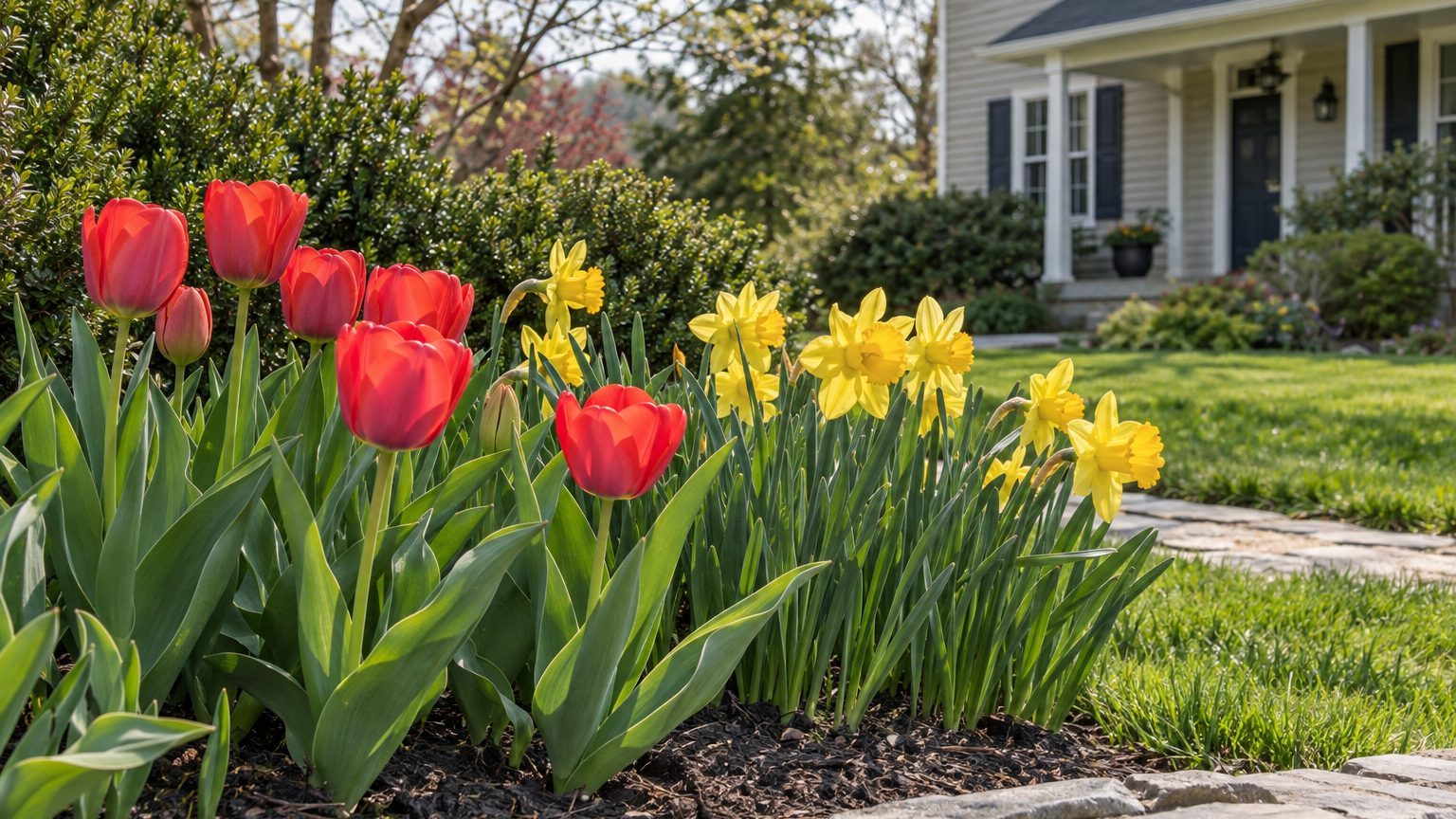
Daffodil leaves pushing up through cold ground and tulips opening as the weather softens are the payoff for bulbs set in the fall. In Maryland, daffodils are the dependable choice. Hyacinths, alliums, fritillaria and scilla do well too, while tulips and crocus carry more risk from hungry animals.
Best Spring Bulbs to Grow in Maryland

Daffodils, hyacinths, alliums, fritillaria and scilla do well in Maryland, largely because deer and squirrels tend to leave them alone. Tulips and crocus bloom beautifully but are the ones animals go after, so they need more thought about where they go.
Daffodils
Daffodils are hardy spring-flowering perennial bulbs that return year after year. They overwinter in USDA zones 3 through 8, a range that covers Maryland from the mountains to the Eastern Shore.
Deer avoid them, which is why they anchor most Maryland bulb plantings. Set them in the fall and let them settle in.
Hyacinths
Hyacinths are on the list of bulbs that deer and squirrels dislike, so they are a sound pick for beds that animals visit. Plant them in the fall along with your other bulbs. Their strong fragrance and dense flower spikes make them a good partner for daffodils.
Alliums
Alliums, the ornamental onions, are another bulb that deer and squirrels pass over. They flower at the end of the spring bulb season, which carries color into the weeks after daffodils fade. They also need no chill period to bloom.
Fritillaria and Scilla
Both are named among the bulbs that deer and squirrels do not like. They suit a gardener who wants something beyond the usual daffodil and tulip, and who would rather not feed the neighborhood wildlife. Tuck them into beds where you want spring interest without extra protection.
Tulips and Crocus
Voles, squirrels, rabbits and deer eat tulips and crocus. In a yard with regular animal traffic, plant them in a few spots rather than across the whole front bed, and rely on daffodils for the bulk of the display.
Maryland — the year and the numbers
- State
- Maryland
- USDA zones
- 5b-8a
- Last spring frost
- April 3 to April 16
- First fall frost
- October 26 to November 5
- Annual rain
- 45 in
- Lawn zone
- transition-season
- Source
- NOAA NCEI 1991-2020 Climate Normals, 32F freeze probabilities · Baltimore
How to Choose Spring Bulbs for Your Maryland Garden
The right bulb depends less on a catalog photo than on who visits your yard and how mild your winters run. Start with animals, then think about how much cold your site delivers and how much work you want to do.
| Your situation | What suits it in Maryland | Why |
|---|---|---|
| Deer or squirrels visit the yard | Daffodils, hyacinths, alliums, fritillaria, scilla | Deer and squirrels dislike these bulbs |
| Voles and rabbits dig or nibble | Daffodils | Animals leave them alone, and they resist deer and rabbits |
| You want bulbs that come back without fuss | Daffodils | They are hardy perennial bulbs that return year after year |
| Your winter is too mild to give enough cold | Tulips and hyacinths chilled in the refrigerator before planting, or alliums | Most spring bulbs need about 12 to 16 weeks of cold to flower, and alliums need no chill |
Mixing types stretches the show, since spring bulbs flower in succession from snowdrops and winter aconites at the start of the season to alliums at the end.
Which Spring Bulbs Suit Different Parts of Maryland
Maryland runs from mountain ridges to tidewater, and that changes how cold the bulbs get and when spring arrives.
- Garrett and Allegany counties: These mountain counties run weeks later in spring than the rest of the state, so bulbs bloom later too. Hardy daffodils are the safe core here, with alliums and scilla added for variety.
- Eastern Shore: Winters are milder, so the cold tulips and hyacinths need may fall short. Chilling those bulbs in the refrigerator before planting makes up the difference, and according to Iowa State University Extension, alliums also need the cold of winter to bloom.
Across that whole stretch, most gardens can plant the full range of bulbs, with animals as the deciding factor.
Spring Bulb Buying Mistakes to Avoid in Maryland
Planting Tulips Where Animals Roam
Tulips are edible to voles, squirrels, rabbits and deer, so a big drift in an open front bed can vanish. Plant daffodils, alliums or hyacinths there instead, and keep tulips to a few spots you can watch.
Planting at the Wrong Time
October is the best month for planting in Maryland, and September or November also work. Wait until the soil has cooled below about 60°F, which lets roots form before the ground freezes without sending up top growth in the fall.
A bag of bulbs left over after that window is better planted late than stored over the winter. Plant as long as the ground can be dug.
Cutting Back Leaves Too Soon
After bloom, the leaves feed the bulb for next year. Leave them until they turn yellow to brown, and remove only the faded flowers. Tying or cutting green leaves for neatness shortchanges the bulb and shows up as thin bloom the next spring.
Where to Get Spring Bulb Advice in Maryland
University of Maryland Extension publishes bulb guidance written for Maryland’s hardiness zones, and your county office can help with local questions.
- The extension site carries articles on bulbs and planting, handy to read before you shop in late summer.
- Your county extension office can answer questions about local soil and animal pressure, and it is worth a call before planting day.
Common Questions
When Do Spring Bulbs Bloom in Maryland?
Bulb bloom times run from February to May. Tulips and daffodils flower mostly in March, April and May, so the main show lands in spring rather than late winter.
Do Daffodils Need to Be Dug Up and Divided?
Daffodils never have to be dug. They are well suited to naturalizing, which means scattering clumps of plants through an area and leaving them in place.
Do Tulips Come Back Every Year in Maryland?
Tulips are often short-lived in the garden. Daffodils last longer and are the more reliable perennial bulb, so treat tulips as a seasonal accent and daffodils as the long-term planting.