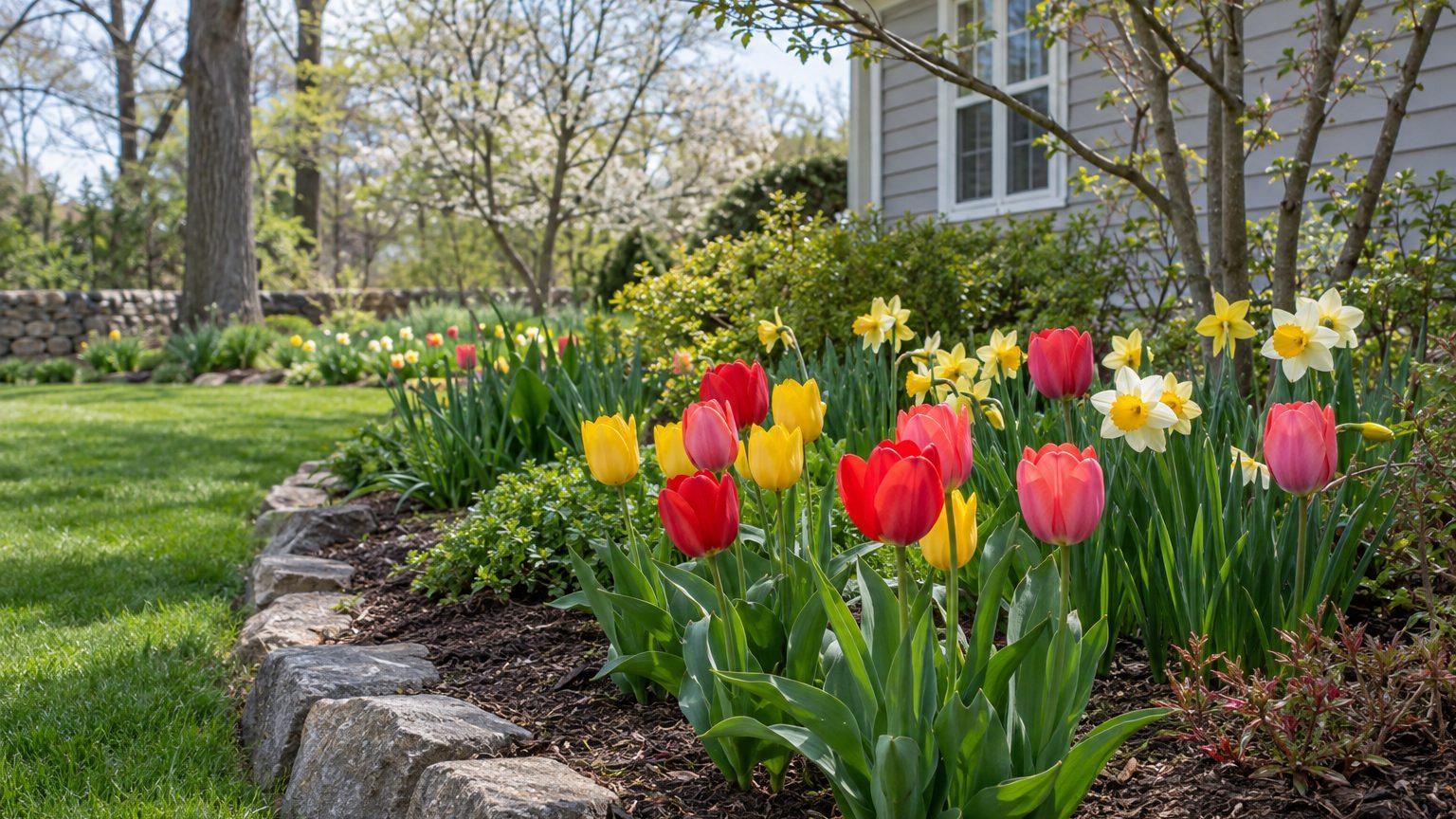
Snow still lingers in the shade when the first green spears of spring bulbs push through the soil in a Northwest Territories yard. Tulips and daffodils flower once the ground and air warm in spring, so their bloom follows the thaw rather than a fixed date.
When Do Tulips and Daffodils Bloom in Northwest Territories?

Tulips and daffodils bloom when spring warmth reaches the bulbs, and no month can be promised for the territory. The bulbs wait out the cold under snow, then open as the soil thaws and the days lengthen. A late melt means later flowers, and a quick thaw brings them sooner.
| Bulb | When it blooms in Northwest Territories | What sets the timing |
|---|---|---|
| Snowdrops | Among the first flowers of the season, as the snow melts | Hardy bulbs that wake with the first thaw |
| Daffodils | In spring, once the ground warms | Spring warming after a full winter of cold |
| Tulips | In spring, once the ground warms | Spring warming, and a mild winter helps them come up |
| Alliums | Near the end of the bulb season | Spring warming, with the cold of winter needed to bloom |
Spring bulbs flower in a long succession, with snowdrops at the start and ornamental onions (alliums) at the close. Crocus and hyacinths slot in between. Because the territory has no local bulb page of its own, its planting months follow the nearest comparable climate, so confirm local timing with a garden centre, a garden society or a territorial gardening group.
Frost matters here too. At Yellowknife the last spring frost falls on average around May 25, which means in one year out of two it comes later. Treat that as the middle of a window, never as a safe date. The Canadian hardiness zone for Yellowknife is 1b, a rating from a different system than USDA zones, so it cannot be converted to one.
Bulbs bloom in spring only if they went in the previous fall. August and September are the planting months, when the soil has cooled below about 15°C (60°F). That gives roots time to form before the ground freezes without pushing the bulbs to sprout early.
Northwest Territories — the year and the numbers
- State
- Northwest Territories
- Hardiness zones
- 1b
- Last spring frost
- May 25
- First fall frost
- September 18
- Annual rain
- 11 in
- Lawn zone
- cool-season
- Source
- Environment and Climate Change Canada — Canadian Climate Normals 1981-2010, station YELLOWKNIFE A · Yellowknife
How to Tell Your Bulbs Are About to Bloom
Since no calendar date is reliable this far north, the bulbs themselves are the better clock, and a walk along the bed after the snow retreats tells you plenty.
- Green tips poking through the soil mean the bulb has woken, and the flower is still on its way.
- Leaves that rise and widen show the plant is gathering energy, so keep mulch and foot traffic off the bed.
- A tight bud visible among the leaves means flowering is near, and daffodils and tulips usually show it before opening.
- A bud taking on colour at the tip is the sign that petals will open soon.
- Alliums send up leaves first, and those leaves may yellow before the round flower head opens, which is normal.
If a hard frost threatens after buds appear, a light covering of dry leaves or fabric overnight can protect the flowers.
What to Do After Tulips and Daffodils Bloom in Northwest Territories
Once the petals fade, cut off only the spent flowers. Leave the stems and leaves alone. The leaves feed the bulb for next year’s flowers, so they stay on the plant until they turn yellow and then brown. Do not tie them in knots or fold them down, because that blocks the light they need.
Tulips are often short-lived in the garden, and many beds need fresh bulbs after a few seasons. Daffodils last longer and are the more reliable perennial bulb, which is why they anchor a northern bed. Plant a few new tulips each fall to keep the color coming.
Planting is the other half of the cycle. A bulb still sitting in the bag goes in as soon as the ground can be dug, since planting late beats storing it over the winter. Where winters are too mild to give bulbs the cold they need, tulips and hyacinths are chilled in the refrigerator before planting.
How Bloom Time Shifts Across Northwest Territories
The territory covers a huge area, and a bed in one town can wake well before a bed in another.
- Yellowknife: This is the reference point for frost, on the north shore of Great Slave Lake. Beds here follow the spring pattern above.
- Hay River and Fort Smith: These southern communities lie closer to the milder south, so bulbs there tend to wake earlier than at Yellowknife. Lake ice near Hay River can hold shoreline beds back in spring.
- Inuvik: In the Mackenzie Delta far north, spring arrives later, so bulbs bloom well behind Yellowknife and need the hardiest choices.
A bed against a sunny south wall also thaws sooner than an open, shaded one, even within one yard.
Where to Get Bulb Advice in Northwest Territories
Canada has no county extension offices. The territorial government’s agriculture services are the official starting point, and local growers fill in the details of your own town.
- The territorial agriculture pages explain what grows in northern conditions, and they are worth checking before you order bulbs in summer.
- A local garden society can tell you what has survived in your neighbourhood.
- A garden centre can confirm when to plant locally, so ask there before buying in August.
Common Questions
Which Spring Bulbs Are Hardy Enough for Far Northern Yards?
Snowdrops are hardy, and Scilla tends to winter over well in cold gardens. Grape hyacinth sometimes does too. Daffodils are the dependable perennial choice, and a showy allium such as ‘Purple Sensation’ makes a good late addition.
Do Animals Eat Tulips and Daffodils?
Voles, squirrels, rabbits and deer eat tulips and crocus, while daffodils are left alone. Planting daffodils around more tempting bulbs can help protect a bed.
How Much Winter Cold Do Spring Bulbs Need?
Most spring-flowering bulbs need about 12 to 16 weeks of cold to flower. Northwest Territories winters supply that easily. According to Iowa State University Extension, alliums are not the exception, since they need the cold of winter to bloom.