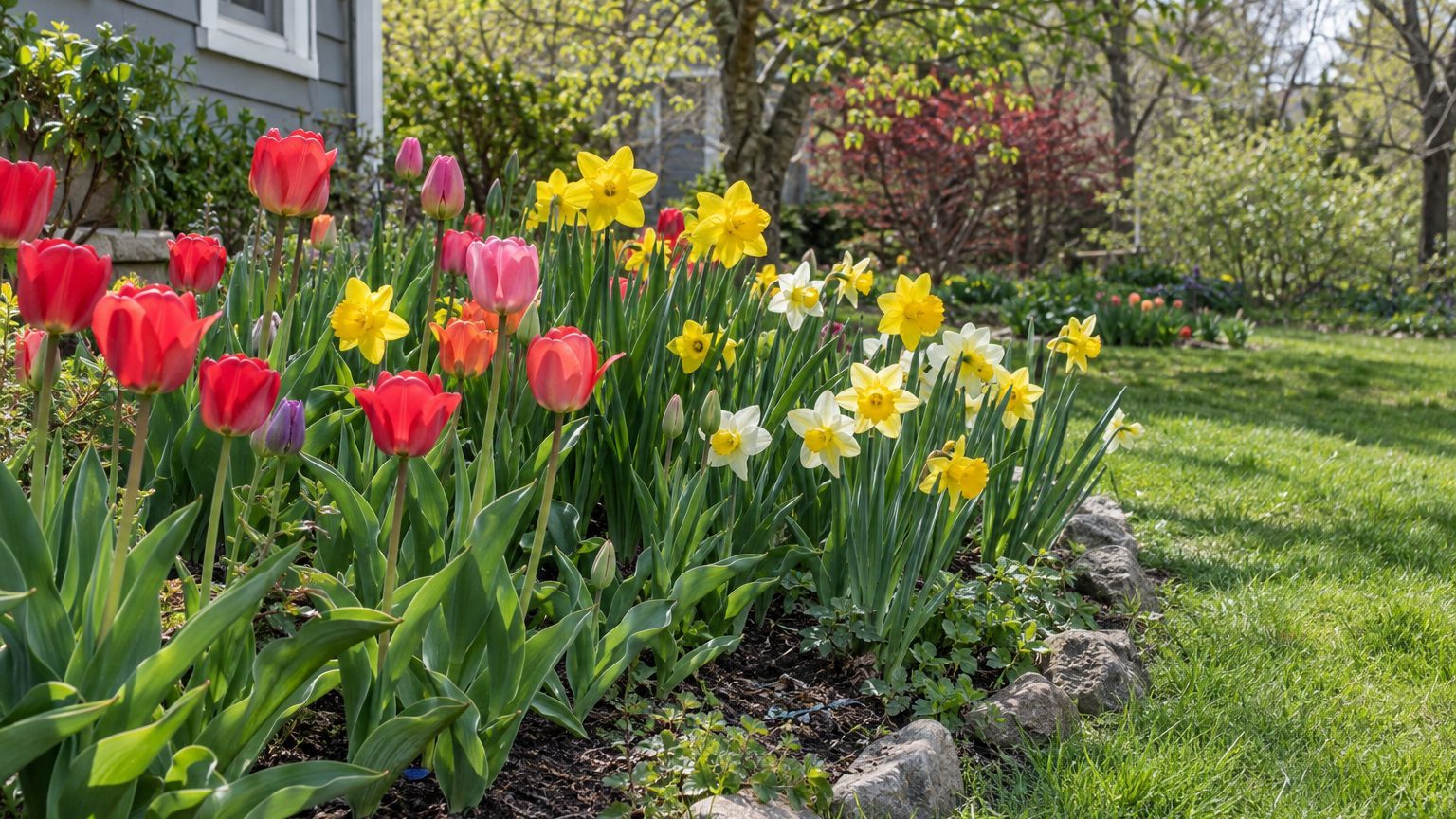
Spring bulbs in Nevada put up green tips and open on a long, drawn-out schedule. Daffodils and tulips may flower in a Las Vegas yard well ahead of a Reno one. The dates depend on where your yard sits, so the answer is a stretch of months rather than a single week.
When Do Tulips and Daffodils Bloom in Nevada?

Hardy spring bulbs in Nevada bloom between January and May. Flowering follows the warming of spring in your particular yard, so a low desert yard and a cold mountain-valley yard land at opposite ends of that window.
| Bulb | When it blooms in Nevada | What sets the timing |
|---|---|---|
| Tulips and daffodils | January to May | Winter cold first, then spring warming where the bulb is planted |
| Alliums | Late in the spring bulb season, after most others | Needs winter chill to bloom |
Crocus and daffodils open near the start of the season, and ornamental onions (alliums) close it out. Hyacinths sit in between and need cold like tulips do. Where winters run too mild to supply it, hyacinths and tulips are chilled in the refrigerator before planting.
Sun and drainage shift the dates too. A bed with full sun warms sooner than one in shade, and a low spot that stays wet in spring is a poor home for any of them.
Nevada — the year and the numbers
- State
- Nevada
- USDA zones
- 4a-10a
- Last spring frost
- January 7 to February 1
- First fall frost
- December 8 to December 23
- Annual rain
- 4 in
- Lawn zone
- warm-season
- Source
- NOAA NCEI U.S. Climate Normals 1991-2020, 32F freeze probabilities · Las Vegas
How to Tell Your Bulbs Are About to Bloom
Your own beds give better timing than any average, and the bulbs announce each step in a way you can see.
- Green tips pushing through the soil mean the bulb has finished its winter rest and growth has started, so leave the bed alone and keep mulch loose.
- Leaves that thicken and rise into a clump tell you the flower stalk is being built inside, usually well before any color shows.
- A tight bud visible at the center of the leaves means the bloom is close, and a hard freeze or a drying wind is the main thing to watch for.
- A bud that shows color while still closed is a few warm days from opening, which makes it the moment to cut stems for a vase if you want them.
- A gap where tulips grew last year, with no tip at all, usually points to a short-lived bulb or to a hungry animal rather than a late bloomer.
Daffodils tend to give a clearer, steadier show than tulips, which fits their reputation as the more dependable bulb.
What to Do After Tulips and Daffodils Bloom in Nevada
Snip off the faded flowers and leave everything else. The leaves keep working after the petals drop, collecting the energy the bulb needs to bloom next year. Let them turn yellow and then brown before you remove them, and never braid or tie them down while they are green.
Tulips are often short-lived in the garden, so expect some to fade after a season or two. Daffodils last longer and are the more reliable perennial bulb. If a tulip bed thins out, new bulbs go in during September and October.
Compost worked into the planting hole loosens the soil, adds organic matter and helps drainage, and that matters more than any later feeding. Beyond that, no fertilizer schedule is needed, and the foliage can finish its work undisturbed.
How Bloom Time Shifts Across Nevada
Nevada covers a huge range of hardiness zones, from 4a to 10a in the USDA system, so bloom time moves with elevation and latitude.
- Las Vegas: The warm desert floor reaches spring conditions sooner, so bulbs wake toward the early part of the window. Winters here may be mild enough that tulips and hyacinths need refrigerator chilling before planting.
- Reno and Carson City: Frost lingers into spring here, and the cold that suits bulbs also delays them, so flowers come later than in the south. Higher yards around these cities run later still.
Treat a Las Vegas frost date as a local number, because yards at elevation freeze earlier in fall and stay frosty later in spring.
Where to Get Bulb Advice in Nevada
Because conditions change so much from one valley to the next, local help beats general rules. Your county extension office can answer questions about your exact yard.
- University of Nevada, Reno Extension offers gardening guidance written for the state, and a visit before fall planting season helps you pick bulbs.
- Your county extension office can speak to your local soil, elevation and frost pattern, so call it with a description of your bed before you buy.
Common Questions
Do Tulips Need to Be Chilled in Nevada?
Most spring bulbs need about 12 to 16 weeks of cold to flower. In places with mild winters, such as the Las Vegas area, tulips and hyacinths are chilled in the refrigerator before planting. Colder areas supply that chill in the ground.
Will Animals Eat My Bulbs?
Voles, squirrels, rabbits and deer eat tulips and crocus. Daffodils are left alone, so they are a safer choice for beds that animals visit.
Can You Plant Bulbs That Are Still in the Bag?
Yes. A bulb still unplanted is better planted late than stored over the winter, so put it in as long as the ground can be dug. For the main planting, wait until the soil has cooled below about 60°F, which lets roots form without the bulb sprouting in fall.