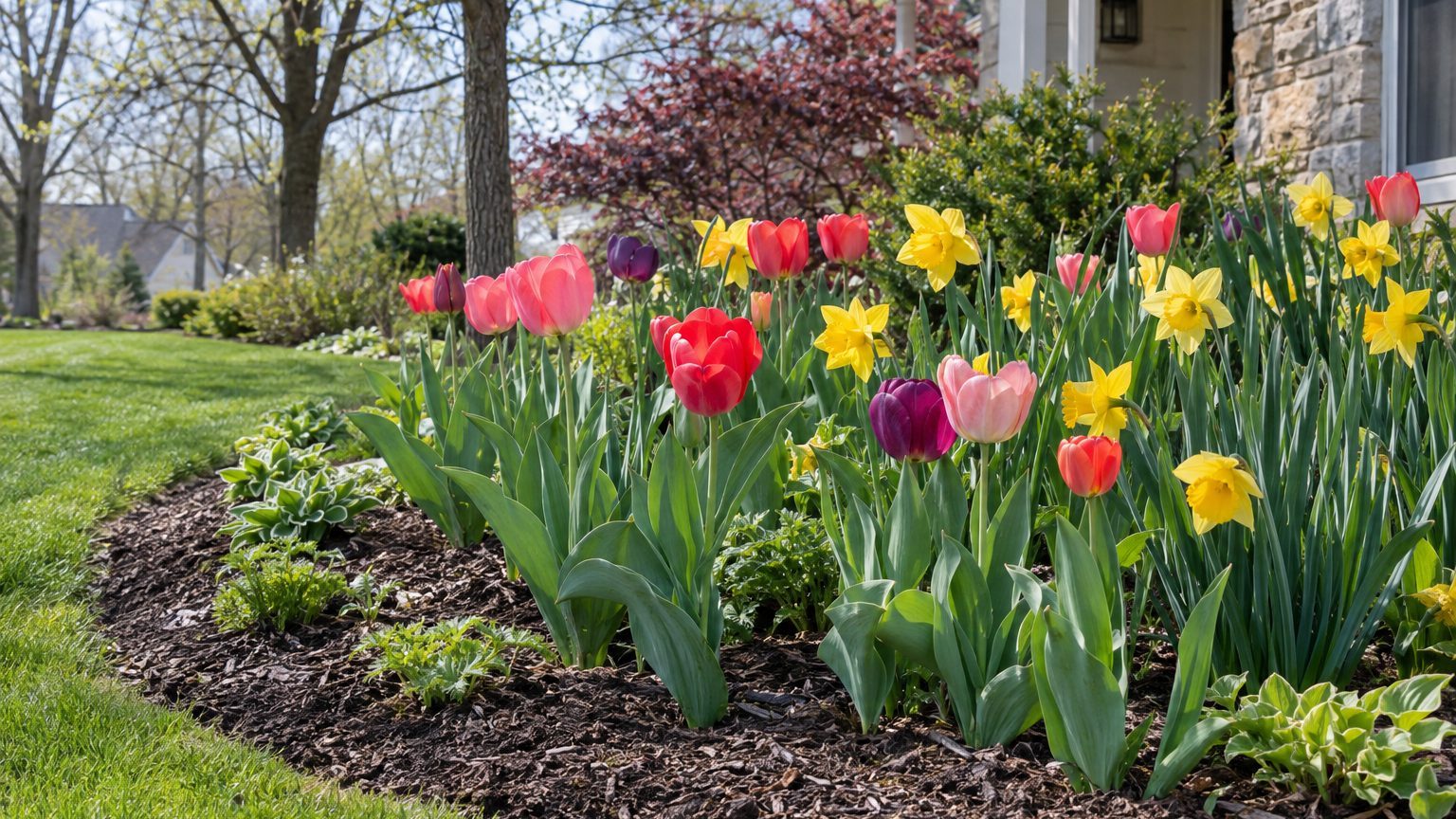
Green spears pushing through cold mulch are one of the first signs that spring is coming to a Connecticut yard. Tulips and daffodils follow with color over a stretch of weeks, and the timing shifts a little from year to year. Here is when to expect flowers in Connecticut and what to do around them.
When Do Tulips and Daffodils Bloom in Connecticut?

Tulips and daffodils bloom in Connecticut from April into May. The earliest hardy bulbs can open as soon as March, and the later ones carry the show through late April and May.
| Bulb | When it blooms in Connecticut | What sets the timing |
|---|---|---|
| Earliest hardy bulbs, including crocus and early daffodils | From March into April | The first warm stretch of spring, once winter cold has done its work |
| Tulips and daffodils in general | April and May | Spring warming, plus the variety you planted |
| Later tulips | Late April and May | These open a little later in the season than the early bulbs |
Alliums close out the spring succession, after the tulips are finished, and according to Iowa State University Extension, alliums need the cold of winter to bloom. Most other spring bulbs do need winter cold to flower. Connecticut gardens sit across USDA hardiness zones 6a to 7b, so the same bulb can open earlier in one yard than in another.
Connecticut — the year and the numbers
- State
- Connecticut
- USDA zones
- 6a-7b
- Last spring frost
- April 2 to April 12
- First fall frost
- October 28 to November 10
- Annual rain
- 44 in
- Lawn zone
- cool-season
- Source
- NOAA NCEI 1991-2020 Climate Normals, 32F freeze probabilities · Bridgeport
How to Tell Your Bulbs Are About to Bloom
The bulbs announce themselves well before the first petal opens, and a few signs in the bed tell you where things stand.
- Green tips breaking the soil mean the bulb has had its winter cold and is responding to spring warmth, so pull back any heavy mulch and let the light in.
- Leaves that widen and stand upright mean the flower is forming in the center, and the bed is on its way to color.
- Buds that swell and show a streak of color while still closed mean bloom is close, which is the moment to plan around a garden party or a photo.
- Shoots that look nibbled or vanish overnight, especially tulips and crocus, point to voles, squirrels, rabbits or deer, which eat those two but leave daffodils alone.
- Bare patches where tulips went in years ago are normal, since tulips are often short-lived in the garden while daffodils last longer.
Keep an eye on the beds regularly once the first tips show, because bloom builds fast after a warm spell.
What to Do After Tulips and Daffodils Bloom in Connecticut
Snip off the faded flowers and nothing else. Removing the spent bloom keeps the plant from spending energy on seed, while the leaves go on working. Tulips and daffodils flower on the energy their leaves stored the year before, and the leaves refill the bulb for next spring.
Leave the foliage standing until it turns yellow and then brown. Do not braid it, tie it in knots or cut it back while it is green, however untidy it looks. Tuck perennials or annuals in front of the fading leaves so the bed still looks tended.
Plan for tulips to thin out over the years. Daffodils are the more reliable perennial bulb and keep coming back, and they naturalize well, especially in partly shady spots. Fosteriana tulips also perennialize well, so they are a smart pick if you want tulips that return.
How Bloom Time Shifts Across Connecticut
Connecticut is a small state, but the Sound, the hills and the distance from the water all move bloom time by a visible margin.
- Shoreline along Long Island Sound: Bridgeport sees its last spring frost between April 2 and April 12, earlier than in the north, so bulbs here tend to wake and open ahead of the rest of the state.
- Litchfield Hills and the northwest: Spring frost lingers longer here, and winters run colder, so bulbs open later than on the coast and often push toward the May end of the window.
- Inland towns between the two: Expect bloom to fall between the shoreline and the hills, with a south-facing wall or a sheltered corner nudging it earlier.
A bed against a warm foundation can flower before the same bulbs out in an open lawn, so compare your own yard from one year to the next rather than leaning on a single date.
Where to Get Bulb Advice in Connecticut
Local questions about varieties, soil and timing are best sent to the people who work with Connecticut gardens every season. University of Connecticut Extension, found through UConn Extension, is the state’s land-grant extension service.
- The extension website carries fact sheets on bulbs, soil and pests, and it is worth a visit in late summer before you order or buy bulbs.
- The extension office that serves your county can look at a photo or a sample if bulbs failed to flower, so reach out in spring while the leaves are still green.
Common Questions
When Should You Plant Tulips and Daffodils in Connecticut?
October is the planting month, so the roots form before the ground freezes. Wait until the soil has cooled below about 60°F, which keeps the bulbs from sprouting in fall.
Can You Plant Bulbs in November or December?
Yes. Planting is still possible in November and December as long as the ground is not frozen. A bulb still in the bag goes in as soon as the soil can be dug, since it does better planted late than left to wait.
Do Connecticut Winters Give Bulbs Enough Cold?
Most spring-flowering bulbs need about 12 to 16 weeks of cold to flower, and Connecticut winters generally supply it in the ground. Refrigerator chilling is meant for places with winters too mild to give that cold. Alliums need the cold of winter to bloom.