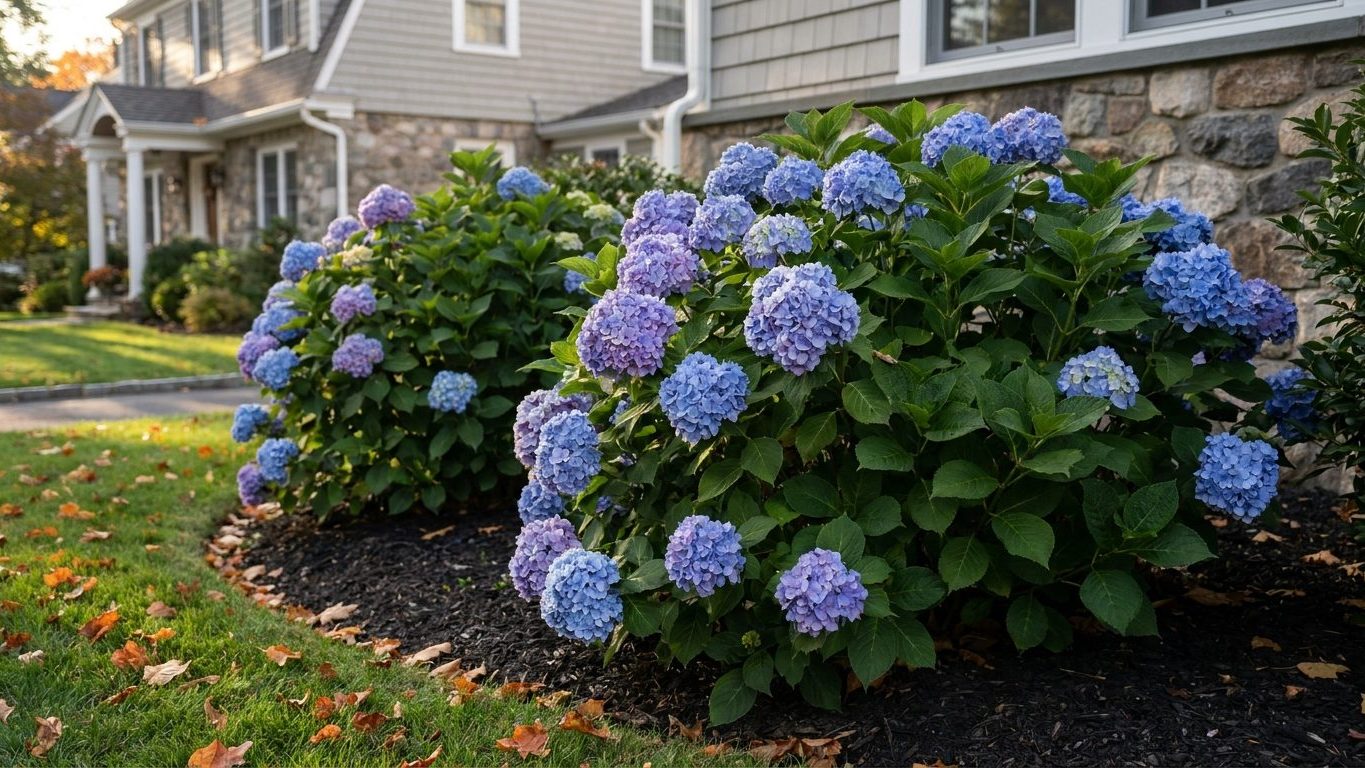
Connecticut homeowners get two safe windows for planting hydrangeas: spring, once the last frost has passed, and late summer running into early fall, well before the ground cools for good. Near Bridgeport, that translates to April through May or August into September, with bigleaf varieties needing their old-wood pruning finished by early July, not later in the season.
When to prune hydrangeas in Connecticut: The Short Answer
Near Bridgeport, the state’s mildest station, NOAA NCEI 1991-2020 Climate Normals put the last spring freeze between April 2 and April 12, the earliest safe date to move hydrangeas into the ground. The first fall freeze follows between October 28 and November 10, closing the second planting window before new roots can settle in.
- January: The ground stays frozen or nearly so this deep in winter, so there’s no digging and no pruning. Check that mulch over the root zone hasn’t blown away, since bare crowns take the brunt of any freeze-thaw cycle.
- February: Buds are still tight and the last frost is two months off, so hold off on any cuts. Order new plants now so they arrive once the April window opens.
- March: This is the first fertilize month of the year, feeding roots as they wake up ahead of the April freeze cutoff. Skip pruning bigleaf stems now, their flower buds are already set from last summer.
- April: Planting opens once frost risk clears between April 2 and April 12 near the coast, later inland. Set new hydrangeas in the ground as soon as the soil has dried enough to work.
- May: A second fertilize month and still a planting month, with the shrub in full leaf and frost risk essentially gone. New plantings from April should show fresh growth by now.
- June: The pruning window opens for bigleaf hydrangea, right as the season’s first blooms start to fade. Cut spent flower heads back to a healthy bud, never into old wood below it.
- July: The last month to prune bigleaf hydrangea and the third fertilize month, since next year’s buds form on the stems shortly after. Finish any pruning early in the month rather than late.
- August: The fall planting window opens, giving roots time to establish before the October frost returns. Water new plantings deeply through any late-summer dry spell.
- September: The last safe month to plant, since roots need roughly six to eight weeks in the ground before the first fall freeze. Get anything new into the soil early in the month.
- October: The first fall freeze arrives between October 28 and November 10, so stop planting and stop fertilizing by now. Apply a fresh layer of mulch before the ground hardens.
- November: By the later dates in this window, frost has likely already hit inland yards even where the coast is still clear. Finish winter mulch over the crown of bigleaf varieties before the ground freezes solid.
- December: The shrub is fully dormant now, so there’s nothing to prune and nothing to plant. Check that winter mulch and any windbreak stakes are still holding after the first real storms.
That’s the shape of a Connecticut year for hydrangeas, but every date shifts earlier or later depending on how close you sit to Long Island Sound.
Connecticut — the year and the numbers
- State
- Connecticut
- USDA zones
- 6a-7b
- Last spring frost
- April 2 to April 12
- First fall frost
- October 28 to November 10
- Annual rain
- 44 in
- Lawn zone
- cool-season
- Source
- NOAA NCEI 1991-2020 Climate Normals, 32F freeze probabilities · Bridgeport
How to Work Out the Dates for Your Own Yard
Your own yard rarely matches the coastal gauge in Bridgeport, so treat the state figures as a starting point and adjust for what you actually see outside your door.
- Start with the coastal frost range: NOAA NCEI 1991-2020 Climate Normals set Bridgeport’s last spring freeze at April 2 to April 12, a fair floor for anyone near the shoreline.
- Add time for elevation and distance from the Sound: inland and northwest towns often trail that coastal date by two to three weeks, pushing safe planting into late April or early May.
- Check the soil before the calendar: dig down a few inches, if it crumbles instead of holding together in a cold clump, the ground has warmed enough to plant.
- Count backward from the fall freeze too: the first freeze runs October 28 to November 10 at the coast, so work back roughly eight weeks to find the last safe date for new roots.
- Let the variety adjust your buffer: a panicle hydrangea shrugs off a frost that would blacken young bigleaf growth, so build in less margin for the tougher species.
- Keep your own log: write down the date buds broke and the date the first hard freeze hit your yard, then use that instead of the station average next year.
Panicle hydrangea rides out this entire hardiness range without protection, while bigleaf varieties pushed past zone 7a can lose their flower buds to a February thaw and freeze cycle. If leaves scorch by August, check soil moisture before blaming a pest, since heat and drought cause most of the state’s problems.
Connecticut North to South: How the Dates Shift
Move away from the Long Island Sound coastline and every date in this guide gets tighter, since elevation and distance from open water are what actually set local frost timing.
- The Long Island Sound coast (Fairfield, New Haven, and New London counties): the mildest ground in the state, with the latest fall freeze and the earliest spring one, stretching both ends of the planting window.
- The Central Valley (Hartford, Middletown, and the Connecticut River lowlands): a few degrees cooler than the shoreline, so treat coastal dates as a floor rather than a fixed target here.
- The Northwest Hills (Litchfield County’s higher elevation towns): the coldest ground in Connecticut, where frost lingers into May and returns well before Halloween, shrinking every planting window.
- The Northeast Corner (Windham County): exposure similar to the hills, with cold air pooling in low valleys overnight even on days that feel mild.
None of this collapses into one statewide date, so use the state guide as a baseline and shift it toward the hills or the shoreline depending on where your yard actually sits.
Mistakes Connecticut Punishes
No flowers despite a healthy shrub
Pruning bigleaf hydrangea any time after July removes buds already set for next summer, since this species blooms on old wood. Hold pruning to the June and July window and skip the fall cleanup on this one variety.
Blackened new growth in April
Setting plants out before the last frost clears leaves new growth exposed to a freeze that can strike as late as April 12 near the coast, later inland. Wait for the soil to warm and hold off feeding until March at the earliest.
Flower buds gone after a mild winter
A warm stretch in January or February can trick bigleaf hydrangea into breaking dormancy early, then a hard freeze afterward kills the buds before summer arrives. Leave mulch over the crown in place through winter instead of clearing it at the first thaw.
Connecticut Extension Offices and County Contacts
The Bridgeport figures above are a starting point, not a forecast for one specific yard. County offices under UConn Extension track local frost dates, soil tests, and pest reports that a statewide average can’t capture.
- Your state page: the frost dates and the pruning window where you live.
- Which ones hold up here: the varieties worth planting in Connecticut, ranked from safest to riskiest.
- What goes wrong here: the pests and problems that actually show up on Connecticut hydrangeas, in season order.
Start with your county’s extension office before you buy anything this season.
Common questions
Can I plant hydrangeas in Connecticut in the fall?
Yes, late summer into early fall is the second planting window, running through September, timed to give roots six to eight weeks in the ground before the first fall freeze arrives.
When should I prune bigleaf hydrangeas in Connecticut?
Prune bigleaf hydrangea in June or July, right after the blooms fade, since this species sets next year’s flower buds on the stems shortly after, and any later cut removes them.
What USDA zone is Connecticut for hydrangeas?
The USDA Plant Hardiness Zone Map places Connecticut between 6a and 7b, a range wide enough that a variety rated hardy at the coast can still struggle in the northwest hills.