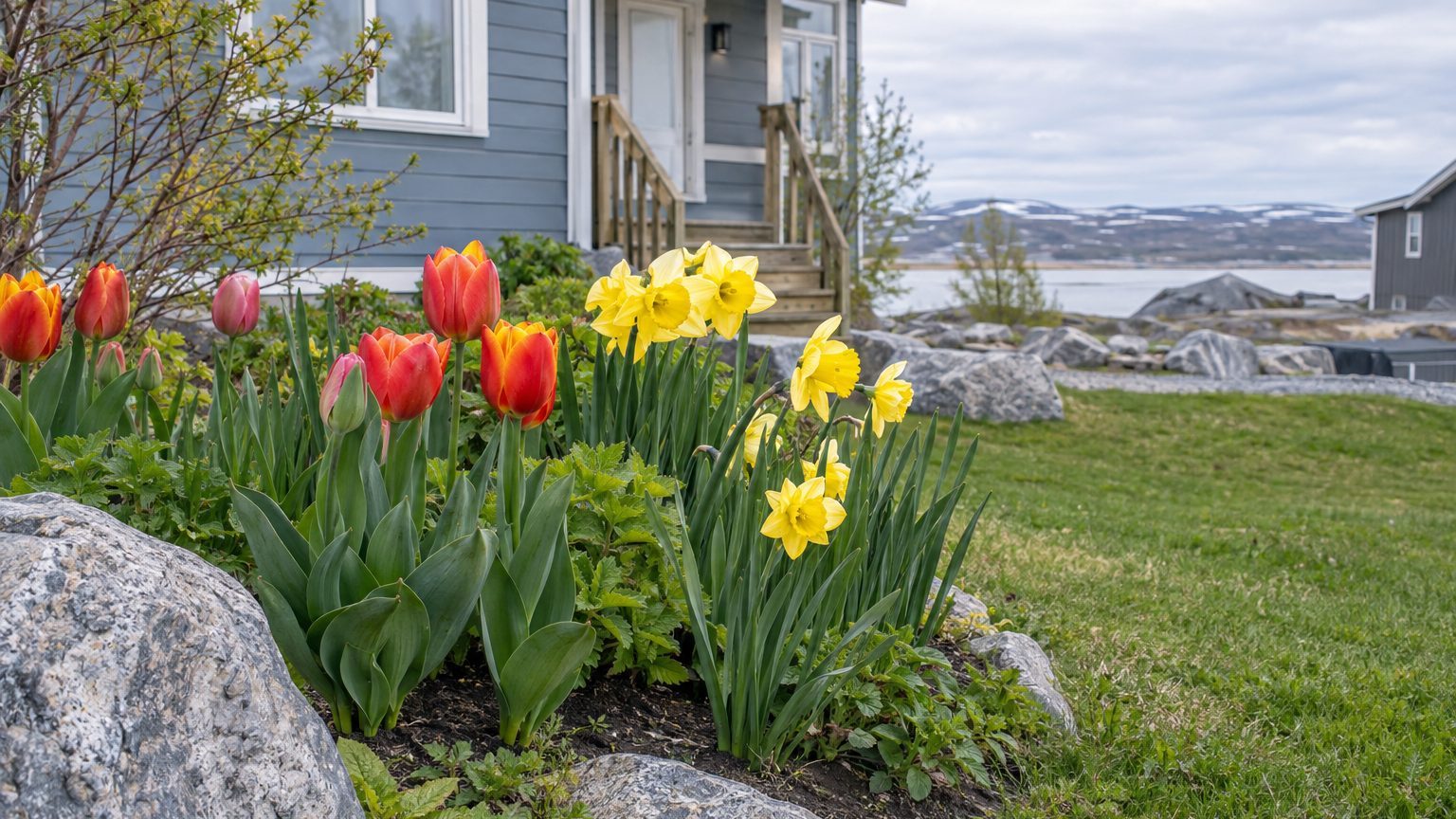
In the Arctic, the garden season is short enough that every bulb has to be in the ground before the soil turns hard. Spring bulbs in Nunavut are a gamble worth taking, and the timing comes down to late summer. The window for tulips and daffodils is brief, and it closes well before the ground freezes.
When to Plant Tulips and Daffodils in Nunavut

Plant tulips and daffodils in late August to early September, or as soon as the soil cools to the low to mid 50s °F (roughly 11 to 13°C). Here is how the year runs for a bulb.
- In summer, ahead of planting, buy firm, heavy bulbs and keep them somewhere cool and dry until the soil is ready.
- In late August to early September, set the bulbs in the ground so roots can form before the cold locks everything up.
- In mid-September, the first fall frost arrives on average September 13 at Rankin Inlet, and in about half of years it comes later. The area sits in Canadian hardiness zone 0a, which is a separate scale from USDA zones.
- Once the ground starts to freeze, spread a layer of mulch over the bed to even out thaws and freezes.
- Through the winter, no refrigerator chilling is needed, because a Nunavut winter supplies the 12 to 16 weeks of cold that most spring bulbs ask for.
- In spring, once the snow melts and the soil thaws, the first green tips push up through the mulch.
A bulb still in the bag after the window is better planted late than stored, so plant for as long as the ground can be dug. The frost date marks frost risk, not a planting day, so go by the soil.
Nunavut has no local extension page on bulb timing, so these dates follow the nearest comparable climate. Confirm the timing for your community with a local garden centre, a garden society or a territorial gardening group.
Nunavut — the year and the numbers
- State
- Nunavut
- Hardiness zones
- 0a
- Last spring frost
- June 19
- First fall frost
- September 13
- Annual rain
- 12 in
- Lawn zone
- cool-season
- Source
- Environment and Climate Change Canada — Canadian Climate Normals 1981-2010, station RANKIN INLET A · Rankin Inlet
Which Spring Bulbs Do Best in Nunavut?
Winter cold is not the limit here, since the territory gives bulbs far more than they need. The real tests are ground that stays hard and cold, and hungry animals. Daffodils and alliums are the soundest choices, and small bulbs such as snowdrops are worth a trial.
Tulips and crocus can work, but expect them to need more attention.
| Bulb type | How it does in Nunavut | Why |
|---|---|---|
| Daffodils | Dependable perennial bulb | They last longer than tulips, and animals leave them alone. |
| Tulips | Worth trying, but exposed | Voles, squirrels, rabbits and deer eat them, so protect the bed where such animals live. |
| Alliums | Good candidate | A showy allium called ‘Purple Sensation’ is a bulb to consider planting in the fall. |
| Snowdrops | Hardy | They are known to take cold well and are a sensible small bulb to test. |
| Scilla | Likely to winter over | It tends to stay in the ground through hard winters, and grape hyacinth sometimes does too. |
Crocus belong on the same watch list as tulips, since the same animals dig them up. Hyacinths are better left until daffodils and alliums have proven themselves in your bed.
When to Plant, Chill and Care for Spring Bulbs in Nunavut
The bulb year here is simple, with one busy window in late summer and then a long wait. Skipping the refrigerator step saves work, and the leaf rule after bloom protects next year’s flowers.
| Task | Best timing in Nunavut | Why then |
|---|---|---|
| Plant | August to September, from late August to early September or when the soil is in the low to mid 50s °F | Roots form before the ground freezes, and the bulbs do not sprout early. |
| Chill | Not needed | The winter itself provides the cold that tulips and hyacinths would otherwise get in a refrigerator. |
| Leave the foliage | After bloom, for as long as the leaves are green | The leaves feed the bulb for next year, so remove only the faded flowers. |
Wait until the leaves turn brown before clearing them, even if the bed looks untidy for a while.
How Bulb Planting Time Changes Across Nunavut
Nunavut covers a huge span of tundra, coast and islands, so the planting date for one community is only a starting point for another. Watch the soil as much as the calendar.
- Kivalliq coast, including Rankin Inlet: this is the area the frost dates describe, with its cold Hudson Bay shoreline. Treat the late August to early September window as a guide and check the soil first.
- Iqaluit and southern Baffin Island: sea water and ice shape how fast the ground cools in fall, so the soil may reach planting temperature on a different schedule than on the Kivalliq coast.
- Cambridge Bay and the high Arctic: northern communities run weeks behind the Kivalliq coast in spring and see frost sooner in fall, so the planting window is short and the soil needs checking early.
A cheap soil thermometer settles the question in any of these places.
Where to Get Bulb Advice in Nunavut
Nunavut has no county extension offices, so advice comes from the territory’s gardeners and from federal and territorial agriculture offices.
- Agriculture and Agri-Food Canada, on its federal site, gives general growing information you can read before you shop for bulbs.
- A local garden centre or garden society in your community can tell you what has worked in your own soil and when to plant.
- Territorial gardening groups can share local tips on soil and animal pests before the late summer planting window.
Common Questions
Will Tulips Come Back Every Year in Nunavut?
Tulips are often short-lived in a garden, and a harsh site shortens their life further. Treat them as a bonus and plant fresh bulbs when they fade, while daffodils carry the long-term display.
Do Alliums Need a Cold Chill Before They Will Flower?
According to Iowa State University Extension, alliums do need a cold period to bloom, and they are planted in fall like other spring bulbs.
Does the First Frost Tell You When to Plant Bulbs?
No. A frost date only marks when frost becomes likely, and in about half of years it comes later than the average. Plant by the late summer window and the soil temperature instead.