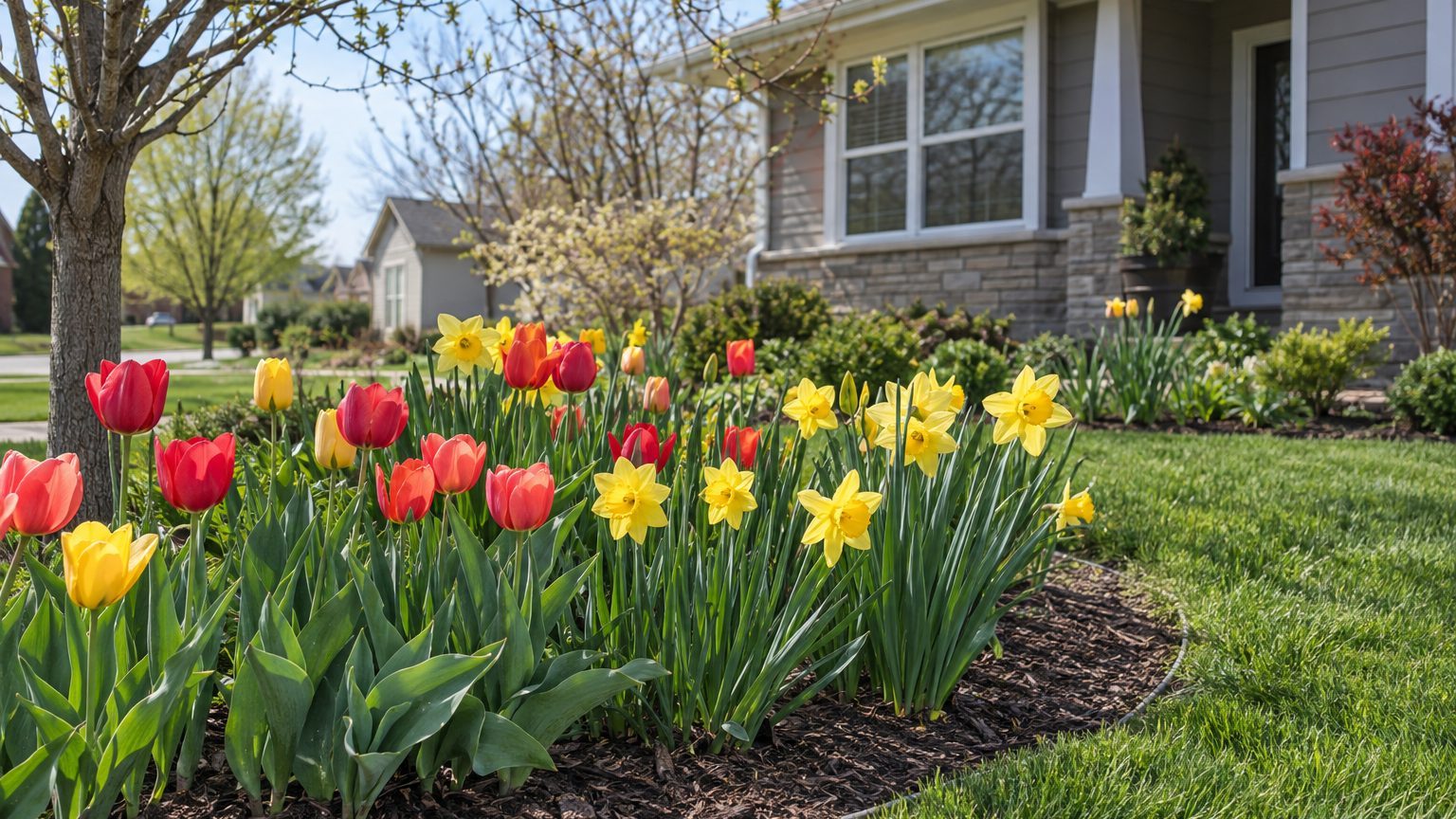
Green tips pushing through cold soil and the first daffodils nodding at the edge of a bed are what make a Nebraska spring feel real. Those flowers start months earlier, when bulbs go into ground that is beginning to cool. For tulips and daffodils, timing is an autumn job, and choosing the right bulbs matters nearly as much.
When to Plant Tulips and Daffodils in Nebraska

Plant tulips and daffodils in September and October, and into November or even December if the ground is still unfrozen. Here is how the bulb’s year runs.
- In September, buy bulbs while the selection is full, choose firm ones with no soft spots, and keep them cool and dry until the soil is ready.
- From late September through October, plant them once the soil has cooled below about 60°F, which lets roots form before the ground freezes without tempting the bulbs to sprout in fall.
- After planting, once the soil has chilled, spread a loose layer of mulch over the bed to even out the swings between freeze and thaw.
- In November and December, any bulbs still on hand can go in as long as a spade can break the ground.
- Through winter, no refrigerator step is needed, because a Nebraska winter supplies the cold. The USDA hardiness zones here run from 4a to 5b.
- In March or early April, the first shoots break the surface, and the leaves start their work of feeding the bulb.
In Omaha, the first fall frost arrives between October 15 and October 26, so October planting gives roots a comfortable head start. Suburban and rural yards usually see frost sooner, so check the dates for your own county.
Nebraska — the year and the numbers
- State
- Nebraska
- USDA zones
- 4a-5b
- Last spring frost
- April 12 to April 23
- First fall frost
- October 15 to October 26
- Annual rain
- 32 in
- Lawn zone
- cool-season
- Source
- NOAA NCEI U.S. Climate Normals 1991-2020, 32F freeze probabilities · Omaha
Which Spring Bulbs Do Best in Nebraska?
Daffodils are the dependable choice. They are vigorous, they return for years, and the animals that raid a bed leave them alone. Tulips grow well here too, since winters supply plenty of cold, but they tend to fade after a few seasons and are a favorite snack for wildlife.
Soil matters less than drainage. Every one of these bulbs rots in a bed that stays soggy, so pick a spot where water drains away after rain.
| Bulb type | How it does in Nebraska | Why |
|---|---|---|
| Daffodils | Reliable and long-lived | Deer resistant, more vigorous than tulips, and left alone by voles and squirrels |
| Tulips | Lovely but often short-lived | Voles, squirrels, rabbits and deer eat them, and they fade faster than daffodils |
| Crocus | Pretty, but needs protection | Rodents and rabbits dig up and eat the corms |
| Alliums | Good, low-fuss performers | They need the cold of winter to bloom, and they close the season as ornamental onions |
Hyacinths follow the same planting window and ask for the same winter cold as tulips. In Nebraska, daffodil cultivars that win the American Daffodil Society’s Wister Award are worth looking for, since that award rewards long-lasting flowers, disease resistance and good vigor.
When to Plant, Chill and Care for Spring Bulbs in Nebraska
Most spring-flowering bulbs need about 12 to 16 weeks of cold to flower. A Nebraska winter delivers that on its own, so tulips and hyacinths go straight into the ground without a stop in the refrigerator.
The yard work is mostly in the fall, and the care after bloom is simple but important.
| Task | Best timing in Nebraska | Why then |
|---|---|---|
| Plant tulips, daffodils, crocus, hyacinths and alliums | September and October | Roots settle before the ground freezes, and the soil is cool enough that tops stay below ground |
| Plant bulbs that are still in the bag | November and December, while the ground can be dug | A late bulb in the soil does better than one stored over winter |
| Cover the bed with mulch | After planting, once the soil has chilled | It steadies soil temperature through freeze and thaw |
| Leave the foliage after bloom | As long as the leaves are green | The leaves feed the bulb for next year’s flowers |
After the petals drop, remove only the faded flowers. Let the leaves yellow and turn brown on their own before you clean them away.
How Bulb Planting Time Changes Across Nebraska
Nebraska stretches a long way from the Missouri River to the high plains, and planting time shifts with it.
- Omaha and Lincoln: In eastern Nebraska, bulbs can be planted from late September through the end of October. Frost comes later here than on the high plains, so the whole window stays open into the later weeks of fall.
- The Panhandle: Higher ground in the west cools sooner and sees frost earlier, so plant at the start of the window rather than the end. The soil reaches planting temperature sooner there than in the east.
City yards and open farm country also differ, because paved areas hold warmth longer than bare, windswept ground.
Where to Get Bulb Advice in Nebraska
Local help is close by, and a short visit often saves a season of disappointment. The state’s land-grant university and your county office can answer questions that general advice cannot.
- University of Nebraska–Lincoln Extension offers planting guides and local bulb advice, and early September is a good time to browse before shopping.
- Your county extension office can diagnose a bed where bulbs have failed and can help with a soil test, ideally before planting begins.
- Before digging, press a soil thermometer into the bed, and plant once the reading drops below about 60°F.
Common Questions
Can You Plant Forced Daffodils Outdoors in Nebraska?
Yes, daffodils that were forced indoors can usually go into the garden afterward, since they are tougher than most spring bulbs. Let the leaves die back naturally, then plant the bulbs in a spot with good drainage as soon as the soil can be dug.
Which Spring Bulbs Open the Season and Which Close It?
Spring bulbs bloom in a long succession. Snowdrops and winter aconites open the season, and ornamental onions, the alliums, finish it. Planting several kinds gives you color across the whole span.
Is the Hardiness Zone Enough to Pick a Planting Date in Nebraska?
No. The USDA system rates a zone only by the average annual extreme minimum temperature, so it says whether a bulb survives winter and says nothing about the calendar. Planting follows the soil cooling in fall, and your county’s own frost pattern is the better local guide.