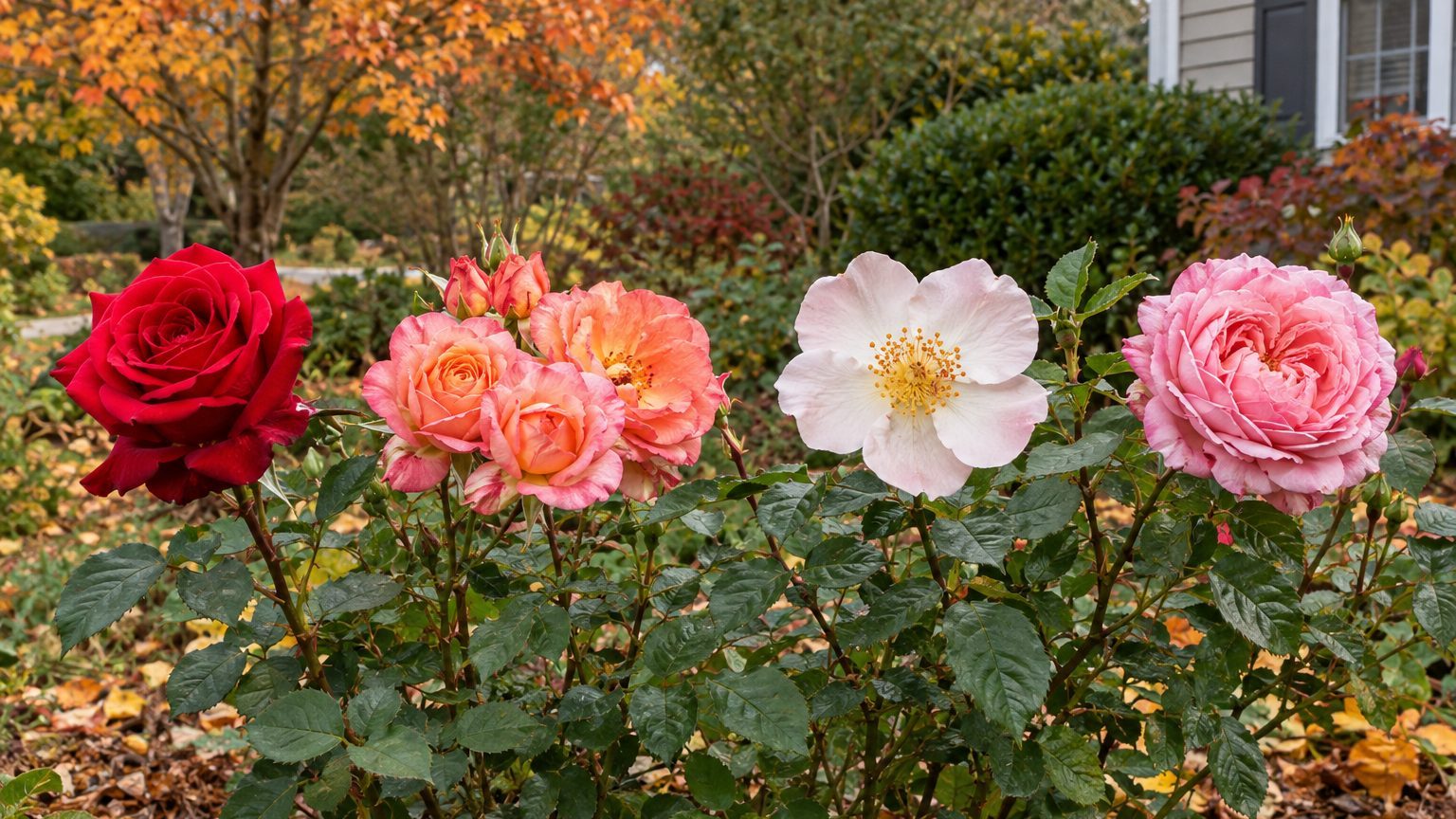
When a rose cane greens up near the base after a Nebraska winter, the type you planted often explains why. Many shrub roses and old garden roses come through the cold with little fuss, while hybrid teas ask for more work.
Best Roses to Grow in Nebraska

Many hardy shrub roses and old garden roses hold up well here, because winter cold is the main test. Nebraska gardens fall between zones 4a and 5b on the USDA hardiness system, so a rose that needs a mound of protection in January is a bigger commitment than one that does not. Humid summers add disease pressure for the tender types.
Shrub Roses
Most shrub and landscape roses are reliably winter hardy and need no extensive preparation for the cold. Hardy shrub roses such as Knock Out and the Explorer series perform well without extra protection.
Many shrub roses are also well adapted to Nebraska and to water-conserving landscapes, which suits a dry stretch in July.
Old Garden Roses
Many old garden roses are extremely tolerant of cold, and that toughness is why they turn up in older Nebraska yards. Plant them where they have room, since they grow into full shrubs.
Once-blooming types flower once a year on last year’s wood. Prune them right after they bloom, never in early spring, or you cut off the buds.
Floribundas
Floribundas are shorter and more compact than hybrid teas, and they carry large clusters of flowers. They are semi-hardy and require winter protection, which makes them useful for beds, shrub borders and low hedges.
They still want winter protection when a cold winter arrives, so treat them as a step up in toughness rather than a hands-off shrub.
Polyantha Roses
Polyanthas are shrubby, low-growing roses with clusters of small flowers. They are usually quite hardy and bloom freely through the growing season.
Some polyanthas still need protection, so read the plant tag before you count on one going without a mound.
Hybrid Teas
Hybrid teas are popular for their large flowers, and most of them carry some fragrance. They are not reliably winter hardy, so plan to protect them in cold winters.
Put protection on in November, or in December if the fall stays mild, and only after several killing freezes have put the plants to sleep. Prune them in March or April, and in February when the forsythia blooms.
Climbing Roses
Most climbers are not reliably hardy in Nebraska winters, though some are hardier than others. Check the label for hardiness before buying.
Many climbers bloom once on last year’s wood, so they follow the same rule as old garden roses and get pruned after flowering.
Nebraska — the year and the numbers
- State
- Nebraska
- USDA zones
- 4a-5b
- Last spring frost
- April 12 to April 23
- First fall frost
- October 15 to October 26
- Annual rain
- 32 in
- Lawn zone
- cool-season
- Source
- NOAA NCEI U.S. Climate Normals 1991-2020, 32F freeze probabilities · Omaha
How to Choose a Rose for a Nebraska Garden
Start with how much winter work you are willing to do. Hardy shrub types ask for almost none, and hybrid teas ask for the most. Then match the rose to the spot, the summer weather and the room you have.
| Your situation | What suits it in Nebraska | Why |
|---|---|---|
| Very cold winter | Shrub roses and old garden roses | Many shrub and old garden roses are reliably hardy and tolerate cold well. |
| Humid summer | Shrub roses rather than hybrid teas | Hybrid teas are susceptible to aphids and black spot. |
| Heat and drought | Shrub roses | Many are well adapted to Nebraska and to water-conserving landscapes. |
| Little time | Knock Out, the Explorer series, floribundas | Knock Out and Explorer roses need no extra protection, and floribundas need less care. |
| Small space | Floribundas and polyanthas | Floribundas are compact, and polyanthas are low-growing. |
Climbers fit a fence or arbor but need a protection plan. If you are unsure which row describes your yard, start with a hardy shrub rose and add a few floribundas for color near the house.
Which Roses Suit Different Parts of Nebraska
Nebraska runs from milder eastern yards to colder, more exposed western ones, so the same rose can behave differently across the state.
- Panhandle: Winters are colder and more exposed here, so lean on shrub roses and old garden roses and treat hybrid teas as a project that needs yearly protection.
- Sandhills: Dry, open ground favors the shrub roses described as well adapted to water-conserving landscapes, and wind makes tender climbers a poor bet.
- Omaha and Lincoln area: This milder eastern side gives hybrid teas and floribundas a better chance, though humid summers raise the odds of black spot.
Your county’s conditions can differ from a neighbor’s by a good margin, so a quick call to the local extension office settles the choice.
Rose Buying Mistakes to Avoid in Nebraska
Buying a Tender Rose Without a Plan
Hybrid teas, grandifloras and many climbers are not reliably hardy here, and an unprotected plant can lose canes or the whole bush.
If you want one anyway, budget time for mounding in November, after several killing freezes. Otherwise choose a shrub rose and skip the work.
Choosing Disease-Prone Varieties
Hybrid teas are susceptible to aphids and black spot, and a humid summer gives both a head start. The cost is spotted leaves, a thinner plant and more spraying or hand cleanup.
A shrub rose or a floribunda gives you flowers with less fuss. Clear fallen leaves from beds so spores have less to winter on.
Ignoring the Hardiness Label
A rose bred to be hardy in a cold zone needs little to no added protection, while one bred for milder places can struggle through a Nebraska winter. Check the tag before you buy, not after the first hard freeze.
Buy bare-root roses early and plant them in March or April, before growth starts. Container roses are more forgiving of timing.
Where to Get Rose Advice in Nebraska
Local help starts with Nebraska Extension and your county office. They can tell you which roses have done well in your part of the state and what is causing a problem.
- Its site carries rose pruning and winter protection guidance, and it is worth a read in late winter before the buds swell.
- Your county extension office can look at a leaf or cane you bring in, which helps most in summer when black spot shows.
- Master gardener volunteers often answer local questions in spring, when planting and pruning decisions are being made.
Common Questions
When Should You Feed Roses in Nebraska?
Feed from April through July, starting after pruning, again at first bloom and in mid-July. After mid-August, stop feeding, because late feeding pushes soft growth that winter can damage.
Can You Plant a Rose in July?
Yes, if it comes in a container. Container roses can go in from April through midsummer, and water them regularly while they settle. Bare-root roses are best planted in March or April, though May through July can work.
When Do You Take Winter Protection Off Roses?
March or April, once the ground thaws. Pull the mound away gradually, then prune hybrid teas and floribundas when the buds begin to swell.