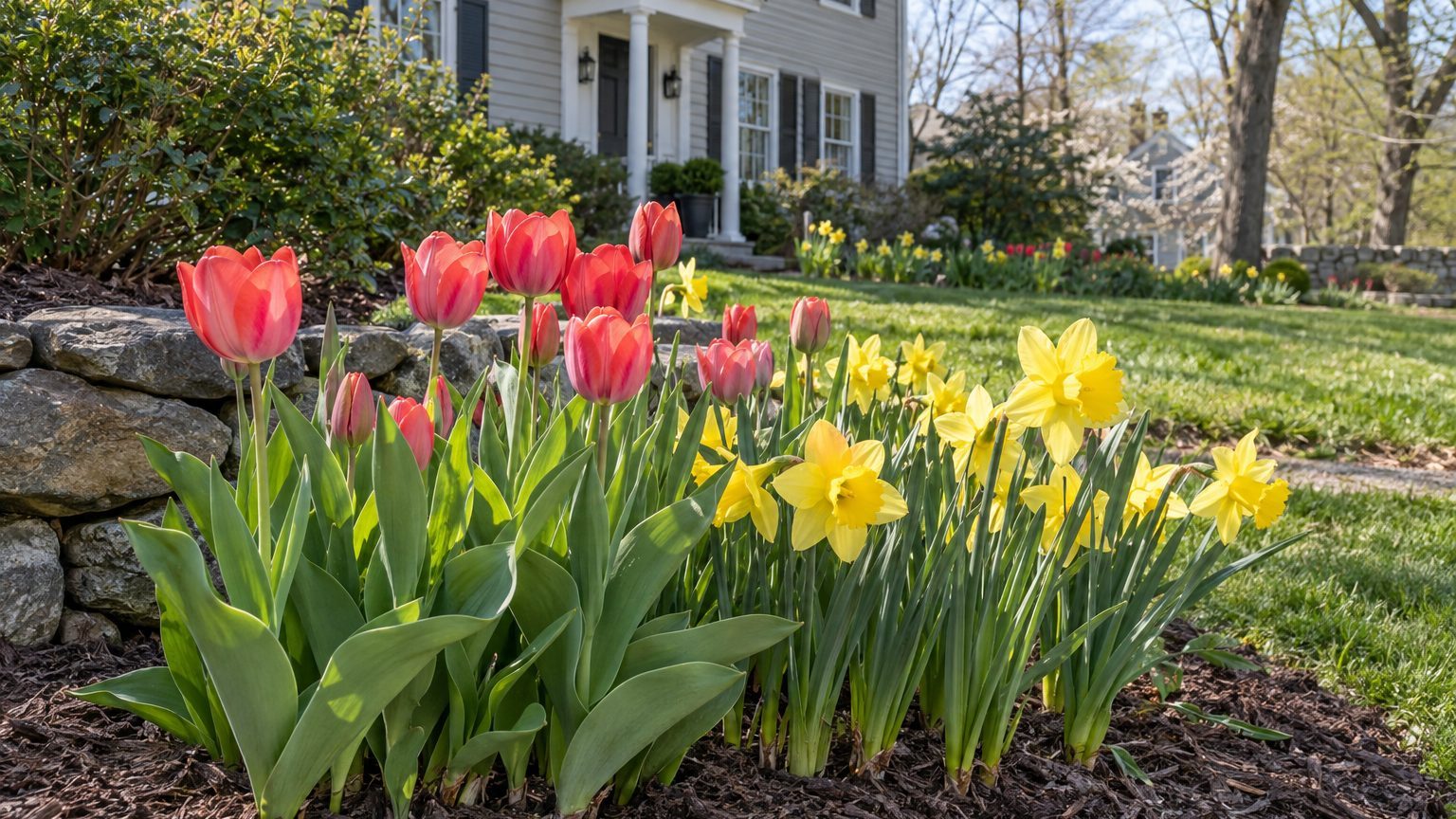
Tulip and daffodil bulbs look like papery onions in a bag, yet what you do with them in autumn decides how the garden looks in April. In Massachusetts the job fits into a narrow stretch of the fall calendar, set by how fast the soil cools.
When to Plant Tulips and Daffodils in Massachusetts

October is the month to plant, with November and December still workable as long as you can push a trowel into unfrozen ground. A bulb needs time to root before winter, and the year runs like this.
- In early fall, buy bulbs while the selection is good and keep them somewhere cool and airy until planting day, since a firm, heavy bulb is a healthy one.
- Through the cooler weeks of fall, skip any refrigerator chilling, because Massachusetts winters supply all the cold that tulips and daffodils need.
- In October, plant once the soil has cooled below about 60°F, which gives the roots time to form before the ground freezes without tempting the bulbs to sprout in autumn.
- In late November or early December, bulbs that missed October can still go in if the soil has not frozen, and a layer of shredded leaves or bark over the bed evens out the temperature swings of early winter.
- In late winter, the first green tips push through the mulch, and the flowers follow in April and May, with the earliest hardy bulbs opening as soon as March.
In Boston, the first fall frost tends to land between November 3 and November 14, so October planting finishes before the cold really sets in. Across the state the USDA hardiness zones run from 5a to 7b, and inland towns and the Berkshires get their frost sooner than Boston, which is why the regional notes further down matter.
Massachusetts — the year and the numbers
- State
- Massachusetts
- USDA zones
- 5a-7b
- Last spring frost
- April 1 to April 8
- First fall frost
- November 3 to November 14
- Annual rain
- 44 in
- Lawn zone
- cool-season
- Source
- NOAA NCEI 1991-2020 Climate Normals, 32F freeze probabilities · Boston
Which Spring Bulbs Do Best in Massachusetts?
Winters here are cold enough to flower every common spring bulb, so the real differences come from longevity and from what lives in your yard. Voles, squirrels, rabbits and deer shape the choice more than the climate does.
Daffodils are the dependable pick, and tulips are the ones that tempt every animal that passes through.
| Bulb type | How it does in Massachusetts | Why |
|---|---|---|
| Daffodils | Return and multiply year after year | Daffodils are the more reliable perennial bulb, and animals leave them alone |
| Tulips | Often short-lived, and frequently eaten | Voles, squirrels, rabbits and deer all go for them |
| Crocus | Bloom well but need protection from nibblers | Rodents, rabbits and deer find crocus as appealing as tulips |
| Alliums | Need winter cold to bloom | Their flowering depends on winter cold |
Hyacinths follow the same fall planting routine as the others. Among tulips, the Fosteriana group is known for coming back well, which makes it the group to look for if you want tulips that last beyond a season or two.
When to Plant, Chill and Care for Spring Bulbs in Massachusetts
The bulb year has only a few jobs, and each has a clear moment. Chilling is the one you can cross off, since the winter does that work for you. Bulbs still sitting in their bag go in as soon as the ground can be dug, because planting late beats storing them over winter.
| Task | Best timing in Massachusetts | Why then |
|---|---|---|
| Plant | October, or November and December if the ground is not frozen | Roots form before the ground freezes |
| Chill | Not needed in the ground | Most spring bulbs need about 12 to 16 weeks of cold, and the soil supplies it |
| Enjoy the bloom | April and May, with March for the earliest hardy bulbs | Bulbs flower in turn as spring warms |
| Leave the foliage | Until the leaves turn yellow and brown | The leaves feed the bulb for next year |
After the petals drop, remove only the faded flowers and let the leaves finish their work. Folding, braiding or cutting green leaves robs next spring’s bloom, and a clump of fading foliage is easy to hide behind perennials that leaf out around it.
How Bulb Planting Time Changes Across Massachusetts
Massachusetts has a milder coast and a colder interior, and that gap moves the best planting day within October. Watch the soil temperature in your own yard more than the calendar.
- The Berkshires: Frost arrives noticeably earlier here, and the soil cools sooner, so aim for the early part of October and get bulbs in before the ground hardens.
- Worcester and the inland suburbs: Cold nights come before they do along the shore, so plant a little earlier than a Boston neighbor would, still within October.
- Boston and the waterfront: The harbor keeps this area milder, the soil stays warm longer, and late October or even November planting makes sense as long as the ground is open.
A cold snap that arrives before you have planted is no reason to give up, since the ground can still be dug for weeks after the first frost.
Where to Get Bulb Advice in Massachusetts
Local help is useful when bulbs fail or the soil is a mystery. UMass Extension offers soil testing and plant diagnosis, and its staff know the regional conditions that national advice misses.
- A soil test tells you the pH and nutrient levels of your bed, and it is most useful before planting, so send a sample in early fall.
- A local Extension office can identify what is eating or rotting your bulbs if you bring a photo or a sample of the damage.
- Master gardener volunteers answer questions about drainage and bed placement, and early October is a good time to ask, just before the bulbs go in.
Common Questions
Can You Plant Daffodils Under Trees?
Yes. Daffodils naturalize well, especially in partly shady spots, so the edge of a tree canopy or a woodland border suits them and they keep spreading over the years.
Do Daffodils Keep Deer Away from Tulips?
Daffodils are left alone by deer, so a ring of them around a bed can make the area less inviting to browsing animals. They do not guarantee protection for tulips, which remain a favorite of deer, rabbits and rodents.
Which Tulips Come Back Best?
Fosteriana tulips perennialize well, which makes them a better bet than most hybrid tulips if you want flowers beyond the first spring. Plant them in October like any other spring bulb.