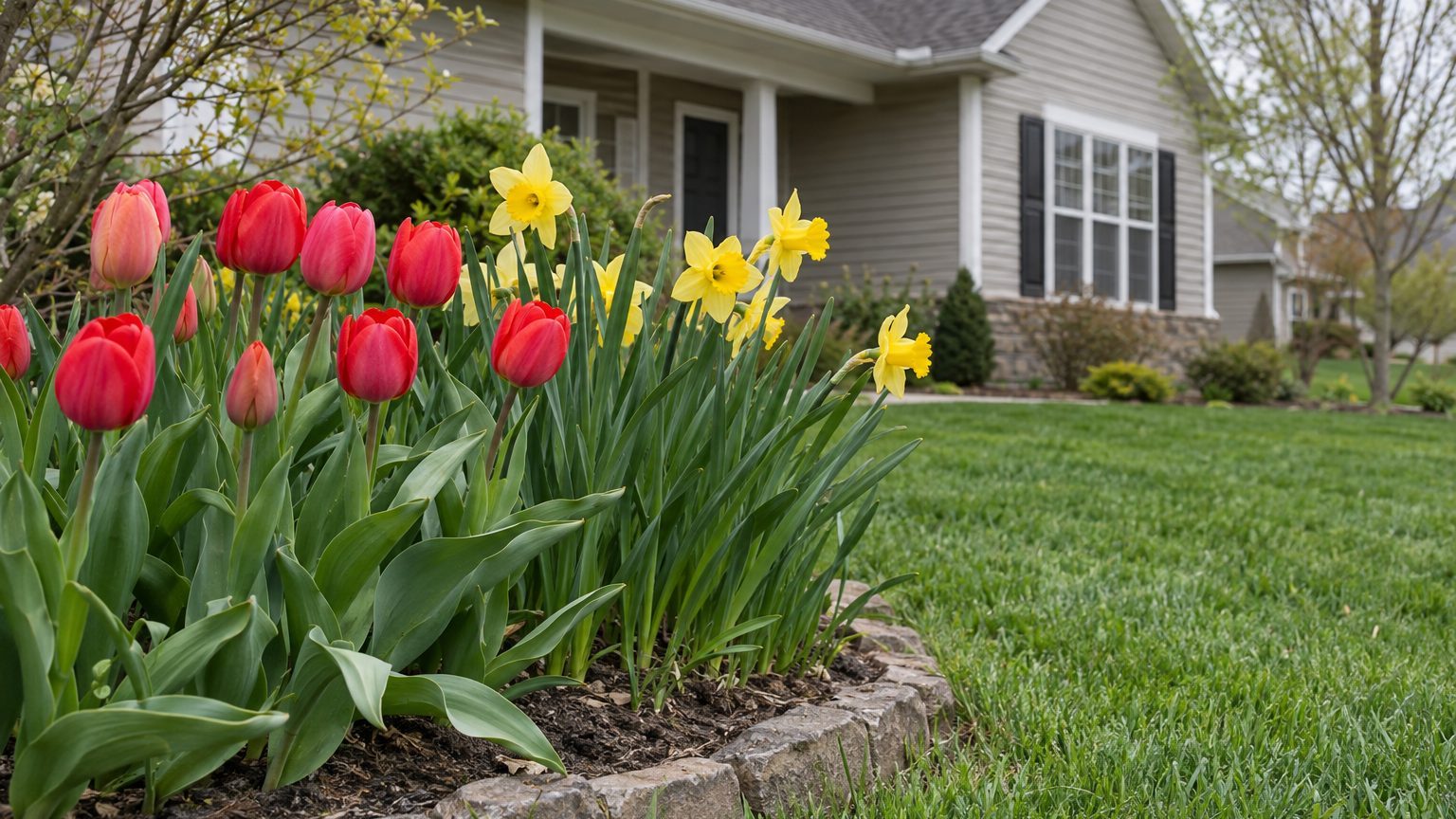
Tulip and daffodil bulbs go into Kansas soil in the fall, and the flowers come back in spring after a long, cold rest underground. Getting the planting window right gives the roots time to settle before the ground freezes.
When to Plant Tulips and Daffodils in Kansas

Plant them in September and October, with November and even December still workable when the ground has not frozen. Kansas sits in USDA hardiness zones 5b to 7a, so winters deliver the cold that bulbs need without any help from you.
- In late summer and early fall, shop for firm, plump bulbs and keep them somewhere cool and dry until the soil is ready.
- Throughout September and October, plant once the soil has cooled well down from its summer warmth, which gives roots time to form before winter without tempting the bulbs to sprout.
- When the first frost arrives, somewhere between October 23 and November 2 at the Wichita reference station, bulbs should already be settled in. Gardens outside the city usually frost sooner, so check with your county office.
- After planting, spread a layer of mulch over the bed to keep the soil temperature steady through the winter freeze and thaw.
- In late winter and early spring, the first shoots push up in March or early April, and the earliest daffodils can open in late February.
Kansas winters are cold enough that no refrigerator chilling is needed. A bag of bulbs still unplanted in November or December should go in as soon as the ground can be dug, since late planting beats storing them over winter.
Kansas — the year and the numbers
- State
- Kansas
- USDA zones
- 5b-7a
- Last spring frost
- April 4 to April 18
- First fall frost
- October 23 to November 2
- Annual rain
- 34 in
- Lawn zone
- transition-season
- Source
- NOAA NCEI 1991-2020 Climate Normals, 32F freeze probabilities · Wichita
Which Spring Bulbs Do Best in Kansas?
Daffodils are the dependable choice here, since they are vigorous, long-lived and left alone by wildlife. Tulips bloom beautifully but tend to fade after a few seasons, and voles, squirrels, rabbits and deer treat them as a snack. Alliums need the cold of winter to bloom and fill in the end of the spring show.
| Bulb type | How it does in Kansas | Why |
|---|---|---|
| Daffodils | Reliable, returns year after year | Vigorous, and animals leave them alone |
| Tulips | Bloom April through May, often short-lived | Larger bulbs may be treated as annuals; animals eat them |
| Crocus | Pretty but often nibbled | Rabbits, voles and squirrels go after them |
| Alliums | Good late-season color | Needs winter cold to bloom |
Giant Darwin hybrids are a popular tulip group in Kansas, with strong stems and vivid color from April through May. Some gardeners lift the larger tulip bulbs in late spring to make room for summer plants, treating them as annuals. Hyacinths grow here too, so plant them with the same timing and care as tulips.
When to Plant, Chill and Care for Spring Bulbs in Kansas
The yearly rhythm is simple: plant in fall, leave the bulbs alone through winter, and let the foliage fade on its own after bloom. Kansas winters supply the cold, so there is no chilling step to add.
| Task | Best timing in Kansas | Why then |
|---|---|---|
| Plant | September and October, or November and December if the ground is unfrozen | Roots form before freeze-up without fall sprouting |
| Chill | Not needed | Winter supplies roughly 12 to 16 weeks of cold that most bulbs want |
| Leave the foliage | Until the leaves turn brown after bloom | Green leaves feed the bulb for next year |
After the flowers fade, snip off only the spent blooms. In Kansas, bulb guidance notes that bulbs need about 12 weeks of temperatures below 40°F to bloom, which a typical winter provides. Tulips that have thinned out over the years can be replaced with fresh bulbs in the next planting window.
How Bulb Planting Time Changes Across Kansas
Kansas stretches from the cooler northern tier to the warmer southern border, and planting time moves along with it.
- Northern Kansas: Gardens in this part of the state run colder, so plant early in the fall to give roots a head start before hard freezes.
- Wichita and south-central Kansas: The reference city sees frost from October 23 to November 2, so the main window of September and October fits comfortably, with November as a fallback.
- Southern border counties: Winters are milder, so planting later in the window, into November, works well, as long as the soil has cooled well down from its summer warmth.
Rural and suburban yards often frost earlier than the city, so lean toward the early end of the window if your garden sits outside town or on higher ground.
Where to Get Bulb Advice in Kansas
Local help is easy to reach. K-State Research and Extension publishes fall bulb guidance, and county offices can answer questions about your specific soil and conditions.
- The state extension site has fall bulb publications covering planting depth, varieties and spring care, and is worth browsing before you buy.
- Your county extension office can diagnose problems and arrange a soil test, so call before planting if drainage is a concern.
Any bulbs still in the bag should go into the ground as soon as the soil can be dug.
Common Questions
Can You Plant Tulips in December in Kansas?
Yes, as long as the ground is still unfrozen and can be dug. Late-planted bulbs root more slowly, but they still bloom in spring, and that beats leaving them in the bag.
Do Daffodils Need Full Sun in Kansas?
Daffodils bloom best with sun while they are flowering and while the foliage is green, since the leaves feed the bulb for next year. Beds that get good light in spring suit them well.
Why Do Tulips Disappear After a Few Years?
Tulips are often short-lived in the garden, and animals like voles and squirrels also dig them up. Daffodils are the more dependable perennial, so mix them in where you want lasting spring color.