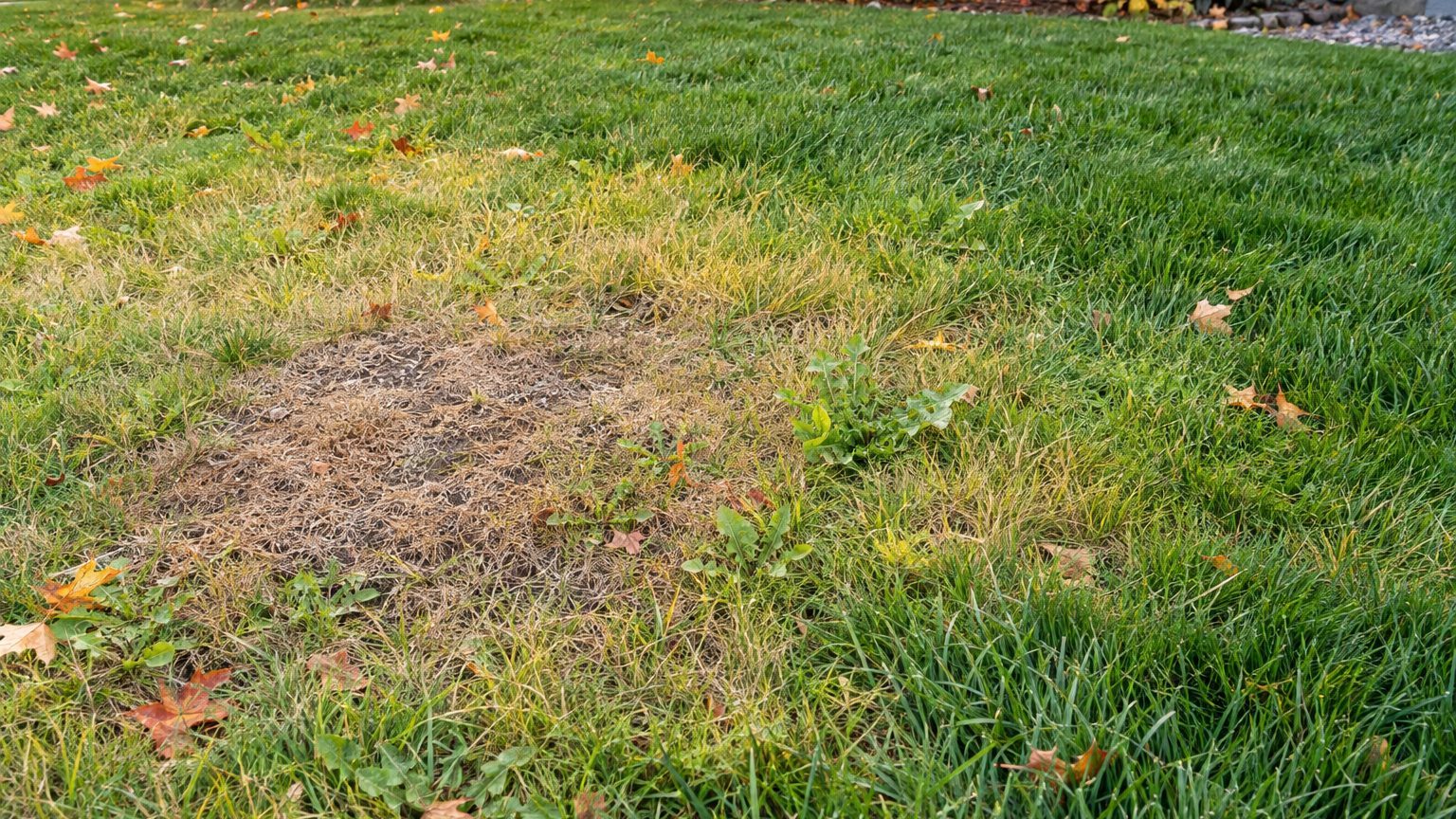
A lawn in the Yukon wakes up slowly, and the usual sight after the snow melts is matted, pale grass or a bare patch where something went wrong over winter. Most lawn trouble in the territory comes from the cold, the short season and the way the grass is cared for, not from insects.
Lawn Pests and Diseases in Yukon
Snow Mold After Melt

Snow mold shows up as flattened, grayish or pinkish circles of matted grass right after the snow leaves. It forms under a long snow cover on turf that went into winter long and wet. The grass underneath is often still alive.
Rake the mats gently so air reaches the crowns and the surface dries. Most patches grow back on their own once the weather warms.
Winterkill Patches
Winterkill leaves tan or brown ground where the grass never greens up, and the dead blades pull away with no resistance. It is common in exposed, windy spots, and Whitehorse’s Canadian hardiness zone of 1b shows how hard local winters can be.
Scratch the bare spots, loosen the surface and reseed in June once the soil has thawed. July still works. The season is too short for fall seeding.
Dandelions in Thin Turf
Dandelions arrive as flat rosettes of toothed leaves with a thick taproot, and they settle wherever the grass is thin. A thick lawn leaves them little light to sprout.
Pull them when the soil is damp so the whole root comes out. Fill the gap with seed so the spot does not reopen.
Moss in Damp Shade
Moss forms a soft green carpet where the grass has faded, usually under spruce or on the north side of a house, where the soil stays wet and cool. Scraping it off only helps briefly.
Let in more light by thinning low branches, loosen compacted ground and sow a shade-tolerant seed mix in the cleared patch.
Thatch Buildup
Thatch is the spongy brown layer of stems and roots between the green blades and the soil. Cool ground slows decay, so the layer can build up. Push a finger or a knife into the turf and measure it.
A layer up to 1.3 cm (1/2 inch) is healthy. Above that, dethatch or core aerate, ideally in June or July when the grass is growing strongly enough to recover.
Yukon — the year and the numbers
- State
- Yukon
- Hardiness zones
- 1b
- Last spring frost
- June 5
- First fall frost
- August 25
- Annual rain
- 10 in
- Lawn type
- cool-season
- Source
- Environment and Climate Change Canada — Canadian Climate Normals 1981-2010, station WHITEHORSE A · Whitehorse
How to Tell Which Lawn Problem You Have
A symptom rarely tells the whole story, so pair what you see with where and when it appears. A pale patch in spring means something different from the same patch in August.
Tug a handful of the damaged grass. Whether it pulls out easily or holds fast tells you a lot about the roots.
| What you see | When and where | Points to |
|---|---|---|
| Gray or pink matted circles | Just after snowmelt, where snow piled up | Snow mold |
| Tan ground, grass pulls out easily | Spring, in exposed or windy spots | Winterkill |
| Flat rosettes with a deep root | Summer, in thin or sparse turf | Dandelions |
| Green carpet, soft underfoot | Any time, in shade and wet soil | Moss |
| Spongy turf, water runs off | Summer, across the whole lawn | Thatch buildup |
Dog urine can also leave small dead spots ringed with dark green grass. Those sit along favorite paths and edges, and they do not match any of the patterns above.
Where Lawn Problems Are Worst in Yukon
The territory is large and its climate shifts a lot from one community to the next. Whitehorse sits at hardiness zone 1b in the Canadian system, and that is the reference point for what follows.
- Whitehorse and the Southern Lakes: Dry air and wind favor winterkill on exposed lawns. Lakeside yards around Carcross and Marsh Lake stay a little milder.
- Dawson City and the Klondike: Winters run colder and summers are short and warm, so recovery after winterkill is slower and reseeding must happen early.
- Watson Lake and the southeast: Wetter ground and deeper snow make snow mold and moss more likely in shaded yards.
Higher or north-facing yards in any of these places warm up later, so give them extra time before you judge a patch dead.
Lawn Care Mistakes That Invite Problems in Yukon
Mowing Too Short
Scalped grass has little leaf to feed its roots, and the bare soil lets dandelions and moss in. Mow regularly from June through September and keep the blade high.
Leave the clippings in place, since they return nutrients to the soil.
Watering Lightly and Often
Shallow sprinkling keeps roots near the surface and the top damp, which suits moss. Water deeply and then let the surface dry between sessions, mainly from June through August.
In Whitehorse the last spring frost falls around June 5 on average, so half of all years bring frost later. Keep newly seeded soil evenly moist while it germinates, even when frost remains possible.
Feeding at the Wrong Time
Fertilizer applied before the grass is growing can run off or sit unused. Wait until June, when the grass is growing, for the first feeding. A second feeding in August also works.
Skip anything later. In Whitehorse the first fall frost arrives around August 25 on average, and soft new growth is easily damaged by it.
Where to Get Lawn Advice in Yukon
Canada has no county extension offices. Instead, turn to the territory’s agriculture staff, local gardening groups and nearby garden centers.
- Agriculture and Agri-Food Canada, at its national site, offers general plant and soil information, making it a useful place to start in spring.
- A local gardening group or master gardener club can look at your yard and its conditions, which is useful once the snow is gone.
- A Whitehorse garden center can help choose a seed mix suited to your light, best done before you sow in June.
Common Questions
Why Does My Lawn Have Yellow Spots with Dark Green Rings?
Dog urine is the usual cause when the spots sit along paths and edges. Flush the area with water soon after and reseed any bare patches.
Should You Bag Clippings in Yukon?
Usually no. Short clippings break down on the lawn and return nutrients. Bag them only when the grass is very long or wet and would form clumps.
Does the Long Summer Daylight Change How You Mow?
Yes. Grass grows fast under long days, so mow regularly and avoid cutting too much at once.