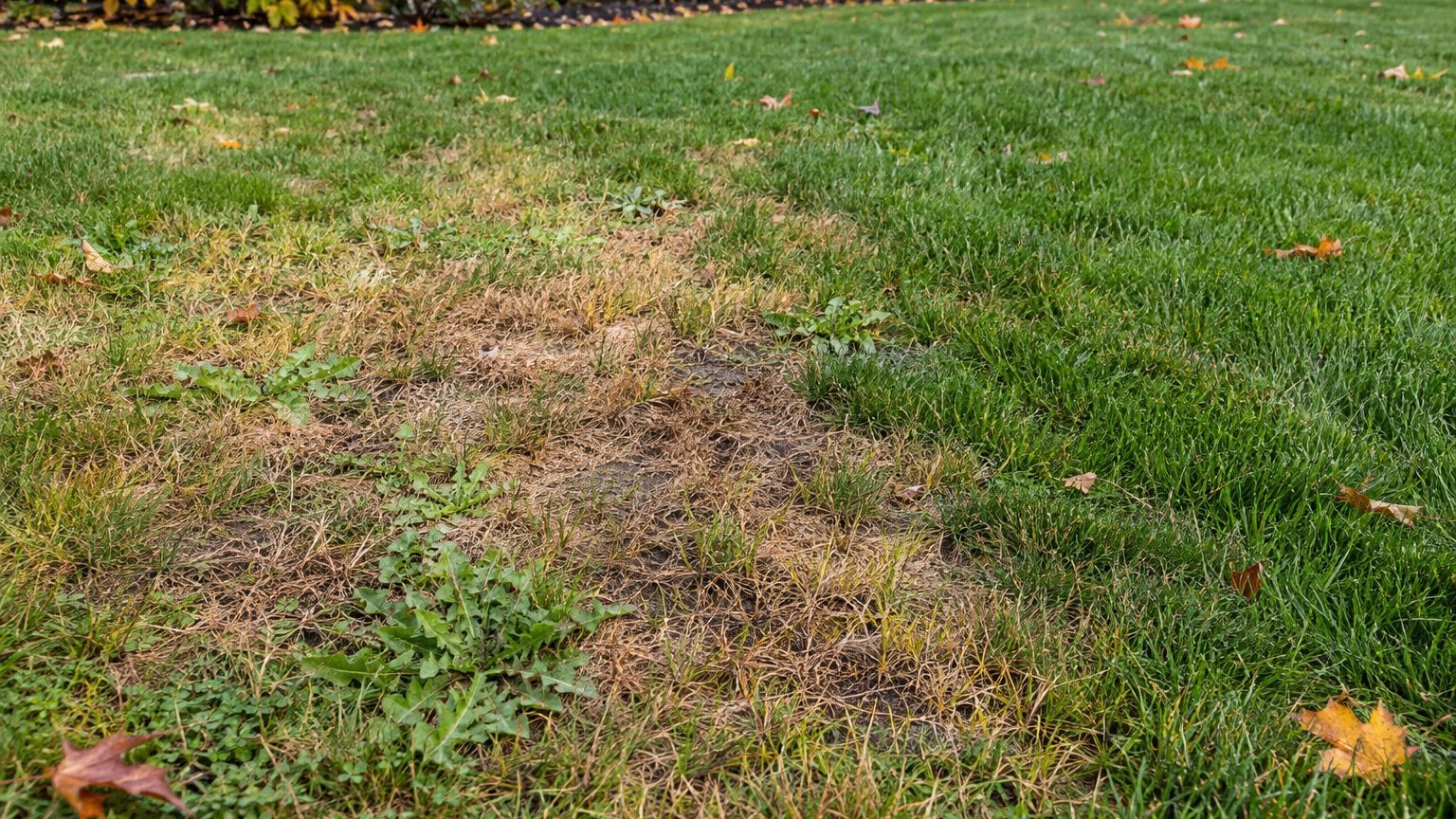
Snow melts in spring and leaves some Alaska lawns with matted gray patches, bare strips and a few tunnels in the grass. Most of what goes wrong here starts in winter or in the short, bright growing season that follows.
Lawn Pests and Diseases in Alaska
Snow Mold

Snow mold shows up right after the snow melts, as circular gray or pinkish patches where the blades lie flat and crusty. It forms under long snow cover on grass that went into winter long or wet.
Rake the patches gently to lift the blades and let the soil dry. Most grass recovers on its own once it starts growing.
Vole Trails
Voles travel under the snow and chew the grass at the surface. When the snow goes, you see winding, shallow runways, often with clipped blades and small bare strips along them.
Rake the runways clear and look for roots that are still attached. Where roots remain healthy, the grass may fill back in. Where they are gone, patch with seed in June.
Dandelions and Other Broadleaf Weeds
Dandelions and other broadleaf weeds move into thin spots in early summer. A short season leaves little time for a weak lawn to close its gaps, so weeds fill them first.
Pull them with the taproot when the soil is damp. A thicker lawn, kept mown regularly through summer, helps crowd out weed seedlings.
Moss in Shade
Moss looks like a soft green carpet where the grass has thinned, usually under spruce or birch, on the north side of a house, or in low ground that stays soggy. It tells you the spot is wet, shaded and often compacted.
Scrape it out, loosen the soil and open the canopy where you can. Reseeding the same shady spot without fixing the drainage or the light brings the moss right back.
Thick Thatch
Thatch is the brown, spongy mat between the green blades and the soil. A layer up to 1/2 inch is healthy, but cool soils break down clippings slowly, so it can build.
Above that depth, water and fertilizer run off instead of soaking in. Dethatch or core aerate the lawn, when the grass is actively growing in summer.
Alaska — the year and the numbers
- State
- Alaska
- USDA zones
- 1a-8a
- Last spring frost
- May 3 to May 12
- First fall frost
- September 22 to October 1
- Annual rain
- 16 in
- Lawn type
- cool-season
- Source
- NOAA NCEI 1991-2020 Climate Normals, 32F freeze probabilities · Anchorage
How to Tell Which Lawn Problem You Have
Symptoms make more sense together. Pair what you see with where it sits and when it appeared, then pull a handful of grass. If it lifts like a loose mat with no roots, something has eaten or killed the roots. If it holds, inspect the blades and soil before deciding what is wrong.
| What you see | Where and when | Likely problem |
|---|---|---|
| Gray or pink crusty circles, blades matted flat | Right after snowmelt, where drifts lay longest | Snow mold |
| Winding runways, clipped blades | Spring, often near shrubs, fences or garden beds | Vole trails |
| Rosettes with a deep taproot | Thin or bare spots in early summer | Broadleaf weeds |
| Soft green carpet over thin grass | Shade or soggy low ground, all summer | Moss |
| Spongy turf, water that beads and runs off | Whole lawn, older and well-fed turf | Thatch buildup |
Pale, weak grass across an entire lawn may reflect soil or nutrient trouble, but the pattern alone does not rule out other causes. A soil test can show whether soil conditions or nutrient levels are part of the problem.
Where Lawn Problems Are Worst in Alaska
Alaska is too big for one answer, and the problem you meet depends mostly on how long the snow lies and how much rain falls.
- Around Anchorage, lawns may face snow mold, voles and weeds, while thaw and soil warmth shape recovery.
- Fairbanks and the Interior: Winters are colder and summers shorter, so winter injury and slow recovery matter more than any pest, and patched areas need extra time to fill.
- Juneau and Southeast: Frequent rain and shade from tall evergreens make moss and soggy soil the main trouble, and drainage matters more than feeding.
Farther north, lawns are rare, and anything you plant relies on the long summer daylight to catch up.
Lawn Care Mistakes That Invite Problems in Alaska
Mowing Too Short
Scalped grass has less leaf to feed itself, and bare soil between blades is an open door for weeds and moss. Mowing is a June to September job here.
Set the deck high and cut only the top of the blade. Longer grass shades the soil and thickens up faster.
Watering on a Schedule
Alaska lawns can stay damp in cool weather, and frequent sprinkling encourages moss and shallow roots. Soggy turf also holds disease longer after winter.
Water when the grass looks dull or footprints stay pressed down, and soak the soil deeply instead of misting it.
Feeding at the Wrong Time
June is the first feeding, once the grass is clearly growing, and August also works. Around Anchorage, a late feeding pushes soft new growth just before frost, which can arrive between September 22 and October 1.
Skip anything later than August and let the grass harden off for winter.
Where to Get Lawn Advice in Alaska
Local grass varieties and soil conditions differ a lot from one borough to the next, so ask people who see lawns in your area. The University of Alaska Fairbanks Cooperative Extension Service offers lawn guidance for the state.
- Its publications cover lawn care and common turf problems, and they are worth reading before mowing begins in June.
- Your local extension office can help identify a patch if you bring a sample or clear photos, ideally while the problem is still visible.
Common Questions
When Should You Seed a Lawn in Alaska?
June is the time, once the ground has thawed, and July still works if you miss it. The season is too short for fall seeding, because young grass needs time to root before frost.
What Hardiness Zone Is Alaska In?
The USDA hardiness zone system runs from 1a to 8a across the state, and that rating rests only on the average coldest winter temperature. Your own zone depends on where you live, so check your exact location.
How Long Is the Growing Season for an Alaska Lawn?
Anchorage has about 143 frost-free days, and the Interior and the north have far fewer. Long summer daylight partly makes up for the short season, but grass still grows only as fast as the soil warms.