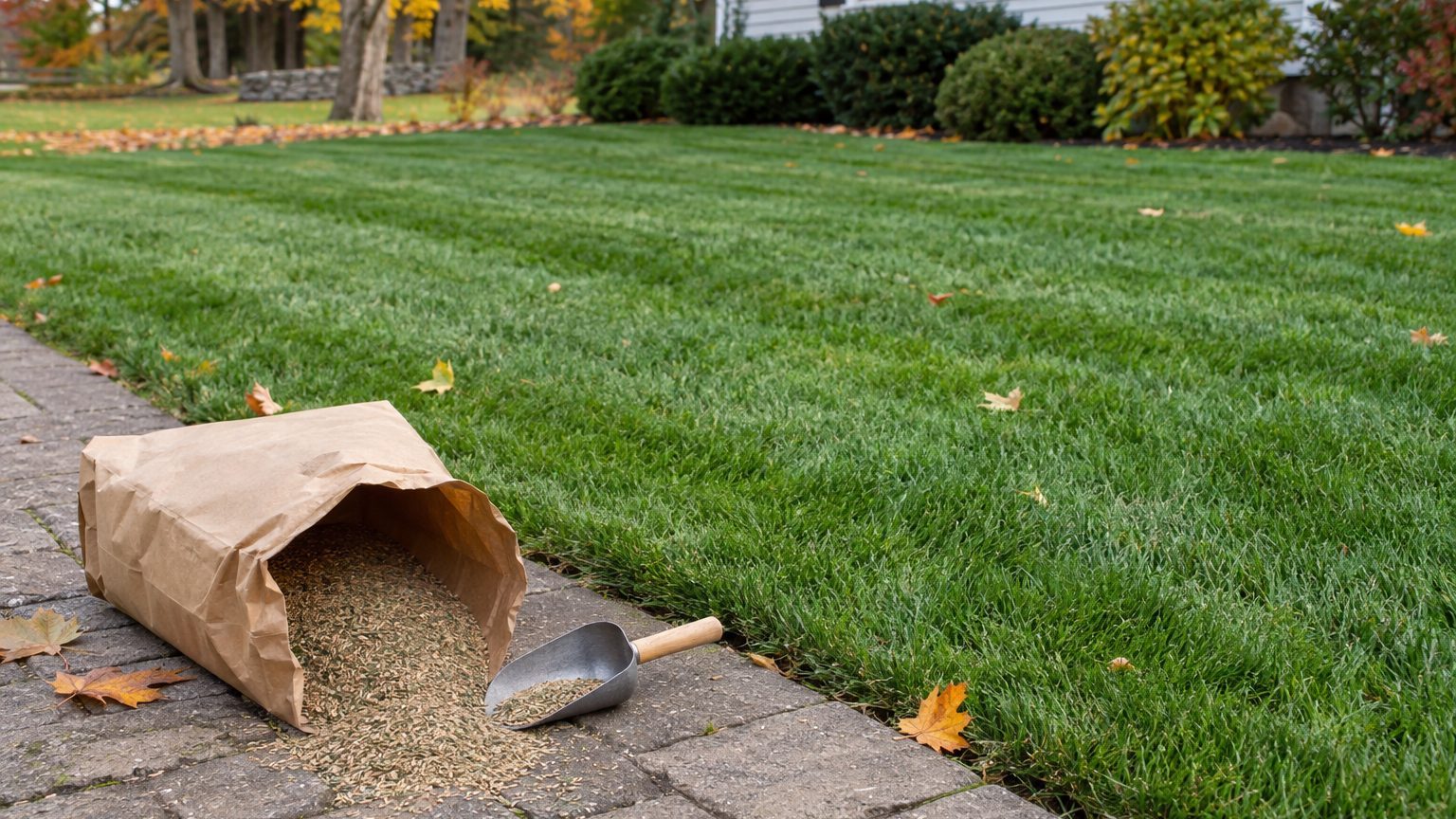
A Vermont lawn that greens up thick in May and still looks good after a cold winter is usually made of cool-season grasses, not a single species. Kentucky bluegrass, fine fescues, perennial ryegrass and tall fescue all grow here, and which one leads depends on your sun, your soil and how much work you want to do.
Which Grass Grows Best in Vermont?
Vermont spans USDA hardiness zones 3b to 5b, and cool-season grasses handle its cold winters and grow actively in spring and fall. Warm-season grasses stall in the short, cool summers and rarely come back dependably. These grasses offer different balances of winter hardiness, maintenance, traffic tolerance, and establishment speed.
Fine Fescues
Creeping red, chewings and hard fescue handle cold, shade and thin soil better than bluegrass does. They need less fertilizer and less mowing, which suits a yard under maples or on a rocky slope.
The trade-off is traffic. Fine fescue wears down under kids and dogs, so keep it for the quieter parts of the yard.
Kentucky Bluegrass
Bluegrass is the classic Vermont lawn. It tolerates winters in every zone of the state, and it spreads by underground stems to fill in thin spots on its own.
It wants full sun and regular feeding, and it germinates slowly. Plan on patience after seeding, since the seedlings take their time showing up.
Tall Fescue
Tall fescue sends down deep roots, so it copes well with dry spells and heavy use. It makes a coarser, bunchier lawn than bluegrass.
Hard winters can thin it in colder hills, while milder lower valleys and high-traffic yards suit it well.
Perennial Ryegrass
Ryegrass sprouts fast, which makes it useful for quick cover on bare spots and as a partner in a mix. Ryegrass can suffer winter injury in Vermont.
Use it as a minor part of a blend rather than on its own, especially in the colder parts of the state where winter injury is a real risk.
Vermont — the year and the numbers
- State
- Vermont
- USDA zones
- 3b-5b
- Last spring frost
- April 30 to May 10
- First fall frost
- October 3 to October 13
- Annual rain
- 38 in
- Lawn type
- cool-season
- Source
- NOAA NCEI 1991-2020 Climate Normals, 32F freeze probabilities · Burlington
How to Choose Grass Seed for a Vermont Yard
Start with the conditions you can see: how many hours of sun reach the lawn, how much the yard gets walked on, and whether you can water. Then decide how much mowing you are willing to do.
Vermont yards can be patchwork, so a blend of suitable grasses often works better than a single species.
| Your yard | Grass that fits | Why |
|---|---|---|
| Full sun, tidy lawn | Kentucky bluegrass | Dense turf that repairs itself |
| Shade under trees | Fine fescues | Tolerate low light and poor soil |
| Heavy foot traffic | Tall fescue | Deep roots, tough blades |
| No watering planned | Fine fescues or tall fescue | Handle dry spells well |
| Low mowing, low feeding | Fine fescues | Grow slowly and need little |
| Quick cover on bare soil | Perennial ryegrass in a blend | Sprouts fast |
Sunny and shady spots in the same yard can take different seed. Sow bluegrass-heavy mixes where the sun is strong, and fescue-heavy mixes under the trees.
Which Grasses Grow Where in Vermont
Vermont is small, but elevation and the lake shape the growing season, and that shifts which grass is the safer bet.
- Burlington and the Lake Champlain Valley: this is the mildest corner of the state, with a spring last frost between April 30 and May 10. Bluegrass and tall fescue both do well here.
- The Green Mountains: shorter seasons and colder winters favor fine fescues and hardy bluegrass over ryegrass and tall fescue.
- The Northeast Kingdom: this is the coldest, shortest-season part of the state, so lean on fine fescues and bluegrass and seed early in the window.
Outside Burlington, elevation and local exposure can shorten the time new seed has to root.
Grass Seed Mistakes to Avoid in Vermont
Seeding at the Wrong Time
Seed does best in August and September, when soil is warm and cold has not arrived yet. If you miss that window, May also works. In Burlington, the first fall frost lands between October 3 and October 13, so young grass needs those earlier weeks to root.
Burying the Seed
Cover seed with no more than 0.25 inch of soil, and press it down so it touches the ground firmly. Deep seed may never sprout. A light raking and a roll or a walk-over with a flat board does the job.
Choosing the Wrong Species
Planting ryegrass alone in a cold hollow, or bluegrass in deep shade, sets you up for thin turf. Match the seed to the spot, and use a blend when conditions vary across the yard.
Fertilizing new grass has a legal limit too. Vermont law bars lawn fertilizer before April 1 or after October 15, and on frozen ground.
Where to Get Lawn Advice in Vermont
Local help can settle questions about soil, shade and the right mix for your own yard.
- University of Vermont Extension offers turf guidance and soil testing information, so check in before you buy seed.
- Your county extension office can speak to conditions in your town, and it is a good call in late summer, before the seeding window opens.
Common Questions
Can You Plant Warm-Season Grass in Vermont?
Warm-season grasses are a poor fit here. Summers are short and winters are cold, so they struggle to establish and rarely survive. Stick with cool-season species.
Is a Seed Blend Better than a Single Grass?
Yes, when conditions vary across the property. Sun, shade and slopes mix together on one property, and a blend lets each grass fill the spot it likes best.
Can You Overseed an Existing Lawn in Spring?
You can, and May is the spring fallback. August and September give better results, because the soil is warm and weeds are less aggressive.