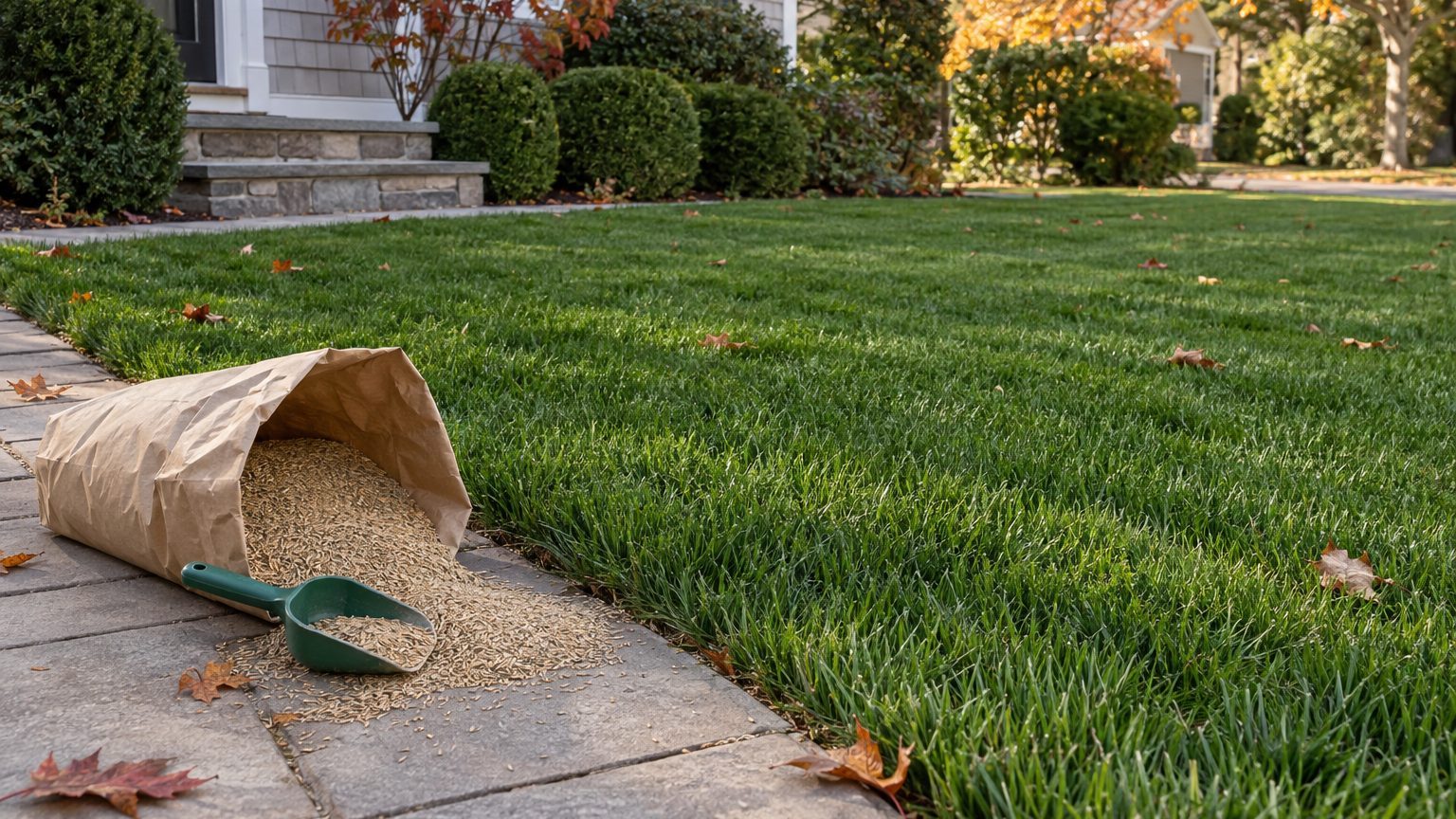
A thin, patchy lawn in late summer is the usual cue to reseed in New York, and the seed you pick matters more than the brand on the bag. Cool-season grasses are the ones that last here: Kentucky bluegrass, fine fescues, perennial ryegrass and tall fescue.
Which Grass Grows Best in New York?
Cool-season grasses are the dependable choice for New York lawns across USDA hardiness zones 3b to 7b. The main grass choices each earn their place for a different reason.
Kentucky Bluegrass
Kentucky bluegrass is the classic New York lawn, dense and dark green, and it shrugs off hard winters. It wants full sun and regular water in summer, and it spreads to fill small bare spots on its own over time.
Fine Fescues
Creeping red, chewings and hard fescue form a soft, fine-bladed turf that tolerates shade and poor soil. They need less fertilizer and less mowing than bluegrass, which suits the shady lots under maples and oaks common across the state.
Tall Fescue
Tall fescue is a coarser, deep-rooted grass that handles foot traffic and summer dry spells well. It does best in the southern and milder parts of the state, and it can thin out after the coldest northern winters.
Perennial Ryegrass
Perennial ryegrass sprouts fast, which makes it handy for quick cover and patching. It can struggle through a harsh upstate winter, so it is a safer choice in a mix than on its own.
New York — the year and the numbers
- State
- New York
- USDA zones
- 3b-7b
- Last spring frost
- March 23 to April 3
- First fall frost
- November 14 to November 27
- Annual rain
- 50 in
- Lawn type
- cool-season
- Source
- NOAA NCEI U.S. Climate Normals 1991-2020, 32F freeze probabilities · New York City
How to Choose Grass Seed for a New York Yard
Start with the light your yard gets and how much foot traffic it sees. Then think about whether you can water through summer and how often you want to mow. Those answers narrow the field quickly.
Most New York yards are a patchwork of sun and shade, so a mix of these species often fits better than using the same grass throughout the yard.
| Your yard | Grass to look for | Why |
|---|---|---|
| Full sun, regular watering | Kentucky bluegrass | Dense, self-repairing turf that looks its best with water |
| Shade under trees | Fine fescues | Handle low light and dry soil better than bluegrass |
| Heavy foot traffic, kids and pets | Tall fescue | Tough blades and deep roots take the wear |
| Little watering | Tall fescue or fine fescues | Both cope with dry stretches better than bluegrass |
| Less mowing | Fine fescues | Slow growth means fewer passes with the mower |
Perennial ryegrass fits best as a minor part of a mix, where its quick sprouting protects the slower grasses while they get established.
Which Grasses Grow Where in New York
New York stretches from salt air to mountain winters, so the same seed behaves differently depending on where the lawn sits.
- Long Island and New York City: Winters are milder near the coast, with the last spring frost falling between March 23 and April 3 in the city. Tall fescue and bluegrass blends do well, and summer heat makes deep roots valuable.
- Hudson Valley: Winters are colder than the coast but summers still run warm. Bluegrass and tall fescue both work, with fine fescues filling the shady spots.
- Finger Lakes and Western New York: Lake moisture and snow cover protect turf through winter. Bluegrass and fine fescues are dependable choices here.
- Adirondacks: Frost comes much earlier in fall and lingers longer in spring. Stick to hardy bluegrass and fine fescues, and skip tall fescue and ryegrass in the coldest valleys.
The more frost your yard sees, the more you should lean on bluegrass and fine fescues.
Grass Seed Mistakes to Avoid in New York
Choosing a Warm-Season Grass
Bermudagrass and zoysia may be sold in some garden centers, but they turn brown in winter and are less reliable than cool-season grasses in New York. Check the label for the cool-season species named above before you buy.
Seeding at the Wrong Time
Seed sown in August or September has warm soil to sprout in and time to root before winter. April and May also work if you miss the fall window. Seed thrown down in midsummer heat or on frozen ground is mostly wasted.
Burying the Seed or Skimping on It
Cover seed with no more than 0.25 inch of soil, and press it down so it touches the ground firmly. Buried seed struggles to sprout, and a thin scattering leaves room for weeds. Follow the rate printed on the bag for the species you chose.
Where to Get Lawn Advice in New York
Local help can match seed to your soil and microclimate in a way a bag label cannot. Local advice is worth seeking before you spend money on seed.
- The Cornell Cooperative Extension network offers research-based lawn guidance, and a visit before the August and September seeding window gives you time to act.
- Your county Cooperative Extension office can test your soil and suggest a seed mix for your neighborhood, so call it in summer before you buy.
Common Questions
Can You Mix Grass Seed Types in New York?
Yes. A blend of bluegrass, fine fescues and ryegrass is common, since each species covers a different weakness in sun, shade or speed of sprouting.
Is Spring a Good Time to Seed a New York Lawn?
April and May work, but August and September give better results. Spring seedlings must face summer heat and weed competition before they are fully rooted.
Should You Fertilize When You Seed?
Fertilizing works well in May and September, with April and November as fallbacks. September pairs naturally with fall seeding and helps young grass fill in before winter.