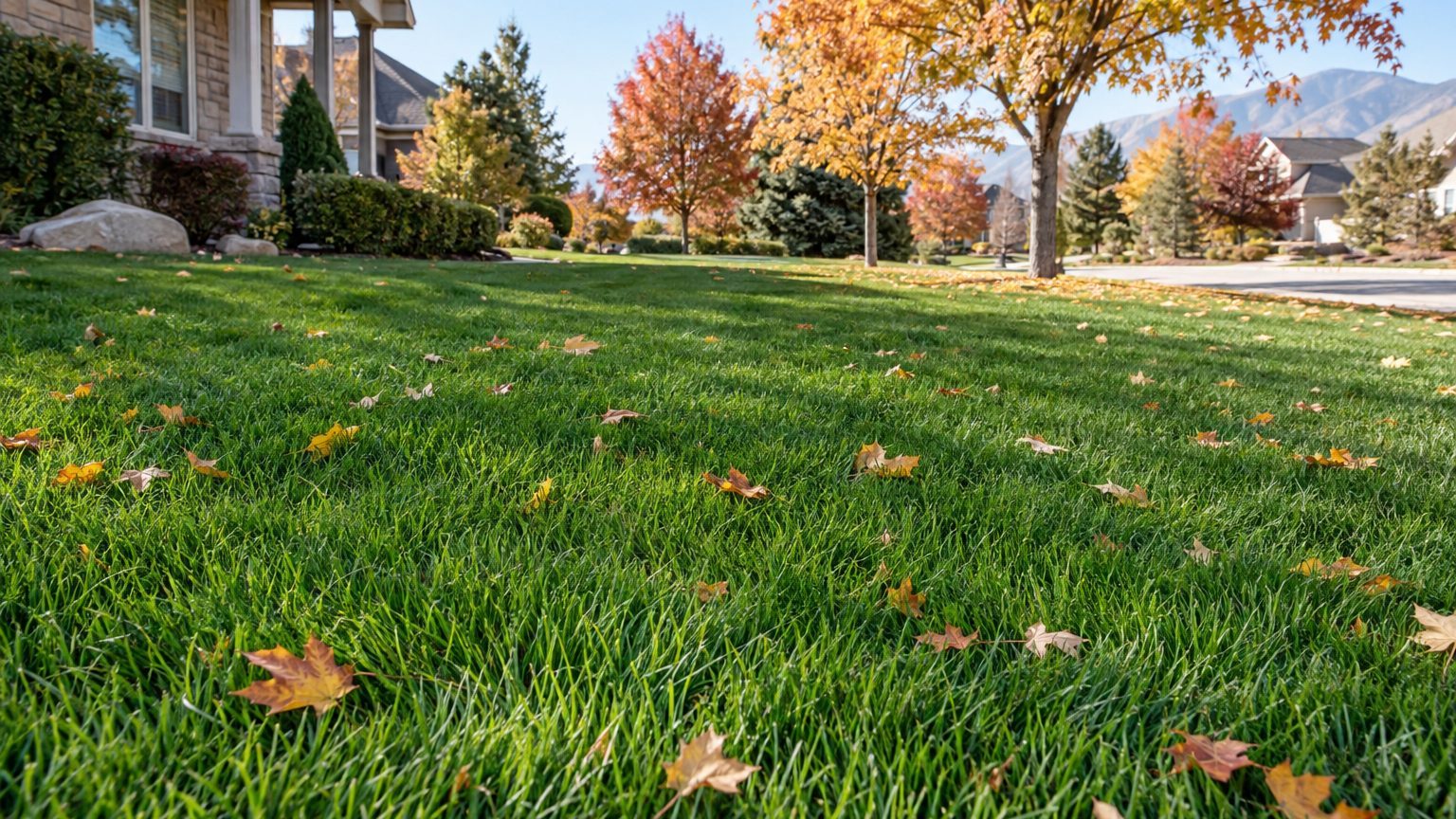
Utah lawns spend a long winter asleep, wake slowly in spring, and reward the work done in late summer more than anything done in May. Most of the yard’s year falls into a spring tune-up and a late-summer rebuild, with watering carrying the heat in between.
What to Do Each Month in a Utah Lawn

The calendar below highlights the work that fits each part of the year, and the order matters more than squeezing in every task. Mowing runs from April through November, while the seed, aeration and feeding all cluster around late summer and fall.
| Month | In the lawn |
|---|---|
| January | Rest. The grass is dormant, so keep foot traffic off frozen turf and let the snow sit. |
| February | Rest. The grass is still dormant. Sharpen the mower blade now so it cuts cleanly come spring. |
| March | Rest, mostly. The lawn is only stirring, so watch for matted patches under old snow and hold off on seed and fertilizer. |
| April | Apply crabgrass preventer before the weed sprouts, and begin mowing as growth picks up. Core aeration, dethatching and seeding also work this month if the soil is workable. |
| May | Mow regularly as growth speeds up. If April slipped by, preventer, aeration and seeding still work now, and a light feeding can go down. |
| June | Mow and begin deeper watering as heat builds. Water is what keeps cool-season turf green now. |
| July | Keep mowing and watering through the hottest stretch. Brown patches are a cue to check moisture, not to feed. |
| August | Dethatch and start seeding as the heat eases. Keep watering and mowing, and new seed gets a head start on the cool months. |
| September | The busiest month: core aerate, dethatch, seed and fertilize. Seed placed now has time to root before winter. |
| October | Keep mowing until growth stops, and clear fallen leaves so they do not smother the grass. |
| November | Fertilize to feed the roots through winter, and make the final mow before dormancy. |
| December | Rest. The grass is dormant, so clean and store the mower and leave the lawn alone. |
If a task gets missed, the fallback months in spring and fall are real options, but September is the month that forgives the most.
Utah — the year and the numbers
- State
- Utah
- USDA zones
- 4a-9a
- Last spring frost
- April 12 to April 29
- First fall frost
- October 18 to October 29
- Annual rain
- 16 in
- Lawn type
- cool-season
- Source
- NOAA NCEI 1991-2020 Climate Normals, 32F freeze probabilities · Salt Lake City
When Does the Lawn Season Start and End in Utah?
Grass starts growing when the soil warms, not when the last frost passes. Cool-season seed wakes with soil at 50 to 65 °F, while warm-season grasses wait for 65 to 70 °F. Most Utah lawns are cool-season, so they green up first and slow down once autumn cools the ground.
Frost dates matter mainly for young seedlings, which are tender. In Salt Lake City, the last spring freeze usually falls between April 12 and April 29, so seed sown early in spring can still be nipped.
Fall works the other way. The first freeze in Salt Lake City tends to arrive between October 18 and October 29, and seed sown in August or September has time to toughen up before that. Salt Lake sits in a mild valley, so higher towns often see their last spring freeze later and their first fall freeze earlier, while southern Utah runs warmer.
How the Lawn Calendar Shifts Across Utah
Utah’s elevation swings are large, and the hardiness zones run from 4a to 9a in the USDA system, so the same month means different things in different places.
- Wasatch Front: Salt Lake City and its neighbors set the pace for the schedule above, with a milder valley floor than the mountains around it.
- Park City and the high benches: Spring arrives later and frost returns sooner, so shift seeding and feeding earlier in late summer and expect a shorter mowing season.
- St. George: Southern Utah wakes earlier and stays active longer, with heat that makes summer watering the main task.
- Logan and Cache Valley: Colder winters hold the lawn dormant longer, so spring jobs start a little later than in Salt Lake.
When in doubt, let how the grass looks and how warm the ground feels decide, and treat the calendar months as a guide.
Lawn Care Timing Mistakes to Avoid in Utah
Seeding Too Early in Spring
Sowing in March or very early April risks a late freeze killing tender seedlings and cold soil leaving the seed sitting. Spring seeding works in April and May, but August and September give far better results.
Fertilizing in Summer Heat
A heavy feeding in July pushes soft growth just when the lawn is stressed and thirsty. Hold nitrogen for September and November, when roots can use it. A light feeding in May is acceptable.
Waiting Too Long to Aerate
Compacted soil starves roots, and aerating after the ground freezes does little. Core aerate in September, or in April or May if the fall passed. Doing it right before seeding lets the seed settle into the holes.
Where to Get Lawn Advice in Utah
Utah’s land-grant university runs a statewide program with guidance built for dry, high-elevation soils. Utah State University Extension is the place to start, and its county offices know your local conditions.
- The extension website covers watering, soil and weed questions, so check it before spring and late summer jobs.
- Your county extension office can answer questions about your own elevation and grass type, and it is worth a call before you seed in August.
Common Questions
Can You Fertilize a Utah Lawn in Winter?
Not while the ground is frozen or the grass is dormant. The November feeding goes down while the lawn can still take it up. The other listed feeding windows are May and September.
Is It Too Late to Seed in October?
Seed sown in October has less time to root, so results are weaker than in August or September. Wait for the next seeding window instead.
How Do You Tell Dormant Grass from Dead Grass?
Dormant turf turns tan in winter or dry heat, yet the crowns stay firm and the grass greens up when water or warmth returns. Dead grass pulls out easily and stays brown even after steady watering.