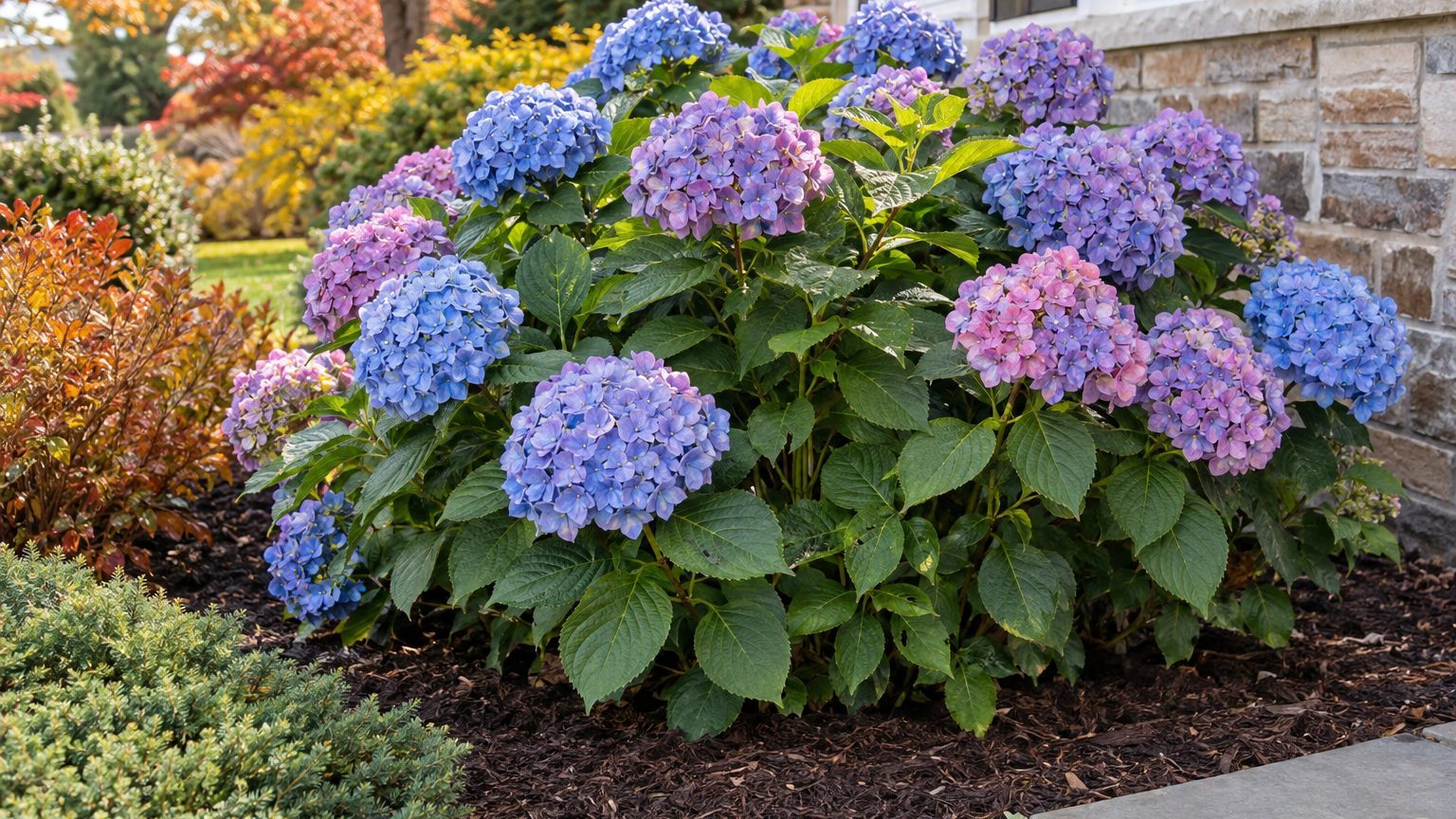
Plant hydrangeas in Salt Lake City in April, May, August, or September, working around the last spring frost window of April 12 to April 29 and the first fall frost of October 18 to October 29. Prune bigleaf varieties in June or July, right after bloom finishes. Higher elevations and colder valleys push these dates later.
When to prune hydrangeas in Utah: The Short Answer
The gardening year in Salt Lake City moves in a fixed order, each task keyed to the spring and fall frost windows.
- January: hydrangeas are dormant here, and there is nothing to plant or prune. Use the quiet weeks to sketch where a shrub will get morning sun and afternoon shade.
- February: still dormant, and any snow cover is doing the mulch’s job for you. Order bare-root stock now if you want it ready for the April window.
- March: this is the first fertilize month, and NOAA NCEI 1991-2020 Climate Normals puts the last spring frost in Salt Lake City at April 12 to April 29, so a feed now gets roots moving before that date arrives. Skip planting, the ground is still too cold and frost risk is high.
- April: the plant window opens, but only push root balls into the ground once you are past the tail end of that frost range. Early April is still gamble territory here.
- May: the safer half of spring planting, since the frost window has closed by now, and it doubles as a fertilize month too. This is when most Wasatch Front yards get a new hydrangea in.
- June: bigleaf pruning starts as soon as the last blooms fade, since these shrubs set next year’s buds on old wood. Cut too late and you remove next summer’s flowers.
- July: bigleaf pruning continues, paired with the third and final fertilize month. Water deeply, since this is the hottest stretch of the Utah summer.
- August: the second plant window opens, aimed at getting roots down before fall cold arrives. Afternoon shade matters more now than it did in spring.
- September: still a plant month, and the calmer one, with cooling nights and less transplant stress. Keep watering through this month regardless of what you planted when.
- October: the first fall frost lands between October 18 and October 29, so treat mid-month as the cutoff for anything beyond cleanup. Stop fertilizing well before this window opens.
- November: dormancy sets in, and a thick mulch layer over the root zone matters more than anything you do above ground. Do not prune now.
- December: fully dormant, roots protected under mulch and snow. This is a planning month, not a working one.
Two plant windows, two fertilize gaps, one prune stretch, that is the whole Salt Lake City calendar, and the shape barely changes as long as you keep it anchored to those frost dates.
Utah — the year and the numbers
- State
- Utah
- USDA zones
- 4a-9a
- Last spring frost
- April 12 to April 29
- First fall frost
- October 18 to October 29
- Annual rain
- 16 in
- Lawn zone
- transition-season
- Source
- NOAA NCEI 1991-2020 Climate Normals, 32F freeze probabilities · Salt Lake City
How to Work Out the Dates for Your Own Yard
The state windows above hold for Salt Lake City specifically, and getting your own yard’s version means working the same logic backward from your own frost dates.
- Pin down your frost window: NOAA NCEI 1991-2020 Climate Normals puts Salt Lake City’s last spring frost at April 12 to April 29 and its first fall frost at October 18 to October 29, and gardeners higher up the Wasatch Front or out on the western desert should expect later spring dates and earlier fall ones.
- Treat the plant window as a range, not a date: April through May and August through September give two shots at planting, so pick the earlier end only once you are confident the frost window has closed for the year.
- Hold fertilizer to the three named months: March, May, and July are the feed months here, spaced so nothing pushes tender new growth right before a frost date.
- Prune bigleaf only after bloom: June and July are the window because bigleaf hydrangeas set next year’s flower buds on this year’s wood, and pruning outside those two months costs you next summer’s blooms.
- Check your zone before you shop: the USDA Plant Hardiness Zone Map places Utah between zone 4a and zone 9a, so confirm where your address falls before buying a shrub rated for warmer ground than yours.
Run those five checks once and you have a planting calendar built for your actual yard, not just for the valley floor.
Utah North to South: How the Dates Shift
Salt Lake City’s dates are a valley-floor baseline, and the rest of Utah pulls away from them in both directions depending on elevation and desert exposure.
- Wasatch Front valleys (Salt Lake City, Ogden, Provo): the mildest ground in the state, closest to the frost windows named on the calendar above, and the safest bet for the earlier end of any plant month.
- Mountain valleys and high benches (Park City, Logan, higher parts of Cedar City): elevation adds cold, so push both plant windows later and expect the fall frost to land earlier than the valley floor sees it.
- Southwest Utah desert (St. George, Hurricane): the warmest corner of the state, with a longer frost-free stretch that lets an August or September planting settle in without rushing.
- West Desert and high plains (Tooele, Delta): thin air and exposed ground swing temperatures harder in both directions, so treat any date here as an estimate until you check a local station.
The USDA Plant Hardiness Zone Map spans Utah from zone 4a in the coldest mountain pockets to zone 9a near St. George, which is as wide a swing as most single states carry, so lean on your own state page for the range that matches your elevation.
Mistakes Utah Punishes
No flowers on a healthy shrub

Pruning bigleaf hydrangeas outside the June to July window is the top cause, since these shrubs set next year’s buds on this year’s wood almost immediately after bloom. Prune only in that stretch, and check the “which ones hold up here” page before assuming your variety needs pruning at all.
Leaves scorched on the sunny side
Utah’s dry air and intense afternoon sun pull water out of the leaf faster than roots in full western exposure can replace it. Plant on the east or north side of the house instead, and water deeply rather than often once August heat sets in.
Yellowing leaves despite regular feeding
Utah’s alkaline soil locks up iron long before it reaches the roots, so more fertilizer rarely fixes it and can push tender growth right before a frost date instead. Work sulfur or an iron chelate into the soil at planting, not after the yellowing shows.
Utah Extension Offices and County Contacts
The USDA Plant Hardiness Zone Map places Utah between zone 4a and zone 9a, but that number only sets the outer edge, and your county extension office fills in the rest for your actual address.
- Your state page: the frost dates and the pruning window where you live.
- Which ones hold up here: the hydrangea varieties rated for Utah’s range of zones, from safest to riskiest.
- What’s wrong with my hydrangea: the pests and problems specific to this state, in the order they show up.
For a county-level answer, Utah State University Extension is the named service for local advice, and its county offices are the next call before you plant.
Common questions
Can I plant hydrangeas in Utah in early spring?
Hold off until you are past the last spring frost window of April 12 to April 29 in the Salt Lake City area. May is the calmer, safer month for the same plant window if you want less risk.
How cold does it get for hydrangeas in Utah?
The state runs from USDA hardiness zone 4a in the coldest mountain valleys to zone 9a around St. George, a wide enough range that the same variety can thrive in one county and struggle in the next.
When should I prune hydrangeas in Utah without losing next year’s blooms?
Prune bigleaf varieties in June or July, right after the flowers fade and before next year’s buds start forming on the new wood.