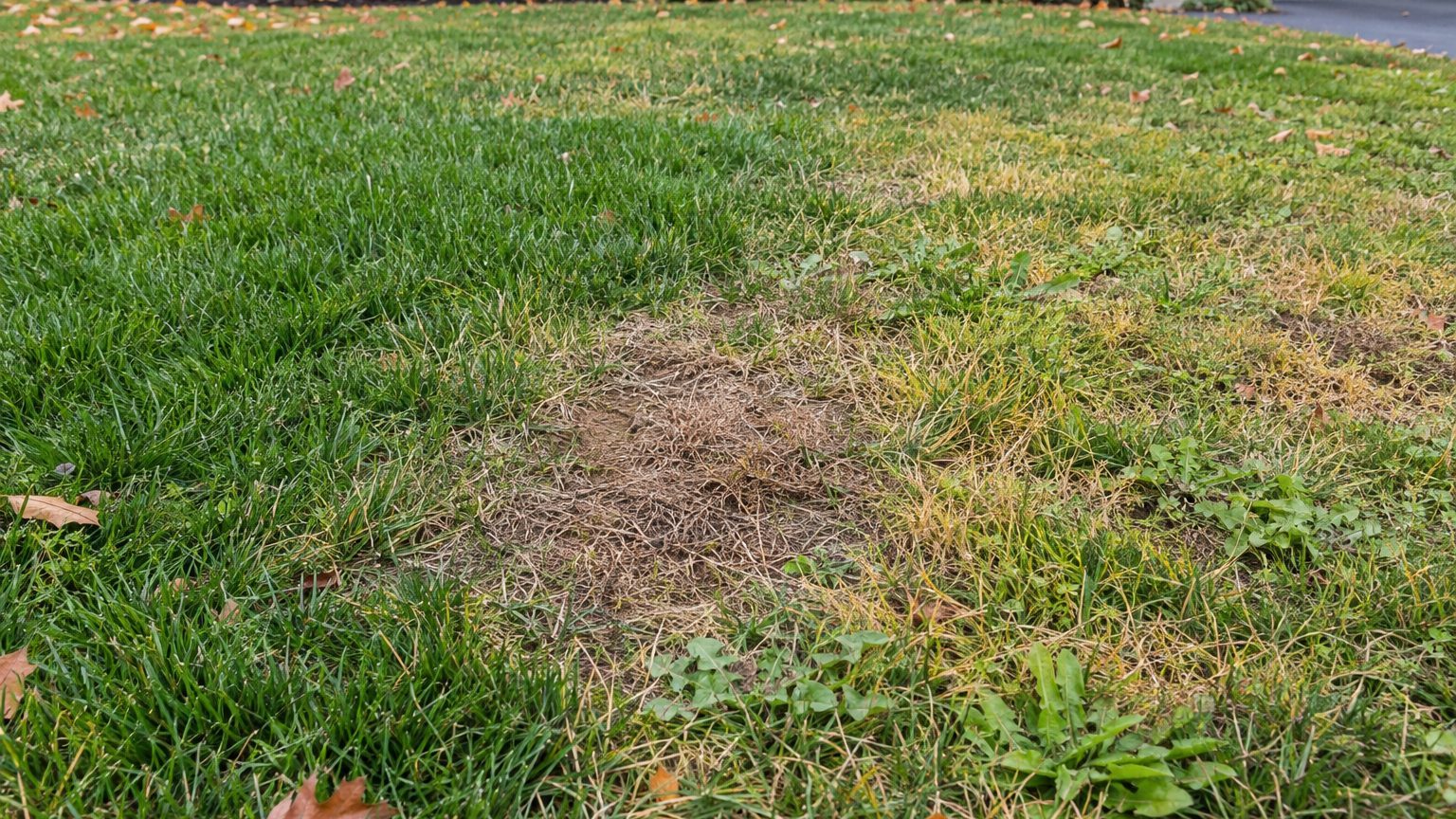
Bare spots, brown rings and weedy patches show up on Pennsylvania lawns as the seasons turn, and most trace back to a short list of causes: crabgrass, thatch, summer fungus and grubs, helped along by a few mowing, watering and feeding habits. Knowing which one you face decides whether the fix is a spring step or a late-summer one.
Lawn Pests and Diseases in Pennsylvania
Crabgrass

Crabgrass appears as coarse, light green clumps that spread flat across thin turf once the soil warms. It dies with the first frost but leaves bare gaps and seed behind. A preventer goes down in April, and it still works in March or May. Thick turf shades out the seedlings, so patch thin areas rather than just treating them.
Spongy Thatch Layer
Thatch is the tan mat of stems and roots between the green blades and the soil. When your fingers sink into it and water runs off the surface, it has built up. A layer up to 1/2 inch is healthy, but anything thicker should be dethatched or core aerated. Do either in August or September, or in April or May if the timing slipped.
Brown Patch in Midsummer
Brown patch is a fungus that thrives in warm, humid weather, especially on tall fescue and ryegrass. Look for roughly circular tan patches, sometimes with a darker, smoky edge in the early morning. Pennsylvania summers stay muggy, so airflow matters. Water early in the day so the blades dry quickly, and avoid heavy nitrogen in the hot months.
White Grubs
Grubs are fat, C-shaped beetle larvae that chew grass roots in late summer. The turf turns brown, feels loose underfoot, and often peels back like carpet, with creamy grubs sitting in the soil below. Raccoons, skunks and birds tearing up the lawn offer another clue. Healthy, deeply rooted grass can tolerate grub activity; if the turf is damaged, repair it with seed once the weather cools.
Pennsylvania — the year and the numbers
- State
- Pennsylvania
- USDA zones
- 5a-7b
- Last spring frost
- March 29 to April 6
- First fall frost
- November 5 to November 16
- Annual rain
- 44 in
- Lawn type
- cool-season
- Source
- NOAA NCEI U.S. Climate Normals 1991-2020, 32F freeze probabilities · Philadelphia
How to Tell Which Lawn Problem You Have
One clue rarely settles it. Pair what the patch looks like with when it appears and what happens when you tug it. A quick pull on the grass and a look at the soil underneath tell you more than any color.
Brown grass that stays rooted points toward fungus or drought. Brown grass that lifts away easily points toward roots that have been eaten.
| What you see | When and where | Best time to act |
|---|---|---|
| Coarse, light green clumps in thin turf | Summer, in sunny, sparse spots | April |
| Spongy turf and water that runs off | Any time, across the whole lawn | August, September |
| Thin, bare patches | Shady areas and worn traffic paths | August, September |
For brown patch and grubs, diagnosis depends more on the signs than on the season. Round tan patches in humid weather with grass that stays rooted suggest brown patch. Turf that peels back like a rug in late summer, with torn-up ground nearby, suggests grubs.
Where Lawn Problems Are Worst in Pennsylvania
Pennsylvania stretches from the Delaware River to Lake Erie, and the problems shift with the climate along the way.
- Philadelphia and the Southeast: Spring comes earliest here, with the last frost typically between March 29 and April 6. Crabgrass germinates sooner, and warm humid summers favor brown patch.
- The Northern Tier: Spring arrives later and the growing season is shorter. Snow can sit on the lawn for a long time, so expect more winter damage and slower recovery than in the Southeast.
- The Allegheny Mountains: Higher ground stays cooler, so grass has less time to grow in spring and fall. Late seeding is risky because seedlings can be caught by cold before they root.
- The Erie Lakeshore: Lake-effect snow blankets lawns for long stretches, and the cool, damp conditions that follow can leave turf slow to green up.
Because of these differences, spring tasks start later in the northern tier and the Alleghenies than in Philadelphia.
Lawn Care Mistakes That Invite Problems in Pennsylvania
Cutting the Grass Too Short
Scalped turf lets sunlight reach the soil, which encourages crabgrass and stresses the roots. Mow high, and take off only a small portion of the blade at a time. Mowing is on the schedule from April through November, so keep the mower blade sharp for a clean cut.
Watering Lightly and Late
Short sprinkles keep roots shallow and leave the blades wet overnight, which invites brown patch. Water deeply and less often, in the early morning, when summer heat peaks from June to August. Skip it when rain has done the job.
Feeding at the Wrong Time
Pennsylvania law (Act 83 of 2022) bans lawn fertilizer from December 15 to March 1, on ground frozen 2 inches deep, or on snow-covered ground. Within the legal window, the best feedings come in May and September. If you miss one, April or November still works. Heavy summer nitrogen fuels fungus rather than roots.
Where to Get Lawn Advice in Pennsylvania
Local help matches advice to your grass, soil and county, which saves guesswork when a patch looks unfamiliar.
- Penn State Extension publishes lawn guides covering identification, seeding and fertilizing that are written for Pennsylvania conditions.
- Your county extension office can answer questions about a specific patch, and a soil test through them is a good first step before spring feeding.
Common Questions
When Should You Seed a Lawn in Pennsylvania?
August and September give new grass warm soil and cooling air, so seedlings root before winter. If that window passes, April and May also work, though summer heat then arrives sooner.
When Should You Lay Sod in Pennsylvania?
August and September are the preferred months. April, May and October also work, as long as you keep the new sod evenly moist until it knits to the soil.
How Late in the Year Should You Keep Mowing?
Keep mowing into November while the grass is still growing. Mowing is on the schedule from April through that month, so stop when growth slows rather than by the calendar.