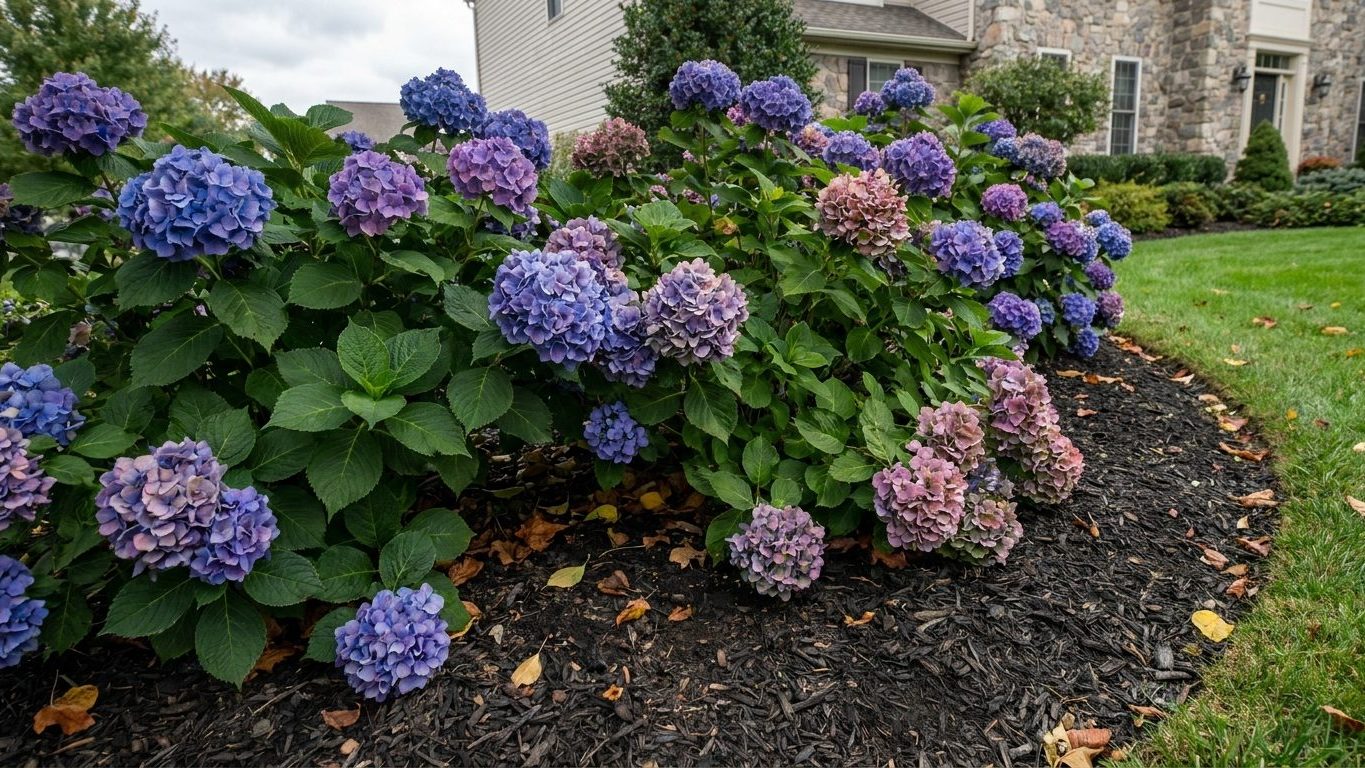
Hydrangeas in Pennsylvania run into more fungus than insects most years. Cool, wet springs around Philadelphia set up Botrytis blight and leaf spot before summer humidity brings on powdery mildew. Aphids show up on soft new growth, four-lined plant bugs leave neat round scars in early summer, and black vine weevil larvae work the roots of older shrubs planted in heavy clay.
Hydrangea pests and diseases Pennsylvania: The Short Answer
NOAA NCEI U.S. Climate Normals puts the last spring frost in Philadelphia at March 29 to April 6, and that soft new growth right after is what aphids and Botrytis blight go for first. By the time the bigleaf pruning window arrives in June and July, the season has usually already picked its main problem for the yard.
Aphids on new growth
Small green or black insects cluster on tender tips right after the frost window closes, curling leaves and leaving sticky honeydew behind. A strong water spray or insecticidal soap knocks them down before ants and sooty mold move in.
Botrytis blight on flower buds
Gray, fuzzy mold shows up on damaged petals and stems during cool, damp stretches in spring. It spreads fastest where old flower heads sit wet against foliage, so I strip spent blooms and space plants for airflow.
Four-lined plant bug damage
Round, sunken brown spots appear on leaves in late spring as nymphs feed with piercing mouthparts. The damage looks worse than it is, and by midsummer the bugs are gone on their own, so I skip spraying for this one.
Cercospora leaf spot
Purple-edged tan spots start on lower leaves during humid midsummer stretches and climb the plant if foliage stays wet overnight. Removing and bagging fallen leaves each fall keeps the fungus from wintering over in the bed.
Powdery mildew in shade

A white, powdery film coats leaves in shadier corners once summer humidity settles in, usually without much real damage to the shrub. Better spacing and morning sun on the foliage clear it up faster than any spray.
Black vine weevil

Adults notch leaf edges at night in summer, but the real damage is grubs chewing roots through fall and winter in heavy, wet clay. Shrubs that wilt despite moist soil are worth digging near the crown to check.
Pennsylvania — the year and the numbers
- State
- Pennsylvania
- USDA zones
- 5a-7b
- Last spring frost
- March 29 to April 6
- First fall frost
- November 5 to November 16
- Annual rain
- 44 in
- Lawn zone
- transition-season
- Source
- NOAA NCEI U.S. Climate Normals 1991-2020, 32F freeze probabilities · Philadelphia
How to Work Out the Dates for Your Own Yard
Working out which problem you actually have starts with the calendar, not a leaf sample.
- Mark the last frost window: NOAA NCEI U.S. Climate Normals puts Philadelphia’s last spring frost at March 29 to April 6, so anything on new growth past that date points to aphids or Botrytis rather than winter injury.
- Watch the four to six weeks after that: four-lined plant bug spotting and early Botrytis both show up in this stretch, so a piercing round hole says insect and a fuzzy gray patch says fungus.
- Check leaves again at the July fertilize round: Cercospora leaf spot and powdery mildew both build through the humid middle of summer, and by the July feeding they are usually visible on the lower third of the plant.
- Dig near the crown before the fall frost window: if a shrub wilts in moist soil sometime before November 5 to November 16, pull back the mulch and look for black vine weevil grubs rather than assuming drought stress.
- Bag and remove fallen leaves at cleanup: this single step breaks the cycle for both leaf spot and Botrytis going into next spring.
None of this replaces an actual look at the plant, but matching the symptom to the point in the calendar rules out most of the guesswork before you spray anything.
Pennsylvania North to South: How the Dates Shift
Pennsylvania stretches from a mild river city to a snowy plateau, and the pest and disease calendar shifts with it.
- The Southeast Corridor (Philadelphia, Bucks, Chester counties): the mildest ground in the state, so aphids and Botrytis start earliest here and powdery mildew often runs into a longer, muggier stretch through August.
- The Piedmont and Lehigh Valley (Lancaster, Berks, Lehigh counties): a week or two behind the southeast, with the same fungal pressure but a shorter window before the fall frost sets in.
- The Allegheny Plateau and Northern Tier (Erie’s inland counties, Potter, Tioga, Bradford): spring arrives two to four weeks later here, which pushes aphid and Botrytis activity back and shortens the whole disease season, though winter injury opens more wounds for black vine weevil.
- The Lake Erie Shore (Erie County lakefront): lake humidity keeps leaves wet longer into fall, stretching the Cercospora and powdery mildew window past what the rest of the state sees.
Whichever corner of the state you garden in, the state guide’s frost window is the number to adjust from, not the one to use as written.
Mistakes Pennsylvania Punishes
Watering the leaves at dusk
Overhead watering late in the day leaves foliage wet all night through Pennsylvania’s humid summers, which is exactly what Botrytis blight and Cercospora leaf spot need to spread. Water the soil in the morning instead so leaves dry by afternoon, and save any spray for open blooms only when spotting shows up.
Pruning bigleaf hydrangea outside June and July
Cutting stems in spring or fall removes the flower buds bigleaf hydrangea already set for next year and leaves fresh wounds open right when fungal spores are most active in the yard. Stick to the June and July window instead, and the shrub heals faster with fewer entry points for disease.
Piling mulch against the crown
Thick, wet mulch stacked against the base holds moisture right where black vine weevil grubs and root rot both thrive best through a Pennsylvania winter. Pull mulch a few inches back from the stems and let the crown stay dry between waterings during the growing season.
Pennsylvania Extension Offices and County Contacts
Pennsylvania’s hardiness range runs 5a to 7b on the USDA Plant Hardiness Zone Map, and that gap alone is why a county agent’s read on your yard beats any statewide number.
- Your state page: the frost dates and the pruning window for wherever you live in Pennsylvania.
- Which ones hold up here: the hydrangea varieties bred to handle this zone range without much fuss.
- Penn State Extension: county offices that can confirm a pest or disease from a photo or a sample.
Common questions
What is the most common hydrangea disease in Pennsylvania?
Cercospora leaf spot and powdery mildew show up most often, both tied to the humid stretch of summer rather than anything in the soil. Neither one usually kills an established shrub, but both spread faster where foliage stays wet overnight.
Do I need to spray my hydrangeas for pests every year?
Most Pennsylvania yards get by without a regular spray schedule. Aphids and four-lined plant bug damage usually clear up on their own by midsummer, and a strong water spray handles the rest.
Can black vine weevil kill a hydrangea?
A heavy grub infestation can girdle roots enough to wilt or kill an older shrub, especially one already stressed by wet clay. Digging near the crown when a plant wilts despite moist soil catches it before the damage goes that far.