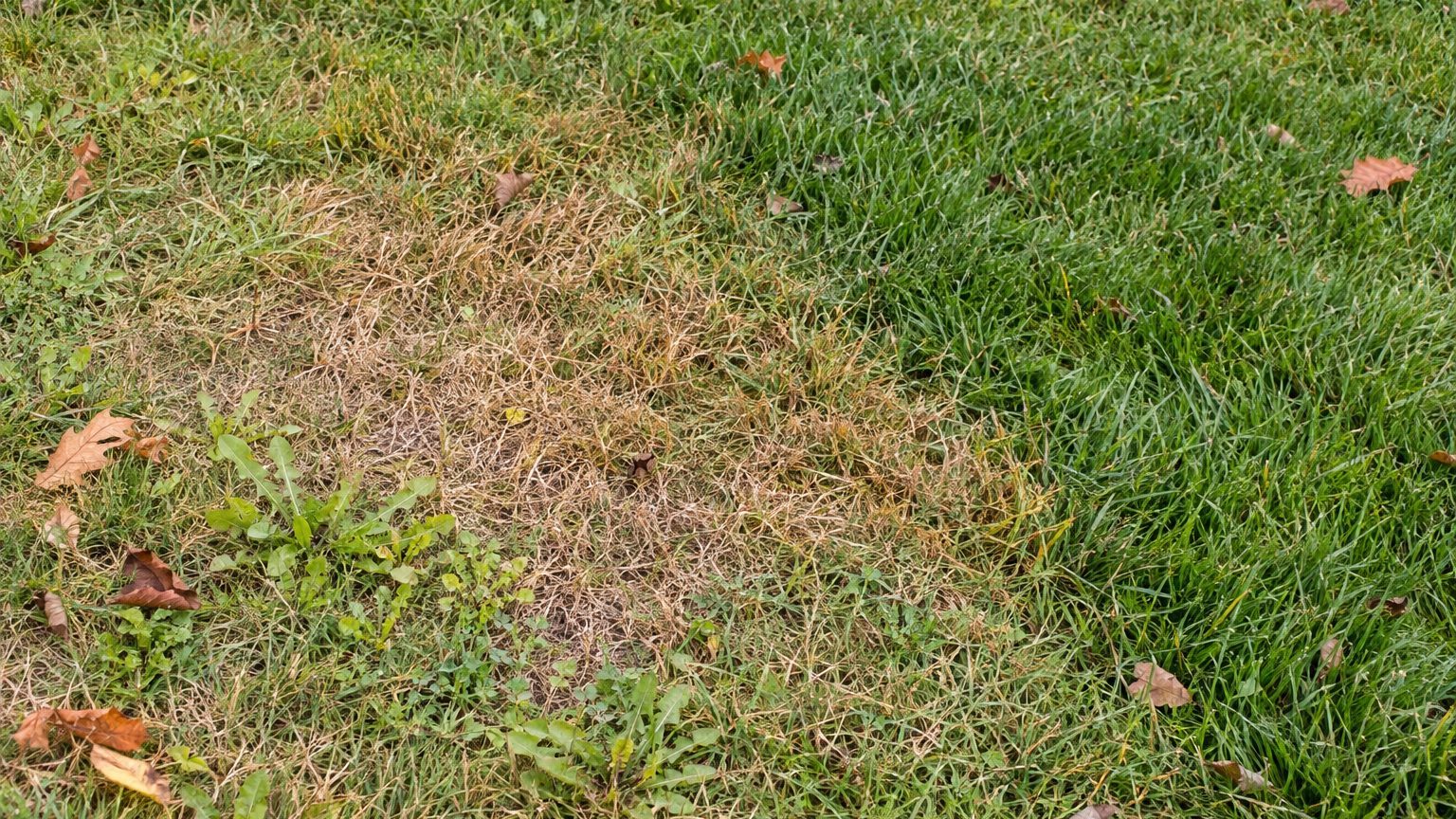
Thin spots, tan circles and a carpet of crabgrass show up in North Carolina lawns in a fairly predictable order through the year. Heat, humidity and a long growing season feed weeds and fungus, while your grass type helps shape the problems you are likely to see. Knowing the sequence lets you act before the damage spreads.
Lawn Pests and Diseases in North Carolina
Crabgrass in Spring

Crabgrass is a coarse, light green weed that sprawls outward and fills thin patches of turf. It sprouts as the soil warms, so a preventer needs to be down before the seeds germinate.
Apply a preventer in March. If March slips by, it also works in April, and February or May can still help in a pinch. Once crabgrass is up, keeping the lawn dense helps reduce future outbreaks.
Brown Patch in Summer
Brown patch is a fungus that strikes tall fescue in hot, sticky weather. Look for roughly circular tan or brown areas, sometimes with a darker ring at the edge, that appear after warm nights and humid days.
Water in the morning so blades dry quickly, and skip heavy nitrogen in summer. Fescue usually recovers from the roots once the weather cools, so patience matters more than panic.
White Grubs in Late Summer
Grubs are fat, C-shaped, creamy larvae that chew grass roots. Turf above them turns dull, then brown, and you can often roll it back like a loose carpet because nothing anchors it.
Peel back a section of damaged sod and look at the roots. If you find grubs among damaged roots, confirm the diagnosis before treating. Digging by birds, skunks or armadillos can also be a clue.
Large Patch in Fall
Large patch is a fungus of warm-season grasses such as zoysia, bermuda and centipede. Patches can spread widely, often with an orange or yellow-brown edge, and they appear when fall turns cool and damp.
Poor drainage and too much late-season fertilizer feed it. Improve water flow, avoid extra feeding as the grass slows down, and keep clippings and leaves from piling up in the damp spots.
North Carolina — the year and the numbers
- State
- North Carolina
- USDA zones
- 5b-8b
- Last spring frost
- March 23 to April 5
- First fall frost
- October 30 to November 8
- Annual rain
- 44 in
- Lawn type
- cool- and warm-season
- Source
- NOAA NCEI U.S. Climate Normals 1991-2020, 32F freeze probabilities · Charlotte
How to Tell Which Lawn Problem You Have
A symptom rarely settles the question. Pair what you see with when it appeared and whether the spot gets sun or shade, then run a simple test: tug the grass and look at the roots.
Shape also helps. Circles can suggest fungus, patches that lift easily can suggest root-feeding insects, and clumps of coarse blades can suggest weeds.
| What you see | When and where | Likely cause |
|---|---|---|
| Coarse, sprawling light green clumps | Warm months, thin or bare sunny spots | Crabgrass |
| Tan circles, grass still rooted | Hot, humid stretches, tall fescue | Brown patch |
| Turf peels up like a rug | Late summer, often in irrigated sun | White grubs |
| Wide patches with an orange edge | Cool, wet fall, zoysia or bermuda | Large patch |
A spongy feel underfoot points to thatch instead. Up to 1/2 inch of thatch is healthy, and anything thicker calls for dethatching or core aeration. Dry, bluish-gray grass that stays footprinted after you walk across it usually means thirst, not disease.
Where Lawn Problems Are Worst in North Carolina
Conditions change a lot between the mountains and the beach, and so do the problems and the grass that makes sense.
- Blue Ridge and the Asheville area: Spring comes later and summers stay milder, which suits tall fescue and eases fungus pressure. Shade and slopes bring their own thin turf and moss.
- Piedmont, including Charlotte, Greensboro and Raleigh: Hot, humid summers push tall fescue into brown patch, while clay soil holds water and compacts. Fescue can struggle in this region.
- Coastal Plain and the coast, from Wilmington to the Outer Banks: Warm-season grasses dominate, spring starts earlier, and sandy soil dries fast. Large patch, grubs and weeds all get a longer run.
The pattern still depends on the grass, site and weather in your yard.
Lawn Care Mistakes That Invite Problems in North Carolina
Mowing Too Short
Scalped grass has little leaf to feed its roots, and bare soil gives crabgrass and other weeds an open door. Tall fescue is especially stressed in summer heat when cut low.
Raise the mower deck, mow with a sharp blade, and avoid removing too much leaf at once. Mowing runs from March through November for fescue, and April through October for bermuda and zoysia.
Watering Lightly and Often
Short, frequent sprinkles keep the surface wet, which fungus loves, and they keep roots shallow. Grass then wilts quickly in a dry spell.
Water deeply and early in the morning instead, mainly in June, July and August when demand peaks. Let the top of the soil dry between sessions, and skip watering after a good rain.
Feeding at the Wrong Time
Nitrogen in a heat wave feeds brown patch on tall fescue and pushes weak growth. Late feeding on warm-season turf encourages large patch.
Feed tall fescue in March, September and October, never in summer. Bermuda and zoysia eat best in May, June and July, when they are growing hard and can use it.
Where to Get Lawn Advice in North Carolina
Local advice matters because soil and weather differ from county to county. NC State Extension publishes research-based lawn guidance, and your county center can answer questions about your own yard.
- Browse the extension site for lawn care guides on your grass type, and check them before you buy any treatment.
- Call or visit your county extension center when patches spread, and bring a small sample of affected turf with the roots attached.
- Ask about a soil test before you feed or lime, so the next step is based on what your ground needs.
Common Questions
When Should You Aerate and Overseed a Lawn in North Carolina?
For tall fescue, aerate and overseed in August. If you miss that window, September still works. Seed needs soil contact, so the holes from core aeration give it a place to root before cold weather.
Can You Seed Bermuda or Zoysia in the Fall?
Warm-season grasses seed best in May, and June still works. Sod is another route, laid in May, with June and July as later options. Fall is too late for them to establish well.
When Should You Dethatch a Warm-Season Lawn in North Carolina?
Dethatch bermuda and zoysia in May or June, when they are growing strongly and recover fast. April also works. Tall fescue is dethatched later, in August or September, as the weather cools.