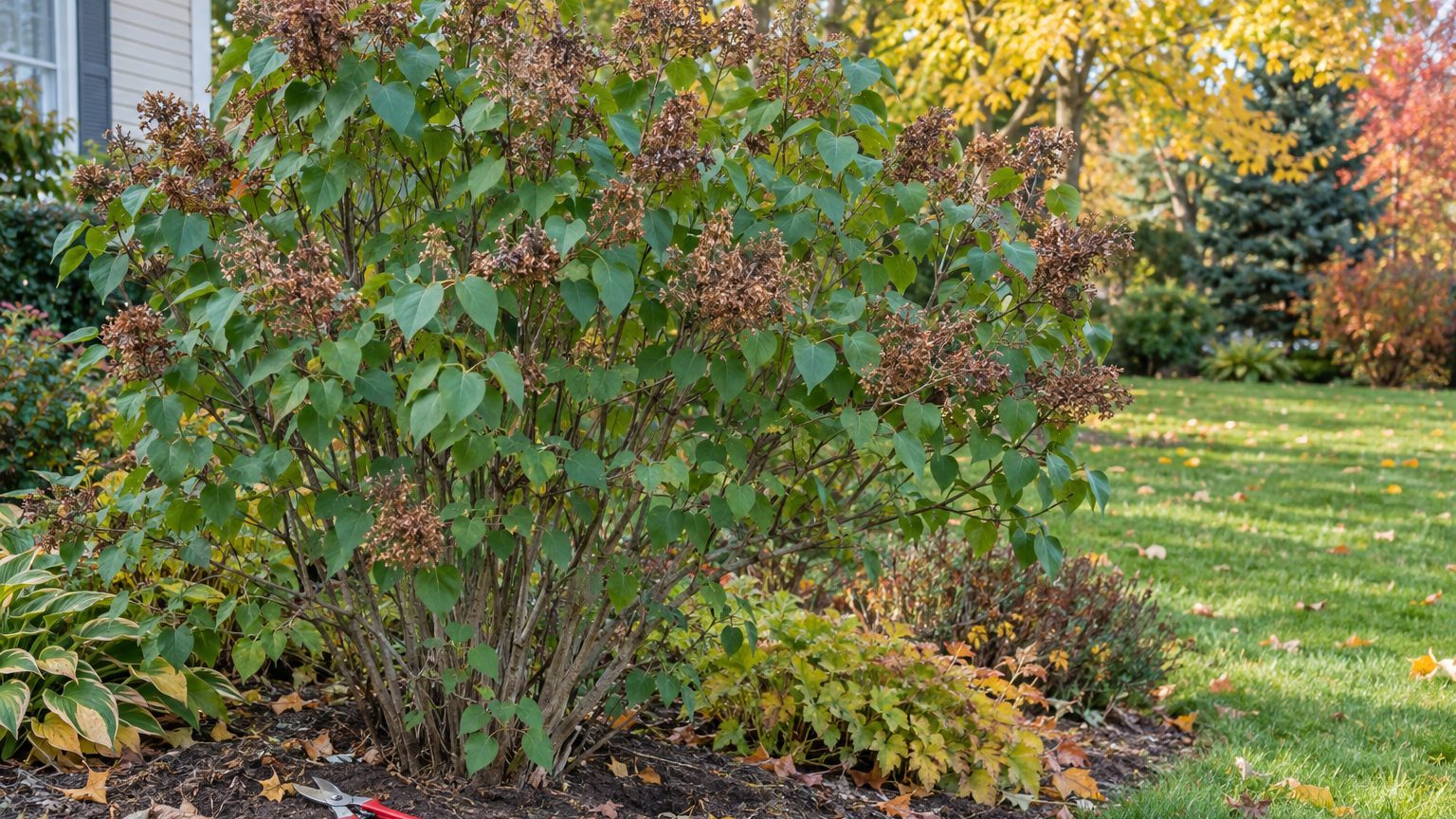
A lilac that blooms heavily in spring has usually been left alone in fall and winter. In North Carolina, the pruning shears belong in the shrub only once the last purple or white clusters turn brown. That short window after flowering decides how many blooms you get the following spring.
When to Prune Lilacs in North Carolina

Prune lilacs in North Carolina right after the flowers fade, which means May and June. The job can also be done in July, though not after July 10. A lilac sets next year’s flower buds in summer, soon after it blooms, so delaying the job cuts into next spring’s show.
| Type of pruning | When in North Carolina | Why |
|---|---|---|
| Maintenance pruning (spent flowers, crossing or weak stems) | Right after the flowers fade, in May and June | Next year’s buds have not formed yet, so nothing is lost |
| Late catch-up pruning | July, and not after July 10 | Buds are forming, and a later cut removes them |
| Cutting in late summer, fall or winter | Leave it alone | The shrub blooms on last year’s wood, so these cuts remove the coming spring’s flowers |
Old, overgrown shrubs benefit from gradual thinning rather than a drastic cut. Reblooming lilacs such as the Bloomerang group also need a period of cold weather to bloom well, so winter chill matters for them as much as the timing of your pruning.
North Carolina — the year and the numbers
- State
- North Carolina
- USDA zones
- 5b-8b
- Last spring frost
- March 23 to April 5
- First fall frost
- October 30 to November 8
- Annual rain
- 44 in
- Lawn zone
- transition-season
- Source
- NOAA NCEI U.S. Climate Normals 1991-2020, 32F freeze probabilities · Charlotte
How to Tell When Your Lilacs Are Ready to Prune
Your lilac tells you when to start, and the shrub’s own signals matter more than a date on the calendar.
- The flower clusters have turned brown and papery, which means bloom is over and the shrub is ready for the shears.
- Petals are dropping and few fresh blossoms remain, a sign that the shrub is already moving its energy toward next year’s buds.
- Fresh green growth is pushing out below the spent clusters, so you can clip just above it without harming the new shoots.
- Bloom has ended in your yard, and that is your cue to get out there soon, because the next buds start forming shortly afterward.
- Stems are crossing, rubbing or growing weakly in the center, and these are the ones to remove first while the shrub’s shape is still easy to read.
If you miss the signs and July 10 passes, leave the shrub alone until it has flowered again.
Should You Prune Lilacs in Fall or Winter in North Carolina?
No. A cut made in fall or winter takes off the buds that are waiting to open in spring, because they were set the summer before. The shrub will not die from it, but you will see leaves and few or no flowers that year.
That includes a late-winter reshaping cut, which feels logical when the branches are bare and easy to see. The structure is clear then, but the flower buds are sitting on those same stems, so a hard cut costs you that spring’s blooms. If a shrub needs a major reshaping, it is better to wait until the flowers fade and do the work then.
How Lilac Pruning Time Shifts Across North Carolina
The calendar follows the bloom, and bloom arrives at different times across the state. Lilacs also need a cold winter rest to mature their flower buds, and they struggle in hot, humid summers, so your location affects pruning time and flowering success.
- Blue Ridge mountains: Spring comes later here, so the flowers fade later and pruning follows. The colder winters also suit lilacs better, which makes this region friendlier to them than the rest of the state.
- Piedmont, around Charlotte: Bloom ends within the usual May and June window. Summer heat and humidity are harder on the shrubs, and powdery mildew can follow.
- Coastal plain: Spring arrives earlier, so lilacs finish blooming earlier than in the mountains. Mild winters give them less of the cold rest they need, so flowering can be thin.
Whatever your region, watch the flowers rather than the date, and finish before July 10.
Where to Get Lilac Advice in North Carolina
Local conditions vary a great deal from the mountains to the coast, and local experts can say which lilacs perform in your area.
- The NC State Extension site offers plant pages and pruning guidance, and it is worth a visit before you buy a shrub or when a lilac stops flowering.
- Your county extension center can answer questions about your own soil and shrubs, and spring is a good time to call, while the lilac is in bloom and the problem is still visible.
Common Questions
When Do Lilacs Bloom in North Carolina?
Lilacs bloom in April and May. Pruning follows right after, so the shears come out as soon as the flowers fade.
Which Lilacs Suit North Carolina Gardens?
Lilacs do best where winters are cold, and even the low-chill cultivars perform best with an extended, cold winter rest. In this state, common lilacs often struggle in the heat and humidity, and powdery mildew can follow. Those conditions are a fair guide for the warmer parts of North Carolina.
Do Reblooming Lilacs Need Different Pruning?
Prune reblooming lilacs in spring. Like nearly all lilacs, the Bloomerang group needs a period of cold weather to bloom well, so a mild winter can matter more than any pruning choice.