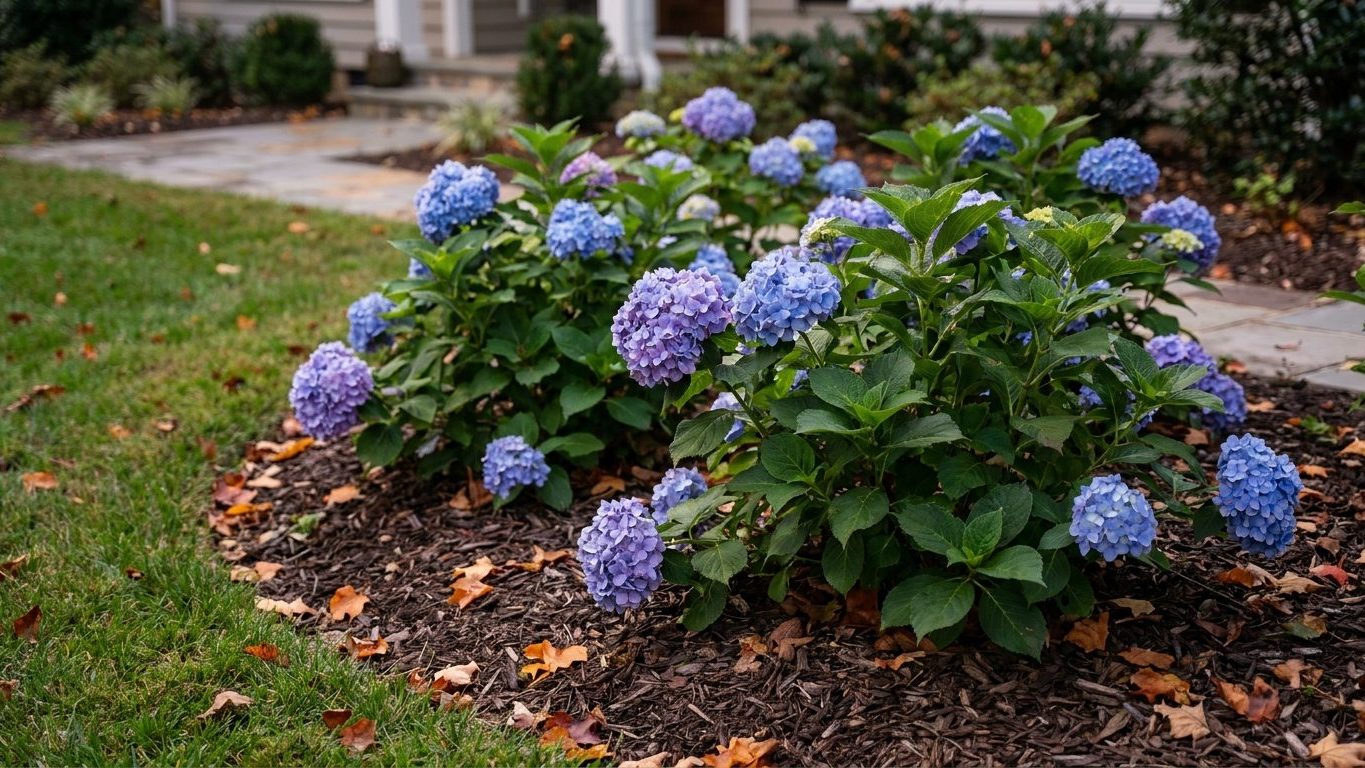
Charlotte’s mix of USDA zone 7b winters and humid Piedmont summers means the real threats to hydrangeas here are fungal more than freezing. Leaf spot, powdery mildew, and root rot in slow-draining clay cause more damage most years than any insect or hard frost, with aphids, mites, scale, and deer rounding out the list.
Hydrangea pests and diseases North Carolina: The Short Answer
Aphids on new growth
Soft green clusters crowd stem tips as growth resumes after the last frost, which NOAA NCEI U.S. Climate Normals 1991-2020 place between March 23 and April 5 for Charlotte. They leave curled leaves and sticky honeydew. A hard spray from the hose most mornings knocks them off before ladybugs finish the job.
Botrytis blight on flower buds
Cool, wet stretches before bloom turn unopened buds brown and mushy, especially on bigleaf types kept shaded and damp. The tissue grays over on humid mornings. Cut spent blooms and open the canopy for airflow, since a wet Piedmont spring gives this fungus every advantage it needs.
Cercospora leaf spot
Small purple-brown spots ring lower leaves by midsummer and spread upward, eventually causing early leaf drop on stressed shrubs. Splashing water from overhead irrigation carries the spores. Water at the base instead, clear fallen leaves weekly, and expect this to return most humid Piedmont summers.
Powdery mildew
A white, flour-like film coats leaf tops during the muggy stretch that follows the July fertilizing round. It rarely kills the plant but stunts new growth. Space shrubs for airflow and treat early, before it reaches the buds forming next year’s blooms.
Spider mites

Fine stippling and a dusty bronze cast show up on leaves during the driest, hottest weeks of late summer, often with faint webbing underneath. Hot, dry air favors them over rain. A strong hose rinse every few days breaks the webs and buys the shrub time until cooler nights return.
Scale insects

Small brown bumps cling to stems near the base by late summer, leaving sticky residue and yellowing nearby leaves. They go unnoticed until a branch dies back. Scrape off light infestations by hand and prune out crusted stems during the June or July pruning window.
Deer browsing
Stripped leaves and snapped stems appear overnight, most often through fall and into winter when other browse is scarce. Bigleaf varieties get hit hardest since deer favor tender new wood. Fencing or repellent applied before October 30 to November 8, the first fall frost window, protects the shrub through the season.
North Carolina — the year and the numbers
- State
- North Carolina
- USDA zones
- 5b-8b
- Last spring frost
- March 23 to April 5
- First fall frost
- October 30 to November 8
- Annual rain
- 44 in
- Lawn zone
- transition-season
- Source
- NOAA NCEI U.S. Climate Normals 1991-2020, 32F freeze probabilities · Charlotte
How to Work Out the Dates for Your Own Yard
Working out your own scouting calendar starts with the same frost window used for planting, then adjusts for what each problem actually needs to get going.
- Mark your last frost window: NOAA NCEI U.S. Climate Normals 1991-2020 puts Charlotte’s last spring frost between March 23 and April 5, and the flush of growth right after that is when aphids and botrytis first show up.
- Check leaves weekly through June and July: this is also the state’s bigleaf pruning window, so pest and disease scouting rides along with the same trip to the shrub.
- Watch humidity, not the calendar, for mildew: powdery mildew tracks muggy stretches more than a fixed date, so a run of sticky mornings after the July fertilizing matters more than the month itself.
- Test soil drainage before blaming an insect: yellowing that looks like pest damage in slow-draining clay is often root rot instead, and a shovel test after rain tells the difference faster than any spray.
- Set a fall deadline around first frost: the same data places that between October 30 and November 8 for Charlotte, and fencing or repellent needs to be up before then, not after.
None of this replaces a look at the actual leaf or stem in front of you, but starting from the frost window keeps the guesswork to a single week instead of a whole season.
North Carolina North to South: How the Dates Shift
Charlotte’s Piedmont numbers are the starting point, but North Carolina runs from sea level to over a mile high, and that spread changes when problems show up as much as which ones matter most.
- The Blue Ridge and western mountains (Asheville, Boone, the High Country): frost lingers several weeks longer into spring, which pushes aphid and botrytis season later and shortens the humid stretch that favors powdery mildew.
- The coastal plain (Wilmington, New Bern, the Outer Banks): frost arrives later in fall and leaves earlier in spring, so the growing season runs longer and leaf spot has more weeks to spread each year.
- The Piedmont around Charlotte and the Triangle (Charlotte, Raleigh, Greensboro) sits between the two extremes above.
Whichever part of the state applies, the state guide adjusts these reference dates for elevation and distance from the coast before the same problems land on your calendar.
Mistakes North Carolina Punishes
Watering the leaves at night
Overhead watering in the evening leaves foliage wet through the humid Piedmont night, exactly what leaf spot and powdery mildew need to spread. Switch to a soaker hose in the morning instead, and check the state calendar page for when else the shrub needs water this season.
Pruning bigleaf hydrangeas in fall
Cutting bigleaf types outside the state’s June or July window removes next year’s flower buds along with the wood, since they bloom on the previous season’s growth. Prune only in that window, right after bloom fades, and confirm the timing on the calendar page before reaching for shears.
Planting in heavy clay without amending it
Clay that holds water around the roots invites root rot faster than any insect on this list, especially through wet stretches between the March and April planting windows. Work compost into the bed first, then check which varieties tolerate wet feet on the state’s which-ones-thrive guide.
North Carolina Extension Offices and County Contacts
Charlotte’s numbers are a starting point, and NC State Extension confirms what’s actually showing up on a given shrub before anyone reaches for a sprayer.
- Your state page: the frost dates and zone range for wherever you live in North Carolina.
- Which ones hold up here: the varieties worth planting given this state’s winters and summers.
- NC State Extension: county offices that confirm a diagnosis in person before you spray or prune.
Common Questions
What is the most common hydrangea disease in North Carolina?
Fungal leaf spot and powdery mildew show up most years in the Piedmont’s humid summers, more often than any single insect. Both spread through wet foliage, so morning watering at the base does more to prevent them than any single spray.
Do deer eat hydrangeas in North Carolina?
Yes, and bigleaf varieties draw the most damage since deer favor their tender new wood. Browsing peaks in fall and winter, right around the state’s October 30 to November 8 first frost window, when other food thins out.
When should I spray for powdery mildew on hydrangeas in NC?
Watch for the muggy stretch that follows the July fertilizing round rather than a fixed date. Treat at the first sign of the white film on leaf tops, since it spreads fast once humidity settles in for the season.