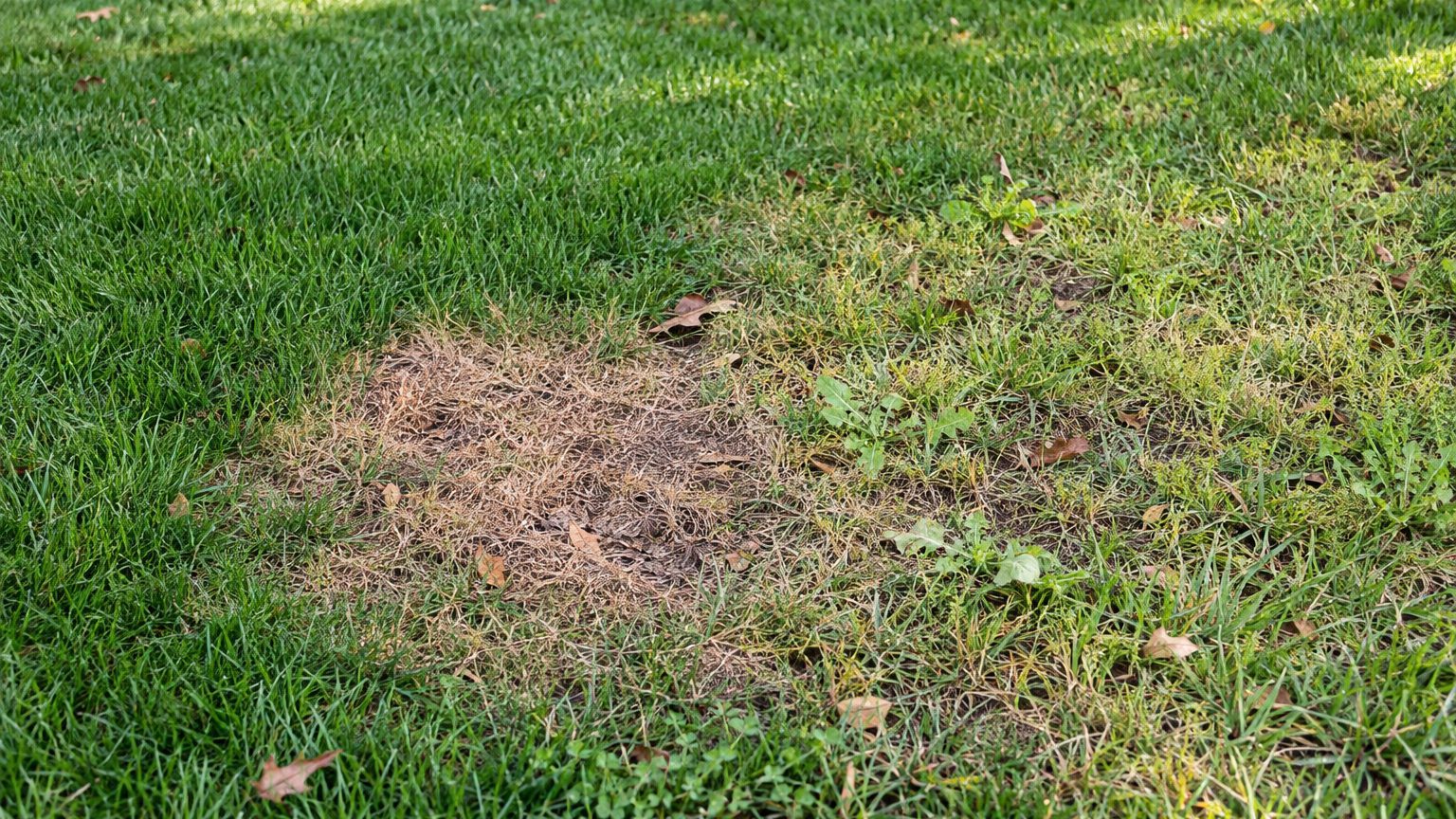
Straw-colored patches in a St. Augustine lawn, crabgrass along the driveway, a mat of turf that feels spongy underfoot: South Carolina lawns show trouble in familiar ways. Heat, humidity and warm-season grasses shape these problems, which become easier to handle once you know what you are looking at.
Lawn Pests and Diseases in South Carolina
Large Patch in Spring and Fall

Large patch is a fungus that shows up as roundish tan to orange rings when warm-season grass is greening up or slowing down. Wet, cool spells and heavy evening watering feed it.
Water early in the morning, cut back on nitrogen during those shoulder seasons, and let the turf dry between rains.
Crabgrass Taking Over Thin Turf
Crabgrass looks like coarse, light green grass fanning out flat from a center point, usually along pavement and in thin spots. It thrives in South Carolina’s warm soil.
A thick lawn is the lasting fix, because seedlings struggle without bare soil and sun. Pulling young plants before they set seed helps in small areas.
Chinch Bugs in Hot, Dry Sun
Chinch bugs are tiny insects that suck sap from St. Augustine grass, leaving yellowing patches that turn brown, usually in full sun beside hot driveways or sidewalks. Watering does not green them back up.
Part the grass at the edge of a patch and look at the soil surface for small dark bugs moving around. Confirm them before treating anything.
Grubs Under Loose Turf
White grubs are C-shaped, cream-colored larvae that chew grass roots in late summer. Affected turf feels loose and peels back like carpet, and skunks or birds may tear it up hunting for them.
Finding grubs does not automatically mean treatment is needed. Treat only after confirming that grubs are causing the damage.
Armyworms Chewing Overnight
Armyworm caterpillars can strip a lawn quickly in late summer, leaving ragged, scalped-looking patches. Birds feeding on the lawn at midday can be an early clue.
Look for caterpillars in the thatch at dusk. Bermudagrass and centipedegrass both get hit, and mature lawns usually recover once the caterpillars are gone.
Brown Patch Rings in Humid Heat
Brown patch rings in warm, muggy weather look like the large patch of cooler seasons, with thinning grass and sometimes a smoky edge at dawn. Warm, humid nights keep leaf blades wet and encourage disease.
Mow when the grass is dry, bag clippings from diseased spots, and skip late-day sprinklers.
South Carolina — the year and the numbers
- State
- South Carolina
- USDA zones
- 7a-9a
- Last spring frost
- February 28 to March 17
- First fall frost
- November 20 to December 5
- Annual rain
- 53 in
- Lawn type
- warm-season
- Source
- NOAA NCEI 1991-2020 Climate Normals, 32F freeze probabilities · Charleston
How to Tell Which Lawn Problem You Have
Do not diagnose a lawn problem from appearance alone. Pair what the patch looks like with where it sits and when it appeared, then try a simple test such as tugging the grass or parting the blades at the edge.
The shape of a patch and the sun it gets can narrow the possibilities.
| What you see | Where and when | Likely problem |
|---|---|---|
| Tan or orange rings, grass still rooted | Cool, wet stretches of spring and fall | Large patch |
| Yellow then brown patch, tiny dark bugs at the edge | Full sun, hot edges, summer | Chinch bugs |
| Turf lifts like carpet, roots chewed | Late summer, birds or skunks digging | White grubs |
| Ragged, scalped patches overnight | Late summer, caterpillars at dusk | Armyworms |
| Coarse light green clumps spreading flat | Thin turf by pavement, warm months | Crabgrass |
| Spongy feel, water beads on top | Anywhere, especially overfed lawns | Thatch buildup |
A thatch layer up to 1/2 inch thick is healthy, while anything thicker calls for dethatching or core aeration. Cut a small wedge of turf and measure the brown layer between green blades and soil.
Where Lawn Problems Are Worst in South Carolina
Problems shift across the state with temperature, soil and how long the warm season lasts.
- The Upstate around Greenville and Spartanburg: Cooler spring conditions can favor fungal rings, while shade under hardwoods can keep turf thin. Frost comes at both ends of the season sooner than on the coast.
- The Midlands around Columbia: Long, hot summers stress turf in full sun, so chinch bugs and drought-stressed patches show up here in heat waves. Poorly drained clay soil can hold disease-friendly moisture.
- The Lowcountry and coast around Charleston: Mild winters and humid air can extend pest and disease pressure, while sandy soil can dry out fast. Salt spray and irrigation with brackish water can add to the stress.
Wherever you live, local soil and shade help determine which lawn problems are likely.
Lawn Care Mistakes That Invite Problems in South Carolina
Mowing Too Short
Scalping warm-season grass exposes soil, which invites crabgrass and stresses roots in summer heat. Mowing runs from March through November here, so the habit repeats for most of the year.
Set the blade to the height recommended for your grass type and take off only a small portion of the leaf at a time. Keep blades sharp.
Watering Late and Often
Evening sprinkling leaves grass wet through the night, which suits large patch and brown patch. Shallow, frequent watering also keeps roots near the surface where heat dries them out.
Water deeply in the morning, mostly from May through September, and skip it after rain.
Feeding at the Wrong Time
Fertilizer pushed too early or too late feeds fungus and weeds more than grass. In South Carolina, feeding fits May through August, when warm-season turf is actively growing.
Wait until the lawn is fully green, then apply what a soil test recommends rather than extra.
Where to Get Lawn Advice in South Carolina
When a patch does not match any description here, local experts can identify it from a sample or photo. A soil test or diagnosis can help you avoid treating the wrong problem.
- The Clemson Cooperative Extension site has lawn fact sheets for each warm-season grass, and spring through early summer is a good time to read up before problems start.
- Your county extension office can take soil samples and look at turf or insect specimens, so go when you first see a patch spreading.
Common Questions
When Should You Lay Sod in South Carolina?
May is the target, and it also works in April, June or July. Sod laid early in that window has time to knit into the soil before the heat peaks.
Can You Seed St. Augustine Grass in South Carolina?
No, St. Augustine is established from sod or plugs because it has no seed. Seeding suits bermudagrass, centipedegrass and bahiagrass, best in May, and if you miss it, June still works.
When Should You Aerate or Dethatch a South Carolina Lawn?
Core aeration fits May, with June as a fallback. Dethatching works best in May or June, and April also works if the grass has started growing.