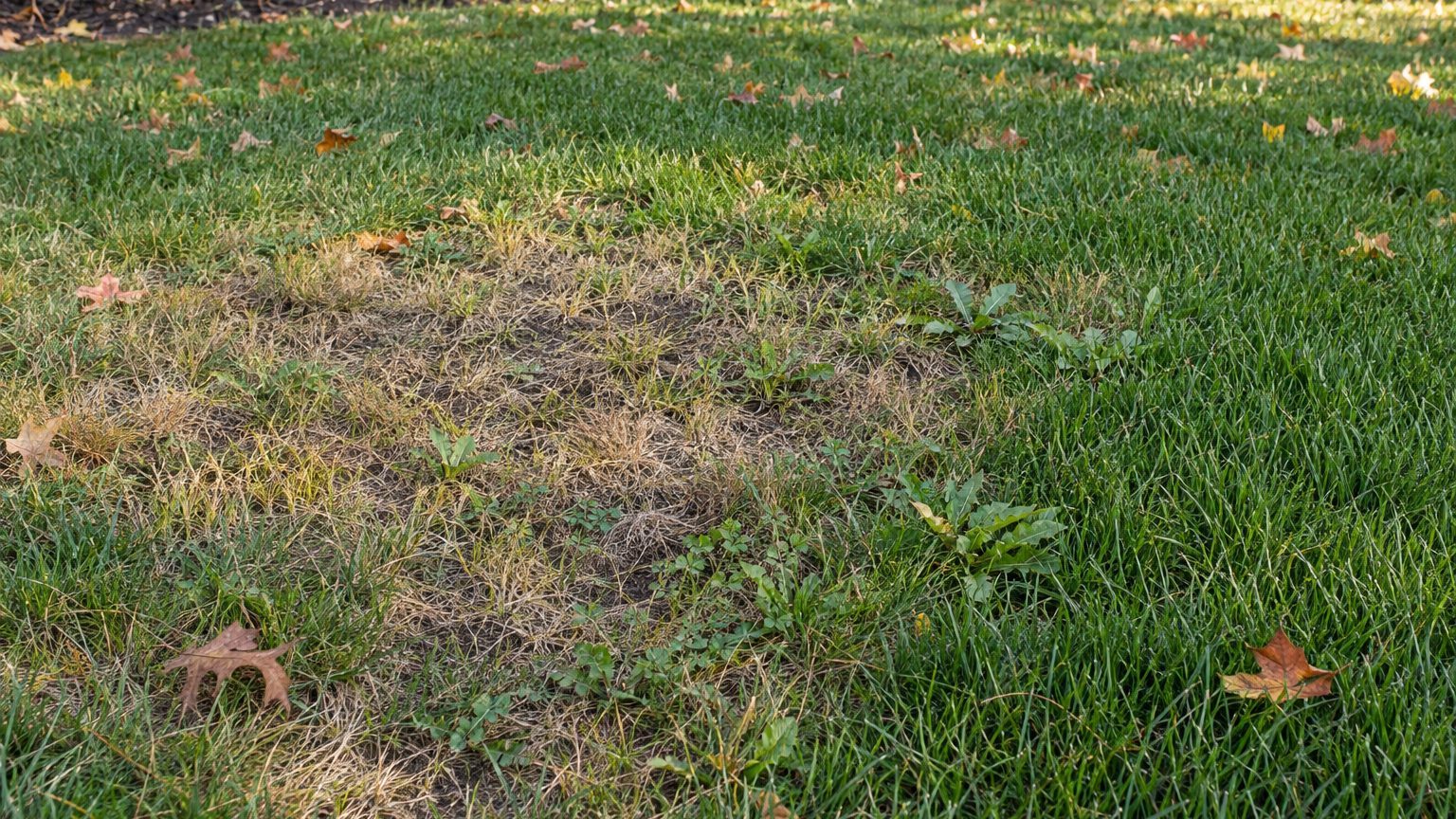
A lawn in New Jersey often shows trouble as thin, off-color patches when summer turns humid or as bare spots when weeds move in after a stressful stretch. The causes can look alike, so read the signs before you reach for anything.
Lawn Pests and Diseases in New Jersey
Crabgrass in Thin Turf

Crabgrass looks like pale green, sprawling clumps with flat stems that fan out along the ground, usually along driveways and in thin spots. It sprouts as the soil warms. Preventer goes down in April, and March or May also work.
Thatch Buildup
Pull back a plug of turf and look at the spongy brown layer between the green blades and the soil. A thatch layer up to 1/2 inch thick is healthy. Beyond that point, water and fertilizer can have trouble reaching the soil, so dethatch or core aerate in August or September (April and May also work).
Brown Patches in Humid Weather
Some fungal diseases show up as roundish tan or brown patches, often with a darker ring at the edge, when summer nights stay warm and the grass stays wet. New Jersey’s humid summers can encourage them. Water in the early morning, keep the blades from sitting wet overnight, and avoid heavy nitrogen in the heat.
White Grubs Feeding on Roots
Grubs are plump, C-shaped white larvae living just under the turf, and they chew roots so the grass lifts like loose carpet. Damage appears as spongy, wilting patches that do not green up with watering. Skunks and birds digging at the lawn are another clue. Peel back a damaged patch to confirm before treating anything.
Moss and Weeds in Shade
Under maples and oaks, grass thins out and moss or broadleaf weeds step in. Common contributors are low light and compacted or damp soil. Core aerate in August or September, and seed shady areas then, since young grass has a chance to root before winter. Fertilizing in September also helps thin turf recover.
New Jersey — the year and the numbers
- State
- New Jersey
- USDA zones
- 6a-7b
- Last spring frost
- March 29 to April 6
- First fall frost
- November 4 to November 16
- Annual rain
- 47 in
- Lawn type
- cool-season
- Source
- NOAA NCEI U.S. Climate Normals 1991-2020, 32F freeze probabilities · Newark
How to Tell Which Lawn Problem You Have
Symptoms can mislead in isolation, so pair what you see with where and when it appears. A tan patch could be disease, drought or grubs, and the tug test and the season can help narrow it down.
| What you see | Where and when | Likely problem |
|---|---|---|
| Wide, pale clumps with flat stems | Edges and thin spots, as the soil warms | Crabgrass |
| Round tan patches with a darker rim | Humid summer weather, wet blades | Fungal disease |
| Turf lifts like a rug, roots missing | Patches that stay brown despite watering | Grubs |
| Spongy feel, water beads and runs off | Anywhere, with a thick, spongy brown layer | Thatch |
| Thin grass, green carpet of moss | Under trees, damp and shaded | Shade stress |
Grass that pulls up easily with no roots points to grubs, while grass that stays firmly rooted in a brown patch points to disease or dry soil. Sun and shade matter too: if the problem follows the shadow line, low light is a likely cause to address.
Where Lawn Problems Are Worst in New Jersey
The state is small, but its lawns face different pressures from the highlands to the shore.
- Northwest highlands and Sussex County: Cooler nights and a later spring put frost risk longer into the season, so seed and preventer timing run behind the coast, and shaded, wooded lots stay damp.
- Central New Jersey and the Piedmont suburbs: Compacted clay soil under busy lawns can hold water, which favors summer fungal patches.
- Jersey Shore and the Pine Barrens: Sandy soil drains fast, so drought stress and thin turf show up sooner, and nutrients wash through.
Check your own county, since backyards inland usually see frost later in spring and earlier in fall than the Newark figures.
Lawn Care Mistakes That Invite Problems in New Jersey
Mowing Too Short
Cutting low scalps the crown, thins the turf and hands crabgrass an open seedbed. Mowing runs from April through November, so there is plenty of time to get it right. Raise the deck and cut only a portion of the blade at a time.
Watering Lightly and Often
Frequent shallow watering keeps roots near the surface and the blades damp, which feeds fungal disease. June through August is when most watering is needed. Water deeply and early in the morning so the grass dries quickly.
Feeding at the Wrong Time
Heavy nitrogen in midsummer pushes soft growth that disease loves. Fertilizing works best in May and September, with April or November as fallback months. Skipping the summer feeding lets the lawn rest in heat.
Where to Get Lawn Advice in New Jersey
Local help can confirm a diagnosis before you spend money on a fix. Rutgers Cooperative Extension and your county extension office are the places to start.
- The state extension site offers lawn guides written for New Jersey conditions, useful in spring before you plan preventer.
- Your county office can look at a photo or sample of a damaged patch, which helps most when brown spots appear in summer.
- Bring a plug of turf with roots and soil, and ask what to do next.
Common Questions
Can You Fix a Thin Lawn in New Jersey Without Starting Over?
Often yes. Core aerate and overseed in August or September, when seed has time to root before cold. April and May also work if you missed the fall window.
When Should You Lay Sod in New Jersey?
August and September suit sod best, and April, May and October also work. Water new sod regularly until the roots knit into the soil.
Do You Need to Dethatch Every Lawn?
No. Check a plug before dethatching, and proceed only when the layer is excessive. Many lawns never reach that point.